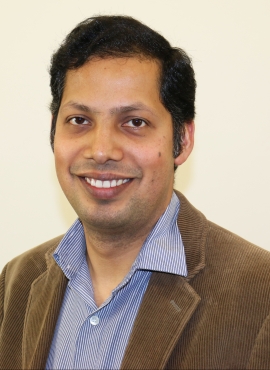
Mohit Singh is the Coca-Cola Foundation Professor at the H. Milton Stewart School of Industrial and Systems Engineering, Georgia Institute of Technology. He previously held positions at Microsoft Research (2011-2016) and as an Assistant Professor at McGill University (2010-2012). PhD in Algorithms, Combinatorics, and Optimization (ACO) at Carnegie Mellon University His research focuses on discrete optimization , approximation algorithms , and convex optimization , with applications to combinatorial optimization, submodular functions, and network design. He has contributed to topics like Sticky Brownian Rounding, integrality gaps, and online adaptive algorithms. His recent work includes theoretical advancements in matroid constraints, dimensionality reduction, and submodular maximization. He has published extensively in top conferences such as FOCS, SODA, ICML, and NeurIPS. He has been recognized with the Coca-Cola Foundation Professorship and served as Director of the Algorithms and Randomness Center at Georgia Tech (2019-2023). He has also held editorial roles and organized key academic workshops like the Bellairs Workshop on Approximation Algorithms (2011). His teaching includes advanced courses on approximation algorithms, combinatorial optimization, and linear inequalities. He has collaborated with institutions such as Microsoft Research and McGill University.
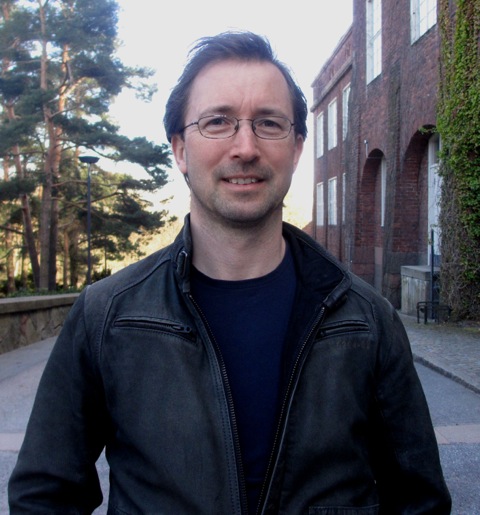
Per Enqvist is an Associate Professor in the Division of Numerical Analysis, Optimization and Systems Theory within the Department of Mathematics at KTH Royal Institute of Technology, Stockholm, Sweden. He has held this position since 2009 after progressing from Assistant Professor (2006-2009) and post-doctoral roles at INRIA France and CNR Italy. His academic background includes: Ph.D. in Optimization and Systems Theory from KTH (2001), supervised by Professor Anders Lindquist M.Sc. in Engineering Physics (Civilingenjör) from KTH (1994) with Applied Mathematics focus Post-doctoral studies at INRIA Sophia-Antipolis (2003-2004) and CNR Padova (2001-2003) Enqvist's research centers on mathematical modeling of stochastic processes, scheduling, and queueing theory with applications across operations research, systems engineering, and signal processing. His principal interests span Optimization, Operations Research, Systems Engineering, Signal Processing, Mathematical Systems Theory, and Modeling and Simulation. He has made significant contributions to spectral estimation, covariance interpolation, and resource allocation frameworks. Publication analysis reveals an evolution from foundational systems theory work (2000s) on spectral estimation and minimal realization toward applied optimization in healthcare operations (2010s-2020s). Recent articles address radiation therapy scheduling and contact center modeling using queueing theory with risk-sensitive measures like CVaR, while earlier work established theoretical frameworks for covariance interpolation and passive system synthesis. No scientific awards are documented in the provided information. He has received funding from Vetenskapsrådet (Swedish Research Council) and led the ACCESS seed project on "Robust Spectral Estimation". Enqvist is course responsible for multiple master's program tracks including Aerospace systems and Industrial Engineering, and oversees the Optimization and Systems Theory seminar series. No student advisement details are provided. He maintains affiliations with the ACCESS Linnaeus centre, Center for Industrial and Applied Mathematics (CIAM), and serves on the Swedish Operations Research Society (SOAF) board.
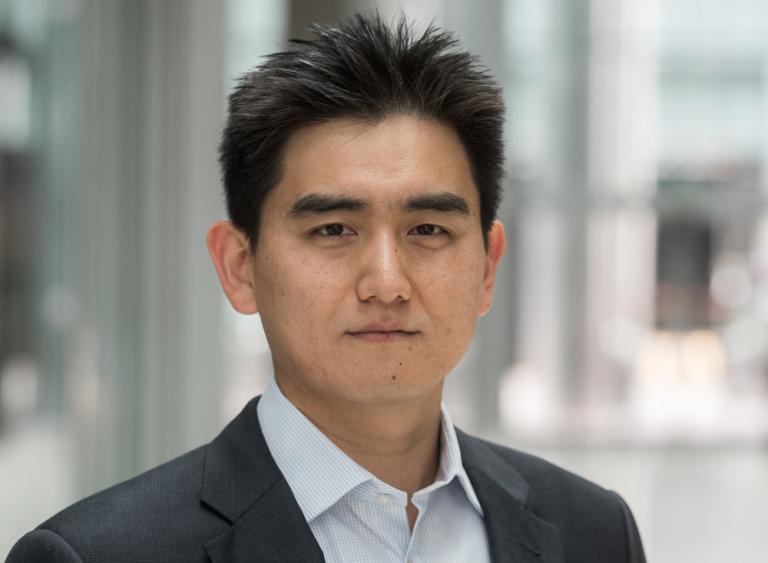
Onesun Steve Yoo is a Professor of Operations and Marketing Analytics at the UCL School of Management, University College London, and Co-Director of the UCL Centre for Sustainable Business. He holds a PhD from UCLA Anderson School of Management, alongside advanced degrees in Electrical Engineering and Applied Mathematics from UC Berkeley and UCLA. His research focuses on innovation and entrepreneurship, examining operational and marketing strategies for firms launching innovative products/services. Key areas include consumer behavior analysis, pricing policies, sequential product launches, and the impact of technologies like surge pricing and AI-driven data analytics on business operations. Recent work integrates sustainability initiatives with AI to enhance operational transparency in supply chains and regulatory compliance. Yoo’s research has been published in top journals such as Marketing Science , Operations Research , and Manufacturing & Service Operations Management . His findings have been cited by US policymakers and featured in media outlets like the Wall Street Journal . He serves as a senior editor at Production and Operations Management and associate editor at Manufacturing & Service Operations Management . His academic service includes grants from Innovate-UK (UKRI) to collaborate with industry on sustainable business practices. Yoo’s work bridges theoretical research with practical applications, emphasizing data-driven decision-making and interdisciplinary collaboration between operations, marketing, and sustainability domains.
Asher Wolinsky is the Gordon Fulcher Professor of Economics at Northwestern University's Weinberg College of Arts & Sciences. His research focuses on microeconomic theory and industrial organization, with emphasis on markets under imperfect competition and information asymmetry. He holds a PhD from Stanford University (1980). He is a Fellow of the Econometric Society and the American Academy of Arts and Sciences. His work has explored auction design, strategic market behavior, and institutional mechanisms. Recent research includes studies on auctions with frictions, bidder solicitation dynamics, and search theory under adverse selection. Educational background: PhD in Economics, Stanford University, 1980. His academic service includes editorial roles with the Econometric Society Annual Reports. His research portfolio spans over 50 years, addressing foundational questions in game theory and market design.
Roel Leus is a full professor at KU Leuven's Faculty of Economics and Business (FEB), part of the Operations Research and Statistics Research Group (ORSTAT). He holds roles such as Program Director for the Business Engineering programs and Chairman of the KU Leuven Advisory Committee for the Chinese Region. He earned his PhD in Applied Economics from KU Leuven in 2003, focusing on project planning under uncertainty. His research emphasizes operations research and management, particularly scheduling, project planning, and decision-making under uncertainty. Education: PhD in Applied Economics (KU Leuven, 2003); Master's in Business Engineering (Handelsingenieur, KU Leuven, 1998). He has held academic positions since 2003, including adjunct professorships at Beijing Jiaotong University. His administrative roles include heading ORSTAT research group (2012–2016) and program directorships. Research Interests: Sequencing and scheduling, project planning under uncertainty, discrete optimization, and practical quantitative decision support. He has supervised 12 graduated PhD students as primary supervisor and contributed to numerous publications in top journals like INFORMS Journal on Computing and European Journal of Operational Research. Teaching: Courses include 'Introduction to Operations Research,' 'Operations Research,' and 'Applications of Operations Research.' He coordinates master's theses in Data Science and Business Analytics, focusing on practical optimization problems. Grants and Projects: Acquired over €2 million in research funding from private companies, the National Bank of Belgium, and KU Leuven. His work spans satellite scheduling, supply chain management, and cross-docking logistics. Labs/Teams: Active in ORSTAT, collaborating on projects like drone-assisted delivery and robust scheduling algorithms. His research bridges theoretical advancements with real-world applications in logistics, manufacturing, and aerospace.
Asuman Ozdaglar is the MathWorks Professor of Electrical Engineering and Computer Science and Department Head of EECS at MIT. She also serves as Deputy Dean of Academics for the MIT Stephen A. Schwarzman College of Computing. Her research focuses on large-scale networked systems, including optimization, game theory, social networks, and distributed algorithms. Education: BS in Electrical and Electronics Engineering from Middle East Technical University (1996), SM (1998) and PhD (2003) in Electrical Engineering and Computer Science from MIT. Research emphasizes nonlinear optimization, machine learning, and network economics. She leads work on robust algorithms, misinformation dynamics, and networked systems. Affiliated with the Laboratory for Information and Decision Systems (LIDS) and the Operations Research Center (ORC). Her contributions span theoretical and applied domains, including distributed optimization methods, social network analysis, and privacy-preserving data mechanisms. Active in shaping academic policy through her roles in the College of Computing.
Paul Ward is an Associate Professor in the Department of Electrical and Computer Engineering at the University of Waterloo and a faculty fellow at the IBM Centre for Advanced Studies. He holds a PhD (2002) and MASc (1993) from Waterloo and a BScE (1998) from the University of New Brunswick. His research focuses on distributed systems management, dependable systems, autonomic computing, wireless networks, and IoT. Key areas include fault detection in web services, service-oriented networking, and optimization of wireless mesh networks. Ward's publications span computer networks, cognitive science, and sports analytics, reflecting interdisciplinary applications of computational methods. He holds two patents in mobile web services and fault resolution.
Shaowu Pan is an Assistant Professor of Aerospace Engineering at Rensselaer Polytechnic Institute (RPI), affiliated with the Future of Computing Institute (FOCI) and the Scientific Computation Research Center (SCOREC). He holds a Ph.D. in Aerospace Engineering and Scientific Computing from the University of Michigan and completed a postdoctoral fellowship at the University of Washington’s AI Institute in Dynamic Systems. Education: Ph.D., University of Michigan, 2021 M.S., University of Michigan, 2015 B.E. & B.S., Beihang University, 2013 Research Interests: His work focuses on the intersection of computational fluid dynamics, data-driven modeling, and scientific machine learning. Key areas include operator-theoretic modeling of fluid flows, generative AI for physical systems, and physics-informed neural networks. He develops novel algorithms for reduced-order modeling and stability-preserving surrogate models, with applications in turbulence, plasma physics, and aerodynamics. Key Contributions: Developed PyKoopman , an open-source Python package for Koopman operator approximation. Pioneered mesh-agnostic representation methods like Neural Implicit Flow for spatio-temporal data. Advanced physics-informed neural networks for solving Grad-Shafranov equations and plasma equilibrium problems. Awards & Recognition: John Tichy Junior Faculty Travel Grant (2024) Chinese Outstanding Student Abroad Award (2021) Richard and Eleanor Towner Prize Nominee (2019) Teaching & Mentorship: He teaches courses like MANE 2110: Numerical Methods and Programming for Engineers and mentors multiple Ph.D., master’s, and undergraduate students. His doctoral committee involvement spans interdisciplinary projects in fluid dynamics and AI. Grants & Software: Lead PI for NSF-funded projects on neural representation learning for turbulent flows. Developed software tools like spKDMD and Warp-DG for dynamics analysis and CFD simulations. Labs & Collaborations: Collaborates with institutions like Los Alamos National Laboratory and actively participates in conferences (e.g., AIAA SciTech, SIAM). His research bridges computational science, machine learning, and fluid dynamics to address complex nonlinear systems.
Lei Wu is a Professor and Anson Wood Burchard Chair Professor in the Department of Electrical and Computer Engineering at Stevens Institute of Technology. He holds a B.S. (2001) and M.S. (2004) in Electrical Engineering from Xi'an Jiaotong University, and a Ph.D. (2008) in Electrical Engineering from Illinois Institute of Technology. His research focuses on power system optimization, renewable energy integration, microgrid control, and cyber-physical systems resilience. Education: B.S. Electrical Engineering, Xi'an Jiaotong University (2001) M.S. Systems Engineering, Xi'an Jiaotong University (2004) Ph.D. Electrical Engineering, Illinois Institute of Technology (2008) Research Interests: Dr. Wu's work addresses challenges in power system operations, including optimization of renewable energy integration, electricity market design, and resilient microgrid control. He develops advanced algorithms for unit commitment, stochastic modeling of renewable resources, and cyber-physical security. His research emphasizes practical applications in grid resilience, demand response, and multi-energy system coordination. Awards: Fellow of IEEE (2022) NSF CAREER Award (2013) IBM Smarter Planet Faculty Innovation Award (2011) Grants & Professional Service: He leads grants on smart grid optimization, including projects from NSF, DOE, and industry partners. He serves as Editor for IEEE Transactions on Smart Grid and other journals, and has advised numerous students on energy-related research. His work on microgrid control and cyber-physical security has been widely recognized in industry and academia. Labs & Teams: Leads the Stevens Energy Systems Lab, focusing on advanced grid technologies and interdisciplinary collaborations between power systems, AI, and cybersecurity.
Rajesh Karki is a Professor in the Department of Electrical and Computer Engineering at the University of Saskatchewan’s College of Engineering. He holds a B.E., M.Sc., and Ph.D. in related fields. His research focuses on power system reliability, renewable energy integration, and microgrid resilience, with particular emphasis on addressing challenges posed by extreme weather, cyber threats, and decarbonization targets. Dr. Karki’s work spans theoretical modeling, probabilistic analysis, and practical implementation strategies for smart grids, energy storage systems, and distributed generation. His educational background includes advanced degrees in electrical engineering, complemented by professional engineering licensure (P.Eng.). His research has explored diverse topics such as wind energy curtailment mitigation, energy storage optimization, and demand response mechanisms in developing economies like Nepal. He has authored numerous peer-reviewed publications on grid resilience, reliability economics, and cyber-physical system security. Key themes in his work include: (1) quantifying the reliability value of energy storage in active distribution systems, (2) modeling cyber-physical threats to microgrids, and (3) developing frameworks for extreme weather-resilient infrastructure. Despite the volume of his publications (over 50 articles), no specific awards or grants are explicitly listed in the provided materials. His research often intersects technical, economic, and policy dimensions of sustainable energy systems.
Neal Sullivan is a Professor of Mechanical Engineering at the Colorado School of Mines (CSM), leading experimental research at the Colorado Fuel Cell Center as its director. His expertise lies in electrochemical ceramics, with a focus on fuel cells, electrolyzers, and membrane reactors for energy conversion and storage. Sullivan’s work spans from materials development to large-scale system integration, addressing applications such as hydrogen production, CO₂-to-fuels processes, and geothermic fuel cell systems for unconventional oil recovery. His research is supported by grants from the U.S. Department of Energy (DOE), NASA, and industry partners, totaling over $15M. Notable projects include the development of proton-conducting ceramic electrolyzers for water splitting, high-efficiency hybrid SOFC-IC engine systems, and Mars-based CO₂ methanation. Sullivan has led collaborative efforts with global leaders in electrochemistry, emphasizing scalability and durability in energy systems. Key contributions include innovations in protonic ceramic fabrication, catalyst integration, and multi-stack system design. His lab focuses on bridging early-stage materials research with full-scale demonstrations, achieving power outputs up to 100 kW. Sullivan’s work has been published in top journals like Nature Energy and International Journal of Hydrogen Energy , with a strong emphasis on practical applications and renewable energy solutions. Labs/Teams: Director of the Colorado Fuel Cell Center. Grants/Advising: PI/co-PI on multiple DOE and NASA grants, including $5M for hybrid SOFC systems and $1.5M for geothermic fuel cells. Advises on advanced materials and system integration for energy storage and conversion.
Ben Bloem-Reddy is an Assistant Professor in the Department of Statistics at the University of British Columbia (UBC), Vancouver Campus. His research focuses on statistical theory and applications in machine learning, particularly in causal inference, Bayesian methods, neural networks, and probabilistic models. He advises current students Quanhan (Johnny) Xi, Kenny Chiu, and Gian Carlo Diluvi. His work bridges foundational statistical theory with practical machine learning challenges, including causal discovery, model identifiability, and uncertainty quantification. Recent research explores topics such as latent variable models, generative processes, and symmetry in data and algorithms. His contributions span interdisciplinary areas like particle physics applications and information theory-based compression techniques. Ben’s research trends emphasize advancing theoretical guarantees for modern machine learning systems while addressing real-world problems. His publications frequently intersect with algebraic topology (e.g., cocycles in causal inference) and nonparametric methods. He maintains an active lab within the Department of Statistics, fostering collaborations across UBC’s academic ecosystem. No scientific awards are explicitly listed in the provided information. His advising and grant activities focus on statistical methodology development, as evidenced by his student supervision and published work. His office is located in ESB 3168, and he can be reached at benbr@stat.ubc.ca.
Christina Lee Yu is an Assistant Professor at Cornell University in the School of Operations Research and Information Engineering (ORIE). She holds a PhD and MS in Electrical Engineering and Computer Science from MIT (2017, 2013) and a BS in Computer Science from Caltech (2011). Her research focuses on algorithm design, high-dimensional statistics, causal inference in networks, and reinforcement learning. She is also an Amazon Scholar and has received prestigious awards, including the NSF CAREER Award and Intel Rising Stars Award. Her work is supported by grants from the NSF and Air Force Office of Scientific Research. Education: PhD in EECS, MIT (2017) MS in EECS, MIT (2013) BS in Computer Science, Caltech (2011) Research Interests: Algorithm design and analysis Inference over networks and causal inference Sequential decision making under uncertainty Online learning and reinforcement learning High-dimensional statistics Awards and Honors: NSF CAREER Award (2024) ACM SIGMETRICS Rising Stars Award (2024) Intel® Rising Stars Award (2021) JPMorgan Faculty Research Award (2021) Simons Institute Research Fellow (2020) INFORMS Dantzig Dissertation Award Honorable Mention (2018) Grants and Funding: National Science Foundation (NSF) CAREER Grant Air Force Office of Scientific Research Grant Advising: PhD Students: Sean Sinclair, Tyler Sam, Xumei Xi Collaborators: Mayleen Cortez, Matthew Eichhorn Labs and Collaborations: Member of ORIE, Statistics, CAM, and CS graduate fields at Cornell Amazon Visiting Academic in Fulfillment Optimization (2025)
Iris D. Tommelein serves as the Roy W. Carlson Distinguished Professor in the Civil and Environmental Engineering Department at the University of California, Berkeley's College of Engineering, where she directs the Project Production Systems Laboratory (P2SL). A globally recognized pioneer in Lean Construction, she has revolutionized architecture-engineering-construction (AEC) practices through research, industry workshops, and leadership since co-founding the Lean Construction Institute in 1997. Her educational foundation spans multiple disciplines: Ph.D. in Civil Engineering (Construction Engineering and Management), Stanford University, 1989 M.S. in Computer Science (Artificial Intelligence), Stanford University, 1989 M.S. in Civil Engineering (Construction Engineering and Management), Stanford University, 1985 B.S. (5-year degree) in Civil Engineer-Architect, Vrije Universiteit Brussel, Belgium, 1984 Professor Tommelein's research centers on transforming construction processes through Lean principles and digital innovation . Her work pioneers takt planning for workflow reliability, industrialized construction for labor and sustainability challenges, and mistakeproofing to eliminate errors. She integrates digital twins , AI , and optimization to develop practical decision-support systems for supply chains, logistics, and production management. Recent focus includes modular offsite construction and Industry 4.0 applications. Analysis of her 2023-2025 publications reveals intensifying research on takt planning maturity models and industrialized construction feasibility , with growing emphasis on mass timber automation and visual management systems. Her work consistently bridges lean theory with practical implementation across megaprojects, subcontracting networks, and heavy civil engineering. Her exceptional contributions have earned: Lean Pioneer Award (Lean Construction Institute, 2015) National Academy of Construction induction (2019) PPI Technical Achievement Award (2022) Robert B. Harris Award (University of Michigan, 2024) ASCE Construction Management Award (2024) - first woman recipient in 51 years Through the P2SL, she leads industry-collaborative research on production system design, mistakeproofing frameworks, and digital transformation. Her grant-funded projects develop assessment tools for industrialized construction adoption and takt planning methods adaptable to diverse project types. She actively mentors graduate students and drives knowledge transfer via workshops and the annual Construction Innovation Day. The Project Production Systems Laboratory (P2SL) operates as a global hub for construction innovation, partnering with owners, contractors, and suppliers to implement lean production systems. Current initiatives include developing serious games for mistakeproofing training, optimizing work density methods for heavy civil projects, and creating digital twins for real-time construction management.
David Simmons-Duffin is a Professor of Theoretical Physics at the California Institute of Technology (Caltech), where he has held positions since 2016. He is part of the Division of Physics, Mathematics and Astronomy, contributing to the Physics Department. His career progression includes roles as Visiting Associate (2016–17), Assistant Professor (2017–20), and Associate Professor (2020–21) before becoming full Professor in 2021. Education: A.B. and A.M. from Harvard University (2006), CASM from the University of Cambridge (2007), and Ph.D. from Harvard University (2012). His research focuses on conformal field theory (CFT), bootstrap methods, quantum field theory, and AdS/CFT correspondence. Key areas include precision computations in strongly coupled systems, critical phenomena, and applications to holography and quantum gravity. Research highlights include advancing the conformal bootstrap program, analyzing CFT data in 3D Ising models, and exploring connections between CFTs and gravitational theories. His work often bridges theoretical frameworks with numerical methods, yielding insights into operator product expansions (OPE), spectral gaps, and causality constraints. Affiliations include the Institute for Quantum Information and Matter (IQIM) and other Caltech research centers. His contributions have shaped modern approaches to understanding universality in critical systems and the geometric aspects of quantum field theories. Notable collaborations involve high-precision calculations, bootstrap island techniques, and studies of thermal QFT and light-ray operators. His work emphasizes interdisciplinary methods, combining analytic tools with computational advancements to tackle complex theoretical problems.