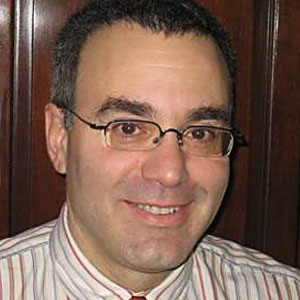
Dr. Anjan Biswas is a Professor in the Department of Math & Physics at the College of Arts & Sciences. His research focuses on analytical and computational approaches to quantum optics and nonlinear wave propagation. Education: Ph.D. in Mathematics from the University of New Mexico. Metrics: Erdos Number 4, Hirsch Index 111. Research interests center on optical solitons in fibers with linear and nonlinear chromatic dispersion, Lie symmetry analysis for quiescent solitons, and stochastic modeling in photonic systems. His work explores fractional temporal evolution, polarization-mode dispersion, and Kudryashov’s power-law structures. Recent publications highlight advancements in cubic-quartic soliton modeling, dispersion triplet systems, and noise-resilient optical communication frameworks. Studies span Boussinesq-type models, magneto-optic waveguides, and metamaterial applications. Key methodologies include Adomian decomposition, Sardar sub-equation techniques, and Lie symmetry analysis. Applications range from quantum fluid dynamics to internet bottleneck suppression via exotic self-phase modulation structures.
George Hripcsak is the Vivian Beaumont Allen Professor of Biomedical Informatics and Director of Medical Informatics Services at New York-Presbyterian Hospital, Columbia University. He holds affiliations with the Vagelos College of Physicians and Surgeons and the Data Science Institute (DSI). His expertise spans clinical informatics, electronic health records (EHRs), and medical knowledge representation standards. Hripcsak earned degrees in chemistry, medicine, and biostatistics, and is a board-certified internist. Research focuses on leveraging EHR data for clinical research and patient safety through data mining and causal inference techniques. Notable contributions include the Arden Syntax (a national standard for medical knowledge representation) and leadership in the Observational Health Data Sciences and Informatics (OHDSI) network. He chairs the AMIA Standards Committee and has advised federal health informatics policies under HIPAA. His academic awards include Fellowships in the American College of Medical Informatics (1995) and New York Academy of Medicine. Current projects emphasize federated learning, genomic risk prediction, and large-scale real-world evidence analysis through initiatives like LEGEND-T2DM and All of Us Research Program. Educations: MD, Biostatistics, Chemistry Labs/Teams: OHDSI, DSI, Medical Informatics Services Grants & Funding: Not explicitly listed in provided texts
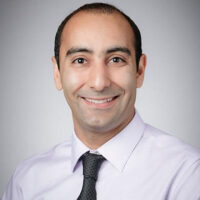
Dr. Amin Reza Rajabzadeh is an Associate Professor at the W Booth School of Engineering Practice and Technology, McMaster University, with affiliate roles in the McMaster School of Biomedical Engineering and Mechanical Engineering. He specializes in biochemical engineering, focusing on biosensors, bioseparation processes, and bioprocess monitoring. His research includes developing biosensors for biological process monitoring and nanotechnology-based cancer therapies. He holds a Professional Engineer license (P.Eng.) and is a member of the Canadian and American Engineering Education Associations. Dr. Rajabzadeh's teaching spans core biochemical engineering courses like Bioreactor Design and Bioprocess Control. He has received the McMaster President’s Award for Teaching and a MacPherson Leadership in Teaching Fellowship. His research clusters span Energy, Environment, Health & Bio-innovation, and Micro-Nano Systems. Recent work includes nanoplatforms for photothermal cancer therapy (ACS Applied Materials & Interfaces, 2021) and innovations in sustainable protein enrichment via tribo-electrostatic separation. Collaborations span biomaterials, environmental engineering, and nanotechnology. Awards: Teaching Excellence Awards, Leadership Fellowships Research Themes: Biosensors, Nanomedicine, Bioseparation Technologies Labs/Teams: Biomedical Engineering Research Group, Nanotechnology Applications Lab
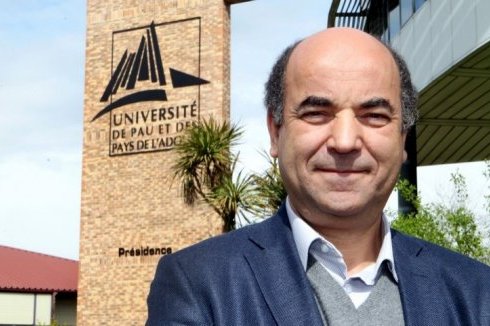
Mohamed Amara is a Professor and President of the Université de Pau et des Pays de l'Adour (UPPA). He is a member of the Inria MAGIQUE-3D team, specializing in numerical analysis and mathematical modeling. His research focuses on finite element methods, computational fluid dynamics, and photovoltaic technologies. He has contributed to advancements in solar energy systems, thermal management of photovoltaic cells, and materials science. Amara has supervised PhD students Elvira Shishenina and Izar Azpiroz, who successfully defended their theses. His work bridges applied mathematics with engineering applications, including studies on estuarian river flows and phase change materials. Roles: Professor, President of UPPA, Inria MAGIQUE-3D researcher Key Research Themes: Numerical Analysis, Solar Energy, Fluid Dynamics Amara's recent publications emphasize structural color metasurfaces, radiative cooling of solar modules, and perovskite solar cell optimization. He collaborates internationally on photovoltaic systems and thermal modeling, addressing challenges in energy efficiency and material performance.
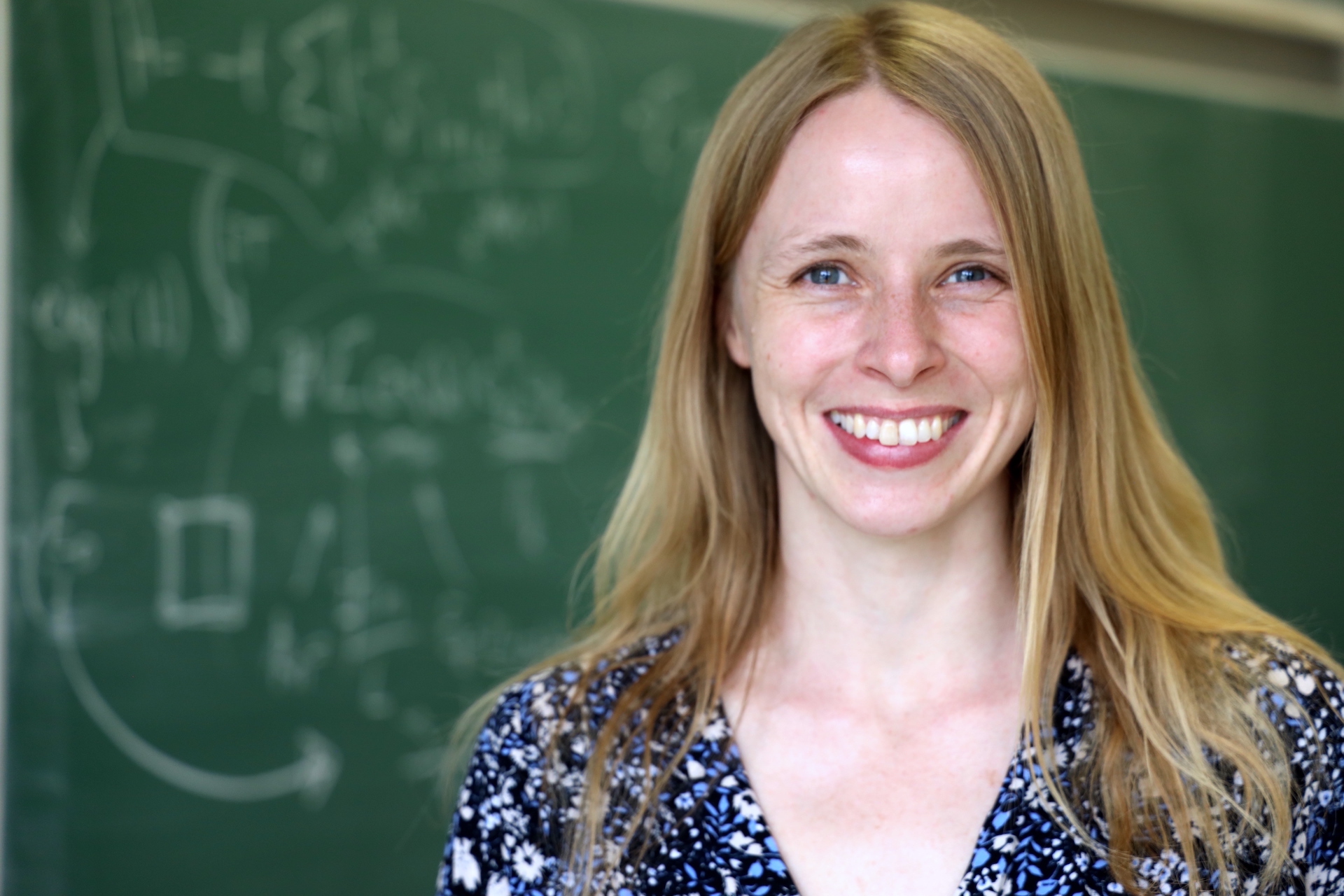
Annabelle Bohrdt is a Professor at the University of Regensburg's Faculty of Physics, affiliated with the Institute of Theoretical Physics. Her research focuses on strongly interacting quantum many-body systems, combining numerical methods, quantum simulation experiments, and machine learning techniques like neural networks. She explores topics such as the Fermi-Hubbard model, t-J model, and stripe formation in doped antiferromagnets. Her work bridges theoretical models and experiments, leveraging quantum gas microscopy and interpretable machine learning tools. Notable contributions include studies on pairing mechanisms in bilayer antiferromagnetic Mott insulators and the role of fluctuations in quantum many-body systems. Bohrdt actively collaborates with experimental groups to validate theoretical predictions. Teaching includes specialized courses on numerical methods for quantum many-body systems and machine learning applications in physics. She advises graduate and undergraduate students on projects in quantum matter and computational physics.
Dr. Christabel Tan is an Associate Professor in the Research Department of Engineering and Technology at the University of Hertfordshire, affiliated with the School of Physics, Engineering & Computer Science and the Wolfson Centre for Biodetection and Instrumentation. She holds a BEng (Hons) in Electronic Engineering (2000), MPhil in Electrical Engineering (2002), and PhD in Microfluidic Systems (2006) from UMIST. Her expertise spans microsystems engineering, microfabrication, and MEMS, with a focus on biomedical applications. She is Deputy Head of Engineering, managing microdevice development and fabrication. Education : BEng (Hons) Electronic Engineering, UMIST (2000) MPhil Electrical Engineering & Electronics, UMIST (2002) PhD in Microfluidics, University of Hertfordshire (2006) MBA, Hertfordshire Business School (2016) NEBOSH H&S Certification (2017) Research Interests : Microfluidic-enabled systems Novel microfabrication techniques MEMS for biomedical applications Rapid prototyping of microengineered devices Projects & Grants : Lead researcher in 16 projects, including CIBD (2023–2026), DIVISIUM (2021), and DLP Printing Systems (2021–2022) Focus areas: biodetection systems, digital microfluidics, and medical device compliance Labs & Teams : Active in the Wolfson Centre for Biodetection and Instrumentation, collaborating on multidisciplinary projects involving microfluidic device design for cell/gene therapy and biosensor development.
James E. Smay is a Professor and Head of the Materials Science and Engineering department at Oklahoma State University. He holds a Ph.D. in Materials Science and Engineering from the University of Illinois and a B.S. in Mechanical Engineering from Oklahoma State University. Ph.D. Materials Science and Engineering, University of Illinois B.S. Mechanical Engineering, Oklahoma State University Dr. Smay’s research focuses on colloidal assembly processes, particularly direct write manufacturing, to create novel devices. His work spans 3D printing of photonic band gap crystals , bone scaffolds , all-ceramic dental crowns , and metal-ceramic composites , leveraging colloidal gel inks with ceramic, metallic, and polymer particles in aqueous media. His publications highlight advancements in additive manufacturing , bioactive ceramics , rheological control of complex fluids , and sanitation engineering . Key trends include the application of direct printing to biomedical and photonic fields, alongside studies on emulsion stability and pathogen deactivation. The Smay lab is equipped for powder processing , advanced rheology , thermal treatment of ceramics/metals/polymers, and particle size/zeta potential measurements , supporting interdisciplinary research in sustainable manufacturing and biomedical materials.
Prof. Irina T. Sorokina is a Professor of Physics at the Norwegian University of Science and Technology (NTNU), leading the Laser Physics Group. Her research focuses on ultrafast lasers, mid-IR photonics, and their applications in materials processing, quantum computing, and spectroscopy. She holds a prestigious Fellowship from the Optical Society of America (2006) and the IEEE Snell Premium Award (2004). Research Interests: Her work spans laser physics, nonlinear optics, and solid-state laser technologies. Key areas include femtosecond laser development, mid-IR frequency combs, and advanced material processing techniques using ultrafast pulses. Recent projects include subsurface silicon modification, all-fiber mid-IR laser systems, and applications in quantum networks. Publications: Her 15 most recent articles (2023–2025) emphasize mid-IR scaling, dissipative solitons, and novel laser architectures. These contributions highlight advancements in energy-efficient laser systems and their industrial applications. Awards: Fellow of the Optical Society of America (2006) IEEE Snell Premium Award (2004) Co-founder of NTNU spin-off ATLA Lasers AS Advising & Innovation: Supervises graduate students in laser physics and materials science. Her lab collaborates on spin-off ventures and advanced projects like subsurface silicon processing for photovoltaics and quantum sensors. Research also extends to energy-dense battery materials and supercontinuum generation in chalcogenide fibers. Labs/Teams: Heads the Laser Physics Group at NTNU, focusing on mid-IR ultrafast lasers and their interdisciplinary applications. Collaborates internationally on projects like double-frequency comb spectroscopy and femtosecond laser writing in ZnS crystals.
Dr. Jenna Yentes is an Associate Professor in the Department of Kinesiology and Sport Management at Texas A&M University, affiliated with the College of Education and Human Development. Her research focuses on functional resiliency in aging populations, biomechanics of chronic obstructive pulmonary disease (COPD), and nonlinear analysis of human movement. She leads studies on gait stability, respiratory-gait coupling, and exoskeleton-assisted walking. Notable contributions include quantifying locomotor reserve and exploring firefighter performance in protective gear. Education: Ph.D. in Biomechanics (University of Nebraska, 2013), M.S. in Kinesiology (California State University Fullerton, 2006), B.A. in Kinesiology (University of Northern Colorado, 2000). Research Interests: Reserve capacity in older adults' mobility and cognition Biomechanical adaptations in COPD patients Methodological rigor in nonlinear data analysis (e.g., entropy metrics) Firefighter physical performance under protective gear Recent Articles Trends: Focus on entropy-based gait analysis, COPD biomechanics, dual-task interference in aging, and exoskeleton effects on interlimb coordination. Methodological rigor in parameter selection for nonlinear algorithms is a recurring theme. Awards: 2023 Faculty Climate Award (Texas A&M), 2019 Promising Scientist Award (International Society of Posture and Gait Research), and 2019 Chancellor's Commission on the Status of Women Award (University of Nebraska). Advising & Grants: Mentors graduate students (noted in publications) and collaborates with TEEX Fire Academy and multiple Texas A&M research centers including the Huffines Institute for Sports Medicine and the Center for Population Health and Aging. Research supported by institutional and federal grants. Labs/Teams: Active in Texas A&M's Human Movement and Aging Lab, collaborating with interdisciplinary teams in sports medicine, rehabilitation engineering, and pulmonary research.
Dr. Sarah Wilson is a Reader at the York Law School, University of York. She holds a LLB from the University of Wales, an MA in History from the University of Wales, Swansea, and a PhD in legal responses to financial crime. Her research focuses on trusts law, charity law, financial crime, banking regulation, and the historical and socio-legal dimensions of financial systems. She has previously held academic positions at the Universities of Manchester, Leeds, and Keele. Her research explores topics such as mandatory rules in trust creation, fiduciary obligations, and the regulatory aftermath of the 2007-2008 financial crisis. Notable projects include investigations into socially useful banking, the historiography of financial crime, and interdisciplinary approaches to financial crime studies. She is also engaged in collaborative projects with institutions like Nottingham Trent University and the University of Newcastle. Dr. Wilson is an Editorial Board Member of the Lloyds Law Reports (Financial Crime), a Consultant Expert for the BBC’s 'Who Do You Think You Are?', and an external examiner at Liverpool John Moores University. Her teaching spans undergraduate and postgraduate modules in trusts law, financial crime, and legal history.
LUIS GONZALEZ GUERRERO is an Assistant Professor at the Universidad Carlos III de Madrid, specializing in photonics and telecommunications. His research focuses on integrated photonic circuits for millimeter-wave and terahertz (THz) communication systems, with applications in satellite payloads, wireless fronthaul/backhaul, and space technology. He leads projects in hybrid integrated optical platforms (e.g., InP-Si3N4), laser stability, and high-frequency signal generation. His work bridges photonics with electrical engineering to enable next-generation wireless systems. Research Interests: Dr. Gonzalez Guerrero’s expertise spans integrated photonics, microwave photonics, THz communication links, satellite communication systems, and photonic signal generation. His innovations include low-noise radiometers, optical injection locking for stable local oscillators, and high-purity mm-wave/THz signal transmission. His contributions address challenges in frequency stability, bandwidth efficiency, and phase noise mitigation in high-frequency systems. Publications: His recent work emphasizes hybrid photonic platforms, sub-THz wireless bridges, and phase noise mitigation techniques. Articles highlight advancements in optical signal processing, laser source integration, and applications in space communication. His research trends reflect a strong focus on translating laboratory prototypes into deployable systems for satellite and terrestrial networks. Affiliations: He is affiliated with the Grupo Universitario de Tecnologías de Identificación (GUTI), a research group at UC3M. His work is supported by grants focused on photonic integrated circuits and space communication technologies. He collaborates internationally on projects involving multicore fiber systems, coherent THz transmitters, and optical frequency comb applications.
Dr. Amit Goyal is the SUNY Empire Innovation Professor and SUNY Distinguished Professor in the Department of Chemical and Biological Engineering at the University at Buffalo. He serves as Director of the UB Initiative on Plastics Recycling and Innovation (a New York State Center of Excellence) and previously founded and led the RENEW Institute (2015–2021), focusing on interdisciplinary research in energy, environment, and water. His academic roles include leadership in both research and industry, with expertise spanning clean energy technologies, superconducting materials, and flexible electronics. Education: B. Tech in Metallurgical Engineering, Indian Institute of Technology (1996) MS in Mechanical & Aerospace Engineering, University of Rochester (1988) PhD in Materials Science & Engineering, University of Rochester (1991) Executive MBA, Purdue University International Executive MBA, Tilburg University Research Interests: Dr. Goyal’s work focuses on heteroepitaxial growth , strain-driven self-assembly , and advanced energy materials . He develops clean energy technologies, including superconducting devices and photovoltaic systems, while pioneering innovations in plastics recycling. His recent projects involve high-throughput plastic sorting techniques using molecular vibrational signatures and nanoscale defect optimization in superconducting wires. Advising & Industry: He co-founded TapeSolar Inc. and TexMat LLC, demonstrating expertise in venture capital engagement and technical project management. His RENEW Institute has attracted multidisciplinary collaborations across six schools at UB, advancing solutions for global sustainability challenges. Labs & Initiatives: Leads the NYS Center for Plastics Recycling & Innovation and oversees the UB Initiative on Plastics Recycling, integrating engineering, economics, and communication strategies to address plastic waste challenges.
Hollis Cline, PhD, is the Hahn Professor of Neuroscience and Director of the Dorris Neuroscience Center at The Scripps Research Institute (TSRI). She holds adjunct positions at the University of California San Diego and the Salk Institute. Her research focuses on understanding how sensory experience shapes visual circuit development, plasticity, and function, with a focus on neurodevelopmental disorders. Cline earned her PhD in Neurobiology from UC Berkeley (1985) and conducted postdoctoral work at Yale and Stanford. She has served in leadership roles including Co-Chair of TSRI’s Department of Neuroscience and President of the Society for Neuroscience (2015–2016). Her research integrates molecular genetics, electrophysiology, and imaging to study structural dynamics in neural circuits, neurogenesis regulation, and excitation/inhibition balance. Key projects include the Dynamic Connectome (3D connectomics in the optic tectum), neurogenesis control, and the role of inhibition in visual circuit function. Her work revealed activity-dependent mechanisms driving synaptic maturation and topographic map formation, and identified molecular pathways linking visual experience to brain development. Education : PhD (UC Berkeley), B.A. (Bryn Mawr College) Awards : NIH Pioneer Award, AAAS Fellow, TSRI Mentor Award Labs/Teams : Cline Lab at TSRI, Dorris Neuroscience Center Grants : Not explicitly listed but implied via NIH advisory roles and research infrastructure Professional Service : NINDS Board, NIH Advisory Council, Society for Neuroscience leadership Her recent work bridges neurodevelopmental mechanisms with translational insights, using Xenopus models to study exosome-mediated intercellular communication and regeneration responses to injury. Collaborative efforts include the BigNeuron project for neuronal morphology analysis and AI-driven behavior recognition studies.
Dr. Jonathan Hu is a Professor in the Department of Electrical and Computer Engineering at Baylor University's School of Engineering and Computer Science. He holds a PhD from the University of Maryland Baltimore County (2008) and completed a postdoctoral fellowship at Princeton University (2009–2011). He is an active researcher in optics and photonics, leading the Photonics Research Laboratory and advising both graduate and undergraduate research assistants. Research Interests: Nanophotonics and metamaterials for photovoltaic and biomedical applications Mid-IR supercontinuum generation using chalcogenide photonic crystal fibers 2D materials such as graphene and their alignment via magnetic fields Coherent optical communication and quantum optical Fredkin gates Numerical simulation of electromagnetic problems and leaky mode analysis His recent publications (2019–2024) demonstrate a strong focus on quantum plasmonics, specialty optical fibers, optofluidics, and nonlinear optical phenomena, with high-impact work in journals like Science Advances , ACS Photonics , and Advanced Materials . The research shows a clear trend toward integrating photonics with 2D materials and quantum systems, with applications in sensing, communication, and materials characterization. Scientific Awards and Recognition: 35 Baylor faculty named among top 2% most cited researchers (2023) Editor’s Pick, Journal of Applied Physics (2018) Top three downloads in OSA journals for three consecutive months (2009) NSF Graduate Research Fellowship (awarded to advisee) Chinese Government Award for Outstanding Self-Financed Students Abroad (awarded to advisee) Second Place in FiO + LS Student Competition (awarded to advisee) Advising and Grants: Dr. Hu actively mentors students at all levels, with current graduate research assistants including Wei Zhang, Zhihao Hu, and Sterling Walzel. His lab is supported by external funding, though specific grants are not detailed in the text. He has advised PhD students such as Joshua Young, Chao Niu, and Chengli Wei, many of whom have gone on to successful academic and industry careers. His teaching includes core courses like EGR 1302, ELC 2320, and ELC 4320, as well as advanced topics in computational photonics and integrated photonics. Labs and Teams: He leads the Photonics Research Laboratory at Baylor University, located at the BRIC facility. He is also involved with the Baylor University Optica Student Chapter, promoting optics outreach and networking among students and researchers.
Chi (Jesse) Zhang is a Research Professor at Purdue University's Department of Chemistry, leading the Zhang Research Group. His work focuses on developing novel optical spectroscopy, imaging, and opto-control technologies to study chemical processes in living systems. He has pioneered techniques like Real-Time Precision Opto-Control (RPOC) and applies them to biomedical problems, including cancer metabolism and neurodegenerative diseases. His lab collaborates with institutions like Merck and has been recognized with awards such as the Astronaut Scholarship and Alice Watson Kramer Award. Education details are not explicitly provided, but his postdoctoral research at the Beckman Institute (2018–2020) indicates prior training in advanced scientific technology. His research integrates optical engineering with biological systems, emphasizing label-free imaging and real-time manipulation of cellular components. Key achievements include over 50 peer-reviewed publications and the development of the photokinesis technology platform (http://www.photokinesis.tech). His group hosts an active wet lab with projects ranging from lipid metabolism studies to optical device innovation. Recent milestones include successful student defenses, conference presentations, and impactful publications in ACS Photonics , Anal. Chem , and npj Imaging .