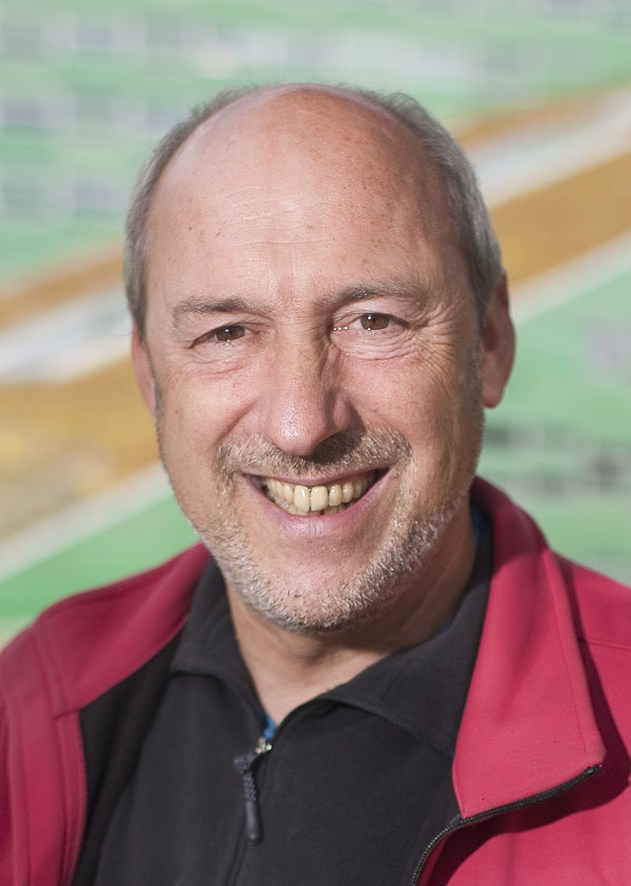
Dr. Bikash R. Pattnaik is an Associate Professor at the University of Wisconsin–Madison , affiliated with the School of Medicine and Public Health and holding joint appointments in the Department of Pediatrics and Department of Ophthalmology and Visual Sciences . His research bridges cellular signaling and channelopathy to investigate mechanisms underlying pediatric blindness . Education BSc, Sambalpur University (1987) MSc, Sambalpur University (1989) PhD, University of Delhi (1997) Research Focus Dr. Pattnaik’s lab explores: Oxytocin-OXTR signaling in retinal physiology Kir7.1 and bestrophin mutations causing blindness (e.g., LCA, Best’s disease) Ion channelopathy repair via gene therapy and pharmacological agents iPSC-RPE models and mouse models for translational studies The lab employs electrophysiology , patch-clamp techniques , biological imaging , and molecular assays to analyze ionic homeostasis and develop therapeutic interventions. Scientific Awards VAIBHAV fellowship (2025) for global research on blindness therapies Retina Research Foundation Daniel M. Albert Chair (2024) ARVO Silver Fellow (2023) Other Contributions He contributes to regenerative medicine by advancing iPSC technology for rapid drug and gene trials. His work aligns with the McPherson Eye Research Institute and Waisman Center resources.
Lasse Bjørn Kristensen is a Research Fellow at the Department of Computer Science, University of Copenhagen, specializing in Machine Learning with a focus on quantum computing applications. Research Interests His work bridges quantum computing, machine learning, and computational biology, with contributions to: Quantum neural networks and spiking neurons Quantum error correction and circuit robustness Quantum chemistry simulations Information flow in parametrized quantum systems Notable Research Trends Kristensen's publications reveal a strong emphasis on quantum-classical hybrid models, entanglement-enhanced devices, and computational methods for chemistry and physics. His recent work explores error-driven learning paradigms and quantum eigensolvers. Contact Email: lakr@di.ku.dk Address: Universitetsparken 1, 2100 Copenhagen Ø
J.C. Hummelen is a Professor at the University of Groningen's Faculty of Science and Engineering , leading the Molecular Energy Materials group. His work intersects Materials Science , Organic Chemistry , and Energy Technology , focusing on organic photovoltaics , thermoelectrics , and molecular electronics . Chairman of the Chemistry of (bio)Molecular Materials and Devices group Leader of the FOM Focus Group Next-Generation Organic Photovoltaics CEO of Solenne BV, a Groningen-based company His research explores fullerene derivatives , conjugated polymers , and organic semiconductor doping , aiming to improve dielectric properties , charge transport , and device stability . He has contributed to ACS Applied Materials & Interfaces , Nature Communications , and Advanced Materials . Recent publications highlight n-type organic thermoelectrics , thiol-free molecular assemblies , and dielectric constant optimization , reflecting his commitment to advancing organic solar cells and flexible electronics for sustainable energy applications.
John Bechhoefer is a Distinguished Professor in the Department of Physics at Simon Fraser University (SFU). He holds academic fellowships from the American Physical Society and the Royal Society of Canada. His research focuses on stochastic thermodynamics, biophysics, and control theory applied to physics. He has led a prolific research group with international collaborations, mentoring over 50 graduate and undergraduate students. His lab explores topics like the Mpemba effect, information engines, and DNA replication dynamics using advanced experimental techniques such as feedback traps and optical tweezers. Bechhoefer teaches courses in nonlinear physics and special topics in physics. His work bridges theoretical and experimental physics, with notable contributions to the understanding of entropy in nonequilibrium systems and the optimization of information-driven engines. He has published extensively in top journals including PNAS , Physical Review Letters , and Nature . His research group maintains active international exchanges, hosting scholars from institutions like the Weizmann Institute and the University of Nice.
Dr. Tristram Alexander is an Associate Professor in the School of Physics at the University of Sydney. His research focuses on nonlinear wave dynamics, complex networks, and interdisciplinary applications of theoretical physics. He completed his PhD at the Nonlinear Physics Centre, Australian National University (ANU), studying Bose-Einstein condensates. His work has expanded to include social dynamics modeling and heat flow phenomena. Education PhD in Theoretical Physics, Australian National University (ANU), 200X Supervised by Professor Yuri Kivshar Research Interests Dr. Alexander explores nonlinear phenomena across diverse domains, including: Nonlinear Optics: Soliton dynamics, high-order dispersion effects, and photonic lattice structures Complex Networks: Community detection in directed networks and social media analysis Interdisciplinary Applications: Heat flow rectification and social discourse modeling Grants & Awards Recipient of the 2023 Australian Research Council (ARC) Discovery Project grant for research on Learning the meso-scale organization of complex networks with collaborators E. Altmann and O. Boichak. Lab & Collaborations Leads research on nonlinear wave propagation and network theory, collaborating with experimental groups in photonics and computational social science.
Darin Zimmerman serves as Dean and Traubert Chair at The Citadel's Swain Family School of Science and Mathematics , and holds a Professor of Physics position in the Department of Physics. With prior roles as Associate Dean at Penn State Altoona, his career spans academic leadership and experimental physics research. Education: Ph.D. in Physics – Texas A&M University (2003) B.S. in Physics – University of California, Irvine (1998) Research Focus: His work primarily addresses Nanomaterials and Microwave Physics , with key contributions in: Plasmonic nanoantenna arrays for electro-optical sensing Atomic-layer deposition for tunable nanoscale light-harvesting devices Magnetorheological nanofluids and elastomer composites Photon-assisted tunneling in asymmetric junctions Microwave absorption mechanisms in metal-insulator composites Publication Trends: Recent articles emphasize Nanoscale Energy Conversion through rectenna systems, plasmonic tuning, and geometrically asymmetric devices. Earlier works focus on Percolation Transitions in nanocomposites, Microwave Absorption studies, and Tunneling Spectroscopy techniques. Departments: Department of Physics Swain Family School of Science and Mathematics Research Grants: NSF RUI: Single Molecule Vibrational Spectra NSF RUI: Microwave Heating of Powdered Metals Technological Innovations: Invented adjustable oxide-free tunnel junctions for Vibrational Spectroscopy and developed Self-Assembling Tunnel Junctions for molecular studies. His work extends to cavity perturbation techniques for permittivity measurements.
Dominique Vuillaume is an Emeritus Research Professor and former Research Director at CNRS, working at the Institute for Electronics, Microelectronics and Nanotechnology (IEMN) in Lille. He holds a PhD and Habilitation in solid-state physics from the University of Lille (1984 and 1992). His research spans molecular nanostructures, molecular electronics, and unconventional computing, with a focus on quantum transport, spintronics, and neuromorphic systems. He led the Nanostructures, nanoComponents & Molecules (NCM) group (2000–2019) and the Department of Physics of Materials and Nanostructures at IEMN (2015–2019). Notable achievements include pioneering molecular synapstors, THz molecular switches, and reservoir computing systems using nanoparticle-molecule networks. He has authored/co-authored over 240 peer-reviewed papers and advised industrial projects in semiconductor reliability and nanoelectronics. Education: PhD (1984), Habilitation (1992) in Solid-State Physics, University of Lille Affiliations: CNRS Research Director, IEMN Laboratory, University of Lille Leadership: Founded NCM Group (2000), Head of Department (2015–2019) Research focuses on molecular-scale devices, including: molecular junctions for high-frequency electronics, spintronics, and neuromorphic systems. Key innovations include low-voltage organic synapse transistors interfaced with biological neurons, and optically-driven molecular networks for reservoir computing. Recent work explores terahertz molecular switches and redox-controlled polyoxometalate junctions. Publications emphasize molecular electronics fundamentals and applications, with 2020s contributions on nanoscale thermal conductivity, THz devices, and neuromorphic architectures. Collaborations span industry (Bull R&D, CEA) and academic networks in Europe and globally.
Dr. Kim Michelle Lewis serves as Associate Dean for Research, Graduate Programs, and Natural Sciences and Professor of Physics in the College of Arts and Sciences at Howard University. She provides strategic leadership to enhance research initiatives, graduate programs, and interdisciplinary collaborations across natural sciences disciplines while supporting faculty advancement through promotion and tenure processes. B.S. in Physics from Dillard University (1998) M.S. in Electrical Engineering from University of Michigan (2003) Ph.D. in Applied Physics from University of Michigan (2004) A Condensed Matter Physicist, Dr. Lewis specializes in quantum transport phenomena in nanoscale structures including thin films and molecular junctions. Her experimental work employs inelastic electron tunneling spectroscopy and scanning probe microscopy techniques. Her research portfolio has expanded to include electrophysiology of biological systems and stem cell applications for regenerative medicine. Recently, she has integrated machine learning approaches to develop predictive models for porphyrin electrical properties, leveraging their tunable characteristics for quantum information technologies. Dr. Lewis's publication record demonstrates consistent contributions to molecular electronics, with recent work focusing on iron porphyrin molecular junctions, vanadium disulfide ultrathin flakes for quantum computing, and plasmonic properties of transition metal nitrides. Her research shows a clear trajectory from fundamental quantum transport studies toward applications in spintronics, quantum computing devices, and machine learning-enhanced materials discovery. David and Lucile Packard Fellowship UNCF/Mellon Fellowships Ford Foundation Postdoctoral Fellowship Career Enhancement Fellowship by Woodrow Wilson Foundation NSF BRIGE Award NSF Career Award (2012) U.S. Patent No. 6,777,911 (2004) Dr. Lewis has secured significant research funding including her 2012 NSF Career Award and previously held an NSF BRIGE Award. As Associate Dean, she actively cultivates federally funded research opportunities while maintaining her own active laboratory program. Her commitment to diversity in STEM is evident through her past leadership of the Movement of Underrepresented Sisters in Engineering and Science (MUSES) during graduate school and ongoing community outreach efforts. She directs the Hybrid Electronics and Characterization Laboratory (HECL) 2.0 at Howard University, which features advanced instrumentation including Conductive Atomic Force Microscopy, Scanning Tunneling Microscopy systems, 77K and 4.2K cryostats, and four-point probe electrical characterization equipment for nanoscale research. The laboratory supports undergraduate, graduate, and postdoctoral researchers in molecular electronics and quantum transport studies.
Patrick Pinhero is a Professor in the Department of Chemical and Biomedical Engineering at the University of Missouri, affiliated with the Nuclear Engineering Program. His research focuses on energy harvesting via nanomaterial innovations, nuclear fuel cycle optimization, and corrosion-resistant material development. He leads interdisciplinary teams studying solar nanoantennas for terahertz energy capture, self-curing lubricants, and pyroprocessing of spent nuclear fuels. Education: PhD (University of Notre Dame), BS (Creighton University) Research interests span energy-food-water nexus solutions, interfacial molecular assembly for nanofabrication, and corrosion mechanisms in structural alloys. His nuclear engineering work includes developing neutron-absorbing alloys and advanced irradiation platforms for graphite analysis. Advised students include Lucas Kuehnel (2023 NSF Graduate Research Fellow). Publications emphasize metamaterials, beta-emitter power systems, and electrochemical deposition techniques. Active in Mizzou Engineering’s strategic focus on chemical and biomedical innovation.
Timothy W. Secomb is a Professor at the University of Arizona with joint appointments in the Department of Physiology, Department of Mathematics, and the interdisciplinary programs in Applied Mathematics and Physiological Sciences. He is also affiliated with the BIO5 Institute and the Department of Biomedical Engineering, reflecting his highly interdisciplinary research approach. His research focuses on theoretical and computational modeling of physiological systems, particularly the microcirculation. Key areas include blood flow mechanics in microvessels, oxygen and nutrient transport to tissues, structural adaptation and angiogenesis in vascular networks, and regulation of blood flow through metabolic and mechanical feedback. His work integrates applied mathematics, physiology, and biomedical engineering to understand fundamental mechanisms in health and disease. The recent publications highlight a consistent focus on microvascular oxygen transport, neurovascular coupling, tumor angiogenesis, and computational hemodynamics. The modeling spans from cellular-level processes like red blood cell mechanics and ion diffusion to organ-level systems such as the cerebral cortex and pulmonary circulation. A strong trend is evident in using realistic 3D vascular geometries and developing fast, low-order models for complex physiological systems. Dr. Secomb has made significant contributions to understanding flow resistance, capillary perfusion, and the impact of vascular structure on tissue oxygenation. His models are instrumental in studying hypoxia in tumors and optimizing cancer therapies like thermoradiotherapy and antibody-drug conjugates. BSc in Mathematics, University of Melbourne (1975) MSc in Mathematics, University of Melbourne (1976) PhD in Applied Mathematics, University of Cambridge (1979) Post-Doctoral Training, Columbia University (1981) He has mentored students and researchers in mathematical physiology and continues to lead an active research program. His lab employs a hybrid discrete-continuum modeling framework and collaborates with experimental groups to validate theoretical predictions. Future work is likely to extend into immune-cell trafficking, multi-scale modeling of organ systems, and personalized models for precision medicine applications.
Prof. Dr.-Ing. Andreas Penirschke is a Professor at Technische Hochschule Mittelhessen (THM) in the Department of Electrical Engineering and Computer Science, where he leads research in high-frequency technology and serves as NAC Study Program Director. His academic appointment includes teaching advanced courses in high-frequency measurement technology, signal processing, and sensor systems, and he actively participates in the Examination Board for Communications Engineering and Computer Networks (Bachelor). Professor Penirschke's research focuses on cutting-edge developments in terahertz technology, microwave sensor systems, and beam diagnostics for particle accelerators. His work spans both theoretical and applied aspects, with significant contributions to high-frequency circuit design, terahertz detectors, and novel sensing techniques for industrial applications including flow measurement and humidity detection. His interdisciplinary approach bridges electrical engineering, physics, and materials science to solve complex measurement challenges in accelerator physics and industrial process monitoring. Analysis of Professor Penirschke's recent publications reveals a strong trend toward ultra-precise measurement systems for particle accelerators and advanced microwave sensor technology. His work on beam diagnostics for X-ray free-electron lasers demonstrates expertise in femtosecond-precision timing systems, while his research on microwave-based sensors shows innovative applications of metamaterials and composite right/left-handed transmission lines for permittivity measurements and flow monitoring. The interdisciplinary nature of his publications reflects collaborations across accelerator physics, semiconductor device engineering, and industrial process control. Professor Penirschke actively supervises multiple PhD and Master's students across several major research projects. His grant portfolio includes significant funding from the German Federal Ministry of Education and Research (BMBF), the Federal Ministry for Economic Affairs and Energy (BMWi), and the European Union's Horizon 2020 program. Current projects include HisTeD (High Speed Room Temperature Terahertz Devices), ULCBAMs (Ultra-Low Charge Bunch Arrival-time Monitors), DFMP (sensor systems for flow and humidity measurement), and DIAGNOSE PASST-THM (beam structure analysis). Professor Penirschke leads the High-frequency technology RF laboratory at THM, where his team develops advanced measurement systems for both academic research and industrial applications. The laboratory serves as a hub for collaborative projects with major research institutions including Technical University of Darmstadt, DESY Hamburg, HZDR Dresden, and KIT. The research environment combines theoretical modeling, circuit design, and experimental validation to push the boundaries of high-frequency measurement technology across multiple application domains.
Professor Andrew Gallant serves as Head of Department and Professor of Electronic Engineering in the Department of Engineering at Durham University, having assumed the Head of Department role in August 2025. He has been with Durham University since completing his undergraduate studies, progressing from Research Associate to Lecturer, Senior Lecturer (Associate Professor) in 2014, and full Professor in 2020. Andrew Gallant graduated with a first class honours degree in Applied Physics with Electronic Engineering from Durham University in 2000, followed by a PhD in 2004 (EPSRC CASE award with Filtronic Compound Semiconductors) on widely tunable micromachined capacitors. His academic journey at Durham has been continuous since his undergraduate studies. Professor Gallant's research focuses on micro- and nanoengineering, sensors and actuators, and terahertz devices and systems. His group specializes in using micromachining to create new components for manipulating terahertz light, with over twenty years of experience in cleanroom-based fabrication techniques. His work spans both fundamental device physics and practical applications in the RF and THz regions, with over 100 refereed journal and conference publications. His recent publications demonstrate a strong focus on terahertz technology, microfluidics, nanofabrication, and spintronics applications. The research shows progression from fundamental device fabrication to increasingly sophisticated systems integration, with growing emphasis on practical applications in communications, sensing, and energy conversion. Scientific Coordinator of the €3.8M EU Initial Training Network (Notedev) Co-I on the €4M H2020 ITN INDEED Multiple EPSRC grants as PI and Co-I EPSRC CASE award for PhD research Funding from the Royal Society for international travel exchanges Professor Gallant supervises multiple research postgraduates across different research nodes including Electrical Power, Advanced Materials and Electronic Devices, and Communications and THz. He has significant experience managing large international collaborative grants, including the €3.8M EU Initial Training Network. His teaching responsibilities include Digital Systems at L1, Digital Electronics at L3, and supervising MEng/BEng/MSc projects. His research group maintains strong cleanroom fabrication capabilities for micro- and nanoscale devices, with particular expertise in terahertz components and systems.
Dr Yasaman Alimi is a Research Associate in Mid-Infrared Photonics at the University of Sheffield's School of Electrical and Electronic Engineering. Her research focuses on semiconductor devices, THz technology, and nanotechnology. She specializes in developing advanced photodiodes, Gunn diodes, and nanoscale optoelectronic systems for applications in infrared detection, terahertz imaging, and high-frequency electronics. Her work combines experimental and computational approaches to optimize device performance and understand underlying physical mechanisms. Key research themes: Terahertz photonics, semiconductor nanostructures, and optoelectronic integration Expertise in micro-transfer printing, avalanche photodiode fabrication, and noise analysis in semiconductor devices Her publications highlight advancements in mid-IR detection via InSb and InGaAs materials, THz imaging systems, and room-temperature operation of nanodiodes. She investigates multi-frequency oscillations in Gunn diodes and explores novel nano-channel diodes for ultra-high responsivity applications. Recent work (2024) demonstrates innovative InGaAs/InP photodiode integration on silicon substrates. Dr Alimi's research emphasizes practical device applications, with studies on thermal THz imaging and semiconductor nanodevices that operate efficiently at ambient conditions. Her work bridges fundamental semiconductor physics with applied engineering solutions for next-generation optoelectronic systems.
Imen HNID is an Associate Professor at Polytech Lille and the Institut d’Électronique, de Microélectronique et de Nanotechnologie (IEMN) in Lille, France. She teaches physical chemistry of materials and leads research in nanoscience, molecular electronics, and nanotechnologies, including the project Evolving electronic transport in molecules/nanoparticles networks (EVOLMONET) . Her work employs scanning probe microscopy (Conducting-AFM) and focuses on surface functionalization, electronic properties of photoactive molecules, and nanoscale device engineering. Education PhD in Nanosciences, Materials, Surfaces – University of Paris (2017–2021) MSc in Inorganic Chemistry – Molecules, Surfaces, Nano-objects – University of Paris Saclay (2016–2017) Engineering Degree in Analytical Chemistry & Instrumentation – University of Tunis-El Manar (2012–2016) Research Focus Her investigations span: Scanning probe microscopy for electronic characterization Design of light-responsive molecular switches and junctions Self-assembled monolayers for nanodevices Coordination chemistry in molecular wires Terahertz-scale molecular electronics Publication Trends Recent articles emphasize molecular junctions , terahertz devices , and photoactive switches , with innovations in ON/OFF ratio optimization, electronic transport in diarylethene systems, and nanoscale characterization techniques. Her work consistently bridges synthetic chemistry with device physics. Awards 2nd PhD Thesis Award (René Dabard – ENSCR 2022) Best PhD Thesis Prize (SCF-IdF 2022) Research Scholarship (Tunisian Ministry of Education, 2016) Affiliation & Team She collaborates within the NCM research group at IEMN, specializing in nanoscale materials and electronic devices.
Dr Jinju Chen is a researcher at Newcastle University specializing in interdisciplinary studies at the interface of biofilm mechanics, nanomechanics, and biomedical engineering. Her work integrates experimental and computational approaches to understand microbial behavior, material interactions, and tissue engineering applications. Key research themes include biofilm formation mechanisms, surface engineering for antimicrobial coatings, and mechanosensing in biological systems. Her research combines advanced experimental techniques like atomic force microscopy with computational models such as CFD-DEM for simulating biofilm dynamics. Notable projects include developing slippery liquid-like surfaces to combat biofilm formation and analyzing bacterial cell wall adaptations under mechanical stress. Collaborations span microbiology, materials science, and robotics, with applications in medical devices and environmental biotechnology. Publications highlight achievements in: Designing anti-biofilm surfaces with long-term efficacy Characterizing novel enzymes for herbicide degradation Modeling fibroblast mechanosensing in engineered substrates Developing thermoelectric materials with tunable thermal properties Her work bridges fundamental science and translational engineering, addressing challenges in infection prevention, energy systems, and regenerative medicine.