معرفی
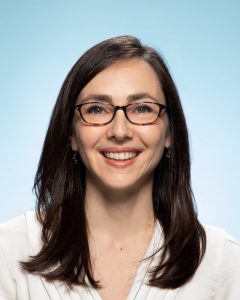
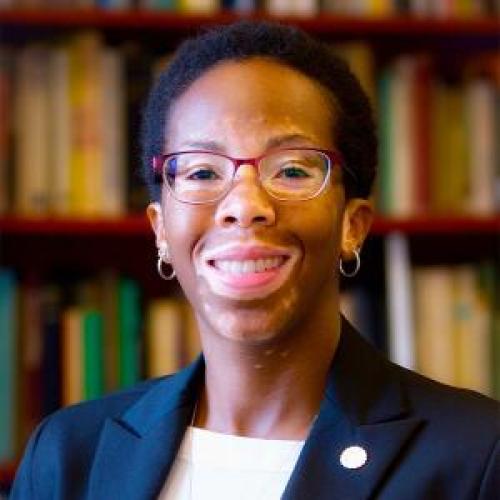
Dr. Kim Michelle Lewis serves as Associate Dean for Research, Graduate Programs, and Natural Sciences and Professor of Physics in the College of Arts and Sciences at Howard University. She provides strategic leadership to enhance research initiatives, graduate programs, and interdisciplinary collaborations across natural sciences disciplines while supporting faculty advancement through promotion and tenure processes.
- B.S. in Physics from Dillard University (1998)
- M.S. in Electrical Engineering from University of Michigan (2003)
- Ph.D. in Applied Physics from University of Michigan (2004)
A Condensed Matter Physicist, Dr. Lewis specializes in quantum transport phenomena in nanoscale structures including thin films and molecular junctions. Her experimental work employs inelastic electron tunneling spectroscopy and scanning probe microscopy techniques. Her research portfolio has expanded to include electrophysiology of biological systems and stem cell applications for regenerative medicine. Recently, she has integrated machine learning approaches to develop predictive models for porphyrin electrical properties, leveraging their tunable characteristics for quantum information technologies.
Dr. Lewis's publication record demonstrates consistent contributions to molecular electronics, with recent work focusing on iron porphyrin molecular junctions, vanadium disulfide ultrathin flakes for quantum computing, and plasmonic properties of transition metal nitrides. Her research shows a clear trajectory from fundamental quantum transport studies toward applications in spintronics, quantum computing devices, and machine learning-enhanced materials discovery.
- David and Lucile Packard Fellowship
- UNCF/Mellon Fellowships
- Ford Foundation Postdoctoral Fellowship
- Career Enhancement Fellowship by Woodrow Wilson Foundation
- NSF BRIGE Award
- NSF Career Award (2012)
- U.S. Patent No. 6,777,911 (2004)
Dr. Lewis has secured significant research funding including her 2012 NSF Career Award and previously held an NSF BRIGE Award. As Associate Dean, she actively cultivates federally funded research opportunities while maintaining her own active laboratory program. Her commitment to diversity in STEM is evident through her past leadership of the Movement of Underrepresented Sisters in Engineering and Science (MUSES) during graduate school and ongoing community outreach efforts.
She directs the Hybrid Electronics and Characterization Laboratory (HECL) 2.0 at Howard University, which features advanced instrumentation including Conductive Atomic Force Microscopy, Scanning Tunneling Microscopy systems, 77K and 4.2K cryostats, and four-point probe electrical characterization equipment for nanoscale research. The laboratory supports undergraduate, graduate, and postdoctoral researchers in molecular electronics and quantum transport studies.