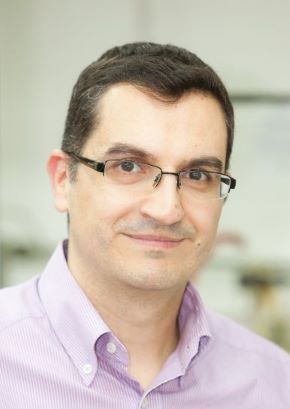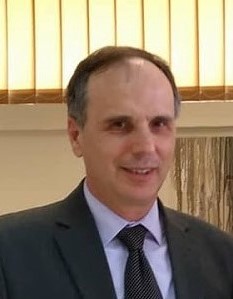
Antonios Tourlidakis is a Professor at the Department of Mechanical Engineering of the University of Western Macedonia, where he has served since 2003 in roles including Head of the Department (2012–2015) and Rector (2015–2019). He holds a Diploma in Mechanical Engineering from Aristotle University of Thessaloniki and a PhD from Cranfield University, UK. His research focuses on computational fluid dynamics (CFD), turbomachinery design, renewable energy systems, and energy harvesting. He has led projects on wind turbine optimization, thermal power generation, and lignite-fired power plant efficiency. Tourlidakis has collaborated internationally, including as an external examiner at Nazarbayev University and a Visiting Academic at Cranfield University. His work earned the 2002 Arthur Charles Prize for research on power generation. He leads the Laboratory of Fluid Mechanics and Turbomachinery and Laboratory of Internal Combustion Engines, contributing to infrastructure and educational reforms at the University of Western Macedonia. Education: Diploma in Mechanical Engineering, Aristotle University of Thessaloniki PhD in Mechanical Engineering, Cranfield University, UK Research Interests: Computational methods for turbomachinery analysis and optimization Wind energy systems and microclimate impact analysis Energy harvesting from human biomechanics and industrial applications CFD-driven design of pumps, turbines, and combustion systems Transition to renewable energy in coal-dependent regions Mathematical modeling of power plant efficiency Key Achievements: Developed aerodynamic optimization methods for axial and centrifugal compressors Pioneered work on piezoelectric energy harvesters for wearable biosensors Directed EU-funded projects on wind farm microclimate modeling Authored over 100 peer-reviewed publications Grants & Collaborations: National and international projects on renewable energy systems Industry partnerships for turbine design and coal utilization optimization Active in EU initiatives for Western Macedonia's energy transition