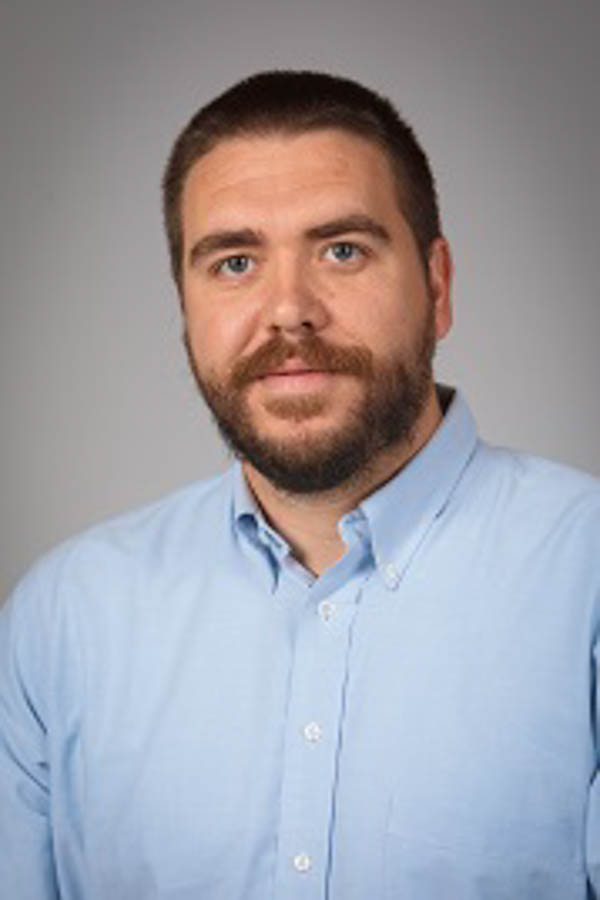
Edward W. Chan is a Senior Operations Researcher and Professor of Policy Analysis at the RAND Corporation and RAND School of Public Policy. His work focuses on applying process mapping, failure mode analysis, and mathematical modeling to security and preparedness challenges across national security, homeland security, and public health emergency domains. Doctorate in Operations Research from Cornell University Expertise in Military Health Care, Homeland Security, Climate Change Risk Specializes in Decision Support Tools and Framework Development Research interests include: Military Medical Systems and Aeromedical Evacuation Critical Infrastructure Protection Climate Adaptation for National Functions Emergency Response Optimization Operational Logistics Recent work spans climate change impact on infrastructure (2023-2025), military recruitment strategies (2024), and post-disaster recovery systems (2020). He has developed frameworks for cybersecurity risk prioritization and climate adaptation strategies. Key educational background: Bachelor's, Master's, and Ph.D. in Operations Research from Cornell University
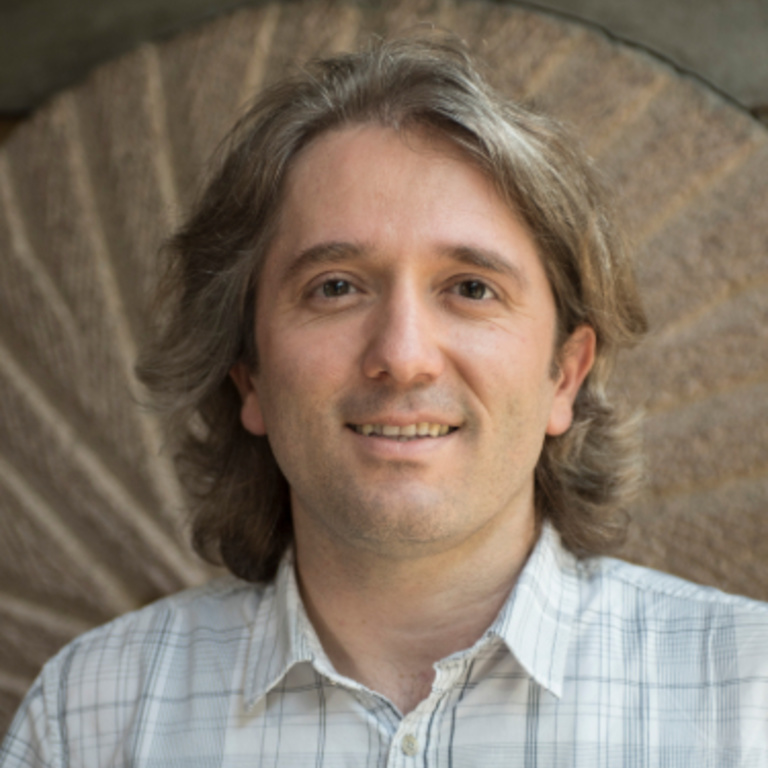
Ibrahim Demir serves as an Adjunct Associate Professor in the Department of Civil and Environmental Engineering at the University of Iowa's College of Engineering, while also holding an Associate Faculty Research Engineer position at IIHR—Hydroscience and Engineering. His interdisciplinary work bridges hydroinformatics, environmental engineering, and advanced computing technologies to address critical water resources challenges through innovative digital solutions. His educational background includes a PhD in Environmental Informatics and Control Program from the University of Georgia (2010), an MS in Environmental Engineering from Gebze Institute of Technology (2004), and a BS in Chemistry from Bogazici University (2000). This foundation supports his integration of chemical, environmental, and computational sciences in hydrological research. Dr. Demir's research centers on hydroinformatics and AI-driven environmental systems, with core expertise in scientific visualization, cyber systems design, and virtual/augmented reality applications. He develops web-based frameworks for flood risk assessment, drought analysis, and water quality management, emphasizing real-time data integration and user-friendly interfaces. Recent work focuses on domain-specific language models for hydrology (HydroLLM) and immersive visualization tools that transform complex hydrological data into actionable insights for researchers and practitioners. Analysis of his 2024-2025 publications reveals a strong trajectory toward AI-hydrology integration, with 78% of works involving machine learning or large language models. Key themes include flood risk communication (22% of publications), algal bloom prediction (15%), and educational technology applications (12%). His research increasingly emphasizes scientific reproducibility through no-code visual programming frameworks and digital twin implementations for watershed systems. Dr. Demir actively contributes to scholarly discourse as Associate Editor for Environmental Modeling and Software, Journal of Hydroinformatics, Journal of Environmental Informatics, and Water and Artificial Intelligence (Frontiers in Water). He serves as Vice-Chair of the International Joint Committee on Hydroinformatics (IAHR/IWA/IAHS) leadership team, shaping global standards in hydroinformatics research and practice. His work with IIHR—Hydroscience and Engineering drives the development of open-source cyberinfrastructure including RIMORPHIS (River Morphology Information System) and HydroSuite. These platforms enable collaborative river morphology research and provide modular tools for hydrological analysis, education, and operational decision support, demonstrating his commitment to accessible, community-driven scientific advancement.
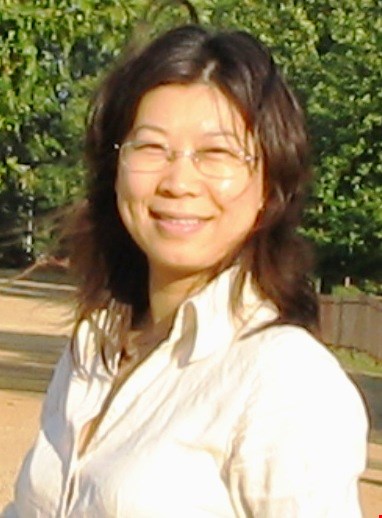
Professor Catherine Wang is a Professor of Entrepreneurship and Strategy at Brunel Business School, Brunel University London. She serves as the Research Excellence Framework (REF) Lead and founded the Interdisciplinary Research Centre for Entrepreneurship and Sustainability, directing it for seven years. Previously, she held academic positions at Royal Holloway (University of London) and Oxford Brookes University. Her research focuses on the integration of entrepreneurship, strategy, and innovation, with emphasis on: Digital/social/sustainable entrepreneurship Entrepreneurial orientation across organizational contexts Dynamic capabilities and organizational ambidexterity AI applications in strategic decision-making Cross-cultural innovation comparisons (UK-China) Her publication portfolio demonstrates strong emphasis on innovation processes, organizational learning, and strategic adaptation, with recurring themes of entrepreneurial failure analysis, dynamic capabilities, and high-tech SME management across geographical contexts. Awards and recognitions include: Fellow of the British Academy of Management Inaugural Fellow of British Academy of Management Peer Review College ESRC Peer Review College Member Top 2% global researcher in Business & Management (Stanford/Elsevier) She supervises doctoral students in digital entrepreneurship, AI strategy, and sustainable business models, and leads industry projects including: Digital Technology Adoption in UK Charities Collaborative Innovation between Small Firms and Large Corporations Social Enterprises: Ten Years On
Ghassen Bouslama is an Associate Professor in the Finance department at NEOMA Business School. He holds a DEA in Management Sciences from the University of Toulouse I and a Doctorate in Management Sciences from the University of Reims Champagne-Ardenne. Education: DEA from University of Toulouse I, PhD from University of Reims Champagne-Ardenne His research focuses on bank-SME relationships, financing international growth for SMEs, capital structure, and Islamic finance. He has published in journals such as Revue Française de Gestion and Research in International Business and Finance , with recent work on sovereign Sukuk as infrastructure financing tools in Africa. Notable scientific contributions include studies on organizational architecture impacts on SME lending and Islamic finance frameworks in Western education. He actively participates in international conferences and has authored case studies on corporate valuations and mergers.
Jennifer Shang is a Professor of Business Administration and Area Director for Business Analytics and Operations at the Katz Graduate School of Business , University of Pittsburgh. With a focus on healthcare analytics, operations management, and e-commerce, she applies data-driven methodologies to enhance patient care, hospital efficiency, and business productivity. Education: PhD in Operations Management, University of Texas at Austin MBA, University of Iowa Bachelor of International Business, National Taiwan University Her research integrates multi-criteria decision-making techniques (e.g., AHP/ANP, DEA) and combines human judgment with quantitative data to improve organizational outcomes. She has published over 140 papers, with recent trends emphasizing healthcare analytics, big data applications, and supply chain optimization in service industries. Scientific Awards: Distinguished Professor for EMBA class 32 (2004-2005) Excellence in Teaching Award for MBA program (2002-2004, 2009-2010) Excellence in Research Awards (2013-2015, 2017-2020, 2021-2022) Best Paper Award (2010) in Information Systems Research Professor Shang teaches courses in operations management, supply chain, statistical analysis, and multivariate data analysis at undergraduate, MBA, EMBA, DBA, and PhD levels. She serves on editorial boards for journals including International Journal of Revenue Management and International Journal of Productivity and Quality Management .
Tae J. Kwon is an Associate Professor in the Department of Civil and Environmental Engineering at the University of Alberta . His research spans Winter Transportation Engineering , Intelligent Transportation Systems (ITS) , Traffic Optimization , and Geospatial Information Science . Developed LoRWIS , a web-based decision support system for road weather sensor optimization Recipient of multiple awards including ITS Canada Excellence in Research and Development Award (2024) , KOFST Scientist of the Year (2024) , and Early Career Research Award (University of Alberta, 3 times) Active in professional committees like the TRB Surface Transportation Weather Research Group (2016–present) Research Highlights : Winter Road Maintenance : Advanced geostatistical and deep learning techniques for road condition monitoring Location Optimization : Pioneered models for RWIS sensor placement using hybrid geostatistical methods Intelligent Transportation Systems : Focused on big data applications for traffic safety and connected vehicles Climate Resilience : Integrated ecological vulnerability into fire hazard modeling Scientific Awards : ITS Canada Excellence in Research (2024) KOFST Scientist of the Year (2024) Donald Stanley Best Paper Award (2023) AKCSE Early Achievement Award (2021) University of Alberta Early Career Research Award (2020) Great Supervisor Award (2019) Teaching & Leadership : Teaches courses like CIV E 419 (Transportation Engineering: Highway Planning and Design) and CIV E 612 (Transportation Planning: Methodology and Techniques) Leads the Geospatial Transportation System & Sensing Solutions Lab (GeoTrans) , mentoring PhD students Juan Cuellar and Jiehao Bi Collaborates with agencies including Alberta Transportation , NSERC , and Iowa DOT
Professor Cathryn Birch is a leading academic in Meteorology and Climate at the University of Leeds' School of Earth and Environment. She holds a Professorship specializing in high-impact weather systems and climate modeling, with extensive collaborations across international meteorological services including the Indonesian Met Service (BMKG) and the UK Met Office. Her research focuses on tropical meteorology , particularly thunderstorm formation and extreme rainfall mechanisms in Southeast Asia. She employs convection-permitting models , satellite observations, and machine learning techniques to develop nowcasting systems that predict severe weather 2-3 hours in advance. Key research areas include: Weather and climate extremes in tropical regions Flood forecasting and early warning system development Climate impacts on health (particularly humid heat extremes) Machine learning applications for weather prediction Her recent publications demonstrate strong trends in applied meteorology with emphasis on real-world implementation - 60% of her 2023-2025 work involves operational forecasting systems, while 40% focuses on climate-health linkages. Notable methodological innovations include satellite-based humid heat early warning systems and deep learning frameworks for convection initiation. Major scientific recognition includes: 2024 Emerging Environmental Impact Award for flood early warning systems 2021 Queen's Anniversary Prize for tropical community resilience 2014 European Meteorological Society Young Scientist Award Professor Birch actively supervises 6 PhD students and 3 postdocs while leading multi-million pound projects including the £6M National Hub on Net Zero, Health and Extreme Heat (HEARTH). Her team develops practical forecasting tools currently being tested with African meteorological services and the Indonesian Met Service. She also serves on the European Meteorological Society Awards Committee and the Met Office K-scale project steering group.
Kenneth R. French is the Roth Family Distinguished Professor of Finance at the Tuck School of Business, Dartmouth College . He specializes in the behavior of security prices and investment strategies, with a focus on asset pricing models and empirical finance. PhD, University of Rochester (1983) MS, University of Rochester (1981) MBA, University of Rochester (1978) BS, Lehigh University (1975) His research includes pioneering work on the three-factor model (with Eugene Fama), value effect , and the interplay between risk, return, and capital structure. He maintains a comprehensive Data Library with U.S. and international research returns, breakpoints, and factor models. Recent methodological updates to his data include transitions to CRSP Flat File Format 2.0 , revisions to operating profitability calculations, and adjustments for accounting standards like FASB 109 and FASB 106 . His work also extends to momentum factors , reversal effects , and industry portfolios across 5–49 categories. Email: kenneth.r.french@tuck.dartmouth.edu | Phone: 603-646-0797
David Holman is a Professor in the Organisational Psychology Group at Manchester Business School, The University of Manchester. His research focuses on employee gentleness, emotion regulation at work, job design, and job quality. He leads a project funded by the Lord Alliance Research Grant exploring employee gentleness in social care settings through ethnographic studies. Holman serves on the editorial boards of Human Relations and the Journal of Business and Psychology , and has received a Best Paper award from the Journal of Occupational Health Psychology (2015-16). His work examines institutional factors shaping job quality across Europe, emphasizing divergent trends in job design. He collaborates internationally, contributing to risk regulation studies and safety culture development in high-risk industries. Research Highlights: Employee gentleness in care settings: Understanding organizational influences on caregiving practices. Emotion regulation dynamics: Investigating interpersonal emotion regulation in healthcare and supervisory relationships. Job quality variation: Analyzing cross-national institutional effects on European job design trends. Awards & Grants: Lord Alliance Research Grant (2023-2025) for studying employee gentleness in social care. Best Paper Prize, Journal of Occupational Health Psychology (2015-2016). Professional Roles: Editorial Board Member: Human Relations , Journal of Business and Psychology . Speaker: Delivered keynote on job redesign interventions at EAWOP conferences.
Femi Olan is a Senior Lecturer at the Strategy, Operations and Entrepreneurship department within Essex Business School at the University of Essex. His academic work bridges the intersection of digital entrepreneurship, knowledge management, and artificial intelligence in organisational contexts. Educational Background: PhD, University of Plymouth Research interests focus on digital entrepreneurship , artificial intelligence , and knowledge management , particularly examining how these technologies enhance organisational resilience and sustainability. His publications in journals like Information Systems Frontiers and Technological Forecasting & Social Change highlight applications of AI in supply chains, crisis information management, and sustainability. Recent editorial roles include Cogent Business & Management Journal (2024) and guest editorships for special issues on fake news, sustainable agriculture supply chains, and crisis information management. His 15 most recent articles (2022-2025) span topics such as explainable AI in B2B marketing, CSR implementation in African SMEs, and Industry 4.0 adoption in agriculture. He supervises PhD candidates in entrepreneurship and has secured funding from the UK Higher Education Academy and European Commission . As a coordinating board member of the Euro Working Group – Decision Support Systems , he contributes to international research networks and conferences.
Jacob Haislip is an Associate Professor of Accounting at the Rawls College of Business, Texas Tech University. He specializes in Accounting Information Systems and teaches undergraduate and advanced courses in data analytics in accounting. His research focuses on corporate governance dynamics, particularly intersections between information technology governance and organizational outcomes. Dr. Haislip holds a PhD in Business Administration (Accounting emphasis) from the University of Arkansas (2014), and MS and BBA degrees in Accounting from Texas Tech University. His research explores how executive IT expertise and board-level technology committees influence cybersecurity disclosures, audit processes, and corporate governance outcomes. Key areas include audit committee effectiveness, data breach reporting practices, and the economic consequences of IT material weaknesses. His work has been published in top journals like Contemporary Accounting Research and Information Systems Research. Haislip currently serves as associate editor for the Journal of Information Systems and editorial board member for the International Journal of Accounting Information Systems. He will assume the role of Treasurer for the American Accounting Association's AIS Section in 2024. His research trends emphasize understanding how technology governance structures impact financial reporting quality, regulatory compliance, and organizational resilience. Recent work highlights executive accountability mechanisms following cybersecurity incidents and the role of audit committees in mitigating earnings management risks.
Niklas Grabbe is a postdoctoral researcher at the Chair of Ergonomics, Technical University of Munich (TUM), where he leads the research group on "Automated Driving and Mobility Systems" and is establishing a new working group focused on "Modelling complex socio-technical systems" with emphasis on Resilience Engineering and the Functional Resonance Analysis Method (FRAM). His research centers on human factors in automated and teleoperated driving, mobility systems, and behavior modeling. He applies systems engineering principles to analyze safety and usability, particularly using FRAM to study performance variability and resilience in socio-technical systems. His work addresses critical challenges in urban automated driving, teleoperation, and multi-driver interactions through rigorous quantitative modeling and field studies. Analysis of Grabbe's publications reveals a dominant trend in applying FRAM to driving scenarios, with recurring themes of safety enhancement, human-automation interaction, and usability evaluation. His interdisciplinary work bridges transportation psychology, safety engineering, and human-computer interaction, consistently emphasizing systems thinking to solve complex problems in automated vehicle technology. Grabbe contributes to academic instruction through courses like "Modelling Complex Sociotechnical Systems" (Winter 2025/26). He operates within TUM's Chair of Ergonomics infrastructure, utilizing specialized labs including driving simulators and ergonomic mockups to support experimental research in human factors and automated systems.
Joachim Ritter is apl. Professor of Geophysics at the Karlsruhe Institute of Technology (KIT) , Geophysical Institute (GPI). He has been with KIT since 2002, after completing his habilitation at the University of Göttingen. His research integrates experimental seismology with field experiments across Europe and Africa. Education Diplom in Geophysics, University of Karlsruhe (TH), 1985–1991 Doctorate (Dr. rer. nat.), Faculty of Physics, University of Karlsruhe, 1996 Habilitation, Faculty of Physics, University of Göttingen, 2002 Research Interests Ritter’s work spans experimental seismology , seismic tomography , seismic anisotropy , and induced seismicity . He operates mobile broadband arrays to image Earth’s interior, studies deformation in the mantle and lithosphere, and monitors volcanic regions such as the Eifel volcanic field and the East African Rift. Additional foci include wind-turbine-induced ground motion and urban seismology . Publication Trends Recent publications (2022–2025) concentrate on volcano-seismic monitoring in Germany and Greece, wind-energy seismic emissions , shear-wave splitting beneath Central Europe, and fault imaging of active tectonic zones. The breadth reflects both methodological advances and targeted regional studies. Scientific Awards 2017 Faculty Teaching Award, KIT Advising & Committees Ritter has supervised numerous master theses and PhD projects, and he leads the KArlsruhe BroadBand Array (KABBA). He has served on national and international committees including the European Seismological Commission, AlpArray Science Council, and the German Geophysical Society Board. Labs & Teams He heads the Working Group on Analysis of Wind Turbines and previously acted as Spokesperson for the KIT Competence Field "Geosphere and Risk Management". His team operates dense seismological networks across Germany and Europe.
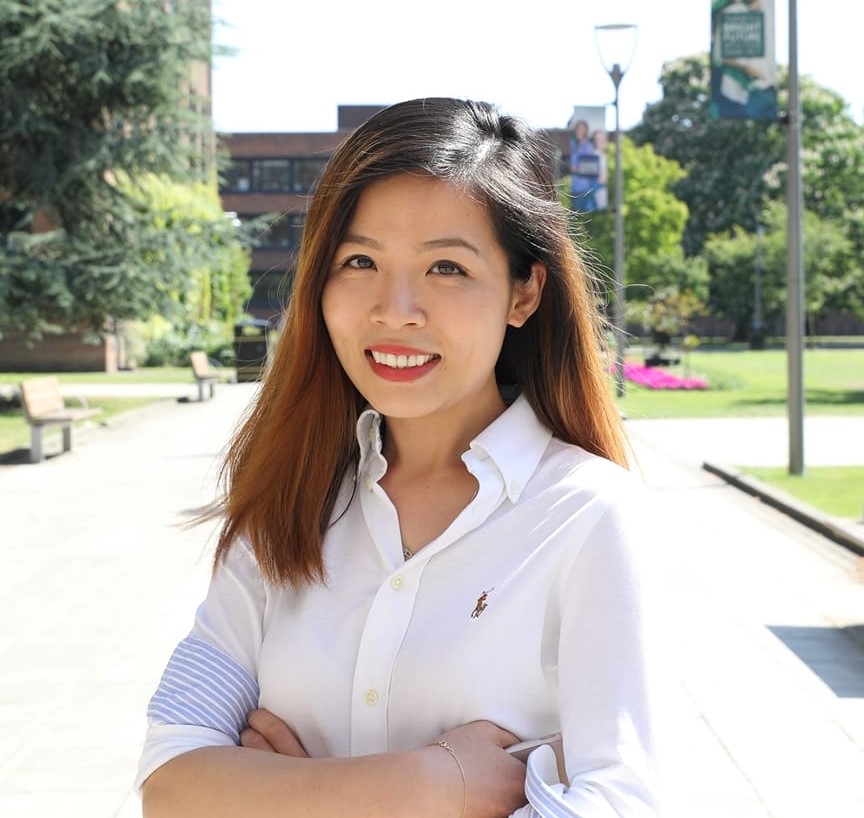
Dr. Quynh Do is an International Lecturer (Assistant Professor) in Logistics and Supply Chain Management at The Management School, Lancaster University . Her research focuses on innovative pathways towards sustainable and circular supply chains , addressing critical issues such as waste reduction, decarbonisation, worker rights, and empowerment of marginalized actors like farmers and workers. Her work explores the digital and social innovations that drive ethical sourcing and systemic change, with applications in the textile, food, and manufacturing sectors . She collaborates with organizations such as Reverse Resources, Renewcell, and the Global Fashion Agenda to promote transparent and responsible sourcing practices. 2025: Big data analytics and supply chain learning for resilience and financial performance. 2024: Circular food waste management in Italian fish manufacturing, stakeholder collaborations in fast fashion, digital platforms for waste exchange, and power dynamics in circular supply chains. 2023: Organizational resilience during the pandemic, legitimacy-seeking behaviors in circular transitions, and data-driven supply chain learning. 2022: Global value chain restructuring post-COVID, institutional adoption of circular practices in seafood, and resource mobilization via bricolage. 2021: Systematic reviews on food waste and supply chain agility during crises.
Stefan Kowalewski serves as Professor of Embedded Software at RWTH Aachen University, leading the Chair of Embedded Software (Informatik 11) within the Department of Computer Science. His research spans critical domains including medical cyber-physical systems, automotive software, and industrial automation, with over 150 publications demonstrating sustained scholarly impact. Professor Kowalewski's work focuses on three interconnected research pillars: Embedded Systems Verification: Pioneering model checking techniques for PLC code, particularly addressing state space challenges in GRAFCET-based specifications Medical Cyber-Physical Systems: Developing safety-critical software for mechanical ventilation, extracorporeal membrane oxygenation, and ARDS diagnosis systems with strong clinical collaborations Automotive Software: Creating verification frameworks and safety architectures for automated vehicles through projects like UNICARagil Recent publications reveal an increasing integration of AI techniques with traditional verification methods, particularly for medical applications involving neonatal care and critical respiratory support. His 2024-2025 work shows particular emphasis on timing isolation in vehicle communication systems, middleware performance evaluation, and robust AI models for medical diagnosis. Professor Kowalewski maintains active collaborations with RWTH Aachen University Hospital's medical departments and automotive industry partners. His laboratory operates specialized facilities including the Cyber-Physical Mobility Lab for vehicle research and in-vivo testing setups for medical device validation. He has supervised numerous doctoral candidates, with recent students focusing on topics like ARDS classification algorithms, GRAFCET verification techniques, and safety architectures for software-defined vehicles. His educational contributions include developing remote teaching platforms for cyber-physical systems education.