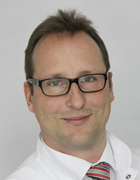
Prof. Dr. Rüdiger von Eisenhart-Rothe is a full Professor and Chair of Orthopedics at the Technische Universität München (TUM), leading the Department of Orthopedics and Sports Orthopedics at the Klinikum rechts der Isar. His research focuses on regenerative medicine, osteo-oncology, endoprosthetics, and the application of machine learning in surgical planning. He completed his medical studies at LMU Munich and business administration at the University of Hagen, followed by a habilitation in orthopedics at Frankfurt’s Friedrichsheim Hospital. Notably, he received the Perthes Prize twice (2003, 2010) for contributions to shoulder and elbow surgery. His work integrates advanced imaging techniques, virtual planning, and biomaterial research to address challenges in joint replacement, infection control, and sarcoma management. Recent projects emphasize AI-driven diagnostic tools and personalized surgical approaches. Prof. von Eisenhart-Rothe collaborates with interdisciplinary teams to advance clinical outcomes in orthopedic surgery, particularly in knee and hip arthroplasty. Awarded the Perthes Prize twice, his contributions span academic leadership, clinical innovation, and translational research at TUM’s School of Medicine and Health. Current initiatives include optimizing prosthetic alignment via 3D modeling and evaluating synovial biomarkers for infection diagnosis.
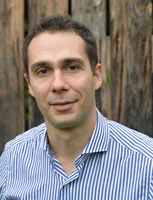
Dr. Vasileios Belagiannis is an Assistant Professor at the University of Ulm within the Faculty of Engineering, Computer Science and Psychology. He holds a BEng in Engineering from Democritus University of Thrace (2009), an MSc in Computational Science and Engineering from TU Munich (2011), and a PhD from TU Munich (2015), supervised by Prof. Nassir Navab and Dr. Slobodan Ilić. Previously, he served as a postdoctoral research assistant at the University of Oxford's Visual Geometry Group (Prof. Andrew Zisserman) and worked as a senior researcher at OSRAM. Research Interests: Belagiannis focuses on bridging computer vision and medical applications. His work includes deep learning for object tracking, deformable object modeling, and human pose estimation in surgical contexts. Notable areas include Crowdsourcing for Healthcare , Deep Learning for Regression , and Humans in the Operating Room . Teaching: He leads courses such as Computer Aided Medical Procedures , Medical Augmented Reality , and Computational Surgineering . Recent lectures include Deep Learning for Medical Applications and Modern Computer Vision Methods . Labs & Affiliations: He collaborates with the Chair of Computer Science Applications in Medicine (Prof. Navab) and contributes to research labs like NARVIS and DHM. His work intersects robotics, ultrasound, and vision-language systems in surgical data science.
Nicolai Kröger is a researcher at the Chair of Communication Networks (Prof. Kellerer) at the Technical University of Munich (TUM). He holds an M.Sc. in Electrical and Computer Engineering from TUM, where his thesis focused on P4 switch performance modeling using queuing theory. His current research centers on 6G networks for critical telemedicine applications, particularly within the 6G-Life project, emphasizing end-to-end communication for medical robotics and surgical systems. He contributes to projects like the 6G Future Lab Bavaria and collaborates with the MITI group at Rechts der Isar Hospital to develop medical testbeds requiring high availability and low latency. Kröger also supervises student theses on 5G/6G security, network optimization, and in-network computing. His technical expertise spans programmable networks (P4), SDN, and performance analysis of network devices. He serves as a supervisor for student projects and internships, including implementations of medical testbeds and security analyses of cellular broadcast messages. His work bridges academic research with practical applications, aiming to advance communication networks for healthcare and future 6G systems.
Prof. Dr. Peter Sollich is a Professor of Theoretical Physics at Georg-August-Universität Göttingen, affiliated with the Institute for Theoretical Physics. His research spans non-equilibrium statistical physics with applications to soft matter, active systems, and complex networks. He maintains a small part-time appointment at King's College London. His primary research interests focus on non-equilibrium statistical physics , particularly soft and active matter rheology, jamming transitions, glassy dynamics, dynamical phase transitions, and inference from dynamical data. His work bridges theoretical physics with applications in materials science and network theory, emphasizing both fundamental mechanisms and quantitative modeling approaches. Analysis of his recent publications reveals strong thematic consistency in studying glassy dynamics and active matter systems , with increasing integration of machine learning techniques for network analysis. Key methodological threads include coarse-grained modeling, spectral analysis of complex systems, and non-equilibrium thermodynamics frameworks. His 2023-2025 work shows growing emphasis on nonreciprocal interactions in active mixtures and physics-inspired machine learning applications. Prof. Sollich actively supervises Bachelor's, Master's, and PhD students, welcoming thesis inquiries in theoretical physics. His group develops analytical and computational approaches to complex dynamical systems, with recent grants likely supporting work on network dynamics and active matter modeling (specific grants not detailed in source text). His research group operates within the Institute for Theoretical Physics at Göttingen, focusing on computational and analytical modeling of disordered systems. Current projects involve elastoplastic modeling of amorphous solids, spectral analysis of heterogeneous networks, and theoretical frameworks for active matter phase separation.
Massimiliano Pontil is a Professor at University College London's Department of Computer Science within the Faculty of Mathematical & Physical Sciences, with additional affiliation at the Italian Institute of Technology in Genoa. He leads cutting-edge research at the intersection of machine learning and dynamical systems theory. His research focuses on developing theoretical frameworks for learning transfer operators of stochastic dynamical systems using kernel methods. Pontil's work provides rigorous spectral learning bounds and addresses representation learning challenges in modeling time-evolving phenomena. His research spans both theoretical foundations and practical applications in data-driven science and engineering. Pontil's recent publications reveal a strong emphasis on Koopman operator theory, with particular attention to spectral analysis, error bounds, and efficient algorithms for large-scale dynamical systems. His work connects kernel methods with dynamical systems theory to create mathematically grounded approaches for forecasting and understanding temporal phenomena. His scientific contributions include multiple publications in top-tier venues including NeurIPS and ICLR, with recent work on invariant representations, long-term forecasting, and randomized algorithms for operator regression. Pontil collaborates extensively with researchers including Vladimir Kostic, Karim Lounici, and Pietro Novelli, leading a productive research group in this specialized area of machine learning theory.
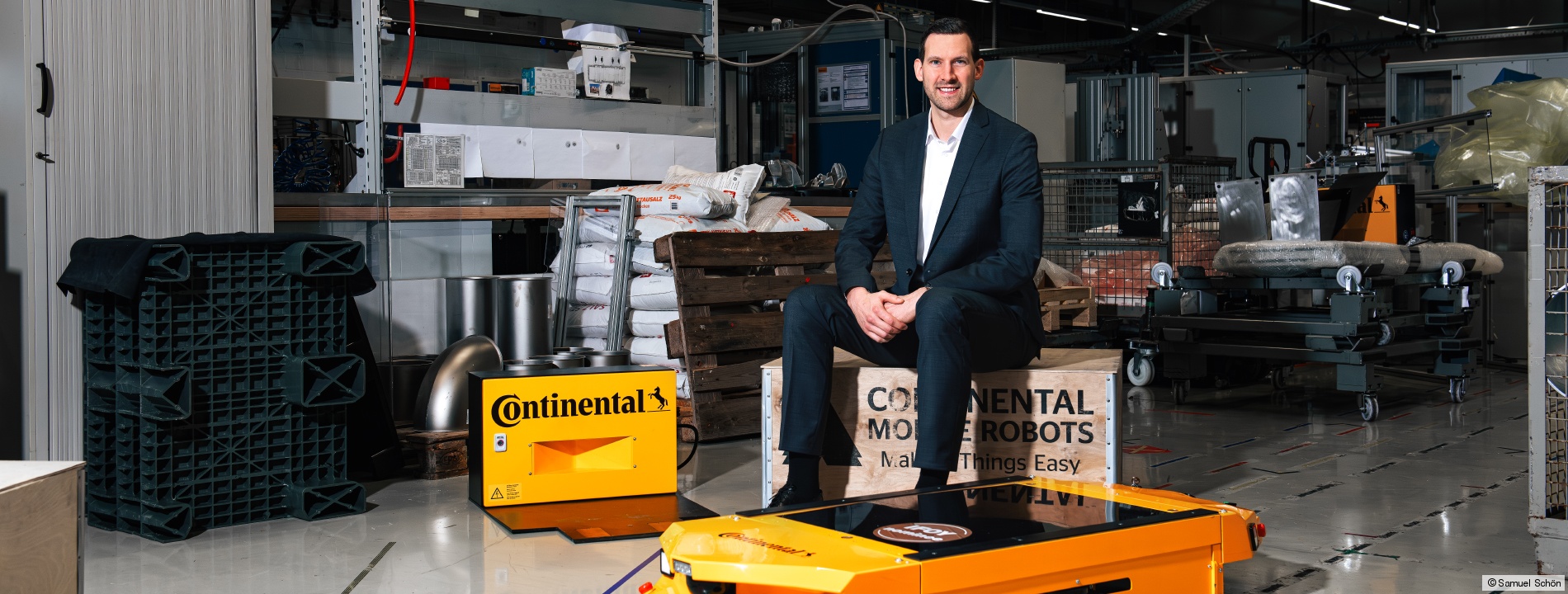
Prof. Dr.-Ing. Tobias Bornemann holds a Cooperative Professorship for Production & Lean Management at Frankfurt University of Applied Sciences , while also serving as Head of Product Management for Autonomous Mobile Robotics at Continental AG . His work bridges theory and practice in areas such as Lean Management , Industrial Engineering , and Smart Factory through teaching, research, and industry collaboration. His research focuses on Intralogistics , Autonomous Mobile Robotics , and Agile Product Development . He leads projects at the Research Lab for Urban Transport (ReLUT) and contributes to the House of Logistics and Mobility (HOLM) , where he co-developed a learning factory. His publications emphasize Industry 4.0 , AMR fleet management , and digital education tools . Cooperative Professorship at Frankfurt UAS Head of Industrial Engineering (M.Sc.) program Research Lab for Urban Transport (ReLUT) House of Logistics and Mobility (HOLM) collaboration Continental AG Tech Matinees and Ambassadorship His academic efforts include mentorship for students, interdisciplinary teaching , and industry-academia partnerships under the PROFfm initiative.
Gyunam Park is a Research Group Lead and Process and Data Scientist at Fraunhofer FIT and a Scientific Assistant at the Chair of Process and Data Science at RWTH Aachen University, a leading institution in computer science and engineering. He is actively involved in both research and teaching, contributing to the advancement of process mining, data science, and artificial intelligence. His work bridges academic research and industrial applications, particularly in SAP ERP systems and digital twins of organizations. Research Interests: Gyunam Park’s research focuses on Action-Oriented Process Mining (AOPM) , Object-Centric Process Analysis , and Responsible Machine Learning . He aims to transform process mining insights into actionable management decisions, ensuring transparency, fairness, and compliance. His work enables organizations to monitor operational constraints, generate corrective actions, and assess their impact using data-driven methods. Publication Trends: His recent publications emphasize object-centric approaches to process mining, predictive monitoring, constraint checking, and integration with AI planning. There is a strong trend toward preserving structural information in event logs, improving machine learning performance, and applying these techniques to real-world systems like SAP ERP and after-sales service processes. Scientific Awards: No awards are explicitly mentioned in the provided text. Advising and Grants: While no formal students are listed, Gyunam Park leads research projects and collaborates with industry partners such as Samsung Electronics and SAP. His projects involve root cause analysis, resource optimization, and educational data mining. He has developed open-source tools like ProAct and OCPA , indicating active grant or institutional support for software development and research dissemination. Labs and Teams: He is a core member of the Process and Data Science (PADS) group led by Prof. Wil van der Aalst at RWTH Aachen University and leads a research group at Fraunhofer FIT. These teams focus on cutting-edge research in process mining, data science, and AI, with strong industry collaborations and regular contributions to top conferences and journals.
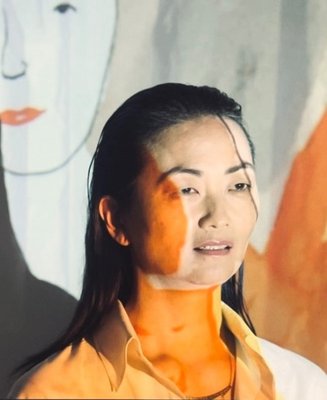
Sara Sejin Chang (also known as Sara van der Heide) is a Korean-Dutch artist born in 1977 in Busan, South Korea, who currently serves as Interim Professor administering the Chair of Spatial Concepts at the University of Braunschweig (HBK) for the 2024-2025 academic year, replacing Candice Breitz. Based in Berlin, Chang creates shamanic film installations that combine film, historical research, rituals, drawings, texts, and sound compositions to challenge Eurocentric thinking, racialization, and persistent colonial narratives. Her work has been exhibited internationally at major venues including Moderna Museet Stockholm, Kunstinstituut Melly Rotterdam, Centraal Museum Utrecht, and ARGOS Brussels, and she has participated in significant biennials such as the Berlin Biennale, Dhaka Art Summit, and Busan Biennale. Chang's research interests focus on the intersection of Korean shamanism and contemporary art practice as a means of healing colonial trauma, particularly examining transnational adoption narratives between Korea and the Netherlands. Her work critically engages with the historical relationship between these two countries, including the participation of 3,418 Dutch soldiers in the Korean War (1950-1953) and the subsequent adoption industry that saw approximately 40,000 people adopted from the Global South to the Netherlands. She interrogates Eurocentric systems of categorization, racialization, and their penetration into all levels of contemporary Western society, proposing what she terms 'meta-cosmic and inclusive approaches to modernity' that transform conventional understandings of value and time. Through her practice, Chang seeks to repair historical ruptures, particularly those affecting diasporic communities, and create spaces for ancestral reconnection. Chang's artistic output demonstrates a consistent trajectory toward using shamanic practices as frameworks for decolonial critique and healing. Her recent major work Dismemberment (2024) employs the Korean Ssitgimgut ritual tradition to symbolically heal 'sick Europe' through a dismemberment and cleansing process, while Four Months, Four Million Light Years (2020) addresses colonial narratives behind transnational adoption through a shamanic healing journey across time and space. These works, along with her long-term project The Mother Mountain Institute , form a cohesive body of work that challenges the normalization of racialization within European society while proposing alternative knowledge systems rooted in Korean shamanic traditions. Scientific Awards: Theodora Niemeijer Prize (2023) - the largest Dutch Art Prize Berlin Artistic Research Grant Fellowship (2022-2023) Jeanne Oostingprize for 'Claim to Universality; Colour Theory Exercise 1-12' Chang's practice extends beyond traditional academic advising, functioning instead through collaborative research frameworks and institutional critique. Her work has been supported by significant grants including the Mondriaan Fund and the Berliner Programm Künstlerische Forschung. She operates through what she terms 'the Mother Mountain Institute,' a conceptual framework that connects her artistic practice with shamanic knowledge systems and decolonial theory. This institute serves as both a research platform and a metaphorical space for healing colonial ruptures, particularly those affecting transnationally adopted individuals. Chang's work consistently challenges the 'whiteness of contemporary art spaces' in European cities, using these spaces themselves as metaphors for the colonial structures they inhabit while simultaneously transforming them into sites of ritual and healing.
Prof. Dr. Markus Holz is a professor at the Department of Economics at Anhalt University of Applied Sciences. He serves as Vice President for Research, Transfer and Sustainability. His research focuses on operations management, process optimization, cost reduction, lean management, system analysis of macrologistic processes, sustainability concepts in logistics, logistics of energy sources and raw materials, digitalization in logistics, ground-based logistics processes in the aviation sector, and drone logistics. Dr. Holz coordinates and supervises the mobility semester and acquisition and implementation of third-party funded projects. His recent publications focus on multivariate statistical analysis of women's empowerment in labor market, environmental sustainability assessment of green hydrogen production, land suitability analysis for green ammonia units, advancement of power-to-x strategies, wind-to-hydrogen production via electrolysis, and photovoltaic module efficiency improvements. Dr. Holz teaches courses including Strategic Logistics Management, Scientific Work, Project Logistics Management, Co-opter Management in Logistics and Air Transport, International Cargo Air Transport, Innovation Management, Strategic Corporate Management, Leadership & Management Skills, Management Game, Reporting & Controlling, and Cost and Performance Accounting.
Carl Witzel is Chair of Production Management at WHU - Otto Beisheim School of Management, affiliated with the Supply Chain Management Group in Vallendar, Germany. He is actively contributing to research in production and supply chain systems while pursuing his doctoral studies. His educational background includes a B.Sc. from WHU (2018) and an M.Phil. in Finance from the University of Cambridge (2019). Since 2021, he has been a Doctoral Student at WHU, and since 2024, an External Doctoral Student at One Investment Management in London, UK, focusing on Value Investing and Corporate Special Situations. His research interests center on Supply Chain Strategy and On-/Offshoring , with broader relevance to operations, logistics, and strategic production planning. These interests align with his role in the Production Management department under the Supply Chain Management Group. No recent publications are listed in the provided text, so no trend analysis can be performed at this time. No scientific awards were mentioned. There is no information available regarding student advisement or research grants. Carl Witzel is engaged in interdisciplinary work bridging production management and investment strategy through his dual role at WHU and One Investment Management. He is associated with the Production Management unit within the Supply Chain Management Group at WHU, which includes research in operations, logistics, and sustainable transport. No separate lab or team name is specified beyond this institutional structure.
Gábor Hofer-Szabó is a Senior Research Fellow and Deputy Head at the Institute of Philosophy within the Research Centre for the Humanities at the Hungarian Academy of Sciences in Budapest. As a Friedrich Wilhelm Bessel Research Award Winner of the Alexander von Humboldt Foundation (2021-22), he spent the 2021/22 academic year at the Munich Center for Mathematical Philosophy (MCMP) at Ludwig-Maximilians-Universität München. His work bridges foundational quantum theory, probabilistic causality, and interdisciplinary applications of contextuality. Education: DSc in Philosophy of Science (Hungarian Academy of Sciences, 2020) Habilitation in Philosophy of Science (Eötvös Loránd University Budapest, 2012) PhD in Philosophy of Science (Budapest University of Technology and Economics, 2001) MA in Physics (Eötvös Loránd University Budapest, 1993) Research Interests: Hofer-Szabó's primary focus is on the foundations of quantum theory and probabilistic causality , with specific projects in noncommutative causality, dynamical systems approaches to causation, emergence in statistical physics, and contextuality in physical, social, and psychological sciences. His work integrates formal methods with philosophical analysis to address fundamental questions in quantum mechanics and causality. Publications: His recent articles explore quantum contextuality, noncommutative causality, and Bell-type inequalities, demonstrating a consistent focus on the interplay between quantum foundations, probabilistic models, and causal inference. Key themes include operational equivalence, Kochen-Specker arguments, and macrostates in statistical physics. Awards and Grants: Friedrich Wilhelm Bessel Research Award, Alexander von Humboldt Foundation (2021-22) János Bolyai Research Scholarship (2008-2011, 2003-2006) Teacher-Researcher Award, Hungarian Academy of Sciences (2004) Fulbright Research Grant (2011-2012) Principal Investigator for multiple OTKA grants including 'Rethinking probability, causality, and contextuality' (2020-2024) Collaborations: Hofer-Szabó leads research teams at the Institute of Philosophy and collaborates internationally, including projects at the Edelstein Center (Jerusalem), MCMP (Munich), and partnerships across European institutions. His work involves interdisciplinary applications of quantum contextuality in social and psychological sciences.
Prof. Dr.-Ing. Markus Gallei is a Full Professor of Polymer Chemistry at Saarland University, Faculty of Natural Sciences and Technology, where he leads the Gallei Lab. His research focuses on the development of nano-structured and stimuli-responsive polymeric materials inspired by natural hierarchical design principles. He holds a W3 professorship and is actively involved in interdisciplinary research bridging polymer chemistry, colloidal science, and self-assembly for advanced applications. His primary research interests include polymer chemistry , self-assembly of block copolymers , stimuli-responsive materials , smart membranes , photonic materials , and ceramic templating . His group develops novel synthetic strategies such as controlled radical polymerization and post-functionalization to create functional hybrid nanostructures. These materials are applied in fields like photonics , separation technologies , and energy storage . The recent publications reflect a strong trend toward redox-responsive systems , metallopolymer-based materials , 3D-printed structural colors , and environmental applications such as PFAS removal. The research combines fundamental polymer synthesis with applied materials engineering, emphasizing scalable and sustainable approaches. Reimund-Stadler-Prize donated by the GDCh (2017) Emerging Investigator 2016, RSC Journal of Materials C Fond der Chemischen Industrie (2016) Emerging Investigator 2016, RSC Polymer Chemistry Fellowship Max-Buchner-Foundation (DECHEMA) (2015) Young Talents 2015, Polymer Science, Macromolecular Chemistry and Physics Prize of the Familie-Bottling-Foundation (2011) Honor for PhD Thesis (summa cum laude), TU Darmstadt (2010) Prize of the Foundation of the Ehemaligen des Deutschen Kunststoff-Instituts (2007) GDCh-Prize for Chemistry (Abitur) (2000) Markus Gallei has led a junior research group at TU Darmstadt and has been a visiting scientist at MIT. He advises students and collaborates extensively on interdisciplinary projects. His lab is supported by national and EU-level funding, particularly in the area of smart inorganic polymers. He is a member of the editorial board of Frontiers in Polymer Science (Colloids) and part of the EU network 'Smart Inorganic Polymers'. The Gallei Lab operates within a well-equipped research environment, focusing on the self-assembly of core-shell particles , melt-shear organization , and functional hybrid films . The group actively develops new methodologies for creating porous membranes , ceramic precursors , and stimuli-responsive opal films .
Prof. Dr. Claus-Michael Lehr is a faculty member at Saarland University, affiliated with the Faculty of Natural Sciences and Technology and the Department of Pharmaceutical Science. He holds the Professorship for Biopharmacy and Pharmaceutical Technology and leads a research group at the Helmholtz-Institut für Pharmazeutische Forschung Saarland (HIPS) in Saarbrücken, Germany. His research focuses on biological barriers and advanced drug delivery systems . Key areas include the use of epithelial cell cultures from the intestine, lung, skin, and eye to model drug absorption and barrier function. His team investigates transport mechanisms of active substances across these barriers and develops modern delivery vehicles such as nanoparticles and liposomes , with applications in pulmonary delivery, targeted intestinal therapy, and non-viral gene transfer. The research also emphasizes predicting drug absorption , assessing biocompatibility , understanding clearance processes , and advancing in vitro models to replace animal experiments. This work contributes significantly to optimizing drug formulations for improved efficacy and safety. The absence of recent publications in the provided text limits trend analysis, but the focus areas suggest strong interdisciplinary work at the intersection of pharmaceutics, nanotechnology, and cellular physiology. Scientific Awards: No awards mentioned in the provided text. Prof. Lehr leads an active research group at HIPS, where he supervises scientific projects and likely mentors graduate students, though no specific advisees are listed. There is no mention of external grants, but his affiliation with Helmholtz suggests involvement in nationally funded research programs. His work contributes to translational pharmaceutical research with a strong ethical emphasis on reducing animal experimentation. The research group operates within the Helmholtz-Institut für Pharmazeutische Forschung Saarland (HIPS), specifically in the Department of Drug Delivery (Abteilung Wirkstofftransport), located on the Saarland University campus. This collaborative environment integrates academic and applied pharmaceutical research, leveraging institutional partnerships for innovation in drug development.
Johannes Jaspersen is a Professor of Behavioral Risk Management and Insurance at the Munich School of Management , part of Ludwig Maximilian University of Munich (LMU Munich) . As an applied economist, his research bridges theoretical and experimental economics with applications to insurance, prevention, decision analysis, risk theory, and national security. His work often combines behavioral economics with rigorous empirical and theoretical methodologies. Research Interests: Behavioral Economics, Insurance Demand, Risk Perception, Experimental Methods, Decision Theory, National Security His recent publications focus on probability weighting, moral hazard, flood risk hedging, and behavioral aspects of insurance demand. These studies demonstrate his commitment to understanding how individuals and organizations make decisions under uncertainty. Key trends in his research include: Behavioral biases in insurance choices Impact of liquidity constraints on risk decisions Heuristic thinking in risk management Operational research applications to security Natural experiments in insurance markets Methodological innovations in risk elicitation
Abdelkader Hameurlain is an active academic researcher specializing in database systems, data management, and cloud computing with a prolific publication record spanning over three decades (1990-2025). He has authored or co-authored more than 170 publications and serves as an editor for the prestigious 'Transactions on Large-Scale Data- and Knowledge-Centered Systems' series published by Springer as part of the Lecture Notes in Computer Science. His research interests focus on database systems, data management, cloud computing, query optimization, data replication, and big data analytics. Hameurlain has made significant contributions to multi-tenant database management systems, SLA-aware query optimization, data replication strategies in cloud environments, and knowledge-based systems. His work bridges theoretical foundations with practical applications in large-scale data processing environments. Analysis of his recent publications (2021-2025) reveals a continued focus on cloud database performance optimization, with particular emphasis on multi-tenant systems, SLA compliance, and cost-effective resource allocation. His research demonstrates a consistent trajectory from traditional database systems toward cloud-native and distributed data management solutions, reflecting the evolving landscape of data-intensive computing. Hameurlain has established long-term collaborations with prominent researchers including Franck Morvan (63 joint publications), Roland R. Wagner (50 joint publications), Josef Küng (40 joint publications), and A Min Tjoa (26 joint publications), indicating his central position in the database research community. As an editor of the Transactions on Large-Scale Data- and Knowledge-Centered Systems series, he has played a significant role in shaping research directions in data management through numerous special issues covering database technologies, big data analytics, cloud computing, and knowledge systems. His editorial work spans multiple volumes from TLS-DCS XIII (2014) through TLS-DCS LVI (2024), demonstrating sustained leadership in the field.