Dr. Christine Matzke is a Lecturer in English Literature at the University of Bayreuth's Faculty of Languages and Literatures. She joined in 2011 after teaching at Goethe-University Frankfurt and Humboldt-Universität Berlin. Her research focuses on African theatre (especially Eritrean), postcolonial crime fiction, and medical humanities. She has held editorial roles for African Theatre and Matatu , and is active in academic societies like AfTA and IFTR. Her academic journey includes a PhD from the University of Leeds (2003) and studies at Goethe-University and Queen Mary, University of London. She has authored/co-edited volumes on African theatre history, crime fiction, and diaspora studies. Recent works include entries in Kindlers Literatur Lexikon and co-editing African Theatre 19: Opera & Music Theatre (2020). Research interests span Eritrean performing arts, Shakespeare adaptations, and transnational cultural studies. She collaborates internationally on projects like analyzing a 1960s German-Nigerian TV production. Her publications reflect interdisciplinary engagement with theatre historiography, colonial legacies, and performance in conflict zones.
Rhonda S. Hackworth is an Associate Professor of Music Education at the University of Mississippi, where she serves as Head of Music Education and Graduate Program Coordinator. She holds a Ph.D. in Music Education from the University of Missouri-Kansas City Conservatory of Music and an M.M. in Vocal Performance. Current role: Associate Professor of Music Education Key responsibilities: Graduate Program Coordinator, thesis/dissertation director Previous institutions: Rutgers University, Syracuse University, University of Missouri-Kansas City Research Interests Dr. Hackworth specializes in vocal health for music educators and students, with a secondary focus on music perception. Her work examines vocal hygiene practices, the impact of teaching experience on vocal health, and musical tension in Debussy’s compositions. She has published extensively in journals like the Journal of Research in Music Education and International Journal of Music Education , and her research spans both empirical studies and literature reviews. Publications Trends Her scholarship bridges music education and vocal health, particularly addressing how pedagogical practices affect vocal wellness. Subfields include behavioral intervention strategies, multilingual text analysis in vocal works, and choral participation models. Professional Engagement Dr. Hackworth presents research at international and national conferences, with presentations in Greece, China, and Italy. She also performs as an alto soloist in concert, opera, and musical theater settings.
Christof Weiß is a Professor for Computational Humanities at the CAIDAS / Institute of Computer Science, Julius-Maximilians-Universität Würzburg (JMU), Germany. He serves as Head of the DFG-funded Emmy Noether group on Computational Analysis of Music Audio Recordings: A Cross-Version Approach. His academic journey includes previous positions as Visiting Researcher at University Télécom Paris (2021), Visiting Lecturer at Karlsruhe University of Music (2020, 2021), and Research Assistant at International Audio Laboratories Erlangen (2015-2022) and Fraunhofer Institute for Digital Media Technology (2012-2015). His educational background encompasses a PhD in Media Technology from University of Technology Ilmenau (2017), Concert Diploma in Composition from Würzburg University of Music (2012), Physics Diploma from University of Würzburg (2012), and Music Diploma in Composition from Würzburg University of Music (2011). This unique combination of technical and artistic training forms the foundation of his interdisciplinary research approach. Weiß's research operates at the critical intersection of computer science and musicology, developing novel computational methods for analyzing musical structures in audio recordings. His work bridges technical audio processing with musicological insights, creating methodologies for tonal analysis, key estimation, and cross-version comparison of musical performances. His approach combines deep learning techniques with music theory to extract meaningful patterns from large music corpora, enabling new forms of musicological corpus studies that were previously impossible. His recent publications reveal a clear research trajectory toward integrating advanced machine learning with fundamental musicological questions. The consistent theme across his work involves analyzing classical music structures through computational lenses, with particular emphasis on cross-version consistency in performances, tonal complexity measurement, and developing datasets that support computational musicology. His publications span both highly technical audio processing journals and musicology-focused venues, demonstrating his commitment to bridging these disciplines. Best paper award at the 4th conference on Computational Humanities Research (CHR), 2023 KlarText award for science communication of the Klaus Tschira Foundation, 2018 2nd prize at Festival Pablo Casals composition competition, Prades (France), 2013 Youth Cultural Advancement Award (Kulturförderpreis) of the city of Amberg, Germany, 2011 As principal investigator of the DFG Emmy Noether group, Weiß leads a multidisciplinary research team investigating computational analysis of music audio recordings through a cross-version approach. His research has secured significant funding including the prestigious Emmy Noether program, supporting doctoral and postdoctoral researchers working on various aspects of music information retrieval and computational humanities. His collaborative network spans institutions across Europe, including University Télécom Paris, Queen Mary University of London, and multiple German research centers. Weiß leads the Computational Humanities research group at CAIDAS, which focuses on developing computational methodologies for music analysis with particular emphasis on classical repertoire. The lab creates specialized datasets (including the Wagner Ring Dataset and Schubert Winterreise Dataset), develops algorithms for structural music analysis, and applies these tools to address musicological questions that require computational scale and precision. Their work bridges the gap between technical audio processing capabilities and humanities research questions, creating new pathways for understanding musical structure and evolution.
Claire Fontijn is the Phyllis Henderson Carey Professor of Music at Wellesley College. Her research and teaching focus on Early Music , Women Composers , and J.S. Bach , with a particular emphasis on medieval to baroque periods. Education: B.A. from Oberlin College, Certificate from Royal Conservatory of The Hague, and Ph.D. from Duke University. Her scholarly work explores the contributions of women composers like Hildegard of Bingen, Barbara Strozzi, and Fanny Hensel, alongside historical performance practices and the synthesis of image, text, and notation in medieval music. Recent publications analyze solmization puns and chorales from the Seicento Venice and Romantic periods. Fontijn’s research has been supported by prestigious organizations including the American Musicological Society , the Andrew W. Mellon Foundation , and the National Endowment for the Humanities . She teaches courses such as Italian Popular Song and the Calderwood Seminar in Public Writing: The Power of Music , which trains students to communicate music scholarship to non-specialist audiences. Scientific Awards : Nicolas Slonimsky Award for Classical Music Biography (2007) Fontijn’s collaborations with Susan Parisi and her editorship of Uncovering Music of Early European Women highlight her dedication to expanding the canon of music history. Grants from the Gladys Krieble Delmas Foundation and the Institute for Citizens & Scholars further enable her interdisciplinary work.
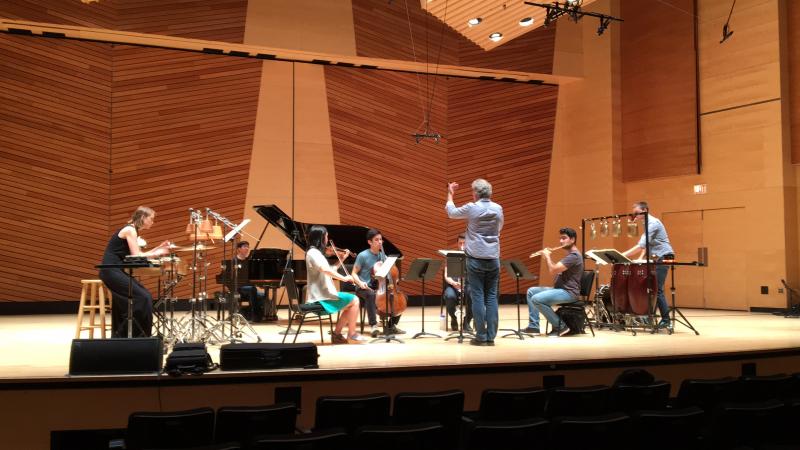
Donald Crockett is a Professor and Chair of the Composition Department at the University of Southern California (USC) Thornton School of Music, and Senior Composer-in-Residence with the Bennington Chamber Music Conference. He has held significant roles in contemporary music composition and conducting, including Assistant Dean for Faculty Affairs at USC. His research and creative work spans orchestral and chamber music, opera, and instrumental compositions. Notable projects include conducting and composing for ensembles like SAKURA, HOCKET, and Xtet, with a focus on ecological themes and interdisciplinary collaboration. Major compositions include Carving an Alphabet (2020) for cello quintet, And the River (2018) for piano duo and chamber orchestra, and Night Scenes (2017) for piano trio, alongside a diverse portfolio of chamber operas and concertos. Arts and Letters Award in Music (2013), American Academy of Arts and Letters Guggenheim Fellowship (2006) Grants: Barlow Endowment, Bogliasco Foundation, Copland Fund, National Endowment for the Arts Active as a conductor, Crockett has premiered over a hundred orchestral works by student composers and collaborated with renowned ensembles like the Los Angeles Chamber Orchestra and Hilliard Ensemble. His music is published by Keiser Classical and recorded on labels including Albany, ECM, and New World Records.
Lynn Helding serves as Professor of Practice in Voice and Vocal Pedagogy at the University of Southern California's Thornton School of Music, where she also coordinates the Vocology & Voice Pedagogy program. She is a distinguished author, most notably of The Musician's Mind: Teaching, Learning and Performance in the Age of Brain Science , and was appointed Editor-in-Chief of the Journal of Singing in 2023. With decades of experience as both a performer and pedagogue, Helding bridges the gap between voice science and artistic practice, advocating for cognitive science as the "Third Pillar of Voice Science" alongside physiology and acoustics. Helding's educational background includes: Master's Degree in Vocal Pedagogy with Distinction from Westminster Choir College of Rider University (2005) Artist Diploma from Indiana University (1988), where she was the first singer ever accepted into this prestigious program Completion of the Summer Vocology Institute at the National Center for Voice and Speech Helding's research focuses on the application of cognitive science to voice pedagogy, with particular emphasis on motor learning theory and expertise studies from social psychology. She pioneered the concept of cognitive science as the "Third Pillar of Voice Science," arguing that understanding the brain's role is essential for effective voice teaching. Her work challenges traditional approaches by emphasizing the "how" of teaching over the "what," advocating for science-informed (rather than science-based) pedagogy that respects both scientific findings and artistic tradition. Helding's research has significant implications for addressing performance anxiety, optimizing practice methods, and developing more effective teaching strategies that account for how musicians actually learn. Her scholarly contributions demonstrate a consistent focus on bridging cognitive science with practical voice teaching. Rather than treating voice science as purely technical knowledge, Helding examines how this information can be effectively communicated to students, recognizing that the delivery method is as important as the content itself. This approach has led to innovative frameworks for evidence-based voice pedagogy that consider both physiological realities and cognitive processing limitations. Helding's significant recognition includes: Lifetime Achievement Award from the Contemporary Commercial Music (CCM) Vocal Pedagogy Institute at Shenandoah University (2020) Van L. Lawrence Fellowship, jointly awarded by the Voice Foundation and the National Association of Teachers of Singing Foundation (2005) Induction into the prestigious American Academy of Teachers of Singing (2022) Recognition as a "legendary figure in the field of voice pedagogy" As an educator, Helding maintains a thriving studio with private clients including members of the Los Angeles Opera and Los Angeles Master Chorale. Her USC Thornton voice students have earned fellowships to prestigious programs including the Aspen and Tanglewood Music Festivals. She has presented masterclasses described as "life-altering" at major voice conferences throughout the United States, Europe, and Australia. Helding previously served twenty-two years as Associate Professor of Voice and Director of Performance Studies at Dickinson College, and four years as voice faculty at Vanderbilt University's Blair School of Music. Helding is actively involved with the USC Voice Center at Keck Medicine of USC as a team member, where she applies her vocology expertise to help singers with functional vocal issues and those recovering from voice surgery. She is a co-founder of the NATS Science-Informed Voice Pedagogy Institute and frequently collaborates with voice scientists and medical professionals to advance the field of vocology.
Yuhang Li is an Associate Professor of Chinese Art at the University of Wisconsin–Madison’s Department of Art History. She serves as Affiliate of the Religious Studies Program, Department of Asian Languages and Cultures, and Center for East Asian Studies, and holds the role of Faculty Director of Material Culture at the Center for Design and Material Culture. Her education includes a B.A. from Central Academy of Fine Arts (Beijing, 1991), M.A. from the University of Illinois at Urbana-Champaign (2001), and Ph.D. from the University of Chicago (2011). Her research focuses on gender and material practice in late imperial China, particularly Buddhist women’s artistic devotions, Chinese textiles and costume, opera’s role in visual culture, and Qing court art. Her book Becoming Guanyin (2020) won major academic awards. She co-edited Performing Images: Opera in Chinese Visual Culture (2014) and contributed to special issues on Empress Dowager Cixi. Teaching includes courses on Asian art surveys, Chinese art history, material culture, and gender studies. Her work bridges art history with religious studies, exploring how material practices reflect gendered identities and religious belief. Awards include the 2021 Religion and the Arts Book Award and the 2024 Geiss-Hsu Book Prize. Her research frequently examines the intersection of ephemeral mediums (e.g., paper, hair embroidery) with enduring cultural and religious themes.
Professor Jose Jouve-Martin is a faculty member in the Department of Hispanic Studies at McGill University. His research focuses on the intersection of history and literature in colonial Latin America, particularly exploring themes of slavery, literacy, and colonialism. He has held significant academic roles including Director of Undergraduate Programs in Hispanic Studies and has been funded by major grants such as SSHRC and FQRSC. His work spans monographs, peer-reviewed articles, and edited volumes, with notable publications like Esclavos de la ciudad letrada (2005). He teaches graduate and undergraduate courses on colonial literature, the baroque, and Afro-Hispanic studies. Education: Ph.D. in Hispanic Literature, Georgetown University (2003) Licenciatura in Philosophy, Universidad Autónoma de Madrid (1994) His research interests include the cultural history of opera, funerary rituals in the Spanish Empire, and the role of writing among enslaved populations. He has advised numerous graduate and undergraduate students on topics ranging from colonial drama to modern Latin American literature. His international collaborations include membership in the MCRI 'The Hispanic Baroque' and Brown University's research groups. Prof. Jouve-Martin’s scholarly contributions have been recognized with awards such as an honorable mention for the Franklin Pease G.Y. Memorial Prize (2007). He actively participates in academic service roles, including editorial boards for Revista Canadiense de Estudios Hispánicos and Latin American Research Review .
Riccardo Schulz is a Teaching Professor in the School of Music at Carnegie Mellon University, specializing in Sound Recording. He directs recording activities and oversees operations, including managing the Edgar Stanton Audio Recording Institute's summer program at the Aspen Music Festival. His work spans classical, jazz, rock, and hip-hop genres, with over 100 CD productions. He collaborates extensively with orchestras, soloists, and innovative artists. He holds a Master's in Mathematics from Duquesne University and a Master's in Musicology from the University of Pittsburgh. His expertise includes live performance recording for radio broadcasts with the Pittsburgh Symphony Orchestra and Opera, and he co-developed the School of Music's Webcast project and Destination website for live internet broadcasts. Notable collaborations: Cuarteto Latinoamericano, Pittsburgh Symphony Orchestra, Mendelssohn Choir, and hip-hop artists like Freestyle and Unknown Prose Recipient of Latin GRAMMY Award for Inca Dances recording (2009) Creator of Arts Greenhouse hip-hop workshops for teenagers His research emphasizes technical mastery across genres, with a focus on preserving classical music traditions while innovating in contemporary recording practices. Riccardo also serves as a music critic and program annotator, contributing to WQED-FM's cultural programming.
Liang Luo is a Professor of Chinese Studies at the University of Kentucky’s Modern and Classical Languages, Literatures and Cultures department within the College of Arts & Sciences. He holds a Ph.D. from Harvard University’s East Asian Languages and Civilizations program, preceded by MA and BA degrees in Chinese literature and comparative literature from Beijing Normal University. Luo’s research focuses on intersections of performance, politics, and popular culture in modern China, Japan, and the international avant-garde. His work explores Sino-Japanese cultural relations, gender politics, and folklore, particularly through the lens of the White Snake legend. Education: Ph.D., East Asian Languages and Civilizations, Harvard University M.A., Comparative Literature, Beijing Normal University B.A., Chinese Language and Literature, Beijing Normal University Research Interests: Performance studies, propaganda, and avant-garde movements Cultural politics of gender and intersectionality Multimedia adaptations of classical legends East Asian comparative literature and film Awards and Recognition: Harvard-Yenching Doctoral Fellowship Reischauer Institute Fellowship NEH Summer Stipend (Stanford University) Harvard’s Certificate of Distinction in Teaching Professional Affiliations: International Studies Chinese Studies Folklore & Mythology Gender and Women’s Studies Global Asias Luo’s publications include The Global White Snake (2021) and The Avant-Garde and the Popular in Modern China (2014), analyzing intersections of cultural politics and performance. His work bridges classical and modern studies, with recent projects exploring digital activism through folklore and transnational cultural narratives.
Nari Shelekpayev is an Assistant Professor of Slavic Languages and Literatures at Yale University, currently on leave for 2024-2025. His research focuses on transnational and comparative history, with specializations in urban history, Soviet and post-Soviet biopolitics, and the cultural history of Central Asia. He holds a Ph.D. in History from Université de Montréal, an M.A. in Social Sciences from EHESS Paris, and an M.L. in International Law from Université Paris 2, Panthéon-Assas, alongside a B.A. in Political Science from Nankai University. His research interests include the intersection of cities and political power, cultural memory in the Soviet and post-Soviet eras, and the role of opera in capital city formation. He has published extensively on topics such as Astana’s urban transformation, Soviet protests in Kazakhstan, and the symbolism of capital cities in imperial contexts. Recent publications include manuscripts on post-Soviet biopolitics and comparative Eurasian urban history. His work has appeared in Kritika , Urban History Review , and Slavic Review , among others. He has held prestigious fellowships including the Macmillan Center Research Grant (2024) and the Nizami Ganjavi Fellowship (2022). Shelekpayev teaches courses such as The Master and Margarita: Money, Sex, and Power in Stalin’s USSR and Second Sex After Second World War at the undergraduate level, and a graduate seminar on Central Asian studies. He is fluent in English, French, Italian, Russian, and Kazakh, with reading competency in Chinese and Portuguese.
Dr Andrea Jean Baker is a Senior Lecturer in Journalism at Monash University's Faculty of Arts, where she has held significant leadership roles including Acting Head of Journalism and Undergraduate, Honours, and Research Coordinator. She is currently serving as Unit Coordinator for Journalism and Global Change and Lifestyle Journalism courses, and is an active member of Monash's Artificial Intelligence in Education Working Group. As an award-winning journalism scholar and journalist, her work integrates Artificial Intelligence and constructive journalism into her teaching of large enrollment units. PhD in Digital Communications from Monash University (2012) Certificate in Human-Centred Artificial Intelligence from Stanford University (2025) Graduate Diploma in Health Management from La Trobe University (1996) Bachelor of Arts in Media and Politics from Swinburne University of Technology (1994) Dr Baker's interdisciplinary research spans feminist journalism studies, criminology, ethnomusicology, and urban studies, with a focused emphasis on violence against women, urban communication, and the safety of journalists in the AI era. Her scholarly work includes over 80 academic publications across 4 books, 38 book chapters, 20 peer-reviewed journal articles, and 2 industry reports. She has pioneered Australia's first student-led net-only radio station at Monash and the nation's first international journalism study tours to major global cities. Her recent publications demonstrate a clear trajectory toward examining the intersection of AI with journalism ethics, safety of journalists, and media representation of violence against women. Baker's work increasingly focuses on applying intersectional frameworks to media coverage of gender-based violence, while exploring how AI is transforming journalism practices globally, particularly in the Global South context. Finalist, International Book Awards, Best Education/Academic Book (2019) International Association for Media and Communications Research Publication Award Nominated for the 2024 Hazel Gaudet-Erskine Best Book Award Hampton Press prestigious publishing award for Virtual Radio Ga Ga (2012) Entry into Jane Jacobs Book Award (2019) Entry into Robert E. Park Book Award (2020) Dr Baker has supervised or examined 12 PhDs and Masters theses and 16 Honours research projects to successful completion. She has secured competitive research grants from governments, NGOs, and university sources for projects including 'Media coverage of violence against women from an intersectional lens' (2024-2026) and 'Examining Sexual Violence in the Music City of Melbourne' (2021). As Editor-in-Chief of Journalism Practice journal since 2022, she plays a significant role in shaping scholarly discourse in the field. Her research extends beyond the university through external positions including City of Melbourne's Music Cities advisor (2013-2017) and City of Port Phillip's Music Taskforce member (2012). Dr Baker's work is cited by international bodies including UNESCO, UN Women, and UNICEF, demonstrating significant policy impact in the areas of gender equality and media ethics.
Dr Brian Kavanagh is a Lecturer in Digital Innovation and Programme Convenor at the Department of Digital Humanities, King's College London, within the Faculty of Arts & Humanities. He is also a member of the Digital Futures Institute and serves as a Seminar Lead. His roles encompass teaching, research, and leadership in digital innovation and organizational studies. Brian holds a degree in classical music performance from Trinity College Dublin (1994), an M.Sc. in Music Technology from the University of Limerick (1998), an MA in Interactive Media from Goldsmiths College (2005), and a PhD from Imperial College Business School (2015), where he was part of the Innovation and Entrepreneurship Research Group. His research focuses on disruptive technology and identity theory, particularly how organizations innovate in response to technological change and field decline. He specializes in classical music performance organizations, examining their adaptation to digital ecosystems and audience fragmentation. His fieldwork includes studies with over twenty orchestras and opera companies globally, including the Metropolitan Opera, London Symphony Orchestra, and Berlin Philharmonic. Notable awards include the Arthur Darley Memorial Gold Medal from the Dublin Conservatoire of Music and the 2023 Institute Fellow appointment at King's College, focusing on digital futures and global cultures research. Brian supervises PhD students in areas related to digital innovation in arts organizations. While specific grants are not detailed here, his research often involves cross-disciplinary collaborations supported by institutional initiatives. He contributes to the Digital Futures Institute and collaborates with the Innovation and Entrepreneurship Research Group, fostering interdisciplinary approaches to organizational innovation. He is based at S3.26 Strand Building, Strand Campus, London, and maintains an active creative practice as a musician, photographer, and filmmaker. His work includes the photographic series Portraits of Iran and a forthcoming book ( Emerald Publishing, 2023 ) on classical music in the digital economy.
Chiara Natali is a PhD Student in Computer Science at University of Milan-Bicocca (2022-present) and a Visiting Research Fellow at the Dalle Molle Institute for Artificial Intelligence USI-SUPSI, supported by a Swiss Government Excellence Research Fellowship. She serves as a Lecturer for Interaction Design Lab and Human-Computer Interaction courses at University of Milano-Bicocca, and as a Tutor for Advanced Data Management and Decision Support Systems and Human-System Interaction courses across multiple Italian universities. Her educational background includes: MA in Politics, Philosophy and Public Affairs at University of Milan (2020-2022) Master's in Digital Communication Strategy at IED, Milan (2019-2020) BSc in International Politics and Government at Bocconi University, Milan (2016-2019) Natali's research centers on the complex relationship between humans and AI systems, with particular focus on Human-AI Interaction, Explainable AI (XAI), Ethical AI, and her signature concept of Frictional AI. She investigates the multidirectional effects of AI on human cognitive faculties, examining the tension between Augmentation and Deskilling. Her work explores how intentional design friction can serve as a debiasing strategy against Automation Bias, promoting more thoughtful human-AI collaboration while preserving human agency and critical thinking. Her publication record reveals a strong emphasis on practical applications of XAI in high-stakes domains like healthcare, with particular attention to medical decision-making processes. Her research consistently addresses the challenge of designing AI systems that support rather than replace human expertise, exploring how explanations impact accuracy in hybrid decision-making and how to measure technology dominance in AI-supported environments. Her significant contributions have been recognized with: Best Paper Award at the World Conference on Explainable Artificial Intelligence (2024) Best Doctoral Consortium Award at CEUR Workshop Proceedings (2023) Natali actively shapes her field through academic service, serving as PUBLICITY & PROCEEDINGS CHAIR for HHAI 2025 and organizing multiple workshops on Human-Centred Machine Learning, Algorithmic Authority, and Frictional AI. She also contributes to gender equality in STEM as a Science Ambassador for her institution's Gender Equality Plan and previously served as PhD co-representative at the Department Board. Her interdisciplinary approach extends into creative domains, where she is developing an Interactive AI Opera on 'The Garden of (Un)Earthly AI's' funded by the University of Edinburgh's Generative AI Laboratory, and has curated projects exploring Human-AI Music Co-Creation and live-coding music performances.
Joseph Lanza is a Lecturer and Director of the Early Music Studio at the Don Wright Faculty of Music, University of Western Ontario. He previously served as Concertmaster of Orchestra London for over 25 years, performing solo works across diverse concert series. A dedicated chamber musician, he has performed extensively in small ensembles in London, Toronto, and internationally. His specialization in 17th- and 18th-century music led to mastery of period instruments, including Baroque violin under mentors like Jeanne Lamon and Jaap Schroder. He balances performance with teaching private lessons and university-level classes. Lanza's family background includes a legacy in orchestral music, having studied violin from age 7 with his father and renowned concertmasters like William de Pasquale and Joseph Silverstein. He is married to Orchestra London oboist Jennifer Short, with whom he shares a daughter, Heather, and a Shetland sheepdog, Fergus. His research interests focus on historical performance practices, particularly in Baroque violin, and he has collaborated with ensembles such as Tafelmusik Baroque Orchestra and Opera Atelier, with notable recordings and international tours.