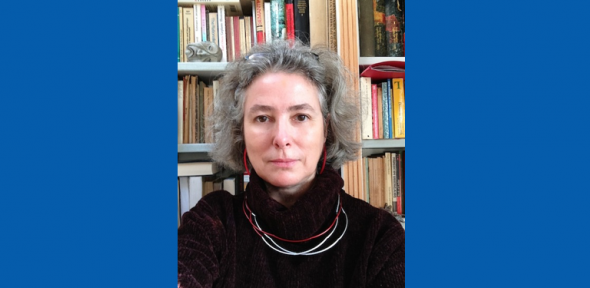
Dr Marion Kant is a Lecturer in the Department of German at the University of Cambridge's Faculty of Modern and Medieval Languages and Linguistics. Her work bridges musicology and dance history, focusing on body politics, the history and aesthetics of performance (theatre, opera, dance, ballet), German-Jewish relations, Nazi ideology, and anti-fascist exile. Her research explores the intersection of physical culture, nationalism, and avant-garde arts. She is currently editing a six-volume Cultural History of Dance for Bloomsbury, examining German nationalism and movement concepts from the 19th and 20th centuries. Her publications span German physical cultures, nationalist ideologies, and the role of dance in exile communities. Key Research Themes: Body aesthetics, German-Jewish assimilation, Nazi cultural policies, avant-garde movements, and transnational exile networks. Notable Projects: Analysis of Nazi-era dance policies, documentation of anti-fascist artists in Los Angeles, and historical studies of German physical cultures.
Susanne Moldenhauer is a faculty member at the University of Music Würzburg , specializing in Vocal Music, Opera Performance, and Song Interpretation . She is affiliated with the Department of Vocal Music, Opera School, and Song Interpretation , where she contributes to teaching and advising in classical voice disciplines. Her research and instructional focus centers on classical vocal pedagogy, opera training, and interpretive techniques for art song. She maintains an email contact at susanne.moldenhauer@hfm-wuerzburg.de and offers consultation by appointment.
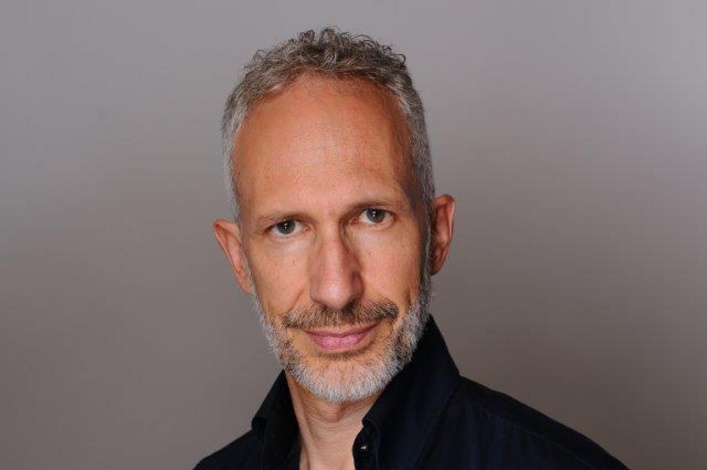
Enrique Sánchez Lansch is a Professor of Media Dramaturgy at the Institute for Music and Media at Robert Schumann University of Düsseldorf, appointed in 2018. Born in Gijón, northern Spain, and raised in Cologne, he has established himself as a prominent documentary filmmaker with a strong focus on music-related subjects. His educational background includes studies in music with a focus on singing, Romance languages, philosophy, and German studies. He completed his master's thesis on adaptation of literature into music films. After gaining professional experience in fictional series production, he pursued further studies in film and screenwriting at Columbia University and UCLA. Sánchez Lansch's research and creative interests center on the intersection of music and visual media. His work explores how musical experiences can be effectively translated to film, examining the relationship between sound and image. He has particular expertise in documenting musical institutions, historical contexts of music, and the educational aspects of musical performance. His approach combines rigorous historical research with innovative visual storytelling techniques that respect the integrity of musical performance while creating compelling cinematic narratives. His filmography reveals a consistent focus on music documentaries that bridge cultural and historical contexts. Early works focused on major musical institutions and figures, while more recent projects have expanded to examine the relationship between music and broader social, political, and cultural phenomena. His films consistently demonstrate a sophisticated understanding of both musical content and cinematic storytelling. His notable awards include: German Film Award German Documentary Film Award Bavarian Film Award German Critics' Award German Kinogilde Award Franz Hofer Prize Best Documentary Film at Los Angeles Latino International Film Festival Best Documentary Film at SEMINCI Festival de Valladolid Diapason d'Or Emmy nomination for "A Celebration for Gershwin" Sánchez Lansch has served as a mentor to young filmmakers, notably curating and presenting music short films by young talents for the Beethovenfest Bonn from 2006 to 2013. His professional activities extend beyond filmmaking to include teaching at institutions such as the dffb (German Film and Television Academy Berlin) and his current professorship at Robert Schumann University. He is an active member of both the German Film Academy and the European Film Academy, contributing to the broader film community through these organizations. As Professor of Media Dramaturgy, Sánchez Lansch contributes to the academic framework of the Institute for Music and Media, bringing his extensive professional experience to bear on the education of future media creators. His work bridges the gap between academic study and professional practice in the field of music-related visual media.
Christoph Wagner is a Lecturer in Lighting at the Royal Conservatoire of Scotland, where he has been employed since 2012. He holds a PhD (part-time) in scenography jointly from the Royal Conservatoire of Scotland and the University of St. Andrews, focusing on technological advancements in lighting design and archival methodologies since 1960. His research involves the Francis Reid Archive, Glyndebourne Opera archives, and practitioner interviews. Education: Graduated with distinction from Queen Margaret University College in Edinburgh, completed a Postgraduate Certificate in Teaching Higher Arts Education, and is pursuing his PhD. Research interests revolve around the intersection of technology and lighting design, particularly how innovations shape artistic expression and archival practices. He explores how historical lighting techniques are preserved and revived through modern digital tools, with a focus on operatic productions and archival documentation. Professional work includes lighting design for diverse theatre genres (devised theatre, cabaret, corporate events) across international stages, including the Tron Theatre, Soho Theatre, Tokyo Metropolitan Theatre, and The Arches. Notable projects include Hamlet , Victory , One Green Bottle , and collaborations with comedians like Eddie Izzard and Catherine Tate. His technical contributions are praised for enhancing dramatic storytelling through lighting, such as creating atmospheric tension in How To Act Around Cops and guiding audiences through narrative journeys in Victory .
Matt Bribitzer-Stull is a Professor in the Music Department at the University of Minnesota (Twin Cities campus). His research focuses on Wagner studies, film music, and analytical approaches to composition. He has made significant contributions to the understanding of leitmotifs in both operatic and cinematic contexts. Primary Affiliation: University of Minnesota, Twin Cities Department: Music Email: mpbs@umn.edu His scholarly work explores the intersection of Wagnerian compositional techniques and modern film scoring, with a particular emphasis on harmonic associativity and thematic development. He has published extensively on topics related to Schenkerian analysis and the application of operatic motifs in non-traditional media. Research output trends indicate a strong focus on Richard Wagner's influence across multiple domains, including opera, orchestral music, and film. His 2015 book on leitmotifs synthesizes these themes, while earlier articles examine Wagnerian harmonic practices in works by Strauss and other composers.
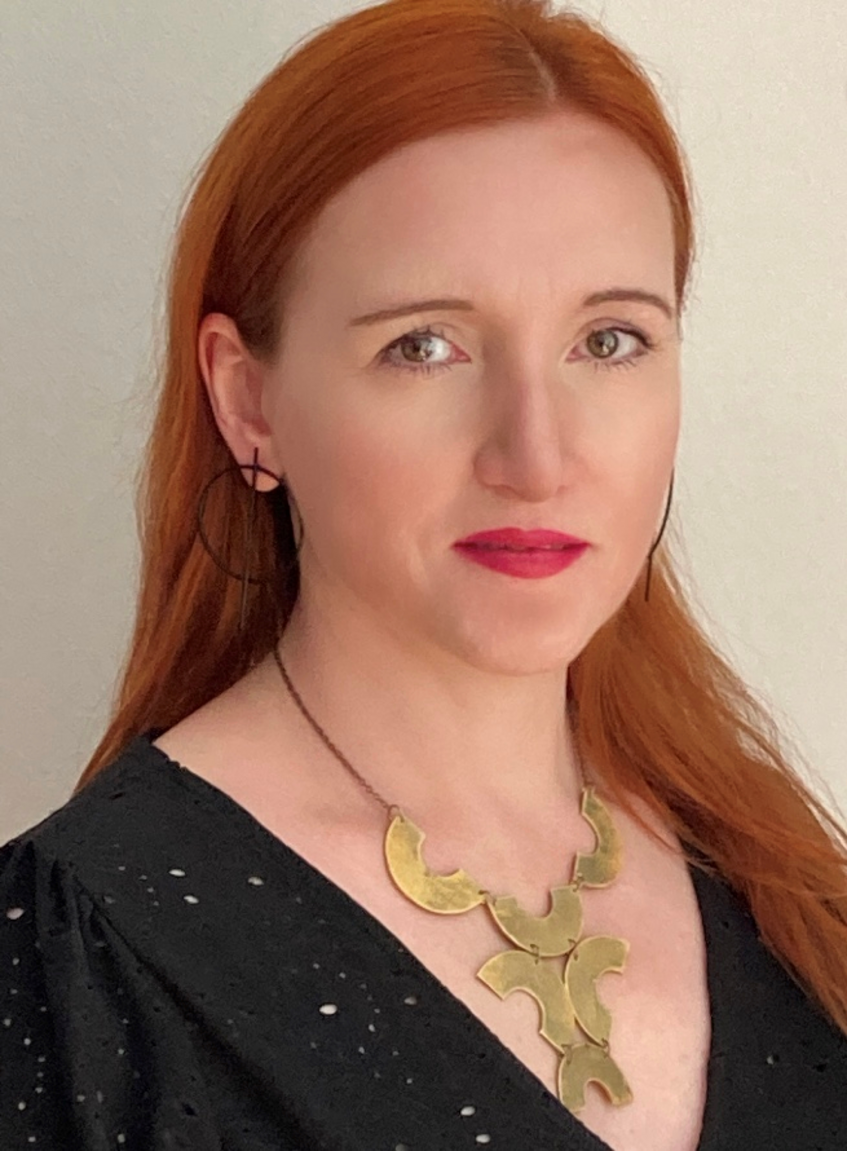
Pauline Lemaigre-Gaffier is a Lecturer in Modern History at the University of Versailles Saint-Quentin-en-Yvelines (UVSQ), affiliated with the Institute of Cultural and International Studies (IECI) and the Department of History. She co-leads the VoCriPat project (2023–present) and participates in the DIM PAMIR committee (2022–present) and ANR ACADEC project (2022–present). Her research focuses on European court societies (festivals, ceremonies, urban interactions) Cultural history (material culture, documentary writings) Political history (public finance, administrative practices) Economic history (privileges and businesses) Heritage sciences Her 15 most recent publications explore topics like archival practices in early modern Europe French court administration of the arts economic networks of privileged enterprises royal household logistics spanning 2015–2024, with upcoming works on economic history and heritage sciences in 2025. She has received the Benabou Prize (2012) and was a Thiers Foundation scholarship holder (2009–2010) . Her career includes editorial roles at Entre-Temps (2021–2023) and educational management for the 'Music, Performance, and Heritage' degree (2014–2016). She collaborates with institutions like the Centre de recherche du Château de Versailles and the Heritage Sciences Foundation.
Irene Albers is a full Professor at Free University of Berlin's Department of Philosophy and Humanities, holding dual appointments at the Peter Szondi Institute for General and Comparative Literature and Institute for Romance Philology since 2004. She chairs both the Examination Board and Doctoral Committee for General and Comparative Literature, serves as Trustee of Studienstiftung des deutschen Volkes since 2004/05, and has been Principal Investigator for the Friedrich-Schlegel Graduate School for Literary Studies and Cluster Languages of Emotion since 2007. Her research bridges comparative literature, anthropology, and visual culture with institutional leadership spanning editorial projects and international conferences. Her educational background includes: Born in Bremen (1967) Romance Studies, Philosophy, and German Studies at Universities of Tübingen, Tours, and Konstanz M.A. from University of Konstanz (1993) Ph.D. from University of Konstanz (1999) on literature and photography in Émile Zola, Proust, and Claude Simon Albers' core research examines literary anthropology through colonial/postcolonial lenses, focusing on French literary engagement with Africa, surrealism, and literature-photography intersections. She pioneered studies on Michel Leiris' ethnological poetics and Claude Simon's photographic techniques, extending to historical emotion research (anatomy of affects, body language) and romance novella traditions. Her work consistently challenges Eurocentric literary canons through primitivism critique and heteronomy aesthetics, emphasizing textual restitution and cultural reclamation. Recent publications (2018-2025) reveal a sharp turn toward colonial restitution ethics, particularly in oral literature provenance. Articles increasingly analyze literature as colonial loot, connecting French modernism with African/Caribbean contexts through collaborative projects with anthropologists like Eléonore Devevey. This trajectory builds from earlier surrealist studies to concrete frameworks for decolonizing literary scholarship, spotlighting institutional complicity in cultural appropriation while advancing symmetrized modernity revisions. Scientific awards include: Senior Fellow and Prize Winner of the Zukunftskolleg, University of Konstanz (2009) Albers supervises master's and doctoral students through dedicated AVL colloquia while securing major research funding as Principal Investigator for Friedrich-Schlegel Graduate School (2007-present) and Cluster Languages of Emotion (2007-2012). Her current DFG-funded project 'Literature as Colonial Loot?' with Andreas Schmid pioneers philological provenance research. Earlier, she contributed to Collaborative Research Center 511 'Literature and Anthropology' (Konstanz, 1999-2002) and DFG-funded conferences on Claude Simon. She leads the DramaNet research project and co-edits the 'machina' series at transcript Verlag since 2010. As board member (2007-2009) and deputy (2008-2012) of Cluster Languages of Emotion, she coordinates Area D 'Cultural Codings of Emotions'. Her Zukunftskolleg fellowship (2012-2013) and Marcel Proust Society collaborations underscore sustained engagement with literary anthropology networks.
Edward Muir is the Clarence L. Ver Steeg Professor in the Arts and Sciences and Charles Deering McCormick Professor of Teaching Excellence at Northwestern University, with joint appointments in the Department of History and Italian Studies at Weinberg College of Arts and Sciences. His academic journey includes a B.A. from the University of Utah (1969), an M.A. (1970), and Ph.D. (1975) in Modern European History from Rutgers University, including a Semester in Italy Program at Syracuse University (1967). Muir's research explores the intersection of ritual, violence, and power in Renaissance Europe, with emphases on Italian history, microhistory, and cultural anthropology. His work examines civic ceremonies, gender exclusion, and the sociopolitical underpinnings of early opera. Key themes include the anthropology of Venice, religious processions, and community formation in pre-modern societies. His scholarly publications reveal a consistent focus on Renaissance cultural practices, Venetian society, and methodological innovations in microhistory. Recent works analyze opera's emergence in 17th-century Venice, anti-war movements, and gendered public spaces, blending archival rigor with interdisciplinary theory. Awards and Honors: Herbert Baxter Adams Prize (1982) Two-time Howard R. Marraro Prize winner (1982, 1993) Andrew W. Mellon Foundation Distinguished Achievement Award (2010, $1.5 million) Fellow, American Academy of Arts and Sciences (2014) Charles Deering McCormick Professorship for Teaching Excellence (2006) Muir has held major administrative roles including Department Chair at Northwestern and LSU, co-directed the Graduate Program in Italian Studies, and served on editorial boards for journals like the American Historical Review . He mentors through graduate programs but no specific student advisees are listed.
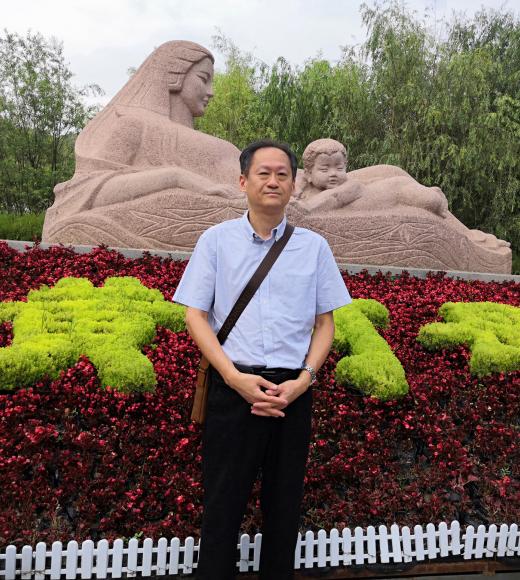
Sheldon Lu is a Distinguished Professor of Comparative Literature at the University of California, Davis. He holds affiliations with East Asian Studies, Performance Studies, Cultural Studies, Film and Media Studies, Critical Theory, and Environmental Humanities. His academic career includes roles as Chair of the Department of Comparative Literature, Director of the Graduate Program in Comparative Literature, and Founding Co-Director of the Film Studies Program. Lu has taught at institutions including the University of Pittsburgh and Beijing Normal University, and served as a Fulbright scholar in Ukraine (2004-2005). Education: B.A. (1984) and Ph.D. (1990) in Comparative Literature from Indiana University and University of Wisconsin-Madison, respectively. His research bridges literary studies, visual culture, film, and China studies. Key publications include Contemporary Chinese Cinema and Visual Culture (2021, BAFTSS Honorable Mention) and Chinese Modernity and Global Biopolitics (2007). He edited the Critical Interventions book series (2009-2019). Lu's work has appeared in journals like New Literary History , Journal of World Literature , and Cinema Journal . Awards include the 2005 Choice Award for Chinese-Language Film: Historiography, Poetics, Politics . He has organized special journal issues on topics ranging from ecocinema to transnational Chinese cinemas. Teaching focuses on Asian literature, film studies, critical theory, and urban culture. Notable courses include World Cinema and East-West Literary Relations .
Prof. Rossella Ferrari holds a professorship in Chinese Studies at the Department of East Asian Studies, University of Vienna. Her research explores performance cultures across the Chinese-speaking world, with a focus on avant-garde theatre, transnational networks, and postsocialist transformations. Key contributions include the concept of 'pop avant-garde' and 'Xiqu 2.0,' examining how classical performance interacts with digital media. She co-edited Asian City Crossings (2021) and authored Transnational Chinese Theatres (2020). Current projects investigate 'performing postsocialism' and intercultural collaborations. Her work bridges disciplines like architecture, visual arts, and film, emphasizing methodologies rooted in Asian perspectives to challenge Eurocentric paradigms. Recent studies analyze pandemic impacts on transnational theatre networks and the role of cities as analytical frameworks. Collaborations with groups like Hong Kong's Zuni Icosahedron highlight her focus on boundary-crossing performance practices. Publications span monographs, edited volumes, and peer-reviewed articles addressing topics such as Brechtian influences in China, intertextuality in global performance, and avant-garde adaptations of classical works like Mudan Ting . Her research underscores the socio-political dimensions of artistic expression in East Asia, particularly in contested historical contexts.
Dr. Marco Ladd is a British Academy Postdoctoral Fellow in Music at King's College London, researching musical culture in early twentieth-century Italy. Current projects investigate musical accompaniment in Italian silent cinema and the emergence of 'light music' in 1920s Italy. Research connects screen music traditions, fascist cultural policies, and popular music development. Publications analyze synchronization practices in silent film and explore intersections between cinema, opera, and operetta. Co-edits a forthcoming special issue on Italian operetta for Cambridge Opera Journal .
Kerri Kotta is a Professor of Music Theory and Head of Musicology at the Estonian Academy of Music and Theatre. She holds a PhD in Musicology (2004) and an MA in Composition (1997) from the same institution. Her research focuses on music theory, tonal analysis, Estonian music history, and contemporary composition, with special expertise in the works of Eduard Tubin and Dmitri Shostakovich. She coordinates the International Eduard Tubin Society and edits the composer's complete works. Her research interests span music theory , compositional techniques , Estonian cultural heritage , and interdisciplinary performance studies . Recent publications explore modernism in Estonian art music, Beethoven's structural rhetoric, and socio-psychological dimensions of contemporary opera. Kotta received the Reet Neimar Criticism Award (2023) for her contributions to music scholarship. She leads the project How to share the ardor? Conveying complex musical structures through animated scores (2024-2025), funded by the Estonian Ministry of Culture. Administratively, she chairs the Estonian Musicological Society (2013–present) and the International Eduard Tubin Society (2015–present), while serving on the board of the Estonian Composers Union (2022–present).
Dr. Amanda Hsieh is an Assistant Professor of Musicology in the Department of Music at Durham University. Her research examines the intersection of music and politics, with a particular focus on global music history and transnational exchanges between East Asia and Central/Western Europe during the 19th-20th centuries. Her current book project, 'The Japanese Empire's German Art Music, 1910–1945', investigates musico-political networks connecting Germany, Japan, and Taiwan. Hsieh employs interdisciplinary approaches including global history, biography, and infrastructure theory to analyze how Western art music influenced Japanese state-building initiatives. Dr. Hsieh actively builds equitable scholarly networks as co-founder of the Asian-German Studies in Music Working Group and former co-chair of the AMS Global East Asian Music Research Study Group. She serves as Reviews Editor for the Journal of the Royal Musical Association, where she promotes linguistic and geographical diversity in music scholarship. Her recent publications explore themes of gender representation in opera, cultural diplomacy through music, and methodological challenges in global music history. She has received prestigious awards including the Kurt Weill Prize and Jerome Roche Prize for her contributions to music scholarship. Dr. Hsieh currently supervises PhD research on women opera singers in 19th-century Britain and welcomes doctoral applicants interested in music and mobility, music and politics, and global music history.
Paul Richards is a Research Foundation Professor of Music and head of the composition and theory area at the University of Florida since 1999. He previously served as Visiting Professor at Florida State University (2016) and taught at Baylor University and the University of Texas at Austin. His academic roles include teaching courses in composition, music theory, and orchestration, along with supervising graduate students. He earned a DMA in Composition from the University of Texas at Austin and degrees from the University of Arizona. Education: Doctor of Musical Arts (DMA), Composition, University of Texas at Austin, 1998 Master of Music (MM), Theory and Composition, University of Arizona, 1993 Bachelor of Music (BM), Theory and Composition, University of Arizona, 1991 Research Interests: Richards’ work spans orchestral, vocal, chamber, and theatrical compositions, including operas and wind ensemble pieces. His style blends eclectic influences—from Jewish sacred music to modernist techniques—resulting in works praised for their "strong melodic gift" and innovative orchestration. Commissions have come from prestigious organizations like the Florida Orchestra, Boston Brass, and White Snake Projects. Awards and Recognition: Recipient of numerous international composition prizes, including the St. Mary’s College/Kaplan Foundation Commission Competition and Second Prize in the International Horn Society Composition Competition University of Florida Research Foundation Professorship (2017–2020, 2010–2013) Finalist in the National Opera Association’s Dominic Argento Chamber Opera Competition (2023) Advising and Grants: Richards has advised over 40 graduate students and chaired multiple PhD committees. His grants include support from the University of Florida and the Research Foundation. He has also served as a mentor in composer-in-residence programs, including the Jacksonville Symphony Orchestra’s Fresh Ink Competition. Labs and Collaborations: He co-founded the Florida Contemporary Music Festival (2013–2018), fostering collaboration between composers and performers. His work integrates interdisciplinary projects, such as music for dance and film, and he actively collaborates with choreographers and theater artists.
Paize Keulemans is an Associate Professor of Chinese Literature at Princeton University's Department of East Asian Studies. His research focuses on the interplay between oral and written literary traditions in Chinese literature, particularly exploring acoustic dimensions in 19th-century martial arts fiction and the role of gossip and rumor in 17th-century texts. He holds a Ph.D. from the University of Chicago (2004) and a B.A. from Leiden University (Netherlands). His work bridges literary analysis with cultural studies, examining topics like Dutch-Chinese interactions since the 17th century and the adaptation of classical texts like The Three Kingdoms into modern media such as video games. Education: Ph.D. in East Asian Languages and Literatures, University of Chicago B.A. in Chinese Language and Literature, Leiden University Research Interests: Acoustic imagination in printed novels Rumor dynamics in late-Ming literature Cultural exchanges between the Netherlands and China Modern adaptations of classical Chinese narratives Publications highlight his exploration of Ming-Qing transition narratives through Dutch tragic plays and the sonic dimensions of martial arts fiction. Current projects include analyzing video game adaptations of classical texts and the role of 'idleness' in literary production.