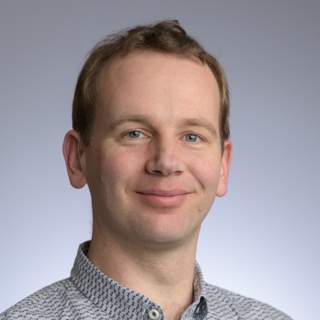
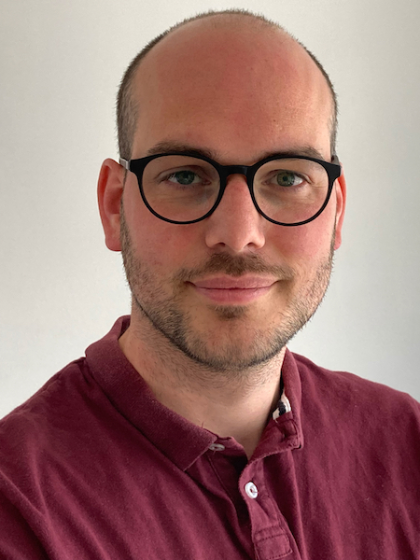
Poonacha Medappa is an Assistant Professor in Information Systems at the Department of Information Systems and Operations Management (ISOM) within the Tilburg School of Economics and Management (TiSEM) at Tilburg University. He holds a PhD in Information Systems from HEC Paris (2014–2019) and a Post Graduate Diploma in Management from the Indian Institute of Management, Calcutta (2008–2010). Prior to academia, he worked as a Senior Business Analyst/Consultant at Cognizant Technology Solutions (2010–2013) and Design Engineer at Larsen & Toubro Limited (2006–2008). His research focuses on open-source software development, project management, online communities, and applications of machine learning in research. He has published in top journals such as Information Systems Research , Research Policy , and Decision Support Systems , and presented at conferences like the International Conference on Information Systems and Academy of Management. His work has been recognized with awards including the Best Paper Award for Creativity at the Strategic Management Society Annual Conference (2021). Medappa organizes major conferences such as the International Conference on Electronic Business (ICEB 2022, 2024) and leads the project Understanding the Negative Impact of AI on Open Source Software Development Communities (2025–2026). He actively advises PhD students and explores topics like AI’s role in software development, funding mechanisms in open-source ecosystems, and contributor behavior dynamics.
Dr. Ranjita K. Bose is an Associate Professor in Polymer Engineering at the Department of Chemical Engineering, Engineering and Technology Institute Groningen (ENTEG), Faculty of Science and Engineering, University of Groningen (The Netherlands). Appointed as Assistant Professor in June 2017 and promoted to Associate Professor in June 2022, she also serves as the Programme Director for BSc Chemical Engineering since 2023. Her research focuses on developing sustainable polymer materials and processes with applications in coatings, electronics, and environmental technologies. Dr. Bose's educational background includes: Ph.D. in Chemical Engineering from Drexel University (USA), 2011 B.E. (Bachelor of Engineering) in Chemical Engineering from Gujarat University (India), 2006 Dr. Bose's research expertise spans polymer engineering, with particular focus on solvent-free processes, sustainable coatings, and smart polymers. She specializes in chemical vapor deposition techniques for creating functional polymer thin films, self-healing materials based on Diels-Alder chemistry, and sustainable polymer systems. Her work bridges fundamental polymer science with practical applications in energy storage, environmental remediation, and advanced manufacturing. She has made significant contributions to understanding structure-property relationships in reversible polymer networks and developing innovative materials with tailored mechanical, thermal, and electrical properties. Analysis of Dr. Bose's recent publications (2023-2025) reveals a strong focus on Diels-Alder chemistry for creating self-healing and recyclable polymers, chemical vapor deposition of conductive polymers, and sustainable polymer systems. Her work spans fundamental studies of polymerization mechanisms to applied research on materials for energy storage, environmental remediation, and advanced manufacturing. A notable trend is the integration of multiple functionalities (self-healing, electrical conductivity, thermal responsiveness) into single material systems, demonstrating her interdisciplinary approach to polymer engineering challenges. Dr. Bose has secured significant research funding through competitive grants: Just Transition Funds (JTF) from Subsidy North Netherlands (SNN) on Recycling of PVC: €400,000 SNN Subsidy on Circular Furniture 2021: €200,000 ERC FET-Open 2019 grant: €547,000 SNN Subsidy on supercritical CO2 applications: €300,000 Drittmittel Fähig 2013 grant from German Research Foundation: €8,000 George Hill Jr. Fellowship 2008 from Drexel University: $5,000 Dr. Bose actively mentors the next generation of scientists, supervising 7 PhD students, 1 postdoctoral researcher, and 4 MSc students. Her research program is supported by multiple grants totaling over €1.5 million, including European and national funding sources. She has established collaborations with institutions across Europe and has been instrumental in securing the University of Groningen's participation in the EU's Horizon 2020 FET Open Program consortium '5DNanoPrinting' project, which received a grant of €3.58 million (UG allocation: €547,000). Dr. Bose leads a research group focused on polymer thin films and surface chemistry, with particular expertise in structure-property relationships of self-healing polymers. Her team utilizes advanced characterization techniques including NMR, FT-IR, UV-Vis, HPLC, GPC, DSC, TGA, DMA, rheology, XRD, ellipsometry, and various surface analysis methods. She is an active member of the scientific community, serving on program committees, organizing conferences, and contributing to outreach activities that promote polymer science to high school students and the general public.
Femke van Beek is an Assistant Professor in the Robotics section of the Department of Mechanical Engineering at Eindhoven University of Technology. Her research focuses on integrating soft robotics with haptic perception to develop autonomous robots with tactile sensing capabilities, particularly for agricultural applications within the 4TU Green Sensors project . She employs VR/AR experiments to study human haptic perception and design bio-inspired sensors. Academic Background : PhD in Psychonomics and Cognitive Psychology (Vrije Universiteit Amsterdam), MSc in Sensory Biology and Biomechanics (Wageningen University), and BSc in Biology (Wageningen University). Her research spans soft robotics , haptic feedback , and human-in-the-loop engineering , emphasizing practical sensor design and robotic movement optimization. Recent work includes open-source platforms for real-time control of soft robots and studies on vibrotactile vs. auditory feedback in tele-operation. Scientific Awards : Eurohaptics Society PhD Award (2017)
Dr. Frederik Verweij is an Assistant Professor in the Department of Cell Biology, Neurobiology and Biophysics at Utrecht University's Faculty of Science since 2021. His research focuses on the intricate mechanisms of extracellular vesicle (EV) biology, particularly exosomes, using advanced imaging techniques in zebrafish models. Prior to his current position, he served as a Researcher at INSERM U1266, IPNP in Paris (2017-2021) and completed postdoctoral work at the Institut Curie in Paris (2014-2017), where he investigated exosome research under the guidance of Dr. Graça Raposo. Dr. Verweij earned his PhD from the Exosome Research Group led by Dr. D. Michiel Pegtel (2009-2014). Dr. Verweij's research interests span multiple aspects of cell biology, with particular expertise in exosome biogenesis, trafficking, and function. His work integrates cell biology, molecular biology, biochemistry, and advanced imaging techniques to study protein trafficking, virology, and signaling in the endo-exosomal pathway. He has pioneered the use of zebrafish as a model organism for in vivo EV imaging, developing innovative approaches for live imaging, dynamic correlative light and electron microscopy (CLEM), optogenetics, and electron microscopy. His laboratory investigates how extracellular vesicles mediate intercellular communication in physiological and pathological contexts, with implications for cancer, viral infections, and potential therapeutic applications. Analysis of Dr. Verweij's publication record reveals a strong trajectory in extracellular vesicle research, with increasing focus on in vivo imaging techniques and physiological relevance. His work has evolved from basic mechanisms of exosome biogenesis and viral protein sorting to sophisticated in vivo models that capture the dynamic nature of EV communication within living organisms. The zebrafish model has become a cornerstone of his research approach, allowing unprecedented visualization of EV trafficking between organs and during development. Recent publications highlight technical innovations in EV imaging and quantification, demonstrating his leadership in methodological advancements within the EV field. ERC Starting grant - European Research Council 5-year grant (2021) Vidi award - Dutch Research Council (NWO) 5-year grant (2021) KWF Young Investigator Grant (2020) ASEMV 2020 Young Investigator Award INSERM CRCN laureate (tenure) via national competition (2020) Multiple featured abstracts and travel awards from ISEV meetings Dr. Verweij has successfully secured substantial funding as both principal investigator (ERC Starting grant, Vidi award, KWF Young Investigator Grant) and co-PI (INCa PLBIO project, ARC project grants). His research group at Utrecht University combines expertise in cell biology, imaging, and zebrafish models to investigate fundamental questions in EV biology. He actively contributes to the scientific community through extensive peer review activities for high-impact journals and funding agencies, and has taken leadership roles in organizing international workshops, including co-chairing the first international 'EV imaging in vivo workshop' in 2020. Dr. Verweij serves on the scientific board of the French Society for Extracellular Vesicles and has established himself as a rising leader in the extracellular vesicle research community.
Dr. Kalliopi Zervanou is an Assistant Professor at the Faculty of Science, Utrecht University, specializing in Natural Language Processing and Text Mining within the Data Intensive Systems research group. Her work bridges Artificial Intelligence, Semantic Web technologies, and healthcare informatics. Research Focus: Information extraction from unstructured texts, interpretable AI methods, and data integration for real-world applications in mental health, logistics, and digital humanities. Education: PhD in Computer Science (University of Manchester, UK), MSc in Machine Translation (UMIST, UK), and BA in French Literature & Linguistics (Aristotle University, Greece). Experience: Former positions at Leiden University, TU/e, Radboud University, Tilburg University, and Technical University of Crete. Visiting researcher at NaCTeM (UK) and USC Viterbi School (USA). Awards: ICAART 2020 Best Industrial Paper award for baggage mishandling prediction research. Her methodological expertise spans rule-based systems, unsupervised learning, and large language models, with a focus on historical texts, OCR error correction, and multilingual challenges. She contributes to healthcare analytics through EHR classification and prognosis modeling.
Prof. Dr. Zeila Zanolli is a Full Professor in 'Theory and Simulations of Quantum Materials' at Utrecht University, leading the 'Quantum Materials by Design' research group. She holds affiliations with the Debye Institute for Nanomaterials Science and the Condensed Matter and Interfaces department. Her work focuses on first-principles modeling of nanoscale materials, particularly topological materials and applications in nanoelectronics/spintronic devices. She has pioneered superconducting Density Functional Theory implementations in SIESTA and contributed to understanding quantum transport phenomena like spin-polarized currents and photoluminescence dynamics. Education & Career: Prior to Utrecht, she was a Ramon y Cajal Fellow (ICN2, Spain) and led the Nanospintronics Group at RWTH Aachen University. Her academic trajectory includes a Marie Curie Fellowship at Forschungszentrum Jülich (2012–2015). She serves as Deputy Chair of the European Theoretical Spectroscopy Facility (ETSF) and holds editorial roles at SciPost Physics and Journal of Physics Materials. Research Interests: Her expertise spans quantum materials, topological matter, computational modeling (DFT, GW/BSE, NEGF), and materials discovery. Key systems include 2D materials, carbon nanostructures, hybrid organic-inorganic materials, and multiferroics. She emphasizes open-source software development (SIESTA, YAMBO) and open science practices. Awards & Recognition: Notable recognitions include the Marie Curie Intra-European Fellowship (2012–15), Ramon y Cajal Fellowship (2018–20), and Treasurer of the Young Academy of Europe (2018–22). She coordinates international initiatives like the MaX Center of Excellence for materials design at exascale computing levels. Teaching & Outreach: Teaches quantum mechanics, quantum transport, and materials theory at Utrecht. Organized graduate schools and international conferences. Engages in science policy, public outreach via videos (e.g., 'Quantum Materials by Design' YouTube channel), and editorial leadership to advance open access science.
Vincent Groenhuis is a postdoctoral researcher at the Robotics and Mechatronics (EEMCS-EE-RAM) group , University of Twente. He holds a BSc, MSc, and PhD in Computer Science, Embedded Systems, and Medical Robotics respectively, all cum laude. His work focuses on image-guided medical robotics for bladder cancer diagnosis (Next-gen In-Vivo project) and MRI/ultrasound-guided breast biopsy (Sunram/MURAB projects), alongside innovations in pneumatic and electric stepper motors with two patents spun into companies. Education : BSc Computer Science (cum laude), MSc Embedded Systems (cum laude), PhD Medical Robotics (cum laude) Key Collaborations : Hamlyn Surgical Robot Challenge, European Robotic Forum, ICRA, BioRob, IROS His research integrates 3D-printed actuators with MRI safety protocols, enabling compact, reconfigurable systems for endovascular interventions and biopsy procedures. Article trends emphasize sensorless positioning , pneumatic computation , and multi-axis motor design . Awards include Best Video (Sunram 4, Hamlyn 2017) and Best Design (Sunram 3, Hamlyn 2016) . Supervised student projects span ultrasound needle steering , auto-rewind spool holders , and emergency disengagement mechanisms .
Sylwester Latkowski is a University Researcher and Project Manager in the Department of Photonic Integration at Eindhoven University of Technology (TU/e), the Netherlands. He also serves as Scientific Director at the Photonic Integration Technology Center. His work focuses on integrated photonics, particularly in photonic integrated circuits (PICs), semiconductor lasers, and their applications in telecommunications, sensing, and emerging technologies. Academically, he holds M.Sc. and Eng. degrees in optoelectronics and technical physics from West Pomeranian University of Technology (Poland) and a Ph.D. from Dublin City University (Ireland), where his research centered on semiconductor mode-locked lasers and terahertz generation. He is a senior member of IEEE and the IEEE Photonics Society, actively contributing to standards and road-mapping initiatives for integrated photonics through organizations like AIM Photonics Academy and Photon Delta. His research interests include photonic integration technologies, test automation for PICs, and applications in gas sensing, optical gyroscopes, and LiDAR. He chairs technical working groups for electronic-photonic test standards and collaborates internationally on projects such as the Integrated Photonics System Roadmap (IPSR-I). His work emphasizes bridging the gap between photonics and electronics, with a focus on scalable manufacturing and standardization. Notable contributions include pioneering open standards for photonic test automation, developing widely tunable laser sources, and advancing InP-based integration platforms. His publications span topics like thermal management in electronic-photonic systems, optical alignment optimization, and narrow-linewidth ring lasers for gyroscopes. He has supervised two research projects and is involved in industry partnerships to commercialize photonic technologies. His expertise spans from fundamental research to applied engineering, reflecting his belief in the seamless integration of science and technology.
Sander Baas is an Education/Research Officer in the BioNanoTechnology department at Wageningen University. His role involves academic research and educational initiatives, focusing on developing innovative hardware solutions for NMR spectroscopy and microscopy. He holds a PhD from Wageningen University, awarded in 2024, for his thesis on DIY NMR systems, magnets, and hyperpolarization hardware. His academic career has been centered around interdisciplinary research at the intersection of engineering and life sciences. Education: Sander Baas completed his educational background at Wageningen University, where he earned his PhD in 2024. His academic journey includes: PhD in BioNanoTechnology (2024) Research Interests: Sander Baas’ research interests span NMR Spectroscopy, Nanobiotechnology, and Microfluidics. He is deeply involved in designing advanced transceiver ASICs for multinuclear NMR applications and optimizing magnet systems for enhanced spectral resolution. Additionally, his work explores the integration of CRISPR technology with microscopy frameworks for in vivo tracking and the repurposing of 3D printers into biomedical tools like programmable syringe pumps. His studies often bridge electronics engineering with molecular biology, aiming to create accessible and high-performance instrumentation for scientific research. Articles Overview: His recent publications (2021–2023) emphasize the development of affordable and versatile NMR instrumentation, including a 2 T magnet with high sensitivity and a syringe pump derived from a 3D printer kit. He also focuses on microfluidic applications, such as hyperpolarization techniques using CIDNP, and advancing ASIC-based transceiver systems for multinuclear NMR. Earlier work (2018–2019) highlights contributions to single-molecule localization microscopy and CRISPR/dCas9 tracking in live bacteria, demonstrating a consistent thread of innovation in both hardware and biological imaging technologies. Scientific Awards: No scientific awards mentioned. Advising & Grants: In his academic journey, Sander Baas was a PhD candidate in the NanoSpin project (2018–2024), supervised by Prof. A. Velders and co-supervised by Dr. V. Saggiomo. This project addressed challenges in NMR spectroscopy signal intensity and polarization transfer within nanobiotechnology. No formal grants or advising roles are explicitly listed in the provided texts. Labs & Teams: He contributed to the NanoSpin research initiative at Wageningen University, focusing on NMR spectroscopy and nanobiotechnology advancements. Collaborations include work with the Universidad de Castilla-La Mancha on microfluidic datasets and open-source hardware projects. His research also involves partnerships with institutions in Biomedical Engineering and Electronics Design.
Martin Roa-Villescas is a Doctoral Candidate and Teaching Assistant in the Department of Electronic Systems within the Electrical Engineering school at Eindhoven University of Technology (TU/e). He also holds an external position as a Docent (Lecturer) at Fontys University of Applied Sciences since August 2023. His educational background includes a B.Sc. in Electronic Engineering from the National University of Colombia (2010) and an M.Sc. in Embedded Systems from TU/e (2013). Between 2013 and 2018, he worked as an embedded software designer at Philips Research in Eindhoven. Roa-Villescas' research focuses on probabilistic graphical models, Bayesian machine learning, and tensor network applications. His work spans both theoretical advancements in probabilistic inference algorithms and practical implementations in open-source software. He has made significant contributions to optimizing message passing algorithms and developing efficient execution schedules for Bayesian inference. His recent publications demonstrate a clear trajectory toward improving the scalability and efficiency of probabilistic inference methods, with applications spanning audio signal processing, robotics, and hearing aid technology. The development of TensorInference, a Julia package for tensor-based probabilistic inference, represents his commitment to open-source tools that advance the field. As a researcher involved in the STW Zero Autonomous Acoustic Systems project (2017-2024), he has contributed to advancing acoustic sensing technologies through probabilistic modeling approaches. His work aligns with UN Sustainable Development Goals related to technology innovation and accessibility.
Prof. dr. H.B. (Ria) Braam is a Professor in Theoretical Chemistry at the University of Groningen, affiliated with the Zernike Institute for Advanced Materials within the Faculty of Science and Engineering. Her research focuses on computational and theoretical methods to study molecular electronic structure, with a particular emphasis on non-orthogonal configuration interaction (NOCI) for large molecular systems. She leads projects on singlet fission, exciton dynamics, and electronic coupling in organic materials. Her expertise includes quantum chemistry, molecular modeling, and high-performance computing. Key contributions include the development of the GronOR software for NOCI calculations and studies on dielectric properties of organic semiconductors. Braam holds additional roles such as Member of the FWO Chemistry Committee and Editorial Board of the International Journal of Quantum Chemistry. Recent research highlights include advancements in NOCI methodologies for singlet fission mechanisms, triplet diffusion in molecular materials, and computational strategies for energy transport. Her work bridges fundamental theory with applications in materials science and photovoltaics.
Dr. Matthijs S. Berends is a medical epidemiologist and microbiologist at the University Medical Center Groningen (UMCG), Faculty of Medical Sciences, working within the Cure and Care in the Community Context (FOUR-C) research group. He holds a PhD from the University of Groningen and maintains dual appointments at UMCG's Department of Primary Care Medicine and Certe Medical Diagnostics and Advice Foundation. His research focuses on innovative applications of data science in microbial epidemiology, particularly in antimicrobial resistance analysis and COVID-19 prediction modeling. Dr. Berends has developed widely adopted analytical methods used in 175 countries with over 85,000 downloads, reflecting significant global impact in his field. His recent publications demonstrate a strong trajectory in applying machine learning to primary care challenges, with multiple 2025 publications examining post-COVID syndrome, hand hygiene compliance, urinary tract infection management, and prenatal care disruptions. These works consistently leverage Dutch healthcare data within international frameworks, showing methodological rigor across epidemiological, qualitative, and time-series analytical approaches. Open Research Award - University of Groningen (2021) for development of antimicrobial resistance data analysis method Method published in Journal of Statistical Software (IF 22.1) ranking in 97th percentile of most popular research Recognized by ResearchGate as top 10 weekly most read preprints Dr. Berends actively contributes to professional discourse through media commentary on public health matters (16 media appearances between 2021-2022) and professional service as a member of The Dutch Working Party on Antibiotic Policy (SWAB) since 2020. His work aligns with UN Sustainable Development Goals related to good health and well-being, with research spanning both structured and unstructured healthcare data analysis.
Peter Baltus is a Full Professor at Eindhoven University of Technology (TU/e) within the Department of Electrical Engineering , leading the Integrated Circuits group. He is affiliated with multiple centers including the Center for Wireless Technology Eindhoven , RF Sensing & Communication Lab , and Center for Astronomical Instrumentation . MSc and PhD in Electrical Engineering from TU/e (1985, 2004) Industry experience at Philips (22 years) and NXP His research focuses on high-frequency integrated circuits and unconventional wireless systems , emphasizing low-power design and real-world applications . Key projects include: Low-latency wireless transceivers Millimeter-wave wireless power transfer for sensors Swarm robotics for pipeline and volcano exploration Thermal modeling in photonic/electronic ICs Remote RF education platforms Recent publications highlight advancements in satellite communication modules (2024) and thermal prediction methods (2024), alongside educational reform proposals (2023). His work bridges analog/RF circuit design with system-level innovation , featuring 16 US patents and over 150 peer-reviewed papers. Veder Award (2006) Best Master Tutor at TU/e (2013) He has directed the Centre for Wireless Technology (2007-2016) and contributes to MOOC development and curriculum reform as evidenced by his 2023 conference paper on addressing systemic challenges in Electrical Engineering education.
Dr. Matthijs Berends is a medical epidemiologist/microbiologist at the University Medical Center Groningen (UMCG) and holds a postdoctoral position in the Department of Primary Care Medicine. He also serves as a Medical Epidemiologist at the Certe Foundation. His expertise spans microbial epidemiology, data science, and predictive modeling. He earned his PhD in 2021 with a thesis on antimicrobial resistance (AMR) data analysis methods, which has been widely adopted globally and recognized with the University of Groningen’s Open Research Award. Education & Background: PhD in Clinical Epidemiology (University of Groningen) Medical Biology and Medical Microbiology background Research Focus: Development of novel AMR data analysis tools Machine learning for predicting acute/long-COVID outcomes Analysis of multidrug-resistant organisms in cross-border healthcare regions Application of NLP in electronic health records Awards & Recognition: Open Research Award (2021) for AMR analysis tool ResearchGate top 10 most-read preprint (2021) Teaching: R instructor for Medical Microbiology PhD candidates at UMCG, with a course on Advanced Infectious Diseases Statistics. Labs/Teams: Member of the Cure and Care in the Community Context (FOUR-C) group and the Dutch Working Party on Antibiotic Policy (SWAB).
Irene Viola is a senior tenured researcher at Centrum Wiskunde & Informatica (CWI) in the Distributed and Interactive Systems (DIS) group. Her work focuses on Quality of Experience (QoE) metrics, immersive multimedia systems , and point cloud streaming . Current projects: AMPLIFY (Horizon Europe), OPEN-DASH-PC (SPIRIT Open Call), INDUX-R (Horizon Europe), TransMIXR (Horizon Europe), VOXReality (Horizon Europe) Education: PhD in Electrical and Electronic Engineering (EPFL), MSc in Computer Engineering (Polytechnic University of Turin/EPFL), BSc in Cinema and Media Engineering (Polytechnic University of Turin) Her research bridges multimedia compression , human-centric XR systems , and adaptive streaming protocols . Recent publications analyze visual saliency in 3D, PCA-based quality metrics, and social interaction latency thresholds. Awards include the 2023 IEEE Multimedia Best Paper, 2019 APSIPA Sadaoki Furui Prize, and 2022 IEEE Best Demo. Projects highlight her expertise in AI/XR integration , open-source VR platforms (VR2Gather), and 5G/XR architectures . She collaborates across Europe (Horizon Europe) and with institutions like EPFL and Nagoya University.