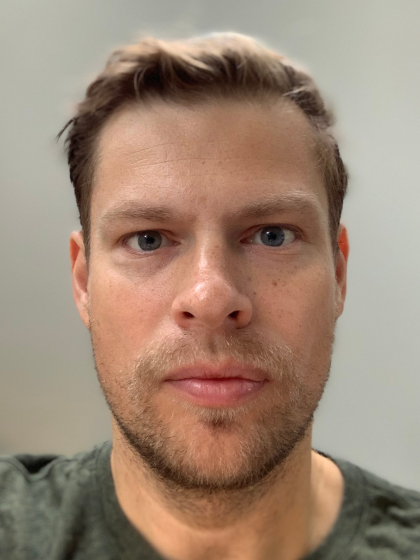
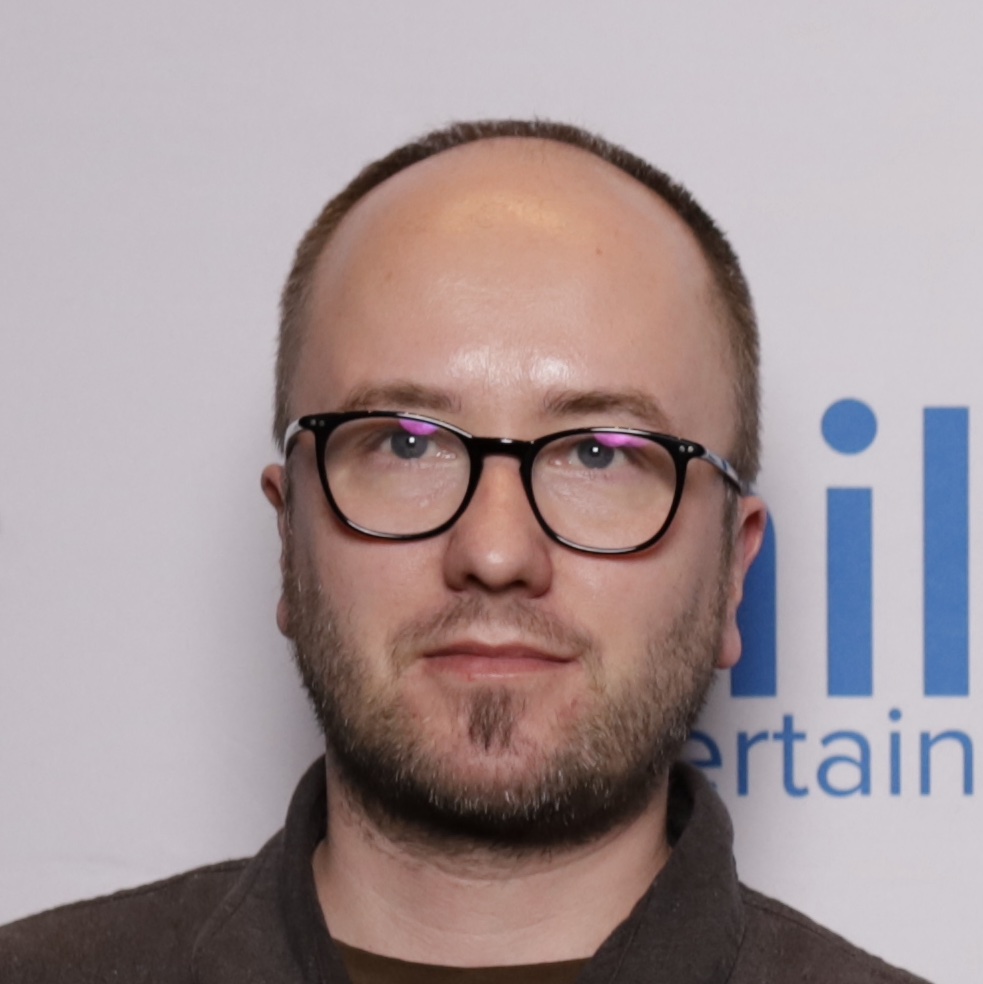
Elia Eiroa Lledo is an Assistant Professor at the Fowler School of Engineering, Chapman University. Her research focuses on software engineering, open source software analysis, and statistical modeling of bug resolution times. She explores the intersection of machine learning applications in software development and behavioral factors in code maintenance. Chapman University, Bachelor of Science Chapman University, Master of Science Chapman University, Ph.D. Recent work includes large-scale studies on bug lifecycle in open source repositories using survival analysis and non-parametric statistics, as well as contributions to deep learning applications in system-on-chip architectures and code tutorial image datasets. Her findings highlight the importance of author accountability in bug resolution and the impact of project scale on defect persistence. Current affiliations include: Fowler School of Engineering, Chapman University Co-authorship in multiple IEEE/MDPI publications
Michael D. Bond is a Professor in the Department of Computer Science and Engineering at Ohio State University, where he leads the Programming Languages and Software Systems (PLaSS) Research Group. His work focuses on designing program analyses and software and hardware systems that enhance computing reliability, scalability, and security. As an active member of the programming languages and systems research community, he serves in leadership roles including General Chair for PLDI 2027 and ISMM 2024. Professor Bond's research interests span programming languages, systems, and security with a particular focus on information flow control, concurrency, memory management, and Rust programming language systems. His group has made significant contributions to data race detection, predictive analysis, information flow control in Rust, and memory-disaggregated systems. Recent work includes Carapace (static-dynamic information flow control in Rust), Cocoon (static information flow control in Rust), and IsoPredict (predictive analysis for weakly isolated data applications). His research group has secured substantial funding, including multiple NSF grants such as SaTC-2348754 (2024-2027) on information flow control in Rust, CyberCorps-2336531 (2024-2029), and CSR-2106117 (2021-2025). Professor Bond has advised numerous PhD and MS students, many of whom have gone on to prestigious positions at Google, Amazon, Huawei, and academic institutions. Scientific Awards: Outstanding Teaching Award, Department of Computer Science and Engineering, Ohio State University (2018) Lumley Research Award, College of Engineering, Ohio State University (2016) OOPSLA 2015 Distinguished Paper and Artifact Awards NSF CAREER Award ACM SIGPLAN Outstanding Doctoral Dissertation Award Professor Bond actively contributes to the research community through service as program committee member for top conferences including PLDI, ASPLOS, and OOPSLA. He is currently the General Chair for PLDI 2027 and served as General Chair for ISMM 2024. His group's open-source implementations accompany many publications, demonstrating commitment to reproducibility and practical impact.
Rebeca Garcia Fandiño is a Full Professor in the Department of Organic Chemistry at the Faculty of Biology, University of Santiago de Compostela. She leads the SupraNanoBioMol research group focused on supramolecular systems, nanobiomimetics and molecular biophysics. Develops cyclodextrin-based therapeutics for age-related diseases Studies cyclic peptide nanotubes for antimicrobial applications Specializes in molecular dynamics simulations of biomolecular systems Her research explores hierarchical membrane structures, water model effects in nanoconfined environments, and membrane-targeted therapies. She has published extensively on: Toxic oxysterol removal using cyclodextrin dimers Antimicrobial D,L-α-cyclic peptide interactions Quantum-classical simulation hybrid approaches Post-COVID condition molecular characterization Augmented reality applications in education The SupraNanoBioMol group at CIQUS center utilizes experimental and computational techniques including DSC, ATR-FTIR and MD simulations. Recent work addresses antimicrobial resistance through membrane disruption mechanisms and AI-driven drug discovery.
Talip Tolga Sarı is a Research Assistant at the Department of Computer Engineering , Istanbul Technical University , where he has been affiliated since 2019. He holds a PhD in Computer Engineering (2021), a Master's in Computer Engineering (2018), and dual Bachelor's degrees in Computer Engineering and Electronics & Communication Engineering (2015). Education PhD in Computer Engineering, Istanbul Technical University (2021) Master's in Computer Engineering (2018) Bachelor's in Computer Engineering (2015) Bachelor's in Electronics & Communication Engineering (2015) Research interests span Computer Networks , Wireless Communication , and Unmanned Aerial Vehicles (UAVs) , with a focus on semantic communication , UWB localization , and topology control for resilient networks. His recent publications address UAV swarm coordination , smart campus frameworks , and assisted localization systems , reflecting interdisciplinary applications of computer science in real-world problems. Key trends in his 15 most recent articles include decentralized UAV networks, semantic communication architectures, and UWB-based indoor positioning. His work combines machine learning, cross-layer routing, and software-defined networking paradigms, with citations spanning Computer Science , Robotics , and Network Security . Awards : Highest Performance Award, Istanbul Technical University (2025)
Chris Misa is a post-doctoral researcher at the University of Oregon's Department of Computer Science, affiliated with the Oregon Networking Research Group and Oregon Cybersecurity Center of Excellence. His work bridges programmable network hardware, virtualization, and security research. PhD in Computer Science (University of Oregon, mentor: Rejaie & Durairajan) Key research: hardware-accelerated network telemetry, DDoS defense via ZAPDOS, cloud networking Publications in top venues: USENIX NSDI, IEEE Security & Privacy, IEEE Transactions on Networking His research focuses on optimizing network measurement systems by combining programmable switch hardware, machine learning, and innovative algorithmic approaches. Recent projects like ZAPDOS demonstrate his emphasis on addressing high-volume DDoS threats through prefix-level traffic analysis and dynamic resource allocation. Current work spans runtime telemetry, multi-cloud management, and optical network security solutions. Scientific awards include: Ripple Faculty Fellowship Ripple Graduate Fellowship NSF grant CNS 1850297 (as team member) As a postdoc, he contributes to sponsored research collaborations with Broadcom and leads academic advising for junior researchers. His projects integrate network testbeds, open-source tools (BONSAI), and interdisciplinary approaches to network science.
Pedro Petersen Moura Trancoso is a Full Professor at the Department of Computer Engineering , Chalmers University of Technology, Sweden. His research focuses on deep learning accelerators , heterogeneous computing , energy-efficient architectures , and memory system optimization for IoT and edge devices. Key projects: AutoPIM (autonomous vehicle accelerators), VEDLIoT (efficient AIoT), eProcessor (European processor ecosystem), PRIME (PIM systems) Collaborations: European Commission, Swedish Research Council, Swedish Foundation for Strategic Research Research Trends : Hybrid CNN/GPU/FPGA Acceleration On-Chip/Scratchpad Memory Optimization Adaptive Resource Allocation for Energy Efficiency Hardware-Software Co-Design for AIoT Publications demonstrate leadership in deep learning hardware , heterogeneous memory systems , and edge computing architectures . Key journals: IEEE ISPASS, ACM Computing Frontiers, DATE Conference.
Dr. Marissa E. Bonyun is an Assistant Professor in the Department of Orthopaedics, specializing in trauma surgery, fracture management, and surgical education. Her work bridges clinical orthopaedics and innovative training methodologies, with a focus on improving surgical outcomes and educational frameworks. Research Focus Her research spans: Orthopaedic Trauma : Techniques for sternoclavicular joint fixation, proximal humerus fracture management, and hardware revision in nonunions. Surgical Education : Development of competency-based training models, simulated entrustable professional activities (EPAs), and validation of educational tools for orthopaedic trainees. Outcomes Research : Population-based studies on fracture treatment efficacy, long-term recovery, and regional healthcare trends. Publications Her 15 most recent publications (2015–2020) emphasize clinical innovations in shoulder arthroplasty, biomechanical fixation techniques, and surgical education reforms. Recurring themes include the use of simulation for skill assessment, epidemiological analysis of fracture management, and optimization of trauma protocols. Awards No scientific awards are mentioned in the provided sources. Additional Activities No details are available regarding grants, student advising, laboratory affiliations, or collaborative teams.
Samuel Shue is a Teaching Assistant Professor in the Department of Electrical and Computer Engineering at the University of North Carolina Charlotte. His research focuses on Robotics, Embedded Systems, and Wireless Sensor Networks, with a particular emphasis on RSSI localization techniques and wireless communication frameworks. Ph.D., University of North Carolina Charlotte, 2017 M.Sc., University of North Carolina Charlotte, 2015 B.Sc., University of North Carolina Charlotte, 2014 Shue's research explores the intersection of robotics and wireless sensor networks, including: Signal processing for localization accuracy XBee-based communication protocols Portable embedded system frameworks Procedural simulation environments His publications (2013-2017) demonstrate expertise in Kalman filter applications, wireless mesh networking, and open-source development platforms. Key collaborations include James M. Conrad and Andrew R. Willis. For direct contact, email slshue@charlotte.edu or call 704-687-5885.
Aleksandar Pajkanović is a Senior Lecturer at the Department of Electronics, Faculty of Electrical Engineering, University of Banja Luka. His work bridges microelectronics research with educational innovation. Institution: University of Banja Luka Faculty: Electrical Engineering Department: Electronics Rank: Senior Lecturer (appointed September 21, 2023) Research focuses on microelectronics , low-power IC design , and flexible electronics , with applications in biomedical assistive devices and wireless control systems. Key projects include: Open-Source IC Design Methodology (2023-2024) Smart Vertical Signaling Systems (2021-2024) Public Lighting Management (2020-2024) Air Quality Monitoring (2020-2020) Projects emphasize digital IC design , EDA tools , and educational technology implementation. Collaborations span academic institutions and government partners including the Ministry of Science and Technology.
Terry Sturtevant is a Lecturer and Lab Coordinator at the Department of Physics and Computer Science, Wilfrid Laurier University, where he focuses on physical computing and open-source platforms. He earned his BSc in Mathematics and Physics from the University of New Brunswick (1982) and an MSc in Physics from the University of Waterloo (1985). Prior to joining Laurier, he served as a Professor of Physics and Mathematics at Collège de la Gaspésie in Quebec. Research Interests: Terry specializes in physical computing, developing hardware and software solutions for real-world applications. His work emphasizes open-source technologies such as Linux, Arduino, and Raspberry Pi, aiming to bridge theoretical concepts with practical devices. He is fluent in English and French and contributes to electronics, mathematics, and media-related projects. Contact Information: Email: tsturtevant@wlu.ca Phone: 519.884.0710 ext. 2049 Office: N2092A, Waterloo Campus Website: denethor.wlu.ca
Bruno Asdourian is a Senior Lecturer at the Department of Communication and Media Sciences (DCM) within the Faculty of Economics and Social Sciences and Management at the University of Fribourg. Holding a PhD in Communication from Aix-Marseille University (2010), he specializes in city diplomacy, civil society diplomacy, and participatory communication within digital transformation contexts. Education: PhD in Communication, Aix-Marseille University, 2010 His research examines how digital platforms reshape organizational communication, with focus areas including civic tech, open data, and citizen engagement in public governance. He investigates city diplomacy dynamics—particularly how municipalities leverage Twitter for international climate collaboration—and analyzes emotional engagement in citizen-government relationships. His work bridges theoretical frameworks from the Palo Alto School and Habermas with practical applications in transparent communication strategies. Analysis of his 15 most recent publications (2015-2024) reveals dominant themes in urban diplomacy, civil society's transnational role, and social media's impact on public participation. Climate-focused city branding, citizensourcing platforms (e.g., Lugano 2025), and corporate hackathons (e.g., Swisscom case) serve as key case studies. Methodologically, he combines qualitative analysis of digital interactions with cross-institutional comparisons of communication practices. Scientific Awards: No awards documented in source materials Dr. Asdourian's teaching integrates digital transformation concepts with strategic communication applications, though specific advising roles remain unreported. He contributes to the DCM's MediaLab ecosystem, which provides technical infrastructure for media production and research. His ORCID profile (0000-0002-5331-1211) demonstrates consistent scholarly output addressing contemporary challenges in digital civic engagement and organizational transparency.
Daan Meerburg is Assistant Professor at the University of Groningen , Faculty of Science and Engineering, embedded in the Van Swinderen Institute for Particle Physics and Gravity . He directs the VIDI programme ‘the cosmic laboratory’ and holds leadership roles in the Simons Observatory, CCAT-prime and REACH collaborations. Education PhD (cum laude) in Cosmology, University of Amsterdam, 2011 – advisors Jan Pieter van der Schaar & Ralph Wijers Rubicon Fellow, Princeton University CITA Fellow, University of Toronto Senior Kavli Fellow, University of Cambridge Research Interests Meerburg’s research straddles theoretical and observational cosmology . Core themes include the physics of the cosmic microwave background , primordial non-Gaussianity , inflationary model building , gravitational waves and the epoch of reionisation . Recently he has pioneered the use of artificial intelligence to extract faint cosmological signatures from large data sets, always cross-validated against conservative statistical methods. Recent Publication Trends Over 2022-2025 his output focuses on next-generation CMB experiments (Simons Observatory, CCAT-prime), global 21-cm observations with REACH, and neural-network-assisted inference of primordial non-Gaussianity and reionisation history. The work integrates instrument design, advanced statistical techniques and forefront theory. Honours & Awards Templeton Grant (2012) VIDI Grant, Dutch Research Council (2017) Rubicon Fellowship (Princeton) Kavli Senior Fellowship (Cambridge) CITA Fellowship (Toronto) Grants & Leadership Principal Investigator , VIDI project ‘the cosmic laboratory’ Science Leadership , Simons Observatory & CCAT-prime consortia Instrument Team , REACH 21-cm experiment Labs & Teams Meerburg leads the Cosmic Frontier research group within the Van Swinderen Institute. The team contributes to hardware development, data pipelines and theoretical interpretation for Simons Observatory, CCAT-prime and REACH, fostering close collaboration between cosmologists, instrumentalists and data scientists.
Prof. Tobias Seidl serves as Vice Dean at the Westphalian Institute for Bionics within the Department of Mechanical Engineering at the Westphalian University of Applied Sciences in Bocholt, Germany. He has been with the university since January 2011, teaching bionics and sensor technology while leading research in biomimetic applications for robotics and engineering. Education: Bionics studies at Saarbrücken PhD on desert ant navigation systems under Rüdiger Wehner at the University of Zurich with fieldwork in Tunisia Professional experience at the European Space Agency (ESA) in Noordwijk, Netherlands Research Focus: Prof. Seidl's work centers on bionics , translating biological principles into engineering solutions. His expertise spans neuroethology (neural basis of natural behavior), functional morphology (structure-function relationships), and biomechanics . Key application areas include biomimetic robotics inspired by ants and spiders, sensor development, and bio-inspired materials. His research consistently bridges entomology with robotics, aerospace, and materials science to solve complex engineering challenges. Publication Trends: Recent publications (2025-2016) reveal a strong focus on biomimetic applications in robotics, 3D printing, and aerospace. Dominant themes include adaptive biomimetic valves for automotive cooling, force-based path integration in walking robots, hydrophobic surface replication, and satellite deployable structures inspired by insect wings. His work consistently leverages biological observations—particularly from desert ants and spiders—to advance robotic locomotion, adhesion mechanisms, and space technology. Research Infrastructure: As head of the Westphalian Institute for Bionics, Prof. Seidl leads R&D projects such as developing force sensors in ant legs for robotic applications. His institute serves as a hub for interdisciplinary collaboration between biologists and engineers, focusing on translating biological insights into technical innovations for automotive, aerospace, and medical applications.
Dr. Michael Schwarz is a tenured faculty member at the CISPA Helmholtz Center for Information Security in Saarbrücken, Germany, where he leads the RootSec research group. Since 2020 he has been investigating microarchitectural side-channel attacks, system security, CPU security, transient-execution vulnerabilities, and corresponding defense mechanisms. He previously served as a post-doctoral researcher (2019–2020) and PhD student (2016–2019) at Graz University of Technology, after earning two master’s degrees in computer science and software engineering with a security focus. Education PhD, Graz University of Technology, 2019 — “Software-based Side-Channel Attacks and Defenses in Restricted Environments” (Advisor: Daniel Gruss) MSc, Computer Science, Graz University of Technology MSc, Software Engineering, Graz University of Technology Research Interests Dr. Schwarz’s work centers on microarchitectural side-channel attacks and system security , spanning: CPU security and transient-execution vulnerabilities (Meltdown, Spectre, Fallout, LVI, ZombieLoad, ÆPIC Leak, CacheWarp) Detection, mitigation, and formal guarantees against microarchitectural leakage Hardware–software co-design for secure operating systems and trusted execution environments Reverse engineering of CPU internals, cache architectures, and prefetchers Browser and web-platform security, including sandbox bypasses and fingerprinting Compiler security and constant-time programming enforcement Scientific Awards & Recognition 2022 Busy Beaver Award for “Foundations of Cybersecurity II” 2021 Busy Beaver Award for “Side-Channel Attacks and Defenses” 2020 EuroSys Roger Needham PhD Award 2019 IEEE S&P Distinguished Paper Award (Spectre) 2019 NSA Best Scientific Cybersecurity Paper Competition Honorable Mention (Meltdown) 2019 Open Exploit Award (Meltdown & Spectre) 2018 CSAW Best Paper Award (Meltdown) 2018 Pwnie Awards: Best Privilege Escalation Bug & Most Innovative Research 2023 USENIX Security Noteworthy Reviewer Award 2023 WOOT Best Paper Award (CustomProcessingUnit) 2022 Pwnie Award for Best Desktop Bug (ÆPIC) 2022 AI 2000 Security & Privacy Honorable Mention 2021 CCSW Best Paper Award & CSAW Best Paper 3rd Place Advising & Collaborations Dr. Schwarz currently mentors numerous PhD students and post-docs within the RootSec group. His collaborations extend across CISPA, Graz University of Technology, and an international network visible through extensive multi-author publications at top-tier venues including USENIX Security, IEEE S&P, ACM CCS, NDSS, ESORICS, DIMVA, ASPLOS, WWW, FC, and specialized microarchitecture security conferences. Labs & Teams He heads the RootSec Research Group at CISPA, whose core mission is to uncover, analyze, and mitigate microarchitectural and system-level security threats. The group maintains close links with industry partners, open-source communities, and policy makers to ensure that research findings are rapidly translated into practical defenses deployed in modern operating systems and processors.
Thomas Wiemann is a temporary Professor for Autonomous Robotics at Osnabrück University and a researcher at the German Research Center for Artificial Intelligence (DFKI) , group Kooperative und Autonome Systeme . He has been active since 2007, focusing on 3D mapping, SLAM, and semantic interpretation of sensor data for robotics. He received his Dr. rer. nat. in 2013 and his habilitation in 2020. His work is widely recognized, with awards such as the Karman Innovation Award (2007) and the Intevation Free Software Award (2014). Education: Habilitation in Computer Science, Osnabrück University (2020) Doctorate (Dr. rer. nat.) in Computer Science, Osnabrück University (2013) M.Sc. in Physics and Computer Science, Osnabrück University (2007) B.Sc. in Physics and Computer Science, Osnabrück University (2005) Research Focus: Thomas Wiemann's research is centered on autonomous robotics , particularly in 3D mapping , SLAM , and semantic environment understanding . His work includes the automatic generation of polygonal maps from point cloud data, large-scale 3D reconstruction, hyperspectral data integration, and hardware-accelerated SLAM systems using FPGAs and GPUs. He has developed open-source tools like the Las Vegas Reconstruction Toolkit (LVR) and contributed to ROS packages for 3D mapping and navigation. Scientific Awards: Karman Innovation Award (2007) for his master’s thesis Intevation Free Software Award (2014) for his contributions to open-source software Advising & Grants: He has supervised over 60 bachelor’s and master’s theses, primarily in the areas of 3D mapping, SLAM, and robotics systems. His projects include SOILAssist (2019–2021), focusing on sustainable agriculture using robotics, and 3DinOS (2016–2017) for 3D documentation of historical buildings. He has also worked on DFG-funded projects like RoboRithmics . Labs & Teams: He is part of the Knowledge Based Systems Group at Osnabrück University and collaborates with the DFKI Robotics Innovation Center . His lab focuses on advanced 3D perception, semantic mapping, and energy-efficient robotic systems.