معرفی
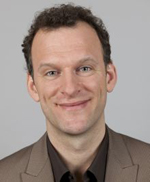
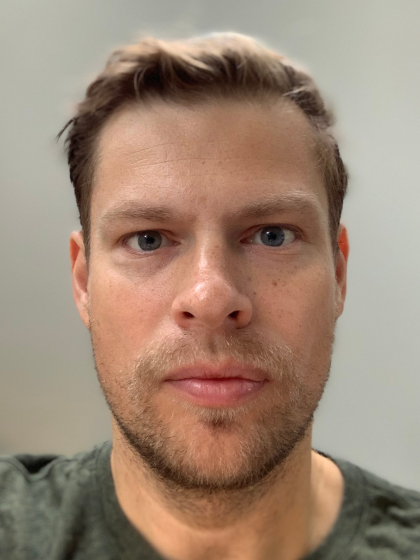
Daan Meerburg is Assistant Professor at the University of Groningen, Faculty of Science and Engineering, embedded in the Van Swinderen Institute for Particle Physics and Gravity. He directs the VIDI programme ‘the cosmic laboratory’ and holds leadership roles in the Simons Observatory, CCAT-prime and REACH collaborations.
Education
- PhD (cum laude) in Cosmology, University of Amsterdam, 2011 – advisors Jan Pieter van der Schaar & Ralph Wijers
- Rubicon Fellow, Princeton University
- CITA Fellow, University of Toronto
- Senior Kavli Fellow, University of Cambridge
Research Interests
Meerburg’s research straddles theoretical and observational cosmology. Core themes include the physics of the cosmic microwave background, primordial non-Gaussianity, inflationary model building, gravitational waves and the epoch of reionisation. Recently he has pioneered the use of artificial intelligence to extract faint cosmological signatures from large data sets, always cross-validated against conservative statistical methods.
Recent Publication Trends
Over 2022-2025 his output focuses on next-generation CMB experiments (Simons Observatory, CCAT-prime), global 21-cm observations with REACH, and neural-network-assisted inference of primordial non-Gaussianity and reionisation history. The work integrates instrument design, advanced statistical techniques and forefront theory.
Honours & Awards
- Templeton Grant (2012)
- VIDI Grant, Dutch Research Council (2017)
- Rubicon Fellowship (Princeton)
- Kavli Senior Fellowship (Cambridge)
- CITA Fellowship (Toronto)
Grants & Leadership
- Principal Investigator, VIDI project ‘the cosmic laboratory’
- Science Leadership, Simons Observatory & CCAT-prime consortia
- Instrument Team, REACH 21-cm experiment
Labs & Teams
Meerburg leads the Cosmic Frontier research group within the Van Swinderen Institute. The team contributes to hardware development, data pipelines and theoretical interpretation for Simons Observatory, CCAT-prime and REACH, fostering close collaboration between cosmologists, instrumentalists and data scientists.