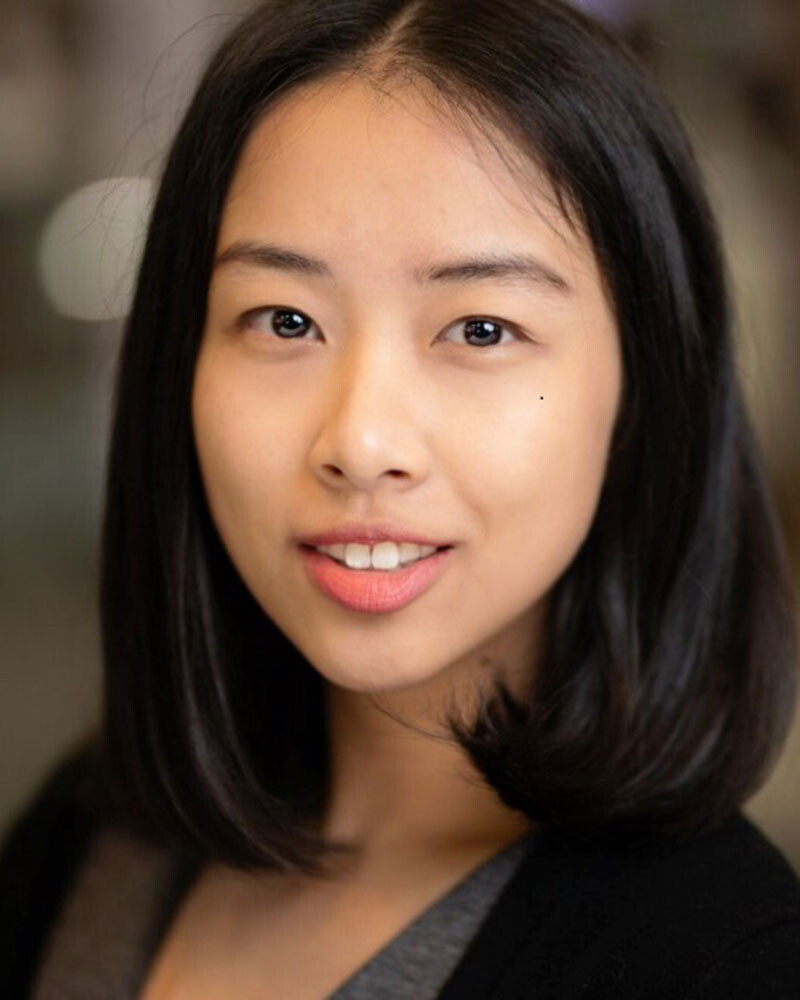
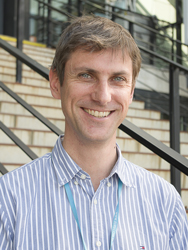
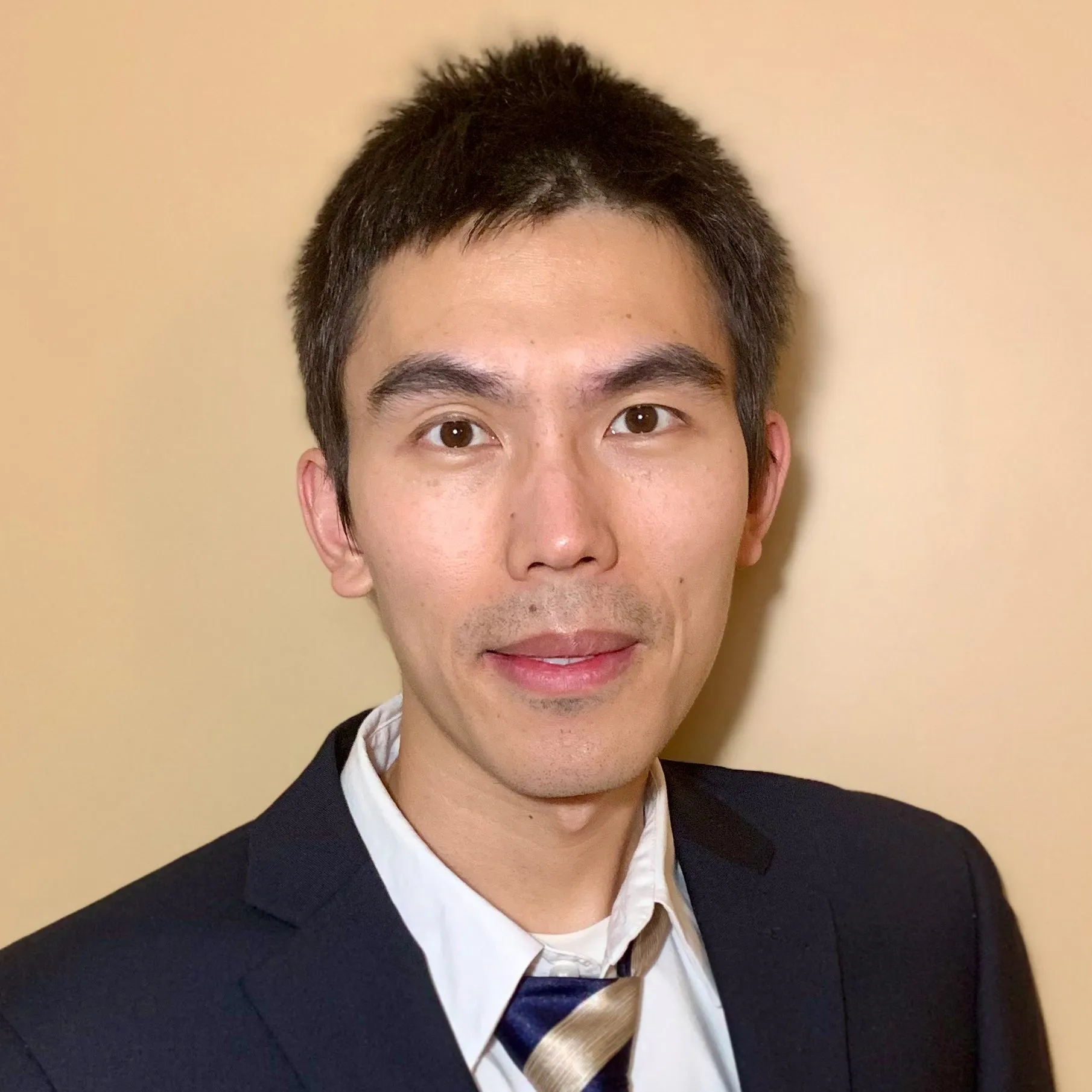
Gina R. Bai is an Assistant Professor of the Practice in the Department of Computer Science at Vanderbilt University's School of Engineering. Her research focuses on software engineering and computer science education, particularly addressing student challenges in software testing and programming practices. She holds a B.S. in Computer Science from Wake Forest University (2016) and a Ph.D. from North Carolina State University (2022), advised by Kathryn T. Stolee. Her work explores testing checklists, generative AI's role in education, fairness in machine learning, and DEI in computing communities. Education: B.S. Computer Science (Wake Forest), Ph.D. Computer Science (NC State) Research Themes: Testing pedagogy, AI in education, DEI, code search Notable Projects: Testing checklist interventions, analysis of ChatGPT in CS1, fairness metrics Her publications emphasize student testing practices, the impact of educational tools, and ethical considerations in software development. She teaches courses like CS 1101 and CS 2201 at Vanderbilt, integrating research into curriculum design.
Hila Lifshitz-Assaf is a Professor of Management at Warwick Business School and a faculty affiliate at Harvard University's Lab for Innovation Science. Her research focuses on the micro-foundations of scientific and technological innovation in the digital age, with emphasis on AI, open innovation, and R&D transformation. She has conducted groundbreaking studies on NASA's open innovation platforms and the impact of AI on healthcare and managerial roles. Education: Doctorate, Harvard Business School MBA, Tel Aviv University (magna cum laude) BA in Management and LLB in Law, Tel Aviv University (magna cum laude) Her research interests bridge empirical and theoretical understanding of innovation processes, including crowdsourcing, open source communities, and AI-driven organizational change. Recent work explores how AI tools reshape managerial and clinical decision-making, winning multiple awards including the MISQ Best Paper Award (2022). Awards: Grigor McClelland Award (EGOS 2015) Best ASQ Paper (2018) MISQ Best Paper (2022) Frank Giarrantani Rising Star Award Teaching & Grants: She teaches Digital Transformation across multiple MBA programs and has received NSF INSPIRE and Industry Research Institute grants. Her consulting background in strategy for telecom and finance sectors informs her work on innovation strategy. She leads the ISM-Analytics (ISMA) Group at WBS and collaborates globally with institutions like MIT, Stanford, and INSEAD.
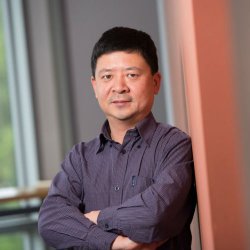
Professor Ning Wang is a leading academic in communication systems at the University of Surrey's Institute for Communication Systems (ICS), School of Computer Science and Electronic Engineering. He holds a PhD from the University of Surrey (2004) and has expertise in 5G/6G networks, edge computing, and space-terrestrial integration. As a coordinator for the EuroMaster Programme and Communication Networks and Software (CNS) pathway, he leads research in network management, mobile video delivery, and IoT applications. His work has been featured in IEEE ComSoc Technology News three times since 2012. Current leadership roles include 5GIC Work Area 1 leader for content and network context. Research collaborations span global institutions like UCL, ETH Zurich, and industry partners like BT and InterDigital. Notable contributions include SDN-based space-terrestrial network integration (VDPA scheme) and O-RAN automation via federated DRL. Over 130 publications and active participation in standards bodies (IETF, 3GPP) reflect his impact on future network architectures. Educations: BEng in Computing (Changchun University of Science and Technology, 1996) MEng in Electronic Engineering (Nanyang Technological University, 2000) PhD in Electronic Engineering (University of Surrey, 2004) Research Focus: Future Internet design, network intelligence, content-centric networking, and satellite integration. Key projects include EU Horizon Europe SPIRIT (immersive telepresence), ESA TINA (satellite 5G functions), and EPSRC NG-CDI (converged digital infrastructures). His research emphasizes practical solutions like edge-AI for VNF splitting and holographic frame synchronisation. Grants & Projects: Over £20M in grants from EPSRC, EU Horizon, InnovateUK, and Royal Society. Active in EU-funded SAT5G (satellite-terrestrial 5G) and C-DAX (smart grid cybersecurity).
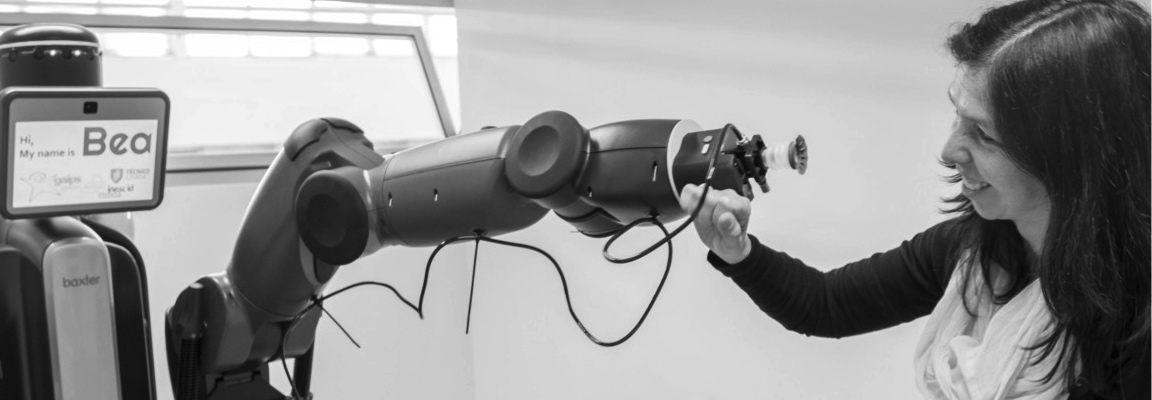
Ana Paiva is a Full Professor in the Department of Computer Science and Engineering at the University of Lisbon's Instituto Superior Técnico (IST), and coordinator of the GAIPS research group at INESC-ID, now focused on AI for People and Society. She holds a Katherine Hampson Bessell Fellowship at Harvard University's Radcliffe Institute for Advanced Study. Her work centers on creating socially intelligent AI and robots through agent-based approaches, emphasizing emotional and cultural competencies. Key research areas include Social Robotics, Affective Computing, and Pro-social Computing. She leads projects like the EU-funded ANIMATAS ITN network and Portugal's AMIGOS/AGENTS initiatives. Notable contributions include the FAtiMA Toolkit for developing emotional AI agents and pioneering work in hybrid human-machine societies. She has received awards such as the EurAI Fellowship (2019) and the Blue Sky Ideas Award at AAAI’18. Her research explores how machines can foster prosocial behaviors like altruism and cooperation, with applications in education, therapy, and ethical AI design. Her advising includes PhD students like Fernando Santos (Victor Lesser Award winner) and Elmira Yadollahi (ACM award recipient). Current projects focus on inclusive robotics for mixed-ability classrooms and ethical frameworks for human-robot collaboration.
Nicolas Loizou is an Assistant Professor in the Department of Applied Mathematics and Statistics at Johns Hopkins University (JHU), with a secondary appointment in Computer Science and affiliation with the Mathematical Institute for Data Science (MINDS). He leads the Optimization and Machine Learning Lab and is part of the Data Science and AI Institute. His research focuses on large-scale optimization, machine learning, federated learning, game theory, and distributed/decentralized algorithms. He holds a PhD in Operational Research from the University of Edinburgh (2019), an MSc in Computing from Imperial College London (2015), and a BSc in Mathematics from the National and Kapodistrian University of Athens (2014). Key achievements include the OR Society’s 2019 Doctoral Award (runner-up), IVADO Postdoctoral Fellowship, COAP 2020 Best Paper Award, and a Cisco Research Grant for developing open-source federated learning tools. His work bridges theoretical guarantees with practical applications, particularly in stochastic optimization methods like the Polyak step-size and extragradient frameworks. Research interests span federated learning architectures, sharpness-aware minimization, and multiplayer systems in AI. He has pioneered frameworks like Locally Adaptive Federated Learning and Multiplayer Federated Learning, addressing challenges in medical imaging and distributed model training. His recent event at JHU highlighted advancements in adaptive optimization algorithms for large-scale models. Education: PhD (Edinburgh), MSc (Imperial College), BSc (Athens University) Affiliations: MINDS, Data Science Institute Grants: Cisco Research Gift, Catalyst Award Labs: Optimization and Machine Learning Lab Recent work includes improving communication efficiency in federated systems and analyzing stochastic algorithms through control-theoretic lenses. His contributions are published in top venues, with a focus on both foundational theory and real-world impact in healthcare and distributed AI.
Prof. Christian Tetzlaff holds a W2 Professorship at the Department for Neuro- and Sensory Physiology, University Medical Center Göttingen. He leads the Computational Synaptic Physiology group, focusing on integrating computational methods to understand neural systems' principles and translating these into technologies like robotics and neuromorphic engineering. His work spans scales from synaptic protein interactions to large neural networks, leveraging disciplines such as nonlinear dynamics and machine learning. Educational Background: 2009: Diploma in Physics, Georg-August University Göttingen 2013: PhD in Physics (Dr.rer.nat.), Georg-August University Göttingen Research Leadership & Grants: Principal Investigator in EU Horizon 2020 Projects (Plan4Act, ADOPD, Human Brain Project's FIPPA) Lead in DFG-funded SFB 1286 (Quantitative Synaptology) INRC member (Intel Neuromorphic Research Community) BMBF-funded KISSKI project (2022–present) Research Interests: His lab explores synaptic mechanisms underlying learning, memory consolidation via synaptic tagging-and-capture, and neuromorphic hardware implementations. Recent work emphasizes calcium signaling in synapses, memristive devices for synaptic working memory, and robust trajectory generation using neuromorphic chips like Loihi. Affiliations: Co-coordinator of Plan4Act (2017–2021) and active in the Göttingen Graduate Center for Neurosciences (GGNB). Collaborates globally with institutions like the Weizmann Institute and Columbia University. Laboratory: Visit tetzlab.com for lab activities and open-source tools like Plastic Arbor .
Maria Shahgedanova is a Professor in the Department of Meteorology at the University of Reading, Faculty of Science. She serves as Programme Co-Director for the MSc in Environmental Management and teaches climatology and climate change at both undergraduate and postgraduate levels. She is affiliated with key research groups including the Walker Institute, Water@Reading, and the Environmental Science Research Division. Research Interests: Her work centers on climate change and variability in extratropical Eurasia and mountainous regions, with emphasis on the mountain cryosphere, glacier dynamics, water resources, and natural hazards. She investigates the impacts of light-absorbing impurities on snowmelt, uses stable water isotopes in hydrological assessments, and develops meteorological forecasts for early warning systems. Her research is particularly focused on Central Asia and High Mountain Asia. The recent publications reflect a strong trend in climate-hydrology interactions in glacierized environments, with increasing emphasis on disaster risk reduction, isotope hydrology, and climate adaptation. Much of her work integrates remote sensing, modeling, and field data to assess future water security and hazards under climate change. University of Reading Engagement and Impact Award (2022) Schlumberger Foundation Fellowship Climate and Cryosphere (CliC) Fellowship Contributing Author, IPCC SROCC Chapter on High Mountain Areas Maria leads multiple international research projects funded by IAEA, UKRI, the Royal Society, and GCRF. She supervises PhD students including Qiao Li and Saule Suleimenova, and mentors postdoctoral researchers such as Dr. Gavkhar Mamadjanova and Dr. Vadim Yapiyev. She leads the Mountain Observatories working group at the Mountain Research Initiative (MRI) and established the Central Asia Research and Adaptation Water Network (CARAWAN), enhancing regional collaboration and capacity building. Her team’s work at the Tuyuksu Mountain Observatory has gained international recognition, including coverage in the New York Times . She actively collaborates with ECMWF, WMO’s Third Pole Regional Climate Change Network (TPRCC), and IAEA’s GLOWAL network, demonstrating strong engagement in global climate science initiatives.
Manuel Reis is an Associate Professor with Agregação at the University of Trás-os-Montes e Alto Douro (UTAD), Portugal, in the Electrical Engineering Department. His research focuses on signal/image processing, smart environment systems, and multimedia education technologies. He is affiliated with the Institute of Electronics and Telematics Engineering of Aveiro (IEETA) and collaborates with Brazil's IFPA-Santarém in computing education research. Education: Bachelor's in Electrical Engineering (University of Trás-os-Montes e Alto Douro, 1991) Master's in Electronics and Telecommunications (University of Aveiro, 1996) PhD in Electrical Engineering (University of Aveiro, 2001) Research Interests: Signal & Image Processing Cybersecurity for IoT and Smart Environments Education Technology (e-learning, multimedia tools) 5G and Edge Computing Applications Artificial Intelligence in Agriculture and Healthcare Recent articles highlight his work on cybersecurity in connected vehicles, federated learning for IoT security, and IoT-based systems for drowsiness detection. He has contributed to projects involving smart city infrastructure, sustainable waste management, and low-cost biomedical devices. His educational research explores e-learning frameworks, student engagement metrics, and innovative teaching methodologies in engineering education. Lab/Affiliations: Institute of Electronics and Telematics Engineering of Aveiro (IEETA) Multidisciplinary Research Group IFPA-Santarém-Brazil (Computing in Education)
Florian Kaltenberger is a Professor in the Communication Systems department at EURECOM, a leading research institute in digital technology based in France. He actively contributes to research and teaching in wireless communications, with a focus on 5G/6G technologies, massive MIMO, and OpenAirInterface-based prototyping. Research Affiliation: EURECOM - Communication Systems Key Projects: SOLDER FP7, Newcom++, COST 2100 Professional Memberships: IEEE, reviewer for major journals and conferences His research centers on signal processing for wireless communications, MIMO systems, channel modeling, and hardware implementation. He specializes in exploiting channel reciprocity in TDD systems and developing practical testbeds for next-generation networks. Recent publications highlight a strong trend toward AI-integrated RAN, open-source 5G/6G testbeds (e.g., OpenAirInterface, X5G), UAV-aided localization, and real-time control using decentralized applications. His work bridges theoretical innovation with field deployment in programmable living labs. Award Highlights: Neal Shepherd Best Propagation Award (2013) He leads research grants under EU frameworks like FP7 and collaborates internationally on open RAN and 6G innovation. Though no formal student list is provided, his role as project lead and frequent co-authorship suggests active mentorship. He also manages EURECOM’s contributions to large-scale collaborative projects. Kaltenberger is deeply involved in lab development, particularly around OpenAirInterface, where he leads efforts in creating end-to-end, multi-vendor, private 5G O-RAN testbeds with real-time AI control and green networking capabilities.
Jie Ding is an Associate Professor at the University of Minnesota's School of Statistics with graduate faculty appointments in Electrical Engineering, Computer Science, and the Data Science Program. He serves as a core faculty member of the Data Science and AI Hub and holds an Amazon Scholar position with the Amazon AGI Team focusing on foundation model training. His educational background includes a Ph.D. in Engineering Sciences from Harvard University (2017), postdoctoral work at Duke University (2018), and a B.S. from Tsinghua University where he participated in both the Math & Physics Academic Talent Program and Electrical Engineering program. Ding's research sits at the intersection of artificial intelligence, statistics, and scientific computing, with focus areas including Agentic AI for autonomous data science workflows, AI Foundations for interpretability and trustworthiness, Scalable Modeling for broader AI accessibility, Decentralized and Collaborative AI systems, and AI Safety addressing privacy and security concerns. He developed the STAT 8931 Generative AI course with open-source materials available at genai-course.jding.org . His recent publications demonstrate strong activity across multiple AI subfields, particularly in value alignment (MAP framework), AI safety mechanisms, federated learning innovations, and statistical foundations for modern AI systems. The breadth of venues (ICML, ICLR, NeurIPS) indicates significant impact across the AI research community. NSF CAREER Award (2024) Army Early Career Program (Young Investigator) Award (2023) Cisco Research Award (2022-25) AWS Cloud Credits for Research (2021-22) Meta/Facebook Faculty Research Award (2021-22) UMN Thank-A-Teacher Teaching Award (2019-20) Ding leads the Agentic AI for Data Science Benchmark initiative, collaborating with University of Minnesota colleagues and Minnesota industry partners to evaluate AI agent capabilities across healthcare, insurance, retail, energy and other sectors. His research group actively recruits PhD students interested in AI/Statistics intersections, with focus on developing theoretically grounded yet practically impactful AI systems.
Nur Arafeh Dalmau is a marine community ecologist and marine spatial planner currently serving as a Postdoctoral Scholar at the University of California, Los Angeles (UCLA) and Stanford University. She is also an Honorary Fellow at The University of Queensland. Her research focuses on the impacts of marine heatwaves on kelp forest ecosystems and the role of marine protected areas (MPAs) in providing climate resilience. She collaborates with NGOs, parks, and fishers to support conservation initiatives and teaches decision-making tools like Marxan for marine spatial planning. She is deeply connected to her home region of Costa Brava, Spain, where she advocates for marine conservation. Her research interests span Marine Ecology Climate Resilience Marine Spatial Planning Kelp Forest Dynamics Conservation Biology Ecological Resilience with a focus on climate-smart marine protected areas and small-scale fisheries adaptation. Recent publications highlight trends in Climate resilience strategies for kelp forests Global marine heatwave impacts Systematic conservation planning Trophic dynamics in MPAs Data integration for fisheries resilience Transboundary marine management . These works emphasize climate adaptation, ecosystem-based management, and policy frameworks. Scientific recognition includes Honorary Fellow, The University of Queensland . Contact: nadalmau@stanford.edu
Janna Levin is a Professor of Physics and Astronomy at Barnard College, Columbia University, where she has been a faculty member since January 2004. Her office is located in Pupin Hall, and she is deeply involved in both theoretical research and science communication. She holds a Ph.D. from the Massachusetts Institute of Technology and a B.A. from Barnard College. B.A., Barnard College Ph.D., Massachusetts Institute of Technology Her research lies at the intersection of cosmology, theoretical physics, and gravitation. Key interests include the early universe, black hole dynamics, chaos in gravitational systems, the topology of space, string cosmology, and extra dimensions. She has conducted research at the Center for Particle Astrophysics at UC Berkeley and the Department of Applied Mathematics and Theoretical Physics at Cambridge University. She also served as the first scientist-in-residence at the Ruskin School of Fine Art and Drawing at Oxford, supported by a NESTA award. The 15 most recent publications reflect a consistent focus on black hole orbital dynamics, gravitational waves, cosmic topology, and chaos. Her work combines deep theoretical insight with computational and mathematical rigor, often exploring how fundamental physics manifests in observable phenomena. Trends include the classification of black hole orbits, the role of chaos in binary systems, and the observational implications of a finite or multiply connected universe. PEN/Bingham Fellowship for Writers Mary Shelley Award for Outstanding Fictional Work Runner-up for the PEN/Hemingway Award Levin is a dedicated mentor and science communicator. While specific advisees are not listed, her leadership at Pioneer Works as Director of Science indicates active engagement in guiding young scientists and interdisciplinary thinkers. She has not publicly listed grants, but her research has clearly been supported through institutional affiliations and fellowships. Her work bridges science and the humanities, emphasizing the human dimension of scientific discovery. She is the founder and director of the 'Scientific Controversies' series at Pioneer Works, a cultural center in Brooklyn where she serves as Director of Sciences. This initiative fosters public dialogue on open scientific questions, promoting a culture of curiosity, vulnerability, and collaborative inquiry. Her programming emphasizes the process of science over definitive answers, reflecting her belief in the value of uncertainty and intellectual struggle.
Professor Donna M. Gitter is a faculty member in the Department of Law at Baruch College’s Zicklin School of Business, City University of New York. She holds a JD from the University of Pennsylvania Law School and a BA in Government from Cornell University, where she graduated Phi Beta Kappa and cum laude . Her research focuses on the intersection of technology and ethics, particularly in comparative intellectual property law with emphasis on biotechnology patenting and biomedical ethics in the United States and European Union. Education : BA, Cornell University (Phi Beta Kappa, cum laude); JD, University of Pennsylvania Law School Professor Gitter’s work spans biotechnology patent law, genetic data privacy, pharmaceutical regulation, and bioethics. She has presented internationally in Europe, Asia, and the United States, addressing topics like computational genomics and open-source biotechnology. Her recent articles focus on experimental use exemptions for gene patents, genetic data privacy enforcement, and post-Dobbs reproductive regulation. She has received significant recognition, including the Fulbright-SyCip Distinguished Lecturing Award , Zicklin Excellence & Innovation in Teaching Award , and multiple research grants from PSC-CUNY. Her teaching includes courses like Fundamentals of Business Law and honors seminars on New York City’s demographics. Scientific Awards : Fulbright-SyCip Distinguished Lecturing Award (2016), Zicklin Excellence & Innovation in Teaching Award (2022), Community Partnership Award (2020), Outstanding Honors Teaching Award (2017) Professor Gitter serves on committees like the Zicklin School of Business Executive Committee and mentors students in entrepreneurship competitions. Her work bridges legal, ethical, and technological domains, with a focus on policy solutions for emerging biotech challenges.
László Lengyel is a Professor at the Budapest University of Technology and Economics (BME), affiliated with the Department of Automation and Applied Informatics . His work bridges theoretical and applied computer science, focusing on industrial automation, IoT systems, and model-driven engineering. Research interests include Model transformations and domain-specific languages IoT device management and multi-domain integration Software obfuscation and cybersecurity Graph algorithms and distributed computing (MapReduce) Real-time data analysis in manufacturing Automotive sensor networks His recent publications reflect expertise in model-driven IoT architectures , granule manufacturing automation , and MapReduce-based graph analysis , with a focus on industrial and automotive applications. He contributes to open-source frameworks like SensorHUB and explores gamification in driver behavior systems.
Kenza Kellou-Menouer is a researcher affiliated with the ETIS Laboratory at ENSEA, France, and part of the MIDI research group . Her work focuses on schema discovery for Semantic Web data, data mining, and big data optimization. Research: Semantic schema discovery, clustering/classification algorithms, and association rules. Teaching: Semantic Web technologies, database design, algorithms, and programming languages (Java, C++, C#, C). Research Interests center on Semantic Web data integration, RDF schema inference, and hybrid machine learning approaches. She has contributed to scalable schema discovery systems and real-time profiling techniques for large datasets. Publications include work on schema inference tools (SchemaDecrypt++, HInT) and methodological frameworks presented at top-tier venues like VLDB (A*), ICDE (A*), SSDBM (A), and ISWC . Her research bridges theoretical advancements with practical implementations for RDF datasets. Community Contributions include organizing tutorials at the International Semantic Web Conference (ISWC) 2022 and developing educational materials for database and programming courses.