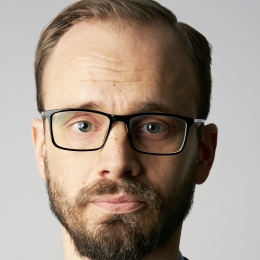
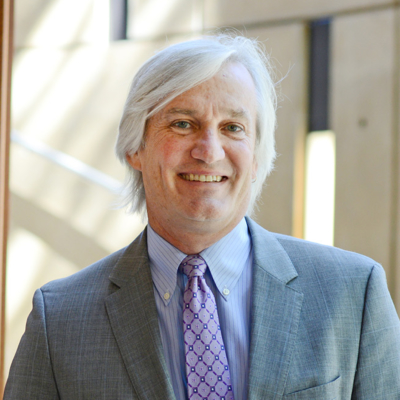
Karl Gustafsson is a Professor at Stockholm University within the Department of Economic History and International Relations. His work bridges security studies , collective memory , and digital research methods in international relations. Current Role: Professor of International Relations, Stockholm University Previous Positions: Post-Doc at Lund University, Researcher at Swedish Institute of International Affairs Visiting Appointments: University of Tokyo, Osaka University, Keio University, Academia Sinica, Nordic Institute of Asian Studies Research Focus: Karl specializes in memory politics , ontological security , and anxiety-driven international dynamics , particularly in Sino-Japanese relations and digital platforms . His studies explore how historical narratives and online memory construction influence state identity and policy. Awards & Grants: Recipient of the Wang Gungwu Prize (2014) and Stockholm University Association’s award (2011). Holds Swedish Research Council and Marianne & Marcus Wallenberg Foundation grants for projects on apologies in international politics and digital memory in East Asia . Publications: His work appears in journals such as International Studies Quarterly , European Journal of International Relations , and Memory Studies , addressing topics like narrative power in East Asia, anxiety’s role in policy change , and digital humanities applications in IR.
Professor Andrew Murray is a leading academic in Law with expertise in New Media and Technology Law. He holds the position of Professor of Law at the LSE Law School and directs the LSE Law, Society and Technology Group. His research focuses on digital rights, AI ethics, and regulatory frameworks for emerging technologies. Murray has held roles including Fellow of the Royal Society for the Arts and advisor to the Saudi Arabian government on e-commerce law. He has advised parliamentary committees, including the House of Lords Communications Committee on digital regulation, and delivered the prestigious TMC Asser Lecture on AI and human agency. Education: LL.B. Hons from Edinburgh University (1994), followed by academic roles at Stirling University and LSE since 2000. Professional memberships include the Society of Computers and Law (SCL) and the Higher Education Academy (HEA). He has been a visiting professor at Amsterdam Law and Technology Institute and Sciences Po Paris. Research interests span cyberspace regulation, AI governance, and the intersection of technology with human rights. Key publications include Human Rights in the Digital Age (2004) and The Regulation of Cyberspace (2007). Awards include recognition as an Independent Expert in Nominet UK dispute resolution (2001–2008) and a 2024 Leibniz Prize reviewer. Advocacy includes contributions to EU e-commerce directives and UK surveillance law debates. His work emphasizes balancing innovation with legal accountability in digital spaces.
Ronald J. Colombo is Professor of Law and Associate Dean for Distance Education at Hofstra University's Maurice A. Deane School of Law. He teaches courses in Business Organizations, Securities Regulation, Contracts, and corporate law seminars. He has been on the faculty since 2006 and previously served as Associate Dean for Academic Affairs (2013–2015). Education: JD, New York University School of Law (magna cum laude, Order of the Coif), 1998 BS, Cornell University, 1994 Clerkship: Judge Jerry E. Smith, U.S. Court of Appeals for the Fifth Circuit Professor Colombo’s research focuses on corporate law, securities regulation, financial regulation, and the constitutional rights of corporations, especially First Amendment protections. His work explores the moral and philosophical underpinnings of corporate personhood, religious liberty in business, and the role of trust in financial systems. He is particularly known for bridging legal doctrine with ethical and theological perspectives. His recent scholarly publications reveal a strong thematic trend: the intersection of religion, corporate governance, and constitutional law. He has also contributed to legal education, especially in online teaching methodologies, and continues to publish on financial regulation and corporate ethics. Scientific Awards: Stessin Prize for Outstanding Scholarly Publication Lawrence A. Stessin Prize for Outstanding Scholarly Publication (2008) Professor Colombo has been actively involved in professional service, including serving on the editorial review board of the Review of Business and as an arbitrator for the Financial Industry Regulatory Authority (FINRA). He has not listed any formal research grants or PhD students, but his influence extends through media engagement—quoted in The New York Times , Wall Street Journal , and Bloomberg —and through his widely read op-eds in The Financial Times and Huffington Post . He has held leadership roles in academic administration and is a recognized expert in both practitioner and scholarly legal communities. His treatise Law of Corporate Officers and Directors is republished annually by Thomson Reuters, indicating sustained scholarly and practical impact.
Fidelma White is a Senior Lecturer in the School of Law at University College Cork (UCC), Ireland. She holds a Higher Doctorate (LL.D.) from the National University of Ireland and has been affiliated with UCC since 1995, previously teaching at the University of Sheffield (1991–1995). Her research focuses on commercial law, e-commerce, consumer law, and public sector audit. She has advised numerous national and EU institutions, including the European Parliament and the Competition and Consumer Protection Commission. Education: LL.B. and B.C.L. from UCC (1988–1989), LL.M. in International Business Law (London School of Economics, 1991), and an LL.D. (2009). She also holds postgraduate qualifications in teaching and learning in higher education (2019–2020). Research Interests: White’s work emphasizes digital markets, consumer protection, and EU regulatory frameworks. She has led projects funded by the Irish Research Council and EU initiatives, exploring topics like cross-border online gambling and digital content regulation. Awards: Recipient of UCC’s President’s Award for Excellence in Teaching (2009) and the Partnership Award for Innovative Teaching (1994). She has also contributed to numerous peer-reviewed journals and authored/co-authored books on consumer law and commercial practices. Grants & Collaborations: Over €120,000 in research funding, including a €105k study on EU legal frameworks for online gambling (2019–2024). Collaborations include projects with Mary Donnelly and Louise Crowley at UCC, and international work with institutions like KU Leuven and the European Commission. Teaching: Specializes in commercial law, e-commerce law, and legal education. She has designed innovative programs like the eLaw Summer Institute, integrating technology into legal pedagogy. External Roles: External examiner at UCD, Griffith College Dublin, and other institutions. She also serves on advisory committees for consumer legislation and EU policy initiatives.
Allen S. Weiner is a Senior Lecturer in Law at Stanford Law School and directs three major programs: the Stanford Program in International and Comparative Law, the Stanford Humanitarian Program, and the Stanford Center on International Conflict and Negotiation. His expertise spans international security, conflict resolution, and humanitarian law. Weiner holds a BA from Harvard University (1985) and a JD from Stanford Law School (1989). Prior to joining Stanford in 2003, he served in the U.S. State Department, advising on international law and representing the U.S. in international tribunals. His research focuses on international law’s application to contemporary security threats, including cyber warfare, nuclear doctrine, and online misinformation in conflict zones. Notable works include co-authoring the leading textbook International Law (8th ed., 2023) and analyzing historical cases like the Hiroshima bombing’s legal implications. Weiner’s policy work includes projects with INTERPOL to combat transnational crime and rethinking its governance models. Scientific awards are not explicitly listed in the provided texts, though his contributions to legal scholarship and policy are widely recognized. He teaches courses on conflict resolution, humanitarian law, and ethics in warfare. His advising and grants include policy practicums addressing global security challenges.
Linda Mulcahy is Professor of Socio-Legal Studies and Director of the Centre for Socio-Legal Studies at the University of Oxford. She specializes in dispute resolution and the experiences of lay users in legal systems, with research spanning healthcare complaints, court design, and digital justice. Her interdisciplinary work bridges law, sociology, and architecture. Mulcahy's research examines the socio-legal dynamics of disputes in contexts ranging from medical negligence to neighborhood conflicts. She explores how institutional designs and digital transformations affect access to justice and procedural fairness. Her current projects include oral histories of law centers and rape crisis movements, plus studies on explaining legal rights to the public. Mulcahy's extensive publications focus on legal architecture's impact on due process, visual representations of justice, and digital court reforms. Her work demonstrates consistent attention to how marginalized groups experience legal institutions. Awards and Recognition: Fellow of the Academy of Social Sciences She directs doctoral training programs and leads the Frontiers of Socio-Legal Studies blog/podcast for early career scholars. Mulcahy consults for governmental bodies including the Access to Justice Foundation and Law Centres Network.
Cristina Bettinelli is a full professor in the Department of Management at the University of Bergamo. She serves as Director of the MSc Program in International Management and Marketing (IMM) and Director of the Center for Young and Family Enterprise (CYFE). Her research focuses on family business governance , entrepreneurial firm innovation , and internationalization , with publications in journals like Family Business Review , Entrepreneurship Theory and Practice , and Journal of Family Business Strategy . Member of editorial boards: Family Business Review , Journal of Family Business Strategy Professional activities: Innovative training projects, Marketing Lhab research group (since 2024) Scientific Awards: Best Contribution to Practice Paper (2024) - IFERA Best Unpublished Research Paper Award (2022, 2015) - FFI Multiple Best Paper Awards/Nominations - IFERA, EIASM, ICSB Family Business Review Best Paper Award (2012) Recent Research Trends: Analyzes family firm dynamics, pandemic response behaviors, cross-border e-commerce strategies, and B corporation ethics. Her 2024-2025 publications emphasize organizational identity , crisis management , and strategic governance .
Mateja Durovic is a Professor of Law and Technology at King’s College London, holding roles as Deputy Director of the Centre for Technology, Ethics, Law and Society (TELOS) and Academic Director of the Executive programme on Consumer Law. He previously served as Assistant Professor at City University of Hong Kong (2015-2017). His academic credentials include a PhD and LLM from the European University Institute, an LLM from the University of Cambridge, and an LLB from the University of Belgrade, graduating as top of his class. Research focuses on consumer law, contract law, and the intersection of law with new technologies. He has published in leading journals such as the European Review of Private Law and collaborates with institutions globally. His work addresses digital vulnerabilities, smart contracts, EU consumer directives, and online commercial practices. He is a visiting professor at universities in Europe and Asia and advises international organizations like the European Commission and the United Nations. Professional affiliations include the European Law Institute and Society of Legal Scholars. His contributions have been cited by the Court of Justice of the European Union and UK Law Commission. He leads King’s Cybersecurity Centre and Centre for Data Futures, advancing interdisciplinary research in digital technologies, cybersecurity, and participatory data infrastructure.
Professor Steven J. Murdoch is a leading figure in cybersecurity and privacy-enhancing technologies at the Department of Computer Science , University College London . His work bridges computer science and law, focusing on payment system security, electronic evidence reliability, and dispute resolution mechanisms. Head of Information Security Research Group at UCL (2022–present) Director at Open Rights Group (2022–present) Research spans payment security , privacy protocols , and legal implications of computer evidence . Key contributions include analyzing EMV protocol flaws, designing secure authentication mechanisms, and improving Tor's anonymity. Publications cover privacy-preserving federated learning , time-lock puzzles , and malware ecosystem analysis Awards include Fellowships from the Institution of Engineering & Technology and British Computer Society , and a Royal Society University Research Fellowship . Teaches COMP0055 Computer Security II and COMP0061 Privacy Enhancing Technologies at UCL
Tatsuhiro Ueno serves as Professor at Waseda University's Faculty of Law and School of Law, specializing in Intellectual Property Law, Copyright Law, and Information Law. He currently holds leadership positions as Director of the Institute of Comparative Law (since 2024) and President of SARLIB (Society for Administration of Remuneration for Public Transmission by Libraries or Similar Facilities). With extensive international experience including visiting scholar positions at Ludwig Maximilian University of Munich and the Max Planck Institute for Intellectual Property and Competition Law, Professor Ueno has established himself as a leading authority in copyright law reform and international intellectual property matters. Professor Ueno earned his Master of Law from Kyoto University following undergraduate and graduate studies there. His academic career includes teaching positions at Rikkyo University College of Law and Politics and Seijo University Faculty of Law before joining Waseda University in 2013, where he now contributes to shaping Japan's legal education landscape. His research focuses on the critical intersection of intellectual property law with emerging technologies, particularly artificial intelligence systems and digital platforms. Professor Ueno has pioneered work on text and data mining exceptions, copyright limitations in digital environments, and creator-oriented copyright frameworks. His scholarship bridges theoretical analysis with practical policy development, influencing both domestic legislation and international copyright discourse. His recent publications demonstrate a concentrated focus on AI and copyright law, with numerous articles examining the legal challenges posed by generative AI systems, text and data mining exceptions, and the evolving landscape of copyright protection in the digital era. Professor Ueno's work consistently addresses the balance between protecting creators' rights and ensuring public access to knowledge. KDDI Foundation Book Publishing Grant (January 2025) for "Creator-Oriented Copyright System" Professor Ueno actively participates in numerous government committees shaping Japan's copyright law, including serving as Chairman of the Law and Computers Society and as a longstanding member of the Copyright Subcommittee of the Council for Cultural Affairs. His research is supported by multiple grants from the Japan Society for the Promotion of Science, including ongoing projects examining human portraits and voices in the AI age (2025-2029) and AI and intellectual property rights systems (2024-2029). He regularly presents at international forums including WIPO Summer Schools, ATRIP conferences, and copyright forums worldwide, establishing his reputation as a key thought leader in global copyright policy development.
Maxi Scherer is a Professor of Law and Chair in International Arbitration, Dispute Resolution, and Energy Law at Queen Mary University of London’s Centre for Commercial Law Studies (CCLS). She holds a PhD from Paris Sorbonne and LLM from Cologne University. Her academic roles include Global Professor at NYU Law, Visiting Professorships at SciencesPo, Georgetown, and others. She teaches in international arbitration and energy law, focusing on investment disputes, transparency, and energy sector arbitration. Research interests span international arbitration, energy law, and private international law. She is General Editor of the Kluwer Journal of International Arbitration and authored/co-authored books like International Arbitration in the Energy Sector and Transparency in International Investment Arbitration . Over 50 arbitrations as arbitrator (ICC, LCIA, etc.) and extensive practice in civil/common law systems. Her awards include being ranked in the top 20 Global Elite Thought Leaders and recognized by Who’s Who Legal. Key contributions address AI’s impact on dispute resolution, remote hearings, and third-party funding. Affiliations include CCLS, School of International Arbitration, and Energy and Climate Change Law Institute.
Professor John Zeleznikow is an Honorary Associate at La Trobe University's Law School, with a distinguished career spanning 49 years across multiple institutions including the University of Edinburgh and Victoria Business School. His research focuses on AI applications in legal decision-making, dispute resolution, and autonomous vehicle technology. He has secured over $8M in research grants and supervised 20 PhD graduates. Key projects include the Split-Up system (used in high-profile divorce cases like Prince Charles and Lady Di) and Family-Winner software, which won an ABC TV innovation award. His work bridges law, technology, and ethics, with publications in leading journals like the Harvard Negotiation Law Review and Artificial Intelligence and Law . Recent research explores AI-driven online dispute resolution (ODR), autonomous vehicle regulation, and the ethical implications of technology in legal systems. He advocates for transparent, user-centric legal tech solutions to enhance access to justice and improve decision-making processes.
Riikka Koulu is an Associate Professor of Social and Legal Implications of AI at the University of Helsinki, holding joint appointments at the Faculty of Law and Faculty of Social Sciences. She serves as Director of the University of Helsinki Legal Tech Lab, an interdisciplinary research hub focused on law, technology, and society, and is an affiliated researcher at the Alexander von Humboldt Institute for Internet and Society in Berlin. In 2025, she will be an academic visitor at Oxford University. Education: Doctor of Law (OTT), University of Helsinki (awarded November 17, 2016) Title of Docent (digitalisation of law), University of Lapland (2020-present) Riikka Koulu is a socio-legal scholar specializing in the interconnections between law, technology, and society. Her research focuses on understanding law's role in shaping and being shaped by digitalized societies. She combines doctrinal and theoretical legal analysis with empirical research from a public law perspective. Her current work examines digital public administration, AI policy and regulation, European technology regulation, and the impact of digital technologies on legal decision-making. She is particularly interested in human oversight mechanisms and interface design in automated systems. Her recent publications reveal a strong focus on the legal implications of digital transformation, with particular attention to automated decision-making in public administration, algorithmic governance, and the changing nature of legal procedures in digital environments. Her work spans theoretical explorations of legal concepts in digital contexts and practical analyses of how technology is reshaping justice systems and public administration. Scientific Recognition: Title of Docent (digitalisation of law), University of Lapland (2020) Affiliated researcher, Alexander von Humboldt Institute for Internet and Society, Berlin (2019-present) Riikka Koulu actively supervises doctoral researchers through the Doctoral Programme in Law and has secured significant research funding for multiple projects. Her current research portfolio includes the ADM-Gov project (2022-2026) on automated administration governance, the REPAIR project (2022-2025) on algorithmic system maintenance, and the DARE project (2021-2026) on inclusive digital administration design. These projects involve collaboration with international partners and interdisciplinary teams. As Director of the University of Helsinki Legal Tech Lab, Koulu leads an interdisciplinary research hub that is part of the Network of Centers (NoC). The lab serves as a focal point for research on the intersection of law, technology, and society, bringing together scholars from legal studies, computer science, social sciences, and design disciplines to address pressing challenges in digital governance.
A.J. Bellido de Luna is the Assistant Dean for Advocacy and Conflict Resolution Programs, Hardy Law Professor, and Professor of Practice of Law at St. Mary’s University School of Law. He oversees the Advocacy Program National Team, including Moot Court and Trial Teams, and teaches Trial Advocacy and Arbitration. Previously, he served as Managing Director of the Clinical Law Program at the University of Maryland School of Law and held leadership roles in Baltimore City governance and law enforcement. Education: J.D., University of Maryland School of Law (2004) B.S., Johns Hopkins University (2000, with Honors) His expertise spans legal advocacy, dispute resolution, and clinical legal education. He has directed nationally competitive trial teams and developed innovative curricula in remote advocacy techniques. Key research interests include cross-examination strategies, arbitration frameworks, and the integration of technology in legal practice. Awards: 2014 Staff Member of the Year (University of Maryland School of Law) 2013 Faculty of the Year Community Award (Homeless Person’s Representation Project) 2010 Impact Award (Black Law Students Association) 2004 Order of the Barrister His career combines academic leadership with practical experience in criminal justice, having served as a retired police lieutenant and Marine. He currently advises the Board of Advocates and oversees intergovernmental affairs at St. Mary’s University.
Mustafa Aksu is a Professor at Istanbul University's Faculty of Law, Department of Civil Law. His research spans Civil Law , Intellectual Property Law , Information Law , and EU Legal Harmonization . He has advised 26 theses and published extensively on digital rights, family law, and obligations law. Research Interests: Focus on AI and law, copyright exhaustion in digital markets, EU-Turkey legal alignment, domain name regulation, and protection of computer programs. Publications: Recent works include AI's legal frameworks (2023), medical informatics law (2021), and digital exhaustion doctrine (2016). His research emphasizes cross-border IP enforcement and EU court precedents. Contact: Email aksum@istanbul.edu.tr | Office: Hukuk Fakültesi Binası, İkinci Kat, Oda No: 38, Beyazıt, Istanbul, Turkey.