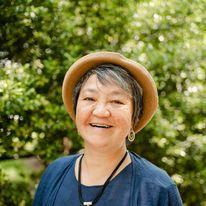
Dr. Mirta Alessandrini is an Assistant Professor of Agri-food Law at Wageningen University & Research (WUR), specializing in the legal dimensions of sustainability transitions within agri-food systems. Her work bridges legal analysis with insights from sociology and environmental studies to address challenges in EU agri-food legislation affecting rural and urban communities. Education: Holds a PhD in Food Law from Università Cattolica del Sacro Cuore (Italy) and a Master’s (LLM) from Università degli Studi di Milano. Her doctoral research compared EU and Californian regulatory frameworks for Short Food Supply Chains (SFSCs), including a research visit to UC Santa Cruz. Research focuses on two core areas: (1) Agri-food law emphasizing SFSC regulation, CAP social dimensions, and GMO/NGT legal frameworks; (2) Food safety law challenges in sustainability transitions. Current projects include leading the regulatory assessment for Horizon Europe’s TOLERATE project (2023–2027), which explores engineered ancient DNA to enhance crop drought resilience, and prior leadership in SMARTCHAIN (H2020) for SFSC innovation. Teaching: Coordinates the Food Law & Regulatory Affairs specialization within the Food Safety MSc program. Teaches courses like "Law for Agri-Food Systems Transformation" and co-developed the WUR Academy’s EU Farm to Fork Food Laws training. Leads the global Food Law Academics Network (FLAN), connecting 300+ scholars across 50 countries. Publications: Authored Regulating Short Food Supply Chains in the EU (Springer, 2024) and contributes to topics like climate technology law, Farm-to-Fork policy evolution, and legal frameworks for novel food technologies.
Craig Merrett serves as an Adjunct Professor in the Mechanical & Aerospace Engineering Department at Clarkson University's Coulter School of Engineering & Applied Sciences, with additional affiliation at the Center for Advanced Materials Processing (CAMP). His academic credentials include advanced degrees from the University of Illinois at Urbana-Champaign and foundational education at Carleton University, supporting his active role in aerospace engineering education and research. His educational background comprises: Ph.D. in Engineering from University of Illinois at Urbana-Champaign (2011) M.S. in Engineering from University of Illinois at Urbana-Champaign (2008) Bachelor's degree from Carleton University (2006) Dr. Merrett's research centers on aero-servo-viscoelasticity , specifically investigating time-dependent structural instabilities in viscoelastic materials under extreme conditions. His portfolio spans aircraft flutter analysis, composite fracture mechanics, elevated-temperature material behavior for aerospace/nuclear applications, and unsteady aerodynamics for panel flutter and wind farm systems. This work bridges theoretical structural dynamics with practical engineering solutions for critical time-to-failure scenarios. Analysis of his 2014-2016 publications reveals consistent focus on viscoelastic composite structures, with significant contributions to flutter prediction models, nuclear component stability, and flight data system innovation. His research integrates computational modeling with experimental validation to address real-world challenges in material degradation and structural performance. Key recognitions include: GARDN II Turboprop Flight Advisory System projects (2016-2017) Partners in Research Virtual Researcher Award (2014) Carleton Student Engineering Society "Best Professor" Award (2014) Dr. Merrett teaches core aerospace courses AE350 (Analysis of Aircraft Structures) and AE458 (Design of Aircraft Structures), while his research is supported through industry-academic collaborations like the GARDN II initiatives. His educational publications demonstrate commitment to innovative pedagogy in engineering design instruction. He conducts experimental and theoretical research through Clarkson's Center for Advanced Materials Processing (CAMP), utilizing specialized facilities for materials testing under extreme thermal and mechanical loads relevant to aerospace and nuclear applications.
Keiko Tanaka is a Professor of Rural Sociology at the University of Kentucky, holding a joint appointment with the Department of Sociology in the College of Arts and Sciences. She is actively engaged in the College of Agriculture, Food and Environment and contributes to interdisciplinary programs in Sustainable Agriculture and Japan Studies. Her research focuses on the sociology of agriculture and food, science and technology, and development, with a particular emphasis on sustainable agriculture and food systems, international development, and community food security in East Asia and the United States. She examines how agricultural science and technology reconfigures food production and consumption globally, publishing in both English and Japanese academic journals. Recent publications reveal a strong comparative U.S.-Japan research trajectory examining beginning farmers' knowledge networks, labor ethics in agrifood supply chains, and migrant agricultural labor systems, demonstrating interdisciplinary methodological approaches across rural sociology and food studies. Scientific Awards and Honors: President of the Rural Sociological Society (2018-2019) Vice President of the Rural Sociological Society (2014-2015) Program Chair for the 75th Annual Meeting of the Rural Sociological Society (2012) Dr. Tanaka leads multiple research initiatives including comparative studies of beginning farmers in the Southeastern U.S. and Japan, and participates in grant-funded projects on agriculture-of-the-middle. Her academic leadership includes serving as Director of Graduate Studies in Sociology (2009-2011, 2013-2014) and Community & Leadership Development (2015), emphasizing civic engagement and internationalization in scholarship. She actively collaborates through interdisciplinary teams developing Sustainable Agriculture curriculum in the College of Agriculture, Food and Environment and Japan Studies curriculum in the College of Arts and Sciences, bridging academic research with practical outreach on food systems and Asian studies.
Professor Bradley Evans is a distinguished Earth observation and remote sensing specialist at the University of New England, where he holds a position in the Faculty of Science, Agriculture, Business and Law within the School of Environmental and Rural Science. His expertise spans environmental science, biodiversity conservation, and the application of hyperspectral imaging spectroscopy to solve real-world environmental challenges. Previously, he has held significant positions including Director of Australia's Terrestrial Ecosystem Research Network and Director of Sydney Informatics Hub at The University of Sydney. PhD in Environmental Science, Murdoch University, Western Australia, 2013 Bachelor of Science with Honours in Environmental Science, Murdoch University, Western Australia, 2009 Bachelor of Science in Energy Studies, Murdoch University, Western Australia, 2009 Advanced Diploma in Marketing Management, TAFE NSW, Bradfield College, 1999 CASA RPAS sub 25kg (Multirotor Drone) certification Professor Evans's research focuses on applying advanced remote sensing techniques to environmental monitoring and conservation. His work integrates hyperspectral imaging with ecological modeling to address critical issues such as koala habitat mapping, forest health assessment, and water quality monitoring. He has pioneered approaches using plant fluorescence to model growth patterns and has contributed significantly to NASA's OCO2 mission. His recent work emphasizes the development of open-source tools for hyperspectral imaging, making advanced remote sensing more accessible to researchers worldwide. Analysis of Professor Evans's recent publications reveals a strong trend toward practical applications of hyperspectral imaging across diverse environmental contexts. His work spans from precision agriculture applications for cotton farming to koala habitat conservation, demonstrating the versatility of remote sensing technologies. The research shows increasing integration of machine learning techniques with hyperspectral data, enhancing the accuracy and efficiency of environmental monitoring systems. There's also a notable emphasis on open-source solutions, reflecting his commitment to democratizing access to advanced remote sensing technologies. 2016 – Terrestrial Ecosystem Research Network NSW – NSW Chief Scientist Award Multiple travel scholarships from NCCARF, EUFAR, and Australian Research Council 2010 Centre of Excellence for Climate Change PhD top-up Scholarship 2008 Master class Scholarship from Wentworth Group of Concerned Scientists Professor Evans has successfully supervised numerous PhD and Master's students across multiple institutions, demonstrating strong mentorship capabilities. His research is supported by substantial grants including the $198K NSW Department of Environment Koala's in the Landscape project (2023), the University of Sydney's Koala's in the Air project ($70K), and significant funding for the OpenHSI initiative. He has been a Chief Investigator for the Australian Research Council Training Centre on CubeSats, UAVs and Their Applications, securing funding for innovative remote sensing projects. His work with NASA JPL's Surface Biology and Geology Study and collaborations with international space agencies demonstrates the global impact of his research. At the University of New England since 2023, Professor Evans has established the Earth Observation Laboratory with a special focus on water and wildlife habitat (particularly koalas) and riverine water quality. He serves as Vice President of Earth Observation Australia and participates in the AquaWatch Steering Committee for the Commonwealth Department of Defence. His laboratory actively collaborates with industry partners like HyVista Corporation and academic institutions including The University of Sydney. The lab emphasizes open-source approaches to remote sensing technology, exemplified by the OpenHSI project, which has created accessible hyperspectral imaging solutions for researchers worldwide.
Dewei (David) Xu serves as an Associate Professor in the Department of Electrical and Computer Engineering at Toronto Metropolitan University, where he has been a faculty member since joining as an Assistant Professor in 2003. His academic career builds upon foundational work in electrical engineering with specialization in sustainable energy systems. His educational journey includes: M.S. in Electrical Engineering, Tsinghua University, Beijing (2001) Ph.D. in Electrical Engineering, Tsinghua University, Beijing (2001) Following his doctoral studies, he conducted postdoctoral research at Ryerson University's Laboratory of Electric Drives and Application Research (LEDAR) from 2001-2003. Dr. Xu's research program centers on power electronics for renewable energy integration, with particular emphasis on wind energy conversion systems. His work addresses critical challenges in permanent magnet synchronous generator controls , brushless doubly-fed induction generator modeling , and advanced AC-DC conversion topologies . This research directly supports the development of more efficient and reliable grid-connected renewable energy infrastructure, bridging theoretical innovation with practical engineering applications in electric drives and machine design. Analysis of his publication record reveals a consistent focus on wind energy power electronics, with recent contributions examining control schemes for current source converters, real-time simulation of turbine dynamics, and novel converter architectures for variable-speed systems. His work demonstrates strong alignment between theoretical modeling and experimental validation in renewable energy applications. Dr. Xu maintains active teaching responsibilities including ELE754: Power Electronics, ELE637: Energy Conversion, ELE800: Engineering Design Project, and ELE864: Electric Drives, training next-generation engineers in critical energy conversion technologies. His academic service includes advising student design projects and contributing to curriculum development in power systems engineering. During his postdoctoral fellowship, Dr. Xu was affiliated with Ryerson University's Laboratory of Electric Drives and Application Research (LEDAR), where he developed foundational expertise in drive systems that continues to inform his current research trajectory. Current laboratory resources at Toronto Metropolitan University supporting his work are not specified in the available documentation.
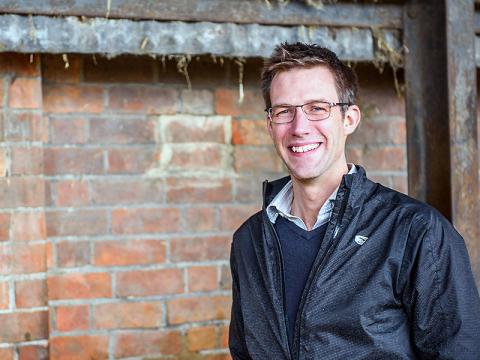
Tom MacMillan is the Elizabeth Creak Chair in Rural Policy and Strategy at the Royal Agricultural University (RAU). He leads strategic initiatives in land use, farming systems, and food policy innovation. His roles include academic leadership for the RAU’s Innovation Village project and directing the Centre for Effective Innovation in Agriculture (CEIA). He also serves as Deputy Director of the National Innovation Centre for Rural Enterprise (NICRE). MacMillan holds a PhD in Geography from the University of Manchester and a BA (First Class Honors) in Geography from the University of Oxford. His research focuses on sustainable agriculture, food systems transformation, and rural enterprise strategies. Key projects include the National Food Strategy development with Henry Dimbleby and advising the Food, Farming & Countryside Commission. His recent work explores cultured meat’s societal impacts, land use innovation, and crop diversity strategies. He has authored over 20 reports and peer-reviewed articles since 2019, emphasizing farmer-led research and policy alignment. MacMillan is also a trustee of the Nuffield Farming Scholarships Trust and actively engages in UK agricultural policy dialogues.
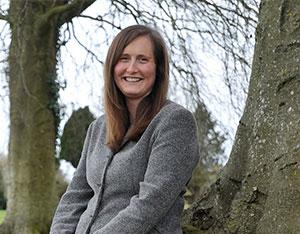
Dr. Jessica Stokes is an Associate Professor in Farm Animal Welfare Science and Policy at the Royal Agricultural University (RAU). She holds additional roles as Senior Lecturer, Academic Lead for the Agricultural Science and Practice Programme, and Programme Manager for the Graduate Diploma in Agriculture. Her work bridges science, policy, and practice to enhance farm animal welfare, focusing on livestock species such as dairy cattle, sheep, and laying hens. Dr. Stokes holds a BSc (Exeter), MSc (Exeter), PhD (Bristol), PGCAP (Gloucestershire), and is a Fellow of the Higher Education Academy (FHEA). Her research emphasizes collaboration with farmers and industry to create welfare frameworks that promote animal well-being while addressing sustainability challenges. Notable projects include BroilerNet (enhancing the European broiler sector) and Pathways to Sustainable Food (funded by Horizon Europe). Her research interests span positive welfare assessment, technology in livestock management, and policy development. She has pioneered frameworks for evaluating 'good life' opportunities in dairy cattle and sheep, integrating farmer expertise with scientific evidence. Key areas include GPS tracking for cattle behavior analysis, microclimate regulation in organic farming, and welfare impacts of innovative practices like GPS shock collars. Dr. Stokes has authored over 20 peer-reviewed articles and presented at international conferences, including the University Federation for Animal Welfare Conference and the ECAWBM/AWSELVA/ESVCE/PSI Animal Congress. She actively promotes agricultural literacy and widening participation in the sector through teaching and outreach.
Stig Irving Olsen is an Associate Professor at the Department of Environmental and Resource Engineering at the Technical University of Denmark (DTU), specializing in Quantitative Sustainability Assessment. His research focuses on environmental assessment of products and systems across their life cycles, with particular emphasis on Life Cycle Assessment (LCA) , micro/nanotechnologies , and circular economy principles. Education: PhD in Environmental Engineering, Technical University of Denmark (1997) Master of Science in Biology, University of Copenhagen (1988) His recent work explores environmental impacts of offshore wind farms on marine biodiversity, carbon capture and storage efficiency, and sustainable agricultural practices. Olsen actively supervises PhD students in projects related to microfabrication , novel entity assessments , and chemical sustainability at nano-level. Notably, Olsen received the DTU Award for Developing Teaching and Learning (2023) and contributes to education development integrating circular economy concepts. His research spans collaborations with EU framework projects, focusing on sustainable technologies and their planetary impact pathways.
Siobhan Abeyesinghe is an Associate Professor in Animal Behaviour and Welfare Science and Head of the RVC Animal Welfare Science and Ethics group at the Royal Veterinary College (RVC). She holds a BSc from the University of Newcastle (1994), an MSc from the University of Edinburgh (1995), and a PhD from the University of Bristol (2000). Her research focuses on poultry welfare, cognition, and welfare assessment methodologies, with a strong emphasis on ethical considerations in animal management. Key projects include investigating broiler chicken welfare across breeds, improving welfare in cage-free systems, and advancing humane slaughter practices. She leads collaborative initiatives with industry partners (e.g., Innovate UK-funded projects like Envirobot) and has received the Worshipful Company of Poulters' 2002 Prize for poultry science contributions. Her teaching spans animal welfare science, ethics, and veterinary education, supported by a Postgraduate Certificate in Veterinary Education (Distinction) and Fellowship of the Higher Education Academy. Her research interests bridge fundamental and applied science, addressing welfare challenges in poultry, companion animals, and laboratory species. Current projects include evaluating slower-growing broiler breeds' welfare-sustainability trade-offs and developing AI-driven monitoring systems for poultry welfare. She also explores canine welfare, such as quality of life in dogs with vision loss. External roles include Council Member of the Universities Federation for Animal Welfare and Trustee for the Humane Slaughter Association. Education: BSc Animal Science, University of Newcastle (1994) MSc Applied Animal Behaviour and Welfare, University of Edinburgh (1995) PhD, University of Bristol (2000) External Roles: Council Member, Universities Federation for Animal Welfare Trustee, Humane Slaughter Association Scientific Research Committee Member, British Hen Welfare Trust External Examiner, University of Bristol BScVS Her work emphasizes translating science into practice, with public engagement projects like the National Science Week 'Inside Chicken Run' event and collaborations with BBC documentaries. She supervises postgraduate students focusing on topics like regenerative poultry systems, broiler welfare, and canine vision loss. Her research has informed farm animal welfare policy, including contributions to the Farm Animal Welfare Council (FAWC) Report on Education and Knowledge Application.
Prof. Dr. Katharina Helming is a Professor leading the Impact Assessment of Land Use Changes working group at the Leibniz Centre for Agricultural Landscape Research (ZALF), affiliated with Research Area 3 on Agricultural Landscape Systems. Her expertise spans interdisciplinary research on land use dynamics, sustainability assessment methodologies, and soil conservation. She holds a Diplom in Agricultural Engineering and a PhD in Agricultural Sciences. Her work focuses on evaluating soil functions, sustainable soil management, and socio-ecological interactions. Key contributions include developing frameworks for sustainability impact assessment and advancing FAIR data infrastructures for agroecosystems. Her research integrates climate change adaptation, digital agriculture, and participatory approaches. Projects include the BonaRes Repository for soil data standardization and protocol-based scenarios for future European agri-food systems (Eur-Agri-SSPs). She leads initiatives on soil health policy and digital transformation in agriculture. Her work emphasizes linking scientific insights with policy through tools like impact mapping frameworks and stakeholder engagement methodologies. Publications highlight innovations in soil data reuse, barriers to sustainable practices, and resilience in community agriculture. She contributes to international initiatives like MACSUR and FAIRagro, addressing global challenges in agri-food systems through interdisciplinary collaboration.
Professor Jan Vanderborght serves as Director of the Agrosphere Institute (IBG-3) at Forschungszentrum Jülich, Germany, while maintaining a professorship in Soil Physics at KU Leuven, Belgium. His research focuses on fundamental soil physical processes with direct applications in agricultural and environmental management. His educational background includes an MSc (1993) and PhD (1997) in Bio-engineering from KU Leuven, followed by post-doctoral research at ETH Zurich (1998-1999). Vanderborght's research centers on solute transport in soils, pesticide fate modeling, hydrogeophysics, soil evaporation processes, and plant water/nutrient uptake mechanisms. His work bridges fundamental soil physics with practical agricultural applications, particularly in irrigation management and contaminant transport. His recent publications reveal strong focus on advanced soil moisture monitoring techniques, root water uptake modeling, and the application of digital twin technology (SWIM²) for precision agriculture. The research spans multiple scales from pore-level processes to field-scale hydrological modeling. As an editorial leader in the field, Vanderborght serves as Co-Editor of Vadose Zone Journal and Associate Editor for both Journal of Hydrology and SOIL, reflecting his significant contributions to soil and water science literature. His research group develops innovative approaches combining field measurements, advanced imaging techniques (like MRI and GPR), and sophisticated modeling frameworks to address critical challenges in soil-water-plant systems, particularly under changing climate conditions.
Mark Licht is an Associate Professor and Extension Cropping Systems Specialist in the Department of Agronomy at Iowa State University. His program integrates extension, research, and teaching to optimize Iowa cropping systems for productivity, profitability, and environmental sustainability. Key focus areas include cover crop management, corn/soybean systems, nutrient management, and soil health. He leads projects addressing cereal rye cover crop BMPs, nitrogen rate optimization, and cropping system adaptation to climate change. Education details are not explicitly listed but his roles imply advanced training in agronomy. Research interests emphasize holistic cropping systems, with recent work on corn yield drag mitigation, soybean nitrogen fixation, and precision agriculture tools like the Field Operations Visualizer. He collaborates with graduate students like Ally Larson and Natan Seraglio, and oversees programs such as the Forecast and Assessment of Cropping sysTemS (FACTS). Publications (2023-2025) reflect trends in cover crop impacts, nutrient dynamics, and climate adaptation. His extension efforts include Iowa Learning Farms outreach and development of farmer-friendly soil health assessment methods. Grants and projects focus on scaling optimal practices from plot to watershed levels. Labs/teams involved include the Iowa State Agronomy Extension team and interdepartmental programs like the Seed Technology and Business Management.
Pamela Espinosa de los Monteros is a Courtesy Associate Professor at The Ohio State University, affiliated with the University Libraries. Her work focuses on global inclusion in academic settings, equity initiatives, and decolonial practices in library and information science. She has contributed to research on affordable academic content, digital humanities pedagogy, and cross-cultural instructional collaborations. Her research areas include information literacy design, global curriculum development, and strategies to repatriate cultural heritage through digital means. Notable projects involve creating inclusive library resources, designing equitable EDI strategies, and recontextualizing Indigenous texts like the Popol Vuh. Publications highlight trends in culturally responsive education, digital decolonization, and partnerships between faculty and librarians to address regional studies curricula. She advocates for accessible academic materials and global citizenship through library outreach programs. While no specific grants or awards are listed, her work emphasizes actionable equity and collaboration across academic and community spheres. She has no listed advisees but actively engages in faculty partnerships and global educational initiatives.
Imke de Boer is a Personal Professor at the Department of Animal Production Systems at Wageningen University & Research. Her research focuses on sustainable food systems, circular agriculture, and livestock production systems. She explores topics such as nutrient cycling, environmental impact reduction, and justice in food system transitions. Dr. de Boer has contributed to over 640 research outputs, including articles, datasets, and policy reports. Her work emphasizes interdisciplinary approaches to address global sustainability challenges. Education & Background: While specific educational details are not explicitly provided, her academic roles and extensive publications indicate advanced training in agricultural sciences and sustainability. Research Interests: She investigates circular feed systems, environmental footprints of livestock, and socio-ecological systems. Key themes include food systems justice, biodiversity conservation, and policy frameworks for transitioning to sustainable agriculture. Her work often combines quantitative analysis with stakeholder engagement to foster practical solutions. Grants & Projects: She leads or co-leads multiple projects, including studies on circular aquaculture, dairy production sustainability, and certification standards in global dairy systems. Collaborations span institutions and involve international stakeholders. Awards: Recognitions include the A.M. Leroy Fellowship (2018), Food100 award (2021), and the Rockefeller Food System Vision Prize (2021). These honors reflect her impactful contributions to sustainable food systems research. Labs & Teams: Engaged in initiatives like the Circling Back project and the Wageningen Livestock Research group, focusing on collaborative sustainability solutions. Her work bridges academia, industry, and policymakers to drive systemic change.
Erin Bachynski-Polić is a Professor in the Department of Marine Technology at the Norwegian University of Science and Technology (NTNU). Her research focuses on offshore renewable energy systems, particularly the design and analysis of fixed and floating support structures for wind turbines, hydroelasticity, and optimization of marine systems. She leads several major projects including WAS-XL, Green Energy at Sea, and WINDMOOR, addressing challenges in mooring systems, extreme loading, and floating wind farm layouts. Education includes a Ph.D. from NTNU (2014), an M.S. and B.S.E. from the University of Michigan (2010 and 2009), specializing in Naval Architecture and Marine Engineering with a mathematics minor. Her teaching spans marine dynamics, ocean structure design, and offshore wind courses. Research interests emphasize advancing hydrodynamic and structural models for floating turbines, wake steering techniques, and environmental load analysis. Notable contributions include validation of Morison force formulations, mooring optimization, and storm impact studies. Projects like SFI BLUES and FLOAWER aim to develop next-generation floating support structures for large-scale offshore wind energy.