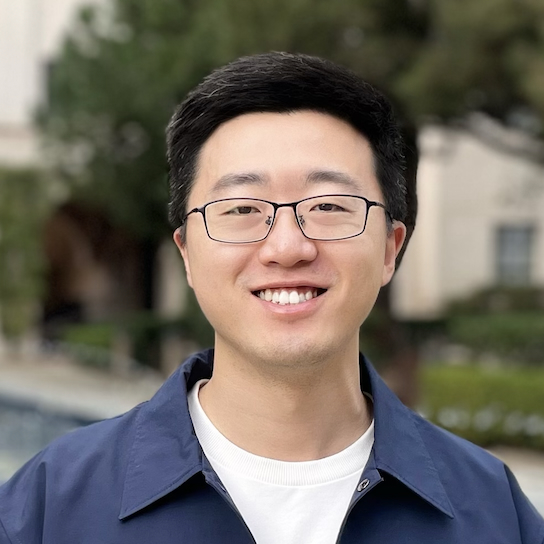
Professor Alexander Slocum holds the Walter M. May (1939) and A. Hazel May Chair in Emerging Technologies at MIT's Department of Mechanical Engineering within the School of Engineering. A distinguished educator and researcher, Slocum has made significant contributions across precision machine design, medical device innovation, and renewable energy systems. His research interests span precision machine design for medical devices and energy industry applications, with particular focus on offshore renewable energy storage systems and kinematic couplings. Slocum's work bridges theoretical mechanical engineering principles with practical applications that address real-world challenges in healthcare and sustainable energy. His recent publications demonstrate a strong emphasis on bio-inspired engineering, underwater energy storage systems, and medical device innovation. The articles reveal a consistent pattern of applying fundamental mechanical engineering principles to solve problems in healthcare delivery and renewable energy storage, often with a focus on practical implementation in resource-constrained environments. NSF Presidential Young Investigator (1987) MacVicar Faculty Fellow (1999) Massachusetts Professor of the Year Award (2000) Multiple R&D 100 Awards (1994-2010) ASME Leonardo da Vinci Award (2004) ASME Machine Design Award (2008) ASME Ruth and Joel Spira Outstanding Design Educator Award (2018) National Academy of Inventors Fellow (2021) Slocum actively mentors students through MIT's Experimental Study Group (which he directs) and his renowned 2.75/2.750 Precision Machine Design courses. His educational approach emphasizes hands-on learning and real-world problem solving, particularly through medical device design projects developed in collaboration with Boston-area clinicians. His research has been supported by significant grants from the NSF, Department of Energy, and military research agencies. His PERG (Precision Engineering Research Group) lab fosters interdisciplinary collaboration, bringing together mechanical engineers, materials scientists, and medical professionals to develop innovative solutions for healthcare and energy challenges. The lab is particularly known for its work on kinematic couplings, hydrostatic bearings, and bio-inspired engineering solutions.