معرفی
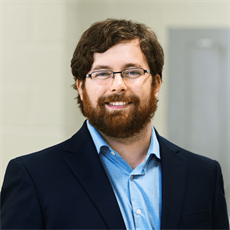
Dr. David R. Themens is an Associate Professor in Space Environment within the Space Environment and Radio Engineering (SERENE) group in the School of Engineering at the University of Birmingham. He specializes in modeling and mitigating the impacts of space weather on radio communications and navigation systems, with a particular focus on the ionosphere's effects on these technologies.
Dr. Themens earned his academic credentials from Canadian institutions:
- BSc (Hons) in Physics from the University of New Brunswick (2011)
- MSc in Atmospheric and Oceanic Science from McGill University (2013)
- PhD in Physics from the University of New Brunswick (2018)
His research primarily focuses on four interconnected areas: ionospheric modeling, ionospheric physics, measurement techniques, and radio propagation. Dr. Themens is particularly interested in the interaction between the ionosphere and the atmosphere, specifically how lower atmospheric forcing drives variability within the ionosphere and the interactions between the ionosphere and thermosphere. He is the principal developer of the Empirical Canadian High Arctic Ionospheric Model (E-CHAIM), a high-latitude alternative to the International Reference Ionosphere (IRI) used for HF/UHF signal propagation modeling. His work includes exploring synergistic properties of different earth observation instruments, measurement technique development, data assimilation, and empirical modeling.
Analysis of Dr. Themens' recent publication record reveals a strong emphasis on space weather phenomena, ionospheric modeling, and radio propagation. His work spans from fundamental ionospheric physics to practical applications in navigation and communication systems. Key themes include the development and validation of ionospheric models, analysis of space weather events (including the May 2024 geomagnetic superstorm), and the impact of solar phenomena on Earth's upper atmosphere. His research increasingly incorporates advanced data assimilation techniques and leverages multiple observational platforms including radar systems, GNSS networks, and satellite measurements.
Dr. Themens holds significant leadership positions in the international space science community:
- Co-Chair of IAG-GGOS Joint Study Group on Understanding Ionospheric and Plasmaspheric Processes (2023-present)
- Chair of URSI Data Assimilation Working Group (2023-present)
- Co-Chair of IAGA Geospace Data Assimilation Working Group (2023-2027)
- URSI Commission G Early Career Representative (2023-2029)
- Chair of Canadian Association of Physicists Division of Atmospheric and Space Physics (2022-present)
Dr. Themens actively mentors graduate students and is 'always looking for new Ph.D. students interested in the ionosphere, data assimilation, and radio propagation.' His research has been supported through contracts with Defence Research and Development Canada (DRDC) and various international collaborations. He leads the Canadian High Arctic Ionospheric Models (CHAIMs) project, which builds upon his doctoral work developing the E-CHAIM model. At the University of Birmingham, he teaches courses in Space System Engineering and Design, Space Mission Analysis and Design, and Space Environment.