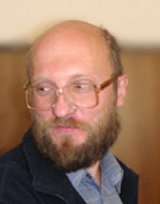
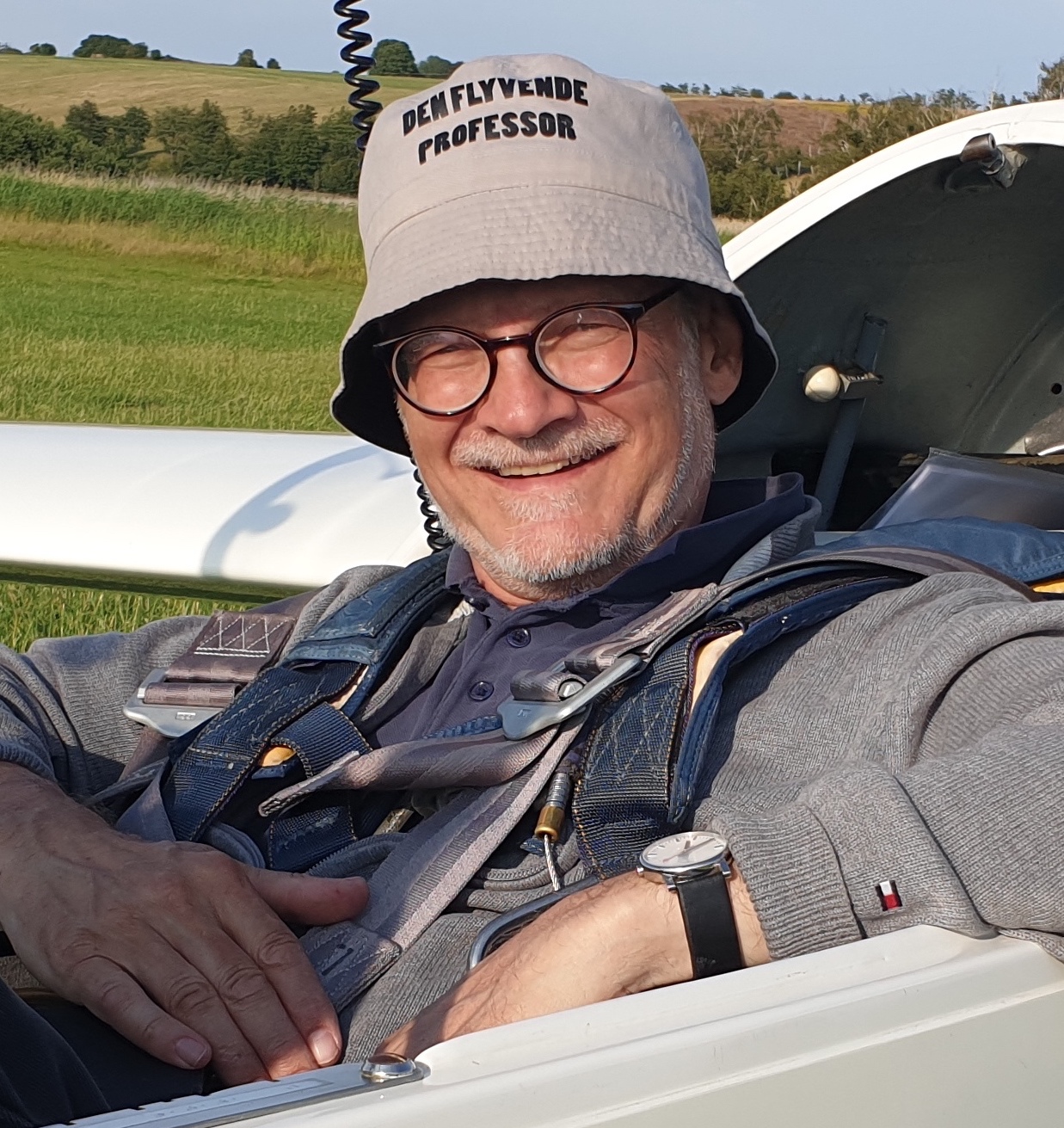
Halvor Spetalen is a Lecturer at the Department of Vocational Teacher Education , Faculty of Teacher Education and International Studies, Oslo Metropolitan University. Holding a Cand. Polit. degree from the University of Oslo, he serves as Study Leader Area 3 and leads the School-Working-University Cooperation research group. He also coordinates the Center for Vocational Knowledge and acts as subject manager for restaurant and food studies in the Store Norske Leksikon. Specializes in vocational teacher education since 2001 Focuses on vocational training integration Active in research about curriculum development Key contributor to vocational didactics Expert in R&D methodology for vocational contexts His research interests center on how vocational training can better qualify future professionals through: Curriculum innovation for practical relevance R&D-based learning activities Entrepreneurship in vocational settings Assessment practices in vocational education Writing competence development Knowledge transfer between school, work and university Publication trends show significant focus on: Restaurant and food service vocational training Curriculum reform and implementation Practical skill development Competency-based education models Digital transformation in vocational education Collaborative learning ecosystems
Volker Stolz is a Professor at the Department of Informatics, University of Bergen, within the Faculty of Mathematics and Natural Sciences. He teaches Mobile Application Development (DAT153), Model-driven Software Engineering (DAT355), Model Checking (PCS955), and Refactoring (DAT159). He serves as program director for INF/INF-F/INF-H programs and exchange coordinator for DATA & INF, with his office located at Kronstad (D403). His research focuses on Software Engineering, particularly Programming Languages and Software Testing, where he develops productivity tools to create safer, faster code with fewer crashes in applications. His work spans Runtime Verification, Formal Methods, and Internet of Things (IoT), emphasizing model-driven approaches for reliable software systems in mobile and web environments. Recent publications (2024-2025) demonstrate deep engagement with Runtime Verification for timed systems, advanced software testing techniques like clone elimination, and emerging applications in IoT data acquisition. His work bridges theoretical computer science with practical engineering challenges, particularly in time-series analysis and formal verification of concurrent systems. Stolz leads significant research initiatives including: Ongoing: MSCA DN "TUAI - Towards an Understanding of Artificial Intelligence" Completed: EU H2020 project "COEMS - Continuous Observation of Embedded Multicore Systems" Completed: AURORA bilateral project "SecuTrace" (NO/FR, 2020-2022) Completed: DIKU/CAPES bilateral project "Modern Refactoring" (NO/BR, 2017-2021) He serves as General Chair for ECOOP'25, a premier conference in object-oriented programming. He actively contributes to the Smart Software System (S3) research group and IoT research lab at the University of Bergen, driving innovation in software verification and reliable system development through collaborative projects and industry partnerships.
Henrik Hillestad Løvold is a Lecturer at the Department of Informatics, University of Oslo. He holds a BSc (2015) and MSc (2017) in Informatics from UiO, specializing in programming/networking and technical/natural science applications. His research focuses on computing education, natural language processing, and machine learning applications in education. He is affiliated with the Computing Education research group and contributes to digital learning environments for first-year informatics courses. His academic background includes a master's thesis on neural dependency parsing of Norwegian using tuned word embeddings. He has extensive teaching experience as a teaching assistant and lecturer in foundational courses like INF1000 and INF1010. Recent publications explore team assessment in software engineering education and programming education methodologies. Current roles involve developing digital educational resources and contributing to curriculum design in first-year informatics programs. No scientific awards are listed in available records.
Birger Møller-Pedersen is a Professor Emeritus at the Department for Informatics, University of Oslo. He has been a leading figure in object-oriented modeling, contributing to the development of the BETA programming language and the standardization of UML and SDL. He has held roles including Professor (2004–present), Principal Researcher at Ericsson (1998–2004), and Senior Research Scientist at Telenor R&D (1995–1997). Education: Cand. scient. (M.Sc.) in Computer Science from the University of Aarhus, Denmark (1976). Research Interests: Design and implementation of modeling and programming languages, variability modeling, UML/Simula/SDL standards, and model-driven engineering. He teaches INF3110 (Programming Languages) and INF5110 (Compiler Techniques). Key Projects: SISU (1995–1997), Families/SARDAS (2003–2006), MoSiS (2007–2010), and iFEST (2010–2012). His work focuses on software product lines, tool integration, and formal modeling techniques. Awards: Telenor Nordic Research Prize (1997) for contributions to SDL-92 standardization. His research has been published in leading venues like MODELS, ECOOP, and ACM/IEEE conferences. Advising & Grants: Supervised PhD students including Andreas Svendsen, Weiqing Zhang, and Henning Berg. Active in program committees for MODELS, ECOOP, and UML conferences. Research Groups: Member of the Programming Technology group at the University of Oslo. His work bridges theoretical foundations and industrial applications of modeling languages.
Henrik Hillestad Løvold is a Lecturer at the Department of Informatics , UiT The Arctic University of Norway. His work focuses on computer science didactics , innovative teaching methods, and digital education for students and teachers. Key Roles: Lecturer in Introduction to Computational Programming (INF-1049) and Object-Oriented Programming (INF-1400), developer of continuing education programs for science teachers. Education: Bachelor’s and Master’s degrees from the University of Oslo in Computer Science and Informatics, respectively. Research Interests center on group work in computer science education , modular-based backward teaching , and digital pedagogical tools . He has published extensively on team formation and assessment in software engineering courses and co-authored textbooks like Objektorientert programmering med Python (2024). Recent Publications include studies on collaborative learning strategies, programming education in secondary schools, and workshops on teamwork in software engineering. His work integrates pedagogy , curriculum design , and technology-driven teaching . Contact: henrik.h.lovold@uit.no , Tromso, UiT.
Ida Fugli is an Associate Professor in the Department of Visual Arts and Drama at the University of Agder, Norway, within the Faculty of Fine Arts. Her work bridges artistic practice and academic research, with a strong focus on performative arts, drama pedagogy, and interdisciplinary education. Institution: University of Agder Department: Visual Arts and Drama Research Groups: Art and Young People, Music/Dance/Drama Interdisciplinary Practices, University Pedagogy Her research interests include performative arts, gender and embodiment, inclusion in art education, sustainability in performance, and participatory practices. She explores how drama and theatre can serve as tools for social engagement, identity exploration, and pedagogical innovation, particularly in educational and community contexts. The recent publications and artistic works of Ida Fugli reflect a consistent engagement with interdisciplinary and socially conscious themes. Her work spans from performative memorials and eco-performance to inclusive art praxis and gender dynamics in theatre. The articles and performances demonstrate a deep integration of artistic creation with scholarly inquiry, often involving collaboration with students and fellow researchers. Keywords across her work include vulnerability, fluidity, sustainability, and participatory methods, indicating a research trajectory centered on ethical, embodied, and transformative art practices. Ida Fugli has no listed scientific awards in the provided text. However, her extensive publication record in both academic and artistic formats underscores her active contribution to the field. She is involved in advising and educational development, particularly within master’s programs in art, and contributes to university pedagogy. Though specific grants are not listed, her projects have received support from organizations such as Cultiva, Kristiansand Kommune, Agder Fylkeskommune, and the Norwegian Arts Council (Norsk Kulturråd), indicating successful funding acquisition for artistic and educational initiatives. Fugli’s work is closely tied to collaborative research groups and artistic teams, especially those focused on interdisciplinary performance and drama education. Her projects often involve collective creation, public events, and exhibitions, reflecting a strong commitment to community-engaged and participatory art practices.
Nikolay V. Shilov is an Assistant Professor at Innopolis University, Russia, affiliated with the School of Software Engineering and the Institute of Information Systems. He holds a PhD and has over 30 years of experience in theoretical computer science, formal methods, and logic in computer science. Education: Ph.D. in Computer Science, Novosibirsk Computing Center of Siberian Branch of the Soviet Academy of Sciences, 1987 His research interests span Formal Methods , Program Logics , Model Checking , Knowledge Representation , Multiagent Systems , and Computer Language Ontology . He has extensive experience in applying dynamic logic, temporal logic, and description logic to problems in software verification and knowledge reasoning. His recent work emphasizes formal verification of standard mathematical functions and cyber-physical systems. The 15 most recent publications reflect a strong focus on formal verification , education in formal methods , multiagent systems , and platform-independent specification . Topics include model checking with floating-point arithmetic, recursion elimination, functional programming pedagogy, and ontology for computer languages. There is a consistent thread of bridging theory with practical applications in software engineering and education. Scientific Awards and Honors: No specific awards listed in the provided text. Nikolay Shilov has supervised several Master’s and PhD students, including Peter Schneider, Sergey Berezin, Evgeny Bodin, Natalia Garanina, and Aizhan Sateckbayeva. He has been involved in externally funded research projects supported by the Russian Basic Research Foundation, focusing on formal specification and verification of standard mathematical functions and natural language-based requirement extraction. He is also active in academic service, serving on program committees of major conferences like FM 2019 and co-chairing the PSSV workshops since 2016. He leads and participates in research seminars such as ru-STEP (Russian Seminar on Software Engineering, Theory and Experimental Programming) and is deeply involved in programming contests, including the Open All-Siberian Programming Contests, emphasizing the educational value of formal methods and algorithmic thinking.
Tore Gulden is a part-time Professor at Oslo Metropolitan University's Faculty of Technology, Art and Design, Department of Product Design. His research focuses on systemic design, game dynamics, and sustainable design practices. He has contributed to establishing the master's program Design in Complexity and collaborates internationally on systems-oriented design methodologies. Active in networks: Cybernetics, CEDIC, WATT, Relating Systems Design, Systemic Design Association, ITRA Co-founder of 2025design (since 2004), specializing in environmental management and sustainable product strategy Trained at Design Academy Eindhoven in Industrial Design His research integrates systems theory with design practice to address social and environmental complexity. Recent work explores plastic consumption reduction, urban play systems, and logical paradoxes in public service design. Publications span topics like behavioral design in games, sustainability in design education, and IoT-based health promotion tools. Scientific contributions include collaborations on interdisciplinary design frameworks, with a focus on merging cybernetics, game theory, and sustainable innovation. He teaches courses on Systemic Design, Design for Experience, and Game Dynamics.
Erkki Heinonen is a Professor of Clinical Psychology at the University of Oslo since 2023, with prior roles as an Associate Professor (2019–2023) and Post-Doctoral Researcher at York University (2017–2019). His research focuses on psychotherapy processes, mechanisms, and outcomes , particularly examining patient-, therapist-, and relationship-related factors across psychodynamic, solution-focused, emotion-focused, and cognitive-behavioral therapies. Current projects: NORTRAS (Nordic Psychotherapy Training Study), SPRISTAD (SPR Interest Section study), and EU-funded TREATme (individualized youth psychotherapy). Clinical expertise: Specialized healthcare experience with mental disorders, certified emotion-focused therapy (EFT) training under Les Greenberg at York University. His recent publications explore therapy mediators, therapist development, and long-term outcomes in depression and anxiety treatment. Collaborations include the Helsinki Psychotherapy Study and multidisciplinary networks in Europe.
Volker Stolz is an Associate Professor in the Department of Informatics at the University of Oslo, Faculty of Mathematics and Natural Sciences. He is affiliated with the Reliable Systems research group, where his work centers on improving software reliability through formal methods, model transformation, and UML-based modeling. Institution: University of Oslo School: Faculty of Mathematics and Natural Sciences Department: Department of Informatics Research Group: Reliable Systems Contact: stolz@ifi.uio.no | +47 22852438 | Room GA06 9461 His research spans formal verification, concurrency, model-based testing, and programming language semantics. He has made significant contributions to deadlock detection, refactoring equivalence, runtime verification in distributed systems, and data race analysis, often using formal models such as Petri nets and active object languages. The recent publications highlight a consistent focus on software correctness , modular analysis , and automated verification techniques. Trends include the use of behavioral effects, abstract execution, and field calculus for distributed monitoring. His work frequently appears in top-tier venues like Theoretical Computer Science , Lecture Notes in Computer Science , and Journal of Logical and Algebraic Methods in Programming , indicating strong theoretical and practical impact. He collaborates extensively with researchers such as Violet Ka I Pun, Rui Wang, Lars Michael Kristensen, and Martin Steffen, reflecting an active and collaborative research profile. No scientific awards are mentioned in the provided text. There is no information available about student advising or research grants. Volker Stolz is involved in research projects related to model-based testing, formal methods, and reliable software systems, particularly through the Reliable Systems group. His work often involves building theoretical foundations and practical tools for verifying and improving software behavior in distributed and concurrent environments.
Gunnar Rye Bergersen is an Associate Professor in the Department of Informatics at the University of Oslo, Faculty of Mathematics and Natural Sciences. He is actively engaged in research and teaching within the Software Engineering group. His contact email is gunnab@ifi.uio.no , and he is based in room 10163 at Ole-Johan Dahl's house. His research centers on the competence and success factors of IT developers, with a strong emphasis on empirical methods. Key areas include: Measurement of programming skill and developer expertise Teamwork quality and communication in agile environments Construct validity and methodological rigor in software engineering research User journey modeling and simulation Psychometrics and educational research in computing His recent publications (2022–2024) reveal a trend toward formal modeling of user journeys using game theory and simulation, while maintaining a strong foundation in empirical evaluation of software practices. He frequently collaborates with leading researchers such as Dag Sjøberg and Tore Dybå, publishing in top-tier journals like IEEE Transactions on Software Engineering and conferences such as HICSS and XP. He teaches courses IN1030, IN2000, and IN5140, and supervises master’s students interested in empirical evaluations of software interventions. His programming language of choice is R, reflecting his methodological focus on quantitative analysis and measurement.
Ingvild Holm is a Professor in Performing Arts specializing in scenography, acting, and performance at the Norwegian Theatre Academy (NTA), part of Østfold University College. She holds a 50% position with 20% dedicated to research. Her academic work is deeply intertwined with her practice as a theater and performance artist, engaging in interdisciplinary projects that bridge visual arts, performance, and institutional critique. Her educational background includes completion of a 3-year national Artistic Research Fellowship program (equivalent to a Ph.D.) from 2015 to 2020. This program focused on her doctoral project 'Scenomaten,' which examined the relationship between place and context in artistic form and content. She previously was a member of the performing arts collective Baktruppen from 1987 to 2011, which significantly shaped her collaborative approach to performance. Ingvild Holm's research interests center on object-oriented performance art, performative scenography, text as an object, object dramaturgy, ontology, site specificity, precarity, and reuse. Her work represents an 'expressive minimalism' that explores the political and structural dimensions of theater spaces through object-oriented formats. She draws from historical avant-garde traditions including Commedia dell'arte, performance art, installation, puppetry, and slapstick comedy, re-exploring their radical and political potential. Her approach, which she terms 'performative scenography,' investigates how spaces themselves become protagonists in theatrical works, asking what every possible place and context do to artistic content and form. Her recent publications demonstrate a consistent exploration of site-specificity, object-oriented performance, and the relationship between theatrical form and political content. Across her work, Holm examines how place and context shape artistic content and form, often using minimal interventions that question institutional structures while maintaining accessibility and playfulness. She frequently employs 'expressive minimalism, post-spectacular, low or popular' approaches that challenge traditional hierarchies between spaces, materials, and artistic forms. Government Grants for Artists (2019-2022) Artists Working Grant, Arts Council Norway (2020-23, 2011, 2005) Norwegian Artistic Research Fellowship Program (2015-2020) Holm has extensive experience mentoring students, currently guiding three MA students in performance while providing tutoring for BA-level independent productions and individual students since 2017. She has served on expert committees for Ph.D. applications at the Oslo National Academy of the Arts and assessment committees for Ph.D. candidates at both KHiO and the Norwegian Academy of Music. Her research collaborations include 'Material Strategies' with Concordia University in Canada and 'Blind Spot' with international partners across Europe and North America, funded by multiple national arts councils. She has developed and led numerous courses including 'Picture the picture' (MA Performance), 'Twins of reality' (BA Scenography/Acting), and 'Low status material & re-use' (BA Acting/Scenography). As a former member of the performing arts collective Baktruppen (1987-2011), Holm brings collective experience to her current work. She currently engages in multiple research collaborations including 'Material Strategies' and serves as a vara member in the board of the Norwegian Artistic Research Program (NARP) since 2022. Her artistic practice spans performance, writing, film, exhibitions, scenography, and curating, with a particular focus on how spaces themselves become active participants in theatrical works. She has participated in numerous Norwegian and international collaborations, including 'Resite Venice' at the Venice Research Pavilion (2017) and 'Blind Spot' project with partners from Germany, Romania, Canada, and Norway.
Eric Bartley Christmas is a Professor in Programming Technology at the University of Oslo, with contact details including email ericbj@ifi.uio.no and telephone +47 22840853. He is affiliated with the Programming Technology research group and maintains an office at Gaustadalléen 23B, 0373 Oslo. His core research spans: Programming and Programming languages Object-orientation and Design Patterns Distributed systems and Cloud computing Security His work increasingly intersects with medical applications, leveraging computer vision for diagnostics and analysis. Recent publications (2022-2024) reveal a strong trend toward interdisciplinary medical technology, with multiple studies applying deep learning to sperm detection, microcirculation analysis, and capillary measurement. Concurrently, his work extends into transportation systems through edge computing applications for flight and transport mode detection. He actively collaborates within the Programming Technology research group, particularly with Paulo Ferreira, Maged Helmy, and Trung Tuyen Truong on projects bridging computer science with biomedical engineering and mobile systems.
Rania Elgazzar is Associate Professor in Systems Development at the University of Agder's Department of Information Systems. Her expertise spans cloud computing, blockchain applications, and information security in emerging technologies. Elgazzar researches adoption challenges of transformative technologies, with publications on GDPR compliance, health informatics, and smart city implementations. She teaches object-oriented programming, database systems, and algorithms, while supervising projects in IT systems development. Current work includes fault diagnosis in electric vehicle powertrains using AI and multi-classifier systems. Elgazzar has developed courses on social engineering and NSM principles for aviation professionals.
Anita Skogen serves as Associate Professor in the Department of Visual and Performing Arts at the University of Agder's Faculty of Humanities and Education. Her academic work bridges visual arts, design theory, and practical applications within educational contexts. Her research focuses on art education , sustainable art practices , and design theory , particularly examining construction principles in furniture design and architectural criticism. Recent publications demonstrate strong engagement with youth art programs and community-centered artistic practices, reflecting her commitment to art's societal relevance. Analysis of her publication history reveals consistent exploration of deconstructive methodologies in design, material-principle applications (wedge, washer, tenon), and cultural sustainability frameworks. Her work often connects theoretical design concepts with practical educational implementations, particularly regarding work-life relevance in art programs. Skogen actively participates in collaborative research initiatives such as the KoK Sustainability Seminar series, focusing on art's role in community development and environmental consciousness. Her publications appear in both academic journals like FORM and regional media outlets including Fædrelandsvennen . Her teaching practice emphasizes practical design applications and critical engagement with visual culture, particularly regarding architectural spaces and contemporary art contexts. The department's focus on youth-oriented art programs aligns with her research on art's societal significance and educational implementation.