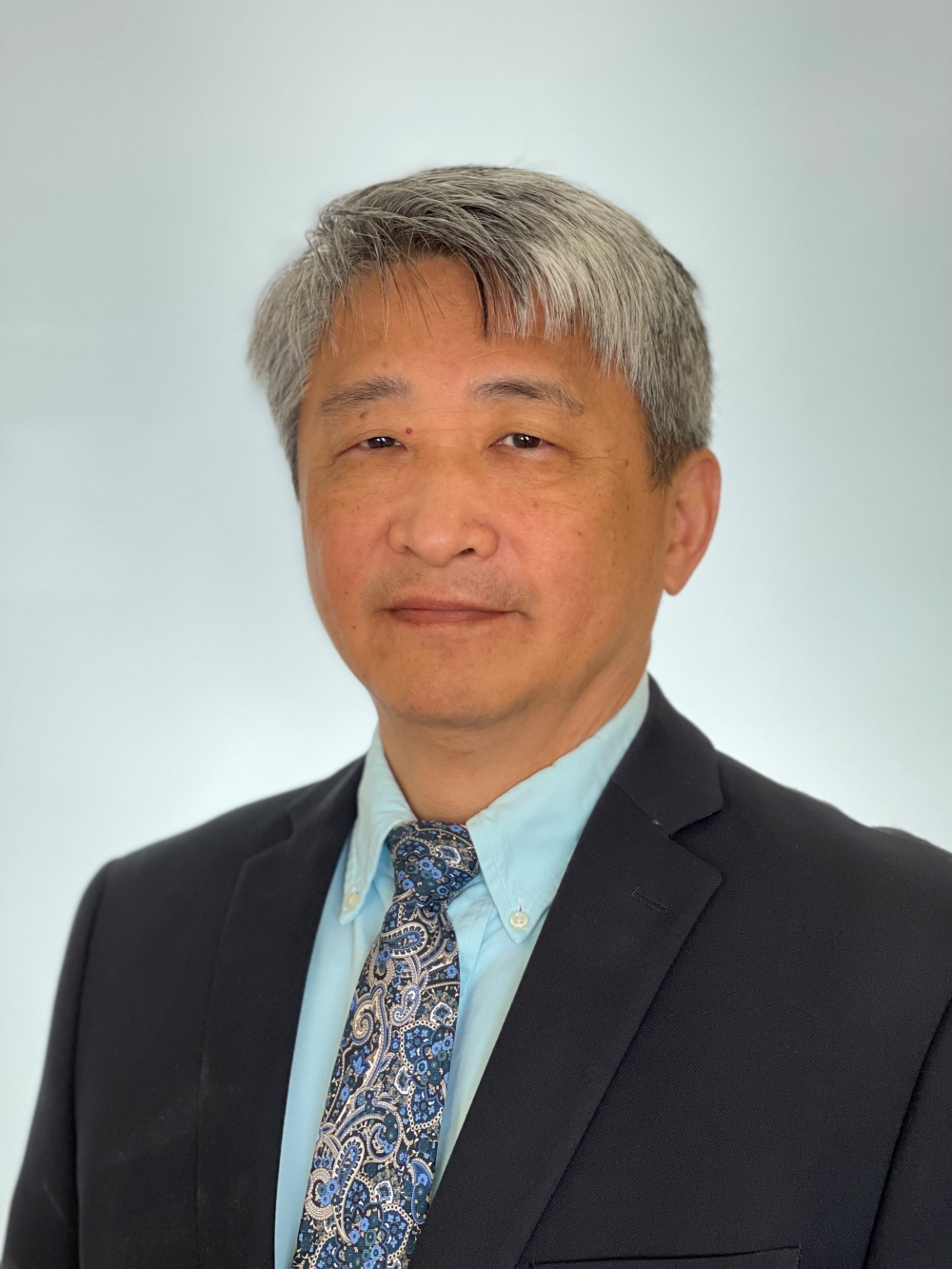
Fischer Andreas is a Professor at HES-SO (University of Applied Sciences and Arts Western Switzerland) , specifically affiliated with the School of Engineering and Architecture of Fribourg (HEIA-FR) . His research spans Pattern Recognition , Applied Machine Learning , Handwriting Recognition , and Graph-based Methods . He has secured significant grants from TAINA Technology , Swisscom , and the Hasler Foundation for projects including automatic handwriting recognition for tax forms , Swiss German translation , and graph-based keyword spotting in Vietnamese steles . Education : BSc in Computer Science from HEIA-FR. Research Highlights : Graph Neural Networks for Büchi automata classification Annotation-free alignment in historical documents Graph edit distance optimization for keyword spotting Hybrid deep learning for Vietnamese stele analysis Graph-based tumor budding analysis in digital pathology Collaborative Impact : Fischer's work bridges historical document analysis and medical imaging , demonstrated through frameworks like DIVA-DAF and tools like GammaFocus for histopathology. His 2024 conferences suggest ongoing exploration of LLM integration in document processing and OCR-free models for information extraction.
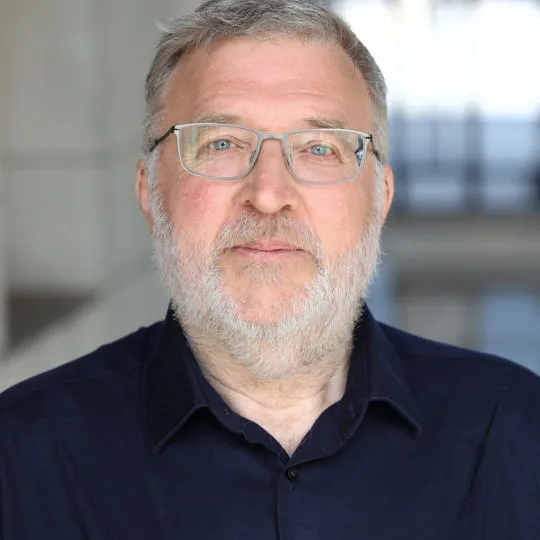
Dr. Anke Hertling is a leading academic researcher at the Leibniz Institute for Educational Media | Georg Eckert Institute (GEI) in Braunschweig, Germany. As Head of the Educational Media Information Center and former acting deputy director (2017-2021), she drives digital transformation in educational media. Her work spans multiple institutions including the Theodor Fontane Archive and Kassel University Press. B.A. and M.A. in German, Cultural Studies, and Communication/Media Studies (Leipzig & Brussels) Ph.D. from University of Kassel with thesis on women in automotive history Her research focuses on digitization of cultural assets , digital humanities , and digital educational media . Key projects include: DigiRel : Digitization of historical textbooks with religious education focus FID : Specialized information service for educational science OCR4all : Full-text recognition for historical collections Empowerment in Collection Preservation : Hybrid best practice development Recent publications (2022-2025) address digital library architecture , textbook digitization , and OER licensing . She received the Conrad Matschoß Prize and Young Talent Award for her pioneering work in digital preservation and born-digital estate materials. As a Verein Deutscher Bibliothekarinnen und Bibliothekare member, she shapes professional standards in German librarianship.
Dr. Donald Sturgeon is an Assistant Professor in the Department of Computer Science at Durham University. He is also a member of the Institute of Medieval and Early Modern Studies. His work focuses on applying computational methods to the study of premodern Chinese texts, including digital archiving, optical character recognition (OCR), and text reuse analysis. He leads initiatives like the Chinese Text Project, a dynamic digital library for premodern Chinese literature and philosophy. Sturgeon has been invited as a keynote speaker at major institutions including Peking University, Chinese University of Hong Kong, and Heidelberg University for his contributions to digital humanities. Research Interests His research bridges computer science and humanities through: Development of linked open data frameworks for historical records OCR solutions for premodern Chinese scripts Unsupervised text reuse identification in classical texts Crowdsourcing methodologies for scholarly knowledge creation Publications Overview His work spans technical advancements in digital humanities, including foundational papers on premodern text digitization, OCR challenges in East Asian scripts, and computational approaches to classical Chinese literature analysis. His most cited contributions address large-scale text preservation and intertextuality in early Chinese philosophical corpora. Professional Contributions Sturgeon's invited lectures (2022-2023) highlight his international recognition in digital methods for East Asian studies. He actively collaborates with institutions across Asia and Europe on projects combining machine learning with historical text analysis. His grants and advisory roles are focused on expanding open-access digital resources for premodern studies.
David Morariu is an academic lecturer and PhD student at the Department of Romance Studies within the Faculty of Letters and Arts at Lucian Blaga University of Sibiu. His work focuses on Romanian literary history, digital humanities, and cultural studies. He has contributed to several major digital projects including the Digital Museum of the Romanian Novel, which digitizes and analyzes literary archives from the 19th and early 20th centuries. His research interests span multiple dimensions of Romanian literature including: 1) analysis of production networks and editorial canons in 20th-century novels, 2) quantitative genre studies using statistical methodologies, 3) interdiscursivity in contemporary neuronovels, and 4) postcolonial concepts like autocoloniality in translation studies. Recent work also explores educational applications of film in teacher training programs through reflective learning frameworks. Publications emphasize historical analysis of Romanian literary production (1845-1947), including studies on foreignness in 19th-century novels and affective geographies of Paris in literary contexts. Active in digital humanities through projects like the Digital Museum of the Romanian Novel, which combines textual criticism with OCR post-correction methodologies. His interdisciplinary approach bridges traditional literary analysis with modern digital methods, evidenced by publications in both quantitative literary analysis and cultural theory critiques of poststructuralism. Current work continues exploring intersections between cultural production, editorial networks, and national identity formation in Romanian literature.
Bogdan Vătavu is a Lecturer at the Department of Romance Studies, Faculty of Letters and Arts, Lucian Blaga University of Sibiu. Specializing in Romanian cultural and social history, his research focuses on banditry narratives, national identity formation, and modernization processes. He explores topics like haiduks (historical rebels), early modern social structures, and the commodification of cultural institutions. His work bridges history, literature, and sociology, with notable studies on 19th-century banditry, the 1821 Uprising context, and the intersection of folklore and power dynamics. Recent publications examine digital archiving practices and commercial libraries in post-socialist Romania. No scientific awards are listed, but his academic contributions include critical analyses of Romanian literary heritage and socio-political themes. He advises no listed students but contributes to academic programs via course materials and institutional roles. Vătavu’s work ties historical analysis to contemporary cultural debates, reflecting a commitment to interdisciplinary research.
Şaziye Betül Özateş is an Assistant Professor at the Institute for Data Science and Artificial Intelligence at Boğaziçi University, specializing in Natural Language Processing (NLP) and Machine Learning. She holds a BSc, MSc, and PhD in Computer Engineering from Boğaziçi University, where she was advised by Dr. Arzucan Özgür and Dr. Tunga Güngör. Previously, she was a researcher at the University of Stuttgart’s Institute of Natural Language Processing and a post-doctoral fellow at KUIS AI Center focusing on procedural language learning from natural instructions. Her research interests include natural language processing, computational linguistics, syntactic analysis, and deep learning. She has developed several influential resources, including the BOUN Treebank (9,761 syntactically annotated Turkish sentences), IMST Treebank, and PUD Treebank. Her tools such as BOUN-Pars (a Turkish dependency parser) and the semi-supervised deep dependency parser support morphological and dependency analysis for agglutinative and code-switched languages. Her recent work focuses on historical Turkish NLP, Ottoman Turkish corpus construction, and multilingual BERT-based dependency parsing. She has contributed to code-switching NLP, semi-supervised learning techniques, and sentence similarity kernels for summarization. Her publications span 2016–2025, emphasizing treebanking, parsing optimization, and low-resource language challenges. Key projects include the NakbaTR dataset for Turkish NER, Arabic calligraphy text extraction, and dementia caregiver detection via social media analysis. Her work bridges theoretical linguistics with practical tools, making Turkish NLP resources accessible for global research.
Joseph Su is a Professor of Epidemiology and Associate Dean for Academic Affairs at the Peter O'Donnell Jr. School of Public Health, University of Texas Southwestern Medical Center. He also serves as co-director of the Simmons Comprehensive Cancer Center Office of Training and Education. Dr. Su received his educational training from several prestigious institutions: Ph.D. in Nutritional Epidemiology from the University of North Carolina at Chapel Hill M.P.H. in Public Health Nutrition from the University of Minnesota, Minneapolis Undergraduate training in Nutritional Sciences from the University of Minnesota, St. Paul Additional undergraduate training in Chemistry from Chung-Yuan University in Taiwan As a cancer epidemiologist, Dr. Su specializes in assessing nutritional and environmental exposures and their interactions with genes in relation to cancer development and progression. His research spans several key areas: Evaluating the relationship between diet, heavy metal exposure, and adverse health outcomes Investigating genomics, epigenomics, and metabolomics in population-based studies Developing expertise in minority recruitment and follow-up methodologies Applying optical character recognition (OCR) data processing and validation techniques Designing survey studies and managing analytical chemistry laboratories for human biological sample processing His laboratory is equipped with state-of-the-art instrumentation including ICP-MS and an HPLC system. Dr. Su's publication record demonstrates consistent research focus on cancer epidemiology, particularly prostate, breast, and colorectal cancers. His work examines how nutritional factors, environmental exposures (including pesticides and heavy metals), and genetic factors interact to influence cancer risk and progression. A notable aspect of his research is the attention to racial disparities and minority populations, with numerous studies specifically addressing African American and other minority communities. His methodological approaches span from molecular techniques to population-based survey designs and geospatial analysis. Dr. Su has held significant leadership positions in federal agencies: Branch Chief at the Division of Epidemiologic Research of the Center for Medical Devices and Radiological Health (FDA) Program Director at the Epidemiology and Genomic Research Program, Division of Cancer Control and Population Sciences, National Cancer Institute In these roles, he managed grant portfolios and oversaw post-approval medical devices in the U.S. market.
Mark Hedges is a Reader in Cultural Informatics and Head of the Department of Digital Humanities at King's College London. He holds a PhD in Mathematics from University College London and an MA in Late Antique and Byzantine Studies. Before academia, he spent 17 years in software and systems consultancy. His research focuses on digital curation, crowdsourcing in humanities, and the social impact of digital technologies, particularly in post-genocide Rwanda. He leads interdisciplinary projects like CENDARI and FISHNet, and collaborates on EU initiatives such as PARTHENOS. Education: PhD in Mathematics, University College London (1986) MA in Late Antique and Byzantine Studies, King's College London (2004) BSc in Mathematics and Philosophy, Bedford College (1983) Research Interests: Digital humanities methodologies, participatory research, digital archives, computational methods for cultural heritage, and technology's societal impact. His work bridges technical innovation with ethical and practical challenges in democratizing access to cultural data. Grants & Projects: UKRI Horizon Europe funding (2025) for language evolution studies EU-funded PARTHENOS (2015–2019, €12M) for humanities research infrastructures CENDARI (2013) for historical research ecosystems Rwanda digital archives initiatives with Aegis Trust Labs & Affiliations: Director of King's Centre for e-Research Computational Humanities Research Group King's Cybersecurity Centre (EPSRC-NCSC ACE-CSR)
Andreas Fischer is an Ordentlicher Professor at the Fribourg School of Engineering and Architecture (HES-SO), specializing in Pattern Recognition, Machine Learning, and Document Analysis. His research focuses on handwriting recognition, graph-based methods, and applications in cultural heritage preservation and medical imaging. Education: BSc in Computer Science from Fribourg School of Engineering and Architecture Research Interests: Graph Neural Networks for automata universality analysis Hybrid systems for Vietnamese stele keyword spotting Medical image analysis (colorectal cancer, tumor budding) Large language models for post-OCR correction Key Projects: TAINA Technology (handwriting validation for tax forms) Swisscom (Swiss German to High German translation) Hasler Foundation (Vietnamese stele graph-based analysis) Publications: Over 30 peer-reviewed articles in top journals/conferences (IEEE Access, Medical Image Analysis, Pattern Recognition, etc.), with focus on graph-based methods, handwriting recognition, and medical applications. Grants & Roles: Principal Applicant for multiple industry-funded projects (TAINA, Swisscom) Co-developer of DIVA-DAF deep learning framework
Senka Drobac is a Research Fellow at the Department of Computer Science (Aalto University), affiliated with the Professorship Hyvönen Eero. She holds roles as a Visitor (Faculty) and Postdoctoral Researcher, focusing on advancing Linked Data, Semantic Web technologies, and Open Data initiatives. Her work emphasizes parliamentary data systems (ParliamentSampo) and cultural heritage projects (LetterSampo Finland), which aggregate historical and governmental data into accessible semantic frameworks. Institution: Aalto University, Department of Computer Science Primary Research: Parliamentary Data, Linked Open Data, OCR for historical texts, metadata harmonization Key Projects: ParliamentSampo, LetterSampo Finland Dr. Drobac's research interests revolve around digitizing historical and governmental records, particularly in Finland, to create interoperable data services. She explores challenges such as deduplicating historical actors, improving OCR accuracy, and designing semantic portals for cultural heritage exploration. Her work bridges computer science and digital humanities, emphasizing data accessibility and collaboration with cultural institutions. Her publications span 2021–2024, with a focus on parliamentary data systems, OCR pipelines for historical debates, and metadata integration in cultural heritage projects. She has collaborated with institutions like Utrecht University and organized events such as the SKILLNET Conference (2022). Dr. Drobac contributed to datasets like ParliamentSampo Knowledge Graph and LetterSampo Finland, which provide open access to parliamentary speeches and historical letter networks. These resources enable interdisciplinary studies in political science, history, and computational linguistics.
Dr. Olajide Funminiyi is a Senior Lecturer in Cyber Security and Digital Forensics at the School of Computer Science and Engineering, University of Westminster, London. He serves as Course Leader for the MSc Cyber Security and Forensics program. With over 32 years of professional experience, his expertise spans academic leadership, research supervision, and industry collaborations. Dr. Olajide holds a PhD in Cybersecurity from the University of Portsmouth, an MSc in Forensic Information Technology, and an MBA from Edge Hill University. His research focuses on cyber security frameworks, digital forensics (including malware analysis, mobile, and cloud forensics), incident response, and enterprise security management. He is Editor-in-Chief of the International Journal of e-Healthcare Information Systems and a member of professional bodies such as the Chartered Society of Forensic Sciences and the British Computer Society. Dr. Olajide actively supervises PhD students and has successfully mentored researchers in areas like cybercrime management and SCADA forensics. Education: PhD in Cybersecurity: Digital Forensics Investigations (University of Portsmouth, UK) MSc in Forensic Information Technology (University of Portsmouth, UK) MBA with Distinction (Edge Hill University, UK) Research Interests: Cybersecurity, Digital Forensics, Incident Response, Cloud Computing, Enterprise Agility, and Information Systems Management. He emphasizes cross-disciplinary approaches to address cyber threats in business and organizational contexts. Professional Roles: Director of Studies (DoS) for PhD students at the University of Westminster Former Senior Lecturer and Course Leader at Nottingham Trent University Collaborations with Airbus on SOC and Cybersecurity Management Awards & Memberships: Senior Fellow, Higher Education Academy (SFHEA-UK) Fellow, British Computer Society (FBCS-UK) Member, Chartered Society of Forensic Sciences (CSFS-UK) Supervision & Grants: Supervised over 10 PhD candidates, including Dr. Olatorera Chidozie Williams (completed in 2023). Actively involved in mentoring and guiding doctoral researchers in cybercrime, forensics, and cloud security. Research projects include frameworks for user input analysis, SCADA forensics, and cyber-attack mitigation strategies. Labs & Teams: Member of the Cyber security Criminal Investigative and Forensic Research (CIFR) group at the University of Westminster, focusing on interdisciplinary cybersecurity solutions.
Anirban Chakraborty is a Lecturer in Computer Science (AI and Data Science) at the University of Wolverhampton's Faculty of Science and Engineering. He leads research initiatives in the Data Science and AI group (DAIREL) at the Digital Innovations and Solution Centre. His academic journey includes a PhD in Computer Science from Trinity College Dublin (2021) and post-doctoral research at the University of Edinburgh's School of Informatics (2022-2024). Current Position: Lecturer (AI/Data Science) at University of Wolverhampton Previous Roles: Post-doctoral Research Associate at University of Edinburgh Education: PhD in Computer Science (Trinity College Dublin, 2021) His research spans personalised information retrieval , contextual recommendation , NLP , and machine learning . Recent work focuses on multi-contextual point-of-interest recommendation and noise handling in OCRed text . Publications demonstrate expertise in relevance modeling, query variants, and co-occurrence analysis. Key contributions include frameworks for contextual recommendation systems and robust retrieval from noisy datasets.