Sandy Cruden is a Professor of Tectonics and Geodynamics at Monash University's School of Earth, Atmosphere and Environment within the Faculty of Science. Previously, she held a Professor and Chair position in the Department of Earth Sciences at the University of Toronto (1989–2010). She earned a BSc (Hons) from the University of Dundee (Scotland) and a PhD from Uppsala University (Sweden). She currently consults for Canada's Nuclear Waste Management Organization and previously worked with Swedish Nuclear Fuels Ltd, Voisey's Bay Nickel Co., and other industry partners. Her research focuses on experimental tectonics, magma emplacement dynamics, Precambrian tectonics, and structural controls on mineralization. She teaches EAE 3511 (Deformation of the Crust) and EAE 2532 (Field Geology). Active research projects include plate boundary fault systems, Proterozoic rift basins, and fluid migration studies funded by Australian Research Council grants. Recipient of the prestigious 2023 S. W. Carey Medal for contributions to Earth sciences. Supervises PhD students in experimental tectonics and ore deposit structural analysis through field and lab-based projects.
Eleanor Carpenter is Professor of Interdisciplinary Art and Culture at Umeå School of Architecture and Director of the UmArts Research Centre at Umeå University. With 25+ years of curatorial experience, her research investigates nuclear culture through art commissions, exhibitions, and international collaborations. Her Nuclear Culture project examines the full lifecycle of radioactive materials from uranium mining to waste management. Current research focuses on planetary nuclear aesthetics and deep geologic repository cultural strategies. Recent publications analyze artistic methodologies for nuclear legacies and decolonial approaches to nuclear technology. She leads international workshops on embedding repository knowledge in future cultural memory.
Laurence Williams OBE is a Professor of Nuclear Policy and Regulation at the School of Computing and Engineering, Bangor University. He holds a BSc in Mechanical Engineering from Liverpool Polytechnic (1970) and an MSc in Nuclear Reactor Technology from the University of Aston in Birmingham (1972). His research focuses on nuclear safety, security, and regulation, including fusion power plant safety, radioactive waste management, and international regulatory frameworks. Current projects include developing Design Safety Guidelines for fusion plants and studying tritium fuel cycles. Prof. Williams has contributed to over 25 peer-reviewed publications since 1979. His work emphasizes harmonizing global nuclear safety standards and addressing societal impacts of nuclear energy. He serves on advisory panels for the Singapore Ministry of Environment and the UK's Committee on Radioactive Waste Management. Awards: OBE (Order of the British Empire) Emeritus Roles: Emeritus Professor at University of Central Lancashire Current Projects: 'Regulation of Fusion Power Plants for Global Deployment' (2023–2026) and 'Tritium Production Industry for Fusion Plants' (2023–2027)
Erika Simpson is an Associate Professor in the Department of Political Science at Western University , Canada. She holds a Ph.D. and M.A. from the University of Toronto and serves as President of the Canadian Peace Research Association . Her research spans international security , NATO policy , nuclear nonproliferation , and peacekeeping . Education: Ph.D., M.A., University of Toronto Her work examines military strategies , cybersecurity , and nuclear waste governance , with recent focus on Canada’s role in a Covid-19-affected security landscape . She has authored 15+ articles in journals like Peace Review and International Journal , alongside op-eds in The Hill Times and Postmedia Network . Research Trends: Recent publications analyze NATO’s nuclear strategy post-Ukraine conflict , drone technology in warfare, and geopolitical risks of nuclear waste repositories . She connects game theory to modern security challenges and critiques militarization of space . Scientific Awards: Shirley Farlinger Lifetime Achievement Award (2015) Robert J. Lifton Fellowship Liu Institute Visiting Fellow NATO Research Fellow She advises Western University graduate students and collaborates with institutions like the Rideau Institute and Canadian Pugwash Group . Her media commentary spans CTV News , Sputnik News , and Urdu News .
Dr. Norbert Jordan is a Senior Scientist at the Helmholtz-Zentrum Dresden-Rossendorf (HZDR) , affiliated with the Institute of Resource Ecology and the Surface Processes department. His career spans over two decades in environmental and radiochemistry research. Ph.D. in Molecular Chemistry (University of Nice Sophia Antipolis) M.Sc. in Molecular Chemistry (University of Nice Sophia Antipolis) Research Interests: Norbert specializes in thermodynamic database development for rare earth elements (REE) and actinides, focusing on complexation with inorganic ligands (phosphate, silicate), surface processes at solid-liquid interfaces using advanced techniques (ATR FT-IR, XAS, TRLFS), surface complexation modeling, isothermal titration calorimetry, and biogenic selenium nanoparticle characterization. Selected Projects: Norbert leads work packages in the EU-funded RadoNorm project (2022-2025), coordinates the national iCross initiative (2018-2022), and previously managed projects on rare earth element extraction ( r4-SEM2 , 2015-2018), pollutant trapping ( POLLTRAP , 2010-2013), and nuclear waste repository systems ( VESPA , 2010-2014). Advising & Collaborations: He has supervised multiple Ph.D. students including Andrea Sabǎu (2015), Sarah Fischer (2022), and Isabelle Jessat (2024), as well as international collaborations with institutions in France, India, and the U.S. Scientific Contributions: Norbert has authored over 50 peer-reviewed publications and book chapters, and organized sessions at major conferences including the Helmholtz Energy Conference (2023).
Anne-Catherine A.M. Dieudonné, holding the title Dr.ir., is a faculty researcher at the Faculty of Civil Engineering and Geosciences, Delft University of Technology , within the Section of Geo-Engineering . Her work bridges fundamental geomechanics with pressing energy and environmental challenges, focusing on clays, bentonites, bio-cemented sands, geothermal systems, nuclear waste disposal, and CO₂ geological storage. Education & Training: Doctor of Engineering (Dr.ir.) – advanced doctoral degree in civil engineering/geosciences, exact institution and dates not stated in the source. Research Interests: Anne-Catherine’s research is organised around four pillars: Energy Geotechnics: thermo-hydro-mechanical (THM) modelling of geothermal systems in deep mines, cold-water injection-induced fracturing, optimisation under uncertainty. Environmental Geotechnics: long-term performance of clay barriers for nuclear waste repositories, gas and fluid transport in saturated clays, self-healing of rock-salt fractures. Bio-mediated Ground Improvement: micro-scale mechanics of bio-cemented sands, influence of carbonate distribution on stiffness and strength, DEM and experimental characterisation. Advanced Experimental & Numerical Techniques: development of novel visualisation devices for fluid-driven cracks, constitutive modelling of expansive clays, zero-thickness interface elements for fracture simulation. Publication Trends: Since 2020 she has authored or co-authored more than 25 peer-reviewed articles and conference contributions. The 2025 corpus shows a strong emphasis on geothermal reservoir engineering , bio-cemented geomaterials , and deep geological disposal , with methodological advances in coupled THM modelling, discrete-element simulation, and experimental validation. Scientific Awards & Honours: ABTUS Scientific Prize – Belgian Association for Underground Techniques and Urbanism (2012) C.B.R. Heidelberg Prize (2011) Bright Spark Lecture Award (2025) Ioannis Vardoulakis PhD Prize (2017) NWO Veni Grant (2019) Supervision & Grants: Anne-Catherine has supervised at least one doctoral student, A. Zhang , on bio-cemented sands. She is principal investigator on the NWO Veni project focusing on clay fracture mechanics and participates in the European EURAD consortium for radioactive waste management research. Laboratory & Teams: She is affiliated with the Geo-Engineering Section laboratories at TU Delft, which host advanced triaxial, oedometer, and bespoke visualisation rigs for clay and sand testing. Collaborative networks span TU Delft, KU Leuven, University of Liège, and multiple European institutions within EURAD.
Prof. Dirk Bosbach is a leading academic at Forschungszentrum Jülich GmbH, holding a Professorship in the Nuclear Waste Management (IFN-2) department of the Institute of Fusion Energy and Nuclear Waste Management (IFN). His research focuses on geochemical processes relevant to nuclear waste disposal, including radionuclide migration, mineral-water interactions, and spent nuclear fuel behavior. He leads projects like iCROSS (integrity of radioactive waste disposal systems) and contributed to the DISCO project on modern spent fuel disposal. Key affiliations: Institute of Fusion Energy and Nuclear Waste Management Expertise in reactive transport modeling, synchrotron-based materials analysis, and lab-on-a-chip technologies Prominent work on radium retention in clays, uranium oxide microstructure characterization, and cementitious barrier performance Recent research highlights include AI-driven geochemical experimentation, pore-scale modeling of diffusion in unsaturated media, and development of uranium oxide reference materials for nuclear safeguards. His team combines experimental methods (microfluidics, synchrotron XRD) with advanced computational tools to understand coupled hydrogeochemical processes in geological repositories.
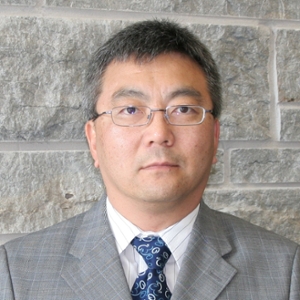
Dr. Brian Ikeda is an Associate Professor in the Department of Energy and Nuclear Engineering at Ontario Tech University, part of the Faculty of Engineering and Applied Science. He holds the Cameco Research Chair in Nuclear Fuels and is affiliated with the Energy Systems and Nuclear Science Research Centre. His work focuses on corrosion mechanisms of nuclear materials in extreme environments, radioactive waste management, and long-term material performance assessment. Education: PhD in Physical Chemistry from the University of Newcastle upon Tyne (UK), MSc in Chemistry from the University of Guelph, and BSc (Honours) from the University of Manitoba. Research interests include corrosion of materials in molten fluoride salts, stress-assisted corrosion cracking, and electrochemical degradation of fluorine anodes. His studies address critical challenges in nuclear waste container durability and repository conditions, with applications to geological disposal systems. Key contributions include pioneering work on titanium and copper alloy corrosion under repository-relevant conditions, as well as advancements in understanding hydrogen absorption effects. His publications span corrosion mechanisms, material selection criteria, and predictive modeling for nuclear fuel waste management. Professional affiliations include membership in the Electrochemical Society, National Association of Corrosion Engineers, and Canadian Nuclear Society.
Elco Luijendijk is an Associate Professor in Hydrogeology at the Department of Earth Science, University of Bergen (UiB). His research focuses on the interplay between groundwater systems, geological processes, and climate change impacts. He is affiliated with the Geodynamics and Basin Studies research group and the Bjerknes Centre for Climate Research. His work emphasizes understanding drainage density dynamics, subsurface flow processes, and the role of groundwater in landscape evolution. Key contributions include developing coupled models of groundwater flow and surface processes, particularly highlighted in his 2022 study on transmissivity's influence on drainage density. His research spans hydrogeological modeling, thermochronology, and environmental applications like coastal groundwater nutrient dynamics and nuclear waste repository safety assessments. Elco has authored over 50 peer-reviewed articles, with recent work addressing global groundwater recharge patterns, climate sensitivity, and subterranean estuary biogeochemistry. His interdisciplinary approach bridges geology, hydrology, and computational modeling, contributing to both theoretical advancements and practical challenges in water resource management and environmental safety.
Sara Bjørn Aaen is an Associate Professor at the Department of Sustainability and Planning, part of The Technical Faculty of IT and Design at Aalborg University. She is affiliated with The Danish Centre for Environmental Assessment and holds an ORCID identifier (0000-0001-6805-0950). Her research focuses on social impact assessment, public participation in infrastructure projects, sustainability, and energy policy. Key areas include radioactive waste management, renewable energy infrastructure, and participatory methodologies like LEGO® Serious Play. Her work emphasizes contested knowledge in environmental decision-making, citizen engagement strategies, and innovative technologies for sustainable resource extraction (e.g., AlSiCal and REESOURCE projects). She has contributed to over 40 publications and led/co-led 11 research projects, including EU-funded initiatives on rare earth elements and decarbonized alumina production. Education: While not explicitly stated in the profile, her academic role implies advanced qualifications in planning, environmental studies, or social science disciplines. Dr. Aaen has received the prestigious Årets Underviser award (2023) for teaching excellence. Her research spans environmental policy analysis, community resilience in Brexit-affected fishing ports, and decision-making processes for mega-infrastructure projects. She actively collaborates with institutions across Europe and engages in public outreach through workshops and media commentary on climate action and participatory governance. Her current projects include: REESOURCE: Sustainable rare earth extraction (2023–2027) AlSiCal: Zero-emission alumina production (2019–2024) Fit4Micro: MicroCHCP energy systems (2022–2026) Lego Serious Play in green transition initiatives (2024) Public engagement is central to her work, with activities ranging from organizing Fensdagene conferences to advising on radioactive waste repository public consultations. She has authored influential reports on Brexit’s socioeconomic impacts and co-developed tools for participatory method selection in planning processes.
Christian Ekberg is a Professor at Chalmers University of Technology, holding the Stena Professorship in Industrial Material Recycling since 2007 and Professor of Nuclear Chemistry since 2012. He leads the Department of Nuclear Chemistry / Industrial Material Recycling, Energy and Materials. His research focuses on radiochemistry, solvent extraction processes for nuclear fuel recycling, and thermodynamic studies of radionuclides. Key areas include spent nuclear fuel dissolution mechanisms, material recycling from industrial waste, and severe accident phenomena in nuclear reactors. Education Background: Ekberg completed his doctoral studies and postdoctoral research at ANSTO (Australia), focusing on chemical modeling and liquid extraction techniques. His career includes roles in separation and transmutation research at Chalmers, with recent emphasis on novel nuclear fuel production and recyclability. Research Interests: Ekberg’s work spans nuclear fuel cycles, actinide/lanthanide separations, hydrometallurgical processes for critical material recovery, and safety-critical studies of radionuclides under accident conditions. He develops advanced extraction systems (e.g., CHALMEX, GANEX) for fuel reprocessing and investigates materials for geological disposal. Grant & Advising Activities: Leads large-scale projects like the PATRICIA and ASGARD initiatives. Advises on EU-funded nuclear fuel recycling programs and collaborates globally on waste management solutions. Labs & Teams: Heads the Nuclear Chemistry and Industrial Material Recycling laboratories at Chalmers, focusing on experimental facilities for solvent extraction, radiolytic studies, and material characterization.
Clare Bond is a Professor of Geology and Geophysics at the University of Aberdeen's School of Geosciences, holding a Personal Chair since 2010. Her research focuses on structural geology, carbon capture and storage (CCS), and geothermal energy, with a particular emphasis on uncertainty analysis in geological interpretations. She leads the Fold-Thrust Research Group and co-directs eRock, an open-access virtual outcrop repository. Bond is also a key figure in the UK's CCS initiatives, including the Acorn CCS project and the UKRI Carbon Storage Research Facility. Education: BA (Hons) from University of Leeds, PhD from University of Edinburgh. Affiliations: Director of Scottish Carbon Capture and Storage (SCCS), member of Committee on Radioactive Waste Management (CoRWM). Her research integrates field observations with advanced modeling techniques to address global challenges like energy transition and radioactive waste disposal. Recent work explores structural controls on CO2 migration, fracture systems in reservoirs, and the psychologies of seismic interpretation bias. Bond actively promotes women in STEM through initiatives like Homeward Bound and her podcast 'Breaking the Ice Ceiling.' Key grants include NERC funding for CCS site selection and Royal Society of Edinburgh support for uncertainty analysis in seismic interpretation. Over 95 publications span structural geology, tectonics, and geoscience education, with a focus on stochastic modeling and open-access data sharing.
Dr. Michal Kruszewski serves as a Senior Researcher at the Department of Engineering Geology and Hydrogeology at RWTH Aachen University, where he leads investigations in reservoir geomechanics, rock mechanics, and fault mechanics with applications in deep geothermal energy systems. His expertise spans numerical modeling, hydraulic testing, and stress state analysis, contributing significantly to sustainable geothermal resource development. His academic credentials include: Ph.D. in Geosciences from Ruhr University Bochum (2023) M. Eng. in Geology and Mining from AGH University of Science and Technology, Cracow, Poland (2017) Dr. Kruszewski's research focuses on the critical relationship between crustal stress states and fault behavior in geothermal reservoirs. His work examines how stress conditions affect fault stability and permeability, with direct implications for induced seismicity risk during geothermal operations. He employs advanced numerical modeling techniques combined with field data analysis to address challenges in geothermal energy development, particularly in the Ruhr region of Germany and Los Humeros in Mexico. His investigations into fault reactivation potential during fluid injection operations have provided valuable insights for safer geothermal system design. His publication record demonstrates consistent research productivity with numerous high-impact articles focusing on geomechanical characterization of geothermal systems. A significant portion of his work addresses the practical challenges of deep geothermal energy development, particularly the relationship between stress states, fault reactivation, and fluid flow in the subsurface. His recent publications (2023-2025) show continued innovation in modeling techniques and field applications. Dr. Kruszewski maintains active membership in key professional organizations: European Geosciences Union (EGU) American Geophysical Union (AGU) International Geothermal Association (IGA) Polish Geothermal Society (PSG) Society of Petroleum Engineers (SPE) As project lead for SIEGFRIED (BMWK) and contributor to PRECODE (BGE), he oversees research initiatives addressing critical challenges in underground engineering and geothermal development. His work on the PRECODE project investigates excavation-induced damage in tunnel environments, with implications for deep geological repositories. Dr. Kruszewski maintains strong international collaborations, particularly with Mexican research institutions through the GEMex project, advancing understanding of superhot geothermal systems in volcanic environments.
Mohammadreza Jalali serves as Professor and Chair of Engineering Geology and Hydrogeology at RWTH Aachen University's Faculty of Civil Engineering. His academic journey spans multiple prestigious institutions including ETH Zurich and the University of Waterloo, with extensive industry experience at Schlumberger and GEOMEC Engineering. His current research focuses on the intersection of geomechanics and hydrogeology with practical applications in energy and waste management systems. Dr. Jalali earned his Ph.D. in Earth & Environmental Sciences from the University of Waterloo (2013), following an M.Sc. in Petroleum Engineering (2007) and B.Sc. in Mining Engineering (2004), both from the University of Tehran. His educational background combines engineering fundamentals with earth sciences expertise, providing a strong foundation for his interdisciplinary research approach. His research interests center on Rock and Geomechanics, Applied Hydrogeology, and their applications to critical infrastructure challenges. Specializing in Thermo-hydro-mechanical coupled problems in rocks, he investigates Hydro-mechanical characterization of rocks, Hydraulic stimulation techniques, and Discrete fracture network modeling. His work has significant implications for Nuclear Waste Repositories and Deep Geothermal Energy systems, addressing some of the most pressing energy and environmental challenges of our time. Analysis of his recent publications reveals a strong focus on the mechanical behavior of clay-rich formations, particularly Opalinus Clay which is crucial for nuclear waste disposal. His work combines advanced experimental techniques with sophisticated numerical modeling to understand rock behavior under complex thermo-hydro-mechanical conditions. The research shows increasing emphasis on energy storage applications, particularly hydrogen storage in salt caverns, reflecting emerging energy transition needs. Dr. Jalali maintains active collaborations with major underground research laboratories including the Grimsel Test Site in Switzerland and the Bedretto Underground Laboratory. His work integrates field-scale experiments with laboratory investigations and numerical modeling, creating a comprehensive research framework that bridges theoretical understanding with practical engineering applications.
Walter Wildi is an Honorary Professor of Geology at the University of Geneva, affiliated with the Department F.A. Forel for Environmental and Aquatic Sciences and the Institute for Environmental Sciences (ISE). He previously held the position of Professor of Geology at the University of Geneva from 1986 to 2013. His academic career includes roles such as Director of the Institute F.-A. Forel (1995–2011) and Director of the Centre of Environmental Sciences (1992–2007). Wildi’s research focuses on geology, environmental science, and nuclear waste disposal, with contributions to understanding sedimentology, contaminated site management, and lacustrine ecosystems. Wildi’s education includes a Dr. Sc. nat. from ETH Zurich (1976) and postdoctoral research at institutions like ETH Zurich and the University of Paris VI. His professional activities span academic leadership, governmental advisory roles (e.g., Swiss Federal Nuclear Safety Commission, 1997–2007), and interdisciplinary environmental studies. His scientific work emphasizes regional geology (Alps, North Africa), glacial geology, and the environmental impacts of human activities. Recent research includes investigations into microbial contamination in lakes and the long-term persistence of pollutants in sediments. Wildi has published extensively on topics ranging from radioactive waste disposal to the geochemical analysis of lake sediments. Teaching contributions include courses on geomorphology, waste management, and environmental geology at both bachelor and master levels. His involvement in public discourse includes expert opinions on climate change impacts, such as a 2019 article in Le Temps discussing Alpine glaciers as climate indicators.