Diana Leitao is Assistant Professor of Applied Physics at Eindhoven University of Technology, specializing in magnetoresistive sensor development and nanofabrication. Her research advances spintronic technologies for industrial and biomedical applications. Research focuses on: Novel thin-film stacks for magnetic sensors Electron beam lithography and nanofabrication Angular-dependent sensor optimization Laser-induced magnetic switching Recent work demonstrates innovations in multi-state magnetic tunnel junctions and thermal resilience in sensor architectures. Current developments focus on flexible magnetoresistive sensors and spintronic device integration.
Erica Carlson is a Professor of Physics at Purdue University, specializing in condensed matter physics with a focus on quantum materials and electronic phase transitions. Her research explores emergent electronic behaviors in strongly correlated systems, leveraging advanced microscopy and machine learning techniques. Key areas include fractal pattern formation in quantum materials, magnetically-driven phase transitions, and nanoscale defect dynamics in vanadium dioxide. Her work bridges fundamental physics with educational outreach, including developing NGSS-aligned quantum-infused curricula for K-12 students. She investigates spatial complexity in superconductors and nickelates, uncovering universal scaling laws and disorder-induced critical phenomena. Recent studies apply deep learning to decode disorder-driven electronic patterns in cuprates and topological materials. Collaborations span nanoelectronics, magnetism, and quantum pedagogy, with a particular emphasis on understanding hysteresis mechanisms and memory effects in functional oxides. Her experimental toolkit includes correlative microscopy, quantum Monte Carlo simulations, and advanced noise spectroscopy to probe emergent phases at atomic scales.
Antonio Guerrero is an Associate Professor in Applied Physics at Jaume I University and Principal Investigator of the Active Materials and Systems Research (AMSY) group at the Institute of Advanced Materials (INAM). His work focuses on developing novel materials for electronic devices, with emphasis on memristors, photovoltaics, and energy applications. Education: Bachelor of Chemistry, University of Alcalá de Henares (2002) Ph.D. in Organometallic Chemistry, University of East Anglia, UK (2006) Guerrero's research centers on three interconnected domains: memory devices (memristors/transistors for neuromorphic computing), photovoltaics (perovskite/organic solar cells), and energy materials . His approach integrates materials synthesis, device fabrication, and fundamental characterization to understand ion transport mechanisms in halide perovskites. This interdisciplinary work bridges chemistry, physics, and engineering to address stability challenges in next-generation electronics. Analysis of his 2023-2025 publications reveals dominant trends in perovskite-based memristors for neuromorphic systems (60% of articles), photovoltaic innovations (25%), and sustainable energy materials (15%). Key advancements include engineering perovskite compositions for resistive switching control, developing organic-inorganic hybrid electrolytes for synaptic transistors, and creating scalable manufacturing techniques for solar cells. His work consistently explores the role of ion migration in device performance. Professional Recognition: Panel member of ERC Consolidator program Regular reviewer for Science, Nature Energy, and Energy & Environmental Science As Principal Investigator of the AMSY group, Guerrero mentors students across all levels and evaluates international research proposals. His leadership has yielded over 110 publications (h-index 53), three patents, and significant contributions to perovskite device physics. He actively collaborates with European research networks and industry partners through INAM's technology transfer initiatives. The AMSY group operates within INAM's advanced laboratories, utilizing specialized equipment for materials synthesis, thin-film deposition, and nanoscale device characterization. Current projects focus on ion migration dynamics in perovskites, flexible memristor arrays, and enzymatic PET recycling processes, with strong ties to Spain's neuromorphic computing roadmap.
Dr. Aswini Pradhan is an Associate Professor of Physics at Hampton University, part of the School of Science. He holds an M.S. from Utkal University, India, and a Ph.D. from the Indian Institute of Technology, India. His research focuses on quantum materials, semiconductors, and superconductors, with applications in energy, biomedical diagnostics, and advanced functional materials. He has led interdisciplinary research teams and held academic roles at institutions like the University of Virginia and Norfolk State University, accumulating over 480 publications and securing $30M+ in grants. His work emphasizes nanomaterials for energy storage and optical/magnetic phenomena. Education: M.S., Utkal University, India Ph.D., Indian Institute of Technology, India Research Interests: Dr. Pradhan's work spans quantum materials, semiconductor innovation, and superconductivity, with a focus on nanomaterials for energy harvesting and biomedical tools. His research leverages magnetic and optical quantum phenomena to develop multifunctional materials for next-generation applications. Recent projects include magnetoelectric coupling in heterostructures, graphene-based memory cells, and plasmonic biosensors. Publications: Dr. Pradhan’s articles highlight advancements in nanomaterials, optoelectronics, and energy systems. His work often bridges theoretical physics with practical applications, such as resistive switching in memristors or enhanced photoresponse in solar cells. These studies underscore his interdisciplinary approach to materials science. Awards: State Council of Higher Education of Virginia (SCHEV) Outstanding Faculty of Virginia Advising and Grants: He has advised numerous graduate students and secured grants from multiple agencies. His leadership spans roles at Hampton University and international collaborations, including the International Center for Superconductivity-Japan and Oxford University’s Clarendon Lab. His work emphasizes mentorship and strategic resource management. Labs and Teams: His research involves interdisciplinary teams focused on nanomaterials synthesis, device fabrication, and characterization. Collaborations include affiliations with SPIE, MRS, and APS, reflecting his engagement with global scientific communities.
Vijay Krishna is a Distinguished Professor of Economics at Penn State University and serves as the Job Market Placement Director in the Department of Economics. His academic career includes a Ph.D. in Economics from Princeton University (1983), an M.A. in Economics from Delhi University (1978), and a B.A. in Mathematics from Delhi University (1976). His research focuses on Economic Theory and Industrial Organization , with recent interdisciplinary contributions in electronics and computer engineering. Notable areas include ferroelectric devices, memory storage technologies, and hardware security. He has also explored neural network architectures and energy-efficient computing systems. Recent publications (2023–2025) highlight innovations in cryogenic logic gates, nonvolatile memory systems, and hybrid neural networks. His work often bridges theoretical economics with applied engineering, reflecting cross-disciplinary collaboration. Awards and grants are not explicitly listed in the provided materials, but his extensive publication record underscores sustained academic engagement. Professor Krishna advises on job market placements for economics PhD students and maintains an active role in academic administration. His research group explores cutting-edge technologies in both traditional economic theory and emerging computational fields.
Yihang Zeng is an Assistant Professor of Physics and Astronomy at Purdue University, leading the Zeng Lab focused on quantum properties in two-dimensional (2D) materials. His research combines nanodevice fabrication with low-temperature electrical/optical characterization to explore phenomena like strong electronic correlations and topological states. Education: B.S. in Physics, Peking University (2011–2015) Ph.D. in Physics, Columbia University (2015–2021) Research Interests: The Zeng Lab designs 2D heterostructures (via 'Lego-like' stacking) and uses advanced tools like polarization-resolved SHG and cryogenic optical systems to study quantum effects. Key goals include discovering new physics and enabling quantum technologies like quantum computing. The lab is part of Purdue’s Birck Nanotechnology Center for fabrication resources. Lab Facilities: The lab includes a fabrication suite with plasma etchers, laser lithography, and an AFM, alongside a renovated measurement lab projected for completion in 2025. Recent milestones include functional 2D devices and Jo’s Rolf Scharenberg Fellowship (2025).
Dr. Guo-Xing Miao is an Associate Professor in the Department of Electrical and Computer Engineering at the University of Waterloo, with affiliations to the Institute for Quantum Computing. His research focuses on spintronics, iontronics, and topological quantum computing, emphasizing novel materials and devices for energy-efficient information processing. He holds a BSc from Shandong University (1999), a PhD from Brown University (2006), and postdoctoral experience at MIT (2011). Key research areas include spiontronics, memristors, neuromorphic computing, and the development of advanced nanoelectronic systems. He has been recognized with the 2017 Ontario Early Researcher Award. Dr. Miao is active in professional organizations such as IEEE, MRS, and APS, and teaches courses ranging from semiconductor physics to quantum circuits. Education: BSc, Shandong University, 1999 PhD, Brown University, 2006 Research Scientist, MIT, 2011 Recent Teaching: ECE 231: Semiconductor Physics and Devices (2023) ECE 405D: Superconducting Quantum Circuits (2025) NANO 601: Characterization of Nanomaterials (2022–2025) Research Highlights: Design of spin-based quantum computing architectures Development of iontronic memory devices Interfacial engineering in resistive switching systems His lab focuses on merging spin and ion dynamics to create next-generation devices, with a particular emphasis on scalable fabrication techniques. Dr. Miao actively supervises graduate students and maintains Sole-Supervisory Privilege Status (SSPS) for doctoral admissions.
Kaustav Banerjee is a Professor in the Department of Electrical and Computer Engineering at the University of California, Santa Barbara (UCSB). He is a globally recognized leader in nanoelectronics, specializing in 2D materials such as graphene and van der Waals heterostructures. His research focuses on energy-efficient electronics, photonics, bioelectronics, and 3D integrated circuits. Banerjee holds visiting/adjunct professorships at institutions including Tokyo Institute of Technology, Universität der Bundeswehr München, and Shanghai Jiao Tong University. Banerjee earned his PhD in Electrical Engineering and Computer Sciences from the University of California, Berkeley. His work has led to commercialized innovations in nanoscale interconnects and 3D ICs, including the groundbreaking Kinetic Inductor overcoming Faraday's 200-year-old inductance density limit. His research interests emphasize strain engineering in 2D FETs, quantum computing interconnects, and cryogenic CMOS integration. Notable contributions include high-performance monolayer 2D stacked nanosheet FETs and advancements in ferroelectric FET-based memory systems. Banerjee has been honored with prestigious awards, including the IEEE Kiyo Tomiyasu Award, Friedrich Wilhelm Bessel Research Award, and recognition as a Highly Cited Researcher by Clarivate Analytics. He advises students who have won multiple awards, including the UCSB Lancaster Dissertation Award and IEEE Electron Devices Society PhD Fellowships. His interdisciplinary work spans collaborations with industry and academia, addressing challenges in next-generation electronics, quantum computing, and biomedical applications.
Ali Gokirmak is a Professor in the Department of Electrical & Computer Engineering at the University of Connecticut's College of Engineering. His research focuses on nanoelectronics, phase change memory, thermoelectric effects, and semiconductor device modeling. He leads the UConn Nanoelectronics Laboratory and has secured over $11.2M in federal grants, including NSF, AFOSR, and DOE funding. He holds the Charles H. Knapp Endowed Professorship and has received multiple teaching awards. His work includes developing novel phase change devices, studying thermoelectric phenomena at nanoscale, and advancing hardware security through nanoscale devices. Education: Ph.D. & M.S. in Electrical & Computer Engineering from Cornell University (2005, 2002), B.S. in Physics and Electrical Engineering from University of Maryland (1998). His research group has supervised over 20 PhD and MS students, focusing on topics like phase change materials, nanofabrication, and electro-thermal modeling. Key contributions include high-temperature measurement setups for phase change materials, computational models for phase change dynamics, and exploration of phase change logic. He collaborates internationally on projects like MURI security initiatives and DURIP instrumentation grants.
Dipti Gupta is a Professor in the Department of Metallurgical Engineering and Materials Science at the Indian Institute of Technology Bombay (IIT Bombay), where she has been serving since 2011, progressing from Assistant Professor to Associate Professor and then to Professor in 2021. She leads the Plastic Optoelectronics Lab and is actively engaged in research and academic programs at IIT Bombay. Her research centers on flexible and stretchable electronics , organic electronic devices for energy and biomedical applications, and printed electronics . Her work integrates materials science with electronic device engineering to develop innovative solutions for robotics, healthcare, and renewable energy. She explores polymer substrates, thin-film transistors, solar cells, and energy storage systems with a focus on mechanical flexibility and performance stability. The recent publications reflect a strong trend in organic and hybrid electronic devices , particularly in solar cells , thin-film transistors , and flexible memory . Her research emphasizes low-temperature processing , nanomaterial integration , and device stability , contributing significantly to the advancement of printable and wearable electronics. Scientific Awards and Recognitions: No specific awards mentioned in the text. Advising and Grants: She has advised multiple students and researchers involved in her publications. Her research is supported by significant grants from DST-TDB, DST-SERI, INDO-USSTF, Wadhwani Research Center, and IITB Seed Grant, covering projects such as flexible tactile sensors, blood pressure measurement devices, and inkjet-printed solar cells. Labs and Teams: She leads the Plastic Optoelectronics Lab at IIT Bombay, focusing on the development of plastic-based electronic devices using organic, inorganic, and hybrid materials. The lab fosters interdisciplinary collaboration in materials synthesis, device fabrication, and performance characterization.
Jan Seidel is a Professor in the School of Materials Science and Engineering at UNSW Sydney. He holds a doctorate from TU Dresden (2005) and has held positions at UC Berkeley, Lawrence Berkeley National Laboratory, and as a Visiting Fellow at the University of Oxford. His research focuses on advanced scanning probe microscopy for studying functional materials, including domain walls, topological structures, and energy-related applications like photovoltaics and quantum materials. He has authored over 200 peer-reviewed papers with 16,000+ citations and an h-index of 50. Education: Doctorate in Materials Science, TU Dresden, Germany (2005). Key Positions: Research Scientist at Lawrence Berkeley National Laboratory (2008–2011), Research Associate at UC Berkeley (2006–2007), and Research Associate at TU Dresden (2001–2006). Research Interests: Ferroelectrics, multiferroics, 2D materials, nanotechnology, and energy materials. His group develops novel microscopy techniques and explores optoelectronic and data storage applications, including nonvolatile memories and nanoelectronics. Awards: UNSW Outstanding Research Supervisor Award (2019), ARC Postgraduate Council Supervisor Awards (2017–2018), and a Future Fellowship from the Australian Research Council (2011). Teaching: MATS6008 Advanced Functional Materials, NANO3001 Advanced Nanomaterials. He leads the Seidel Research Group, affiliated with ARC’s Centre of Excellence in Future Low-Energy Electronics Technologies (FLEET). Advising: Openings for PhD students; contact via jan.seidel@unsw.edu.au. Grants and collaborations span synchrotron techniques, neutron scattering, and international partnerships.
Patricio Farrell is a Senior Lecturer and Research Group Leader in Applied Mathematics at the Weierstrass Institute Berlin (WIAS). His work bridges mathematical theory and engineering applications, focusing on numerical methods for semiconductor devices, perovskite solar cells, and neuromorphic materials. He leads the 'Methods for Innovative Semiconductor Devices' group at WIAS and serves as Vice Chair of the Committee for Mathematical Modeling, Simulation, and Optimization (KOMSO). Affiliations: WIAS Berlin, Freie Universität Berlin (Privatdozent), Berlin Mathematical School (Mentor) Educations: PhD in Applied Mathematics (University of Oxford), Diplom (University of Hamburg/University of Bath) His research emphasizes structure-preserving numerical methods for drift-diffusion systems, with applications ranging from next-generation semiconductors to photonic crystal lasers. He develops simulation tools like ChargeTransport.jl and contributes to open-source numerical libraries such as VoronoiFVM.jl. Key projects include the ARISE initiative for semiconductor solvers (€1M), Excellence in Photonic Crystal Surface Emitting Lasers (PCSELence), and MATH+ projects on perovskite devices and semiconductor mechanics. Farrell is a scientific ambassador for Brain City Berlin and actively publishes in top journals, emphasizing computational methods for energy transition and material science challenges.
Professor Juejun Hu is the John F. Elliott Professor of Materials Science and Engineering at MIT. He leads the Photonic Materials Research Group, focusing on novel materials and devices for photonics, including optical phase change materials, meta-optics, and flexible photonics. His work spans applications in sensing, imaging, and communication systems. Education: B.S. from Tsinghua University (2004), Ph.D. from MIT (2009). Prior to MIT, he was an assistant professor at the University of Delaware (2010–2014). He is a Fellow of the American Ceramics Society, Optica, and SPIE. Research Interests: Development of reconfigurable optical devices, including metalenses and phase-change materials for non-volatile photonics. Key projects include compact sensors for industrial and biomedical applications, and chip-scale optical isolators. Awards: Vittorio Gottardi Prize (2020), SPIE Early Career Achievement Award (2019), Robert L. Coble Award (2017), NSF CAREER Award (2015). Grants & Advising: Advised over 100 students and postdocs. Active in research grants involving phase-change materials, silicon photonics, and integrated optics. Labs: Directs the Photonic Materials Group, teaching courses like MIT 3.071 (Amorphous Materials), 3.022 (Microstructural Evolution), and 3.156 (Photonic Materials and Devices).
Mengfan Guo is a Goldsmiths’ Early Career Research Fellow at Churchill College, affiliated with the Department of Materials Science & Metallurgy at the University of Cambridge. He holds a BS and PhD from Tsinghua University. His research focuses on polar materials for energy and information applications, particularly studying toroidal topologies in ferroelectric polymers and electrocaloric effects for eco-friendly heat pumps. Key areas include dielectric properties, piezoelectric behavior, and energy storage solutions. Dr. Guo’s work emphasizes the interplay between structural strain, chemical disorder, and polarization in materials. He explores novel composites and nanomaterials to enhance energy density, thermal stability, and mechanical robustness, with applications in capacitors and ferroelectric memories. His research bridges fundamental material science with practical engineering solutions for sustainable energy systems. Publications highlight advancements in electrocaloric heat measurement, high-temperature polymer nanocomposites, and ferroelectric nanostructures. Current projects investigate strain-driven polar topologies and multifunctional materials for next-generation devices. His interdisciplinary approach combines experimental characterization with computational modeling to advance material design principles.
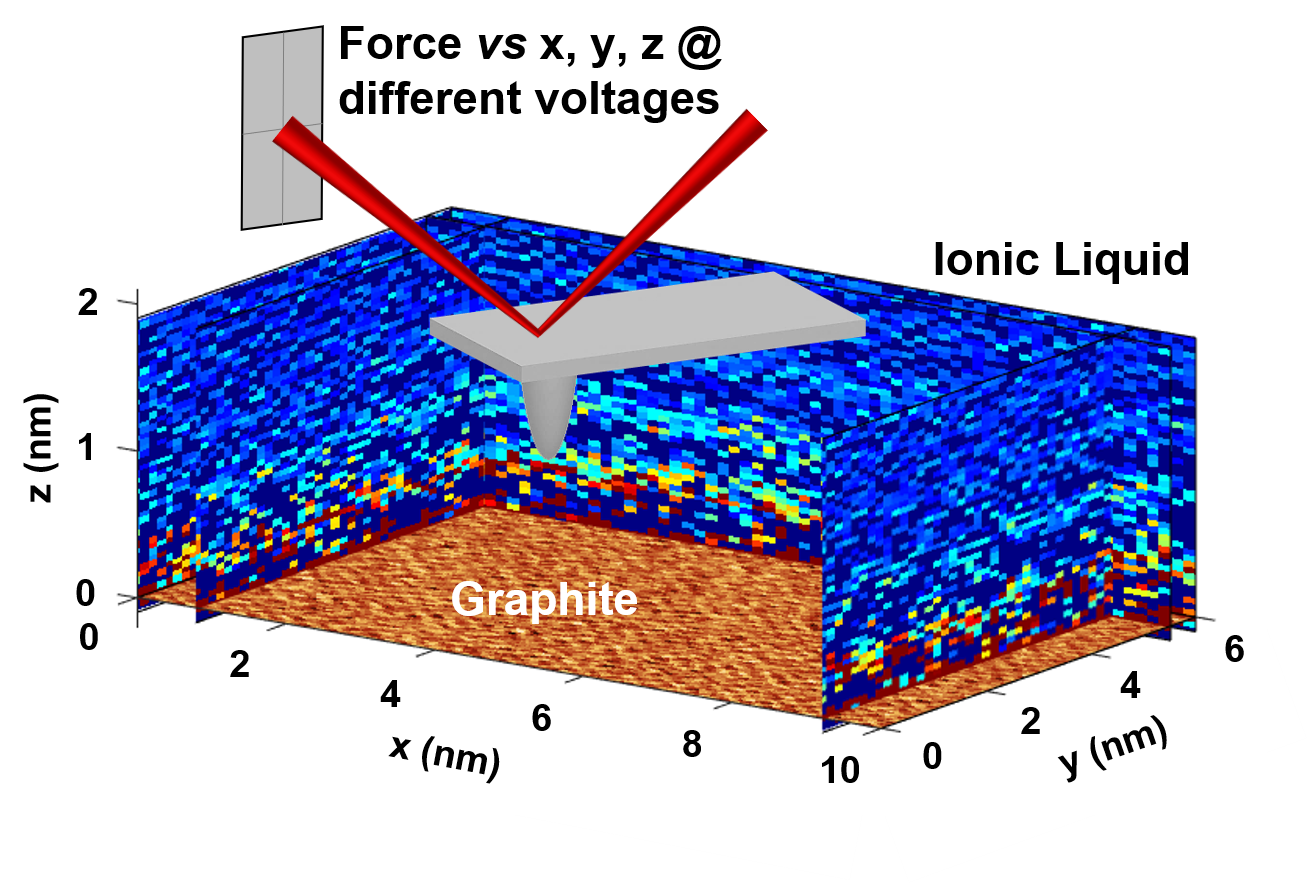
Yingjie Zhang is an Assistant Professor in the Department of Materials Science and Engineering at the University of Illinois at Urbana-Champaign. He holds a Ph.D. in Applied Science and Technology from UC Berkeley (2015). His research focuses on molecular imaging, electrochemistry, and renewable energy systems, with interdisciplinary collaborations across materials science, physics, and engineering. Education: B.S. in Physics (Summa Cum Laude), Nankai University, 2010 Ph.D. in Applied Science and Technology, UC Berkeley, 2015 Research Interests: Molecular imaging and spectroscopy Electrochemical energy conversion and catalysis Interfacial solvation dynamics Nanomaterials for renewable energy Awards: National Science Foundation CAREER Award (2024) Sloan Research Fellowship (2025) Beckman Young Investigator Award (2021) Grants and Labs: NSF STC Center for Quantitative Cell Biology (2023) Beckman Institute affiliation (2023–present) Zhang Research Group (focusing on interfaces, molecular systems, and energy/health applications)