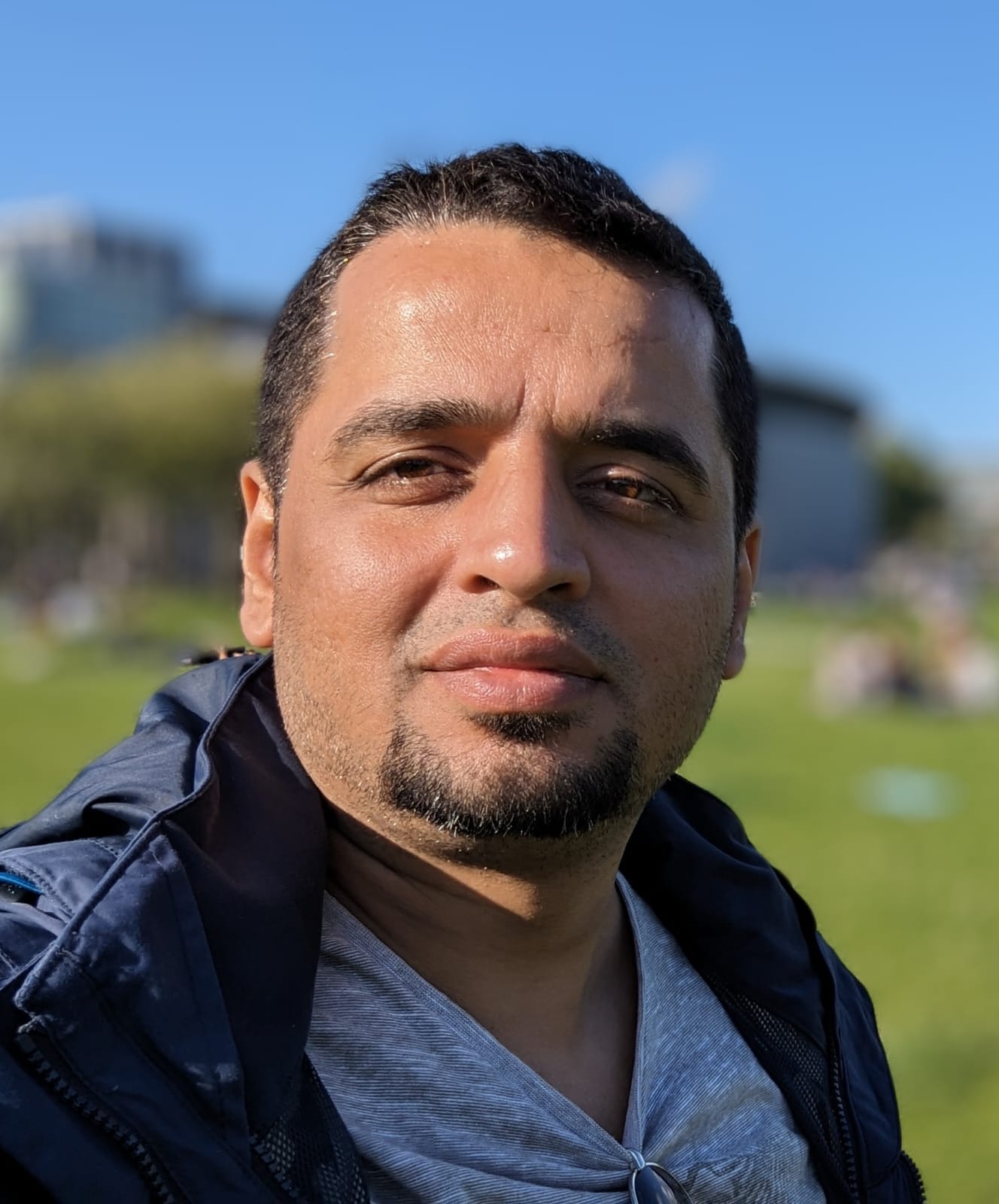
Salim Ullah is a researcher in the Department of Embedded Systems at Ruhr University Bochum. His work focuses on FPGA-based approximate computing, hardware accelerators, and embedded systems design. He leads the Embedded Systems Team, contributing to advancements in reconfigurable logic and neuromorphic computing. Research Interests: Approximate arithmetic circuits, FPGA design methodologies, neural network implementation on FPGAs Key Projects: AxOCS (approximate operator scaling), AxOMaP (mathematical programming for arithmetic operators), AxOSpike (spiking neural networks for operator design) Publications (2024-2020) highlight innovations in error resilience, quantization techniques, and hardware-software co-design. Collaborations include work on RISC-V emulation (NvMISC), energy-efficient multipliers, and embedded AI acceleration frameworks.
Stephen Ducharme is a Professor in the Department of Physics and Astronomy at the University of Nebraska-Lincoln, affiliated with the Nebraska Center for Materials and Nanoscience . His research focuses on ferroelectric polymers, piezoelectric materials, and nanoscale polarization phenomena. 256 Behlen Hall, Lincoln, NE 68588 Email: sducharme1@unl.edu Phone: 402-472-8590 Research Interests: Ferroelectric polymer thin films Nanoscale polarization control Flexoelectricity and piezoelectricity 2D material integration Magnetoelectric coupling Dielectric nanocomposites Publication Trends: His recent work emphasizes anisotropic transport in 2D materials, nanoscale polarization engineering , and hybrid ferroelectric systems combining polymers with inorganic nanostructures.
Jon Ihlefeld is a Professor in the Materials Science and Engineering and Electrical and Computer Engineering Departments at the University of Virginia. He joined UVA in 2017 as an Associate Professor after a career at Sandia National Laboratories. His research focuses on thin film ferroelectrics, dielectrics, and ion-conducting oxides. He is actively involved in editorial roles for journals such as the Journal of the American Ceramic Society and IEEE Ferroelectrics. Education B.S., Materials Engineering, Iowa State University, 2002 M.M.S.E., North Carolina State University, 2005 Ph.D., Materials Science and Engineering, North Carolina State University, 2006 Post-Doc, Pennsylvania State University, 2006–2008 Research Interests Dr. Ihlefeld's work spans ferroelectric materials, dielectric integration, and thermal transport in thin films. He explores novel processing techniques such as atomic layer deposition and sputtering to control material properties, with applications in energy storage and electronic devices. Notable Awards Fellow of The American Ceramic Society (2023) DARPA Young Faculty Award (2020) Richard M. Fulrath Award (2017) R&D 100 Awards (2017, 2010) Grants & Advising His grants focus on ferroelectric thin film integration and energy storage materials. He has advised numerous students and mentored postdocs, though specific student names are not listed here. Labs & Teams He leads the Multifunctional Thin Film Group at UVA, collaborating with national labs and industry to advance materials for next-generation electronics and energy systems.
Dr. Park Ki-ho is an Associate Professor at the Department of Computer Engineering, Sejong University. His research focuses on computer architecture, embedded systems, IoT systems, and low-power design methodologies. Academic Background: PhD in Computer Science from Yonsei University Professional Experience: Senior Engineer at Samsung Electronics, Post-Doctoral Research Associate at University of Utah Research Interests: Develops innovative solutions for sensor hub design , memory systems , and machine learning hardware acceleration . Key areas include: Non-Volatile Memory (NVM) management 3D Integrated Circuit memory bandwidth optimization Intelligent Edge Device architectures Hybrid Cache Architectures Model Compression Techniques On-Device AI Processing Recent Publications demonstrate expertise in in-memory acceleration , sparse matrix representation , and large language model inference . His work bridges theoretical advancements with practical implementations for IoT and AI applications.
Pınar Doğan is a Professor in the Department of Electrical and Electronics Engineering at Muğla Sıtkı Koçman University's Faculty of Engineering. She holds a Bachelor's degree in Physics from Izmir Institute of Technology (1998-2002), a Master's in Physics from the same institution (2002-2005), and a Ph.D. in Physics from Technische Universität Berlin (2005-2011). Her academic career includes significant research contributions and editorial responsibilities. Her primary research focuses on semiconductor materials and renewable energy technologies, including: GaN nanowire synthesis via molecular beam epitaxy Thin-film polycrystalline silicon solar cells Semiconductor device physics and optoelectronic applications Nanostructure characterization and defect analysis Advanced deposition techniques like e-beam evaporation Analysis of her publication portfolio reveals strong emphasis on III-nitride semiconductors (particularly GaN nanowires) and photovoltaic technologies. Her recent work shows increasing focus on machine learning applications for solar cell characterization and continued exploration of nanowire-based semiconductor systems. Professor Doğan has participated in multiple international research projects, including EU-funded initiatives: 'Efficient and Cost-Effective InGaN Light Sources on Si substrates' (2009-2014) and 'Advanced Thin Film Technologies for Cost Effective Photovoltaics' (2005-2009). She also led a TÜBİTAK project on 'Optoelectronic Properties of Polycrystalline Silicon Thin Film Solar Cells' (2015-2017). She holds editorial positions for the Turkish Journal of Electrical Engineering and Computer Sciences and Mugla Journal of Science and Technology. Administrative roles include serving as Deputy Director of the Institute of Science (2018-2021) and Department Head (2016-2017). Her courses cover optoelectronics, solar cell physics, semiconductor devices, and photovoltaic energy conversion.
Dr. Ana Maria Lepadatu is a Senior Researcher rank 2 at the National Institute of Materials Physics (NIMP) in Romania, where she serves as Group Leader of the 'Nanomaterials and Nanostructures based on SiGeSn' within Laboratory 30 'Nanoscale Condensed Matter'. Her research career spans over a decade at NIMP, progressing from Assistant Researcher to her current senior position since 2020. Dr. Lepadatu earned her PhD in Physics from the University of Bucharest in 2012 with a thesis on 'Study of the electrical properties of some nanostructures based on group IV elements', supervised by Prof. Magdalena Lidia Ciurea. She also completed a Master's degree in Physics of Polymers and Technology of Materials from the same institution in 2010. Her research focuses on nanostructured materials based on Si-Ge-Sn alloys, particularly nanocrystals, quantum dots, and nanoparticles embedded in oxides. She investigates charge storage mechanisms, electrical transport properties, quantum confinement effects, and applications in nonvolatile memories and optical sensors. Her work also encompasses ferroelectric HfO 2 structures and trapping processes in semiconductor nanostructures. The research combines experimental fabrication techniques like magnetron sputtering with comprehensive characterization methods including electrical measurements, Raman spectroscopy, and TEM. Analysis of her 15 most recent publications reveals a consistent focus on short-wave infrared (SWIR) photosensing applications, particularly using Group IV semiconductor nanomaterials. Her work demonstrates expertise in nanocrystal formation, memory device development, and optoelectronic applications, with increasing emphasis on SiGeSn alloys that extend detection capabilities beyond pure Ge systems. The publications show a progression from fundamental material properties to practical device applications, with strong emphasis on the relationship between structure, morphology, and functional performance. "Radu Grigorovici" Award of the Romanian Academy (2013) Diploma of Excellence & ProInvent Medal - ProInvent International Exhibition (2019) Best Poster presented during E-MRS 2013 Spring Meeting, Symposium J Prize (2013) Multiple Best Paper Awards at IEEE International Semiconductor Conference editions (2009-2018) Diploma of Excellence - EuroInvent European Exhibition (2019) Dr. Lepadatu has contributed to several research projects including 'SiGeSn nanocrystals with charge storage properties at nanoscale – SIGESNANOMEM' (2019-2021). She has co-authored multiple book chapters on nanostructured materials and holds several patents related to nanocrystal-based memory devices and photosensitive structures. Her work demonstrates strong collaboration with researchers across Romania's materials science community. She leads the 'Group of Nanomaterials and Nanostructures based on SiGeSn' at Laboratory 30 'Nanoscale Condensed Matter', focusing on fabrication and characterization of Group IV semiconductor nanostructures. The group utilizes advanced techniques including magnetron sputtering deposition, rapid thermal annealing for nanostructuring, and comprehensive electrical and optical characterization to develop novel materials for memory and sensing applications.
Dr. Ranko Heindl is an Associate Professor in the Department of Physics & Astronomy at San José State University. He joined the university in 2012 after serving as an NRC Postdoctoral Fellow at the National Institute of Standards and Technology (NIST) in Boulder, Colorado, where he worked in the Magnetics Group for over five years. His expertise spans magnetism, spintronics, nonvolatile memories, and advanced materials research. Education: PhD in Applied Physics, University of South Florida, 2006 Research Interests: Dr. Heindl focuses on magnetic random access memories (MRAM), magnetic recording materials for hard disk drives, magneto-resistive sensors, and high-frequency properties of magnetic thin films. His technical expertise includes vacuum thin film deposition, nanofabrication, and device testing. He is affiliated with the American Physical Society (APS) and the IEEE Magnetics Society. Labs & Facilities: His laboratory (SCI 250) supports advanced materials characterization and device prototyping.
Dr Stuart Norcross is a Scientific Officer and Researcher at the School of Computer Science, University of St Andrews. His work focuses on distributed systems, fault tolerance, peer-to-peer networks, and resilient middleware frameworks. He has contributed to projects funded by the Nuffield Foundation, including research on adaptable middleware for distributed applications and resilient web services infrastructure. His research emphasizes generative approaches to state machine design, Byzantine fault tolerance in distributed protocols, and innovative P2P architectures. Key areas of expertise include distributed algorithms, middleware design, and resilient service deployment. Recent work explores policy-aware frameworks separating application logic from distribution mechanisms, as well as adaptive garbage collection strategies for distributed systems. Norcross has authored/co-authored 16 research outputs including peer-reviewed conference papers and technical reports, with notable contributions to dependable systems architecture (e.g., Architecting Dependable Systems V ) and distributed application methodologies. His grants include the 2009 Nuffield Undergraduate Research Bursary and a 2007 project on policy-free middleware. Norcross collaborates extensively with colleagues like Prof. Alan Dearle and Dr. Geoffrey Kirby on foundational distributed systems research. He is based in the Jack Cole Building, contributing to both theoretical advancements and practical implementations in distributed computing.
Haris Volos is an Assistant Professor in the Department of Informatics at the University of Cyprus . He holds a Ph.D. in Computer Science from the University of Wisconsin-Madison (2012), following B.E.E. degrees from the National Technical University of Athens (2005). Before academia, he worked at Hewlett Packard Labs (2013–2018) and Google (2018–2019). His research focuses on Computer Architecture , Operating Systems , and Data Storage and Processing , with recent work on energy-efficient CPU architectures, disaggregated memory systems, and persistent memory frameworks. Education: B.E.E. (2005), National Technical University of Athens M.Sc. (2007), University of Wisconsin-Madison Ph.D. (2012), University of Wisconsin-Madison Key Research Themes: Energy-efficient CPU core idle-state architectures Disaggregated memory protection and replication Persistent memory systems and transactional memory Big data processing over hybrid memory tiers Recent Contributions: His work includes frameworks like Panthera for holistic memory management and AgileWatts for energy-proportional servers. He also pioneered systems like HOPS (Hands-off Persistence System) for persistent memory. Labs/Teams: Active in the university's informatics research clusters, focusing on hardware-software co-design and scalable data systems.
Mauro Di Marco serves as an Associate Professor in the Department of Information Engineering and Mathematical Sciences at the University of Siena, Italy, with office hours held weekly in the San Niccolò Complex (room 209) for student consultations. His research specializes in nonlinear dynamics and chaos theory applied to memristor-based electronic systems, focusing on discrete-time circuit analysis, snap-back repellers, coexisting attractors, and parameter-independent bifurcations. Key contributions include embedding classical chaotic maps into simplified memristor architectures and analyzing convergence in neural network models like the brain-state-in-a-convex-domain. Recent publications demonstrate expertise in designing tunable Chua's circuits using nonvolatile memristors, advancing applications in chaotic signal generation and neuromorphic computing through rigorous mathematical modeling and experimental validation.
Garrett S. Rose is a Professor and Department Head in the Department of Electrical Engineering and Computer Science at the University of Tennessee, Knoxville. His research focuses on nanoelectronic circuit design, neuromorphic computing, and hardware security. He holds a PhD in Electrical Engineering from the University of Virginia (2006) and has held roles at AFRL and NYU Polytechnic School of Engineering. His work explores emerging nanoscale devices like memristors for neuromorphic systems and security applications. Education: BS in Computer Engineering (Virginia Tech, 2001), MS and PhD in Electrical Engineering (University of Virginia, 2003/2006). His research areas include memristor-based neuromorphic architectures, hardware security primitives, and nanoelectronic device modeling. He leads the SENECA Research Group, which develops neuromorphic systems for applications like robotics and edge computing. Research highlights include memristive neural networks, PUF-based security systems, and cross-disciplinary projects funded by agencies like AFRL and DARPA. His recent work emphasizes co-design methodologies for neuromorphic hardware and applications such as spiking neural network implementations and sensor-integrated systems. He has advised multiple postdoctoral and graduate researchers and collaborates on grants related to neuromorphic computing and hardware security. His lab develops tools like the DANNA neuromorphic architecture and the RAVENS neuroprocessor, emphasizing real-world applications through hardware-software integration.
Max Lemme is a Professor at the Institute of Microelectronics (AMICA) within the College of Engineering at RWTH Aachen University. His research focuses on Materials Science & Engineering , particularly on advanced 2D materials and semiconductor devices for applications in flexible electronics, photonics, and neuromorphic computing. Key affiliations: Chair of Electronic Components, Institute of Microelectronics (AMICA) Research areas: Graphene and TMD integration, memristors, photonic devices, and 2D heterostructures Notable projects: NeuroSys (memristor crossbar architectures), MOSTFLEX (flexible electronics), AEOLUS (mid-IR spectroscopy) Recent work demonstrates expertise in atomic layer deposition, resistive switching mechanisms, and low-loss waveguide design. Publications highlight innovations in plasmonics , CMOS integration , and energy-efficient sensors . Active in transdisciplinary initiatives addressing technological, economic, and environmental aspects of neuromorphic hardware. Publications trends (2023–2025) emphasize 2D materials for neuromorphic computing, mid-IR photonics , and flexible semiconductor devices . Research spans from fundamental defect analysis in 2D transistors to wafer-scale fabrication techniques for industrial applications.
Benjamin M. Hunt is an Associate Professor of Physics at Carnegie Mellon University, affiliated with the Mellon College of Science. His research focuses on experimental condensed matter physics, particularly low-dimensional quantum materials such as van der Waals heterostructures and graphene-based systems. He leads the Hunt Lab, which investigates phenomena under extreme conditions like ultra-low temperatures and high magnetic fields. Education: PhD in Physics from Cornell University (2009), followed by postdoctoral research at MIT (2009–2014) and Columbia University (2014–2015). Professional roles include Assistant Professor at CMU (2015–2021) before becoming Associate Professor. Research interests include electronic transport in 2D materials, quantum spin Hall effects, topological superconductors, and novel superconductivity in low-dimensional systems. His lab employs advanced nanofabrication and probing techniques such as tunneling spectroscopy and scanning tunneling microscopy. Awards: Kaufman Young Investigator Award (2016), DOE Early Career Research Award (2017), Cottrell Scholar (2019). Active in professional societies like the American Physical Society.
Professor Jimmy Xu is the Charles C. Tillinghast Jr. 1932 University Professor at Brown University, with appointments in the School of Engineering and Department of Physics . Prior to Brown, he held distinguished roles such as the Nortel Chair in Emerging Technologies and James Ham Chair in Optoelectronics at the University of Toronto. His research spans nanoscale science and technology , quantum electronics and photonics , semiconductor lasers , and collective behaviors in neuromorphic systems . Key projects include hyperspectral quantum imaging , single-photon emitters , and DNA-programmed synthesis of quantum arrays . Recent publications highlight trends in quantum materials (e.g., phase-change nanocomposites), nanophotonics (e.g., plasmonics, silicon lasers), and DNA-based molecular engineering (e.g., biosensor interfaces). Over 340 refereed papers and 27 patents reflect his prolific output. AAAS Fellow APS Fellow Fulbright-Tocqueville Distinguished Chair Guggenheim Fellow 2001 NASA Tech Brief Class 1 Award 1995 Steacie Prize of Canada He has supervised 27 PhD theses , 30 Master’s theses , and 26 postdoctoral fellows , with 33 awards won by his advisees. His Laboratory for Emerging Technologies collaborates internationally, with grants from DARPA , NSF , and CNRS .
John Chandy is a Professor and Department Head of the Department of Electrical and Computer Engineering at the University of Connecticut. His research focuses on quantum dot-based semiconductor devices, compute-in-memory architectures, and hardware security mechanisms. University of Connecticut, Department of Electrical and Computer Engineering Research Interests: Dr. Chandy's work explores quantum interference transistors, multi-state logic circuits, and energy-efficient computing. He has pioneered the use of spatial wavefunction-switched (SWS) FETs for advanced memory and logic applications. Article Trends: His recent publications emphasize quantum dot channel FETs for multi-bit computing, II-VI gate insulator optimization, and hardware security using physically unclonable functions (PUFs). Key themes include biodegradable electronics, 8-state SRAMs, and quaternary logic gate design.