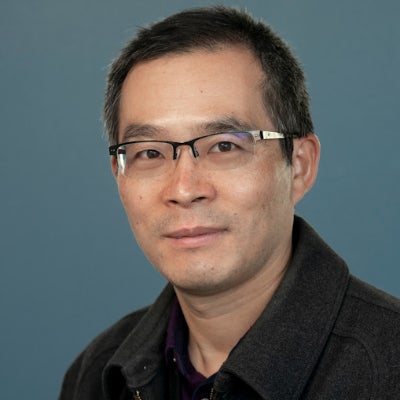
Dr. Haibo He is the Robert Haas Endowed Professor in the Department of Electrical, Computer, and Biomedical Engineering at the University of Rhode Island (URI). As an IEEE Fellow and NSF CAREER awardee, his research focuses on computational intelligence, neural networks, and reinforcement learning with applications to smart grids and microgrid systems. Ph.D. in Electrical Engineering, Ohio University, 2006 M.S. in Electrical Engineering, Huazhong University of Science and Technology, 2002 B.S. in Electrical Engineering, Huazhong University of Science and Technology, 1999 His research interests include: Computational Intelligence Adaptive Dynamic Programming Reinforcement Learning Deep Learning for Power Systems Distributed Control in Microgrids Imbalanced Data Learning Recent research trends from publications (2018-2025) show a focus on: Multi-agent reinforcement learning for energy systems Digital twin frameworks for grid security Event-triggered control mechanisms Finite-time convergence algorithms Cyber-attack resilient control systems Evolutionary computation in power networks Awards: IEEE Fellow (2018) NSF CAREER Award (2017) Dr. He leads the Computational Intelligence and Self-Adaptive Systems (CISA) Laboratory at URI, which conducts fundamental research on computational intelligence methods with applications to power systems, data mining, and neural networks.
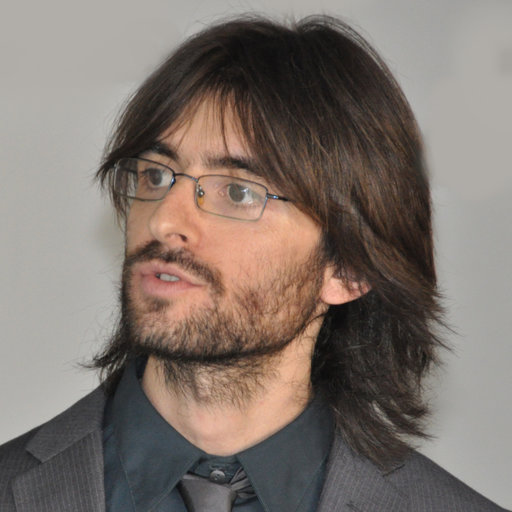
Nader Sadegh is a Professor in the Woodruff School of Mechanical Engineering at the Georgia Institute of Technology's College of Engineering, where he also serves as Associate Director and Education Director of the Robotics Ph.D. Program. His research spans robotics, control theory, and artificial intelligence with applications in industrial automation and public health. Dr. Sadegh's educational background includes: B.S. from University of California, Santa Barbara (1982) M.S. from University of California, Berkeley (1984) Ph.D. from University of California, Berkeley (1987) His research evolved from pioneering work on adaptive learning controllers for robotic manipulators—which enable robots to learn repetitive tasks without precise models—to neural network applications and nonlinear system identification. Current work focuses on barrier state theory for safety-critical control systems, safe trajectory optimization in robotics, and epidemiological modeling for disease transmission control. His methodologies consistently bridge theoretical control frameworks with industrial implementations to enhance system accuracy and autonomy while reducing hardware complexity. Analysis of his recent publications reveals a dominant trend toward safety-critical control architectures using barrier states and functions, with expanding applications in quadrotor navigation, agricultural robotics, and pandemic response systems. The interdisciplinary nature of his work connects control theory with machine learning, epidemiology, and industrial automation. Scientific distinctions include: Associate Editor, Journal of Dynamic Systems, Measurement, and Control (1993-1997) Registered Professional Engineer in Georgia U.S. Patent 5,946,449 for precision apparatus with non-rigid structures Dr. Sadegh has secured significant industry-sponsored research including Xerox Corporation projects on photoreceptor speed regulation, Ford Motor Company collaborations on assembly operations and continuously variable transmissions, and Visteon-funded work on high-precision manufacturing systems. His grants consistently target practical implementations where theoretical control methods solve real-world problems in automotive systems, electro-hydraulic valves, and glass forming processes. Based at the Georgia Tech Manufacturing Institute (GTMI), his lab develops integrated control solutions for complex mechanical systems, with recent emphasis on safety-guaranteed autonomous operations in unstructured environments and data-driven modeling for biological processes.
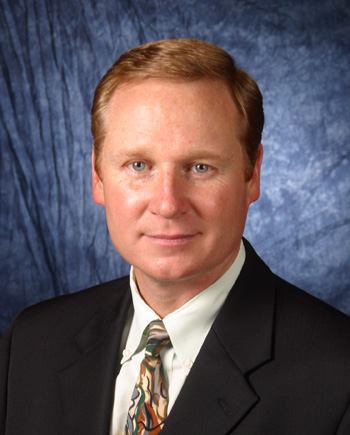
Ewan Dolier is a Research Fellow in the Department of Physics at the University of Strathclyde, Faculty of Science. He is actively involved in cutting-edge research on laser-driven ion acceleration and plasma physics, working within the SCAPA (Scottish Centre for the Application of Plasma-based Accelerators) facility. His work bridges experimental physics and machine learning techniques to optimize and diagnose high-energy particle beams. His research interests include: Laser-Plasma Interactions Machine Learning for Physics Optimization Proton and Ion Beam Acceleration Synthetic Diagnostics using Neural Networks High Repetition Rate Laser Systems Relativistic Transparency Regime Physics The recent trend in his publications shows a strong focus on integrating artificial intelligence and deep learning models into the control and analysis of laser-driven particle acceleration experiments. His work spans experimental design, data-driven optimization, and advanced diagnostics using scintillating fiber spectrometers and synthetic models. His scientific contributions have been presented at major plasma physics conferences and published in high-impact journals such as Communications Physics and High Power Laser Science and Engineering . Notable projects include: External Experiment at the Gemini High-Power Laser Facility (Deep Learning for Ion Acceleration) Development of High Repetition-Rate Target Systems at SCAPA Doctoral Training Partnership research (2019–2024) He collaborates extensively with leading researchers such as Paul McKenna and Ross Gray, and contributes to multi-investigator datasets and simulations. Ewan Dolier completed his PhD in 2024 with a thesis on advancing laser-driven ion acceleration using machine learning and instability analysis.
Dr. Stephen Warren-Smith is a Senior Research Fellow at the Future Industries Institute, University of South Australia (UniSA), where he conducts cutting-edge research in optical fiber technology and photonics. He is affiliated with the Laser Physics and Photonic Devices Laboratories within UniSA STEM (Science, Technology, Engineering and Mathematics), and serves as a Research Degree Supervisor for graduate students. Dr. Warren-Smith's primary research interests span optical fiber technology, photonics, and biosensors, with a particular focus on developing novel fiber optic sensing platforms for biomedical and environmental applications. His work encompasses microstructured optical fibers, fluorescence sensing, and the integration of machine learning techniques for enhanced sensor performance. He has made significant contributions to the fields of harmonic generation in optical fibers, NV center-based quantum sensing, and multimode fiber applications. Analysis of Dr. Warren-Smith's recent publications reveals a strong trend toward developing sophisticated fiber optic sensing platforms with diverse applications. His work demonstrates increasing integration of advanced materials (like diamond with NV centers) and computational methods (particularly deep learning) to overcome traditional limitations in optical sensing. The research spans fundamental physics of light-matter interactions in fibers to practical applications in medical diagnostics, environmental monitoring, and industrial process control. A notable pattern is the development of multi-parameter sensing capabilities within single fiber platforms, enabling simultaneous measurement of various physical and chemical properties. Dr. Warren-Smith has secured significant research funding including ARC Future Fellowships (FT200100154), ARC Discovery Projects (DP190102896), and support from the Australian National Fabrication Facility (Optofab Node) utilizing Commonwealth and South Australian State Government resources. His research has received substantial citation counts, with several papers cited multiple times in Web of Science and Scopus. Dr. Warren-Smith leads research activities within the Laser Physics and Photonic Devices Laboratories at UniSA STEM. His team specializes in the design, fabrication, and characterization of advanced optical fiber devices, with particular expertise in microstructured optical fibers, suspended core fibers, and integrated photonic sensing platforms. The laboratory maintains strong connections with the Australian National Fabrication Facility (Optofab Node) for advanced device fabrication capabilities and collaborates extensively with institutions including RMIT University, University of Melbourne, University of Adelaide, and international partners in China.
Cosimo Lacava is an Assistant Professor at the University of Pavia, Department of Industrial and Information Engineering. He works in the Integrated Photonics Laboratory (Floor F) and specializes in silicon photonics, integrated optics, and nonlinear optics for optical communications applications. His research focuses on developing advanced photonic integrated circuits for next-generation optical networks and signal processing systems. Dr. Lacava's primary research interests include: Silicon and silicon nitride photonic devices (design, fabrication and testing) Integrated electro-optic devices for telecommunications applications Design of highly spectral-efficient optical networks enabled by advanced modulation formats Digital signal processing (DSP) for telecommunication and data communication applications Nonlinear optics for all optical signal processing His recent publication record demonstrates significant contributions to integrated photonics, particularly in wavelength conversion technologies, nonlinear signal processing, and silicon nitride platforms. The research shows a clear progression from fundamental studies of nonlinear optical properties to practical implementations of photonic integrated circuits for optical communications systems. His work bridges theoretical understanding with practical device development for real-world applications. Dr. Lacava received his education at the University of Pavia, graduating with honors in Electronic Engineering in 2011 and completing his PhD in Optoelectronics and Electronic Engineering in 2014. Prior to his current position, he worked as a Senior Research Fellow at the Optoelectronics Research Centre, University of Southampton, and as a Postdoctoral researcher at the Quantum Electronics Laboratory at the University of Pavia working on the 'Fabulous' European Project. As an educator, he teaches Physics 1 for civil and environmental engineering students. His laboratory work in the Integrated Photonics Laboratory focuses on developing and testing photonic integrated circuits with applications spanning optical communications, signal processing, and emerging quantum information systems.
Matthew A. Franchek is a Professor in the Department of Mechanical and Aerospace Engineering at the University of Houston, where he has served since 2002. His career spans over three decades, including prior roles as Professor and Chair at the University of Houston (2002–2009), Director of the Biomedical Engineering Program (2002–2009), and faculty positions at Purdue University from 1992 to 2002. He earned his Ph.D. (1991), M.S. (1988), and B.S. (1987) in Mechanical Engineering from Texas A&M University and the University of Texas at Arlington, respectively. Dr. Franchek’s research focuses on Dynamic Systems, Measurement and Control , with expertise in linear/nonlinear system identification, multivariable control theory, diagnostics/prognostics, and adaptive control. His engineering applications span internal combustion engines , exhaust after-treatment , noise/vibration control , and health prognostics for cardiovascular/respiratory systems . His recent publications highlight applications in superconductor manufacturing, aeroelastic stability, magnetic actuators, and subsea engineering. 2002 Best Paper Award, ASME Journal of Dynamic Systems, Measurement and Control 2001 ASME Dynamic Systems and Control Division Young Investigator Award 1997 CASA/SME University Lead Award 1997 Feddersen Faculty Fellow, Purdue University Multiple teaching awards at Purdue University (1994–2001) and Texas A&M University (1991) He has served as an Associate Editor for the ASME Journal of Dynamic Systems, Measurement and Control, held leadership roles in ASME and IEEE, and organized symposia on nonlinear control and robust control at international conferences. His professional activities include advisory roles at Cummins Incorporated and reviewing for NSF and numerous journals.
Charu Sharma is an Associate Professor in the Department of Electrical Engineering at UiT The Arctic University of Norway, specializing in power systems and smart grid technologies. Her work focuses on reactive power control, voltage stability, and optimization of renewable energy-integrated networks. Research on cyber-physical co-simulation frameworks for real-time grid management Development of hybrid renewable energy microgrids for rural and industrial applications Expertise in optimization algorithms (e.g., BFOA-PSO, ANFIS) for energy systems Recent publications highlight her contributions to DER-enriched distribution networks, low-inertia system stability, and intelligent load frequency control. She actively collaborates with researchers on projects like Cooperative Isolated Renewable Energy Systems and arcICE , addressing reliability and sustainability challenges.
Lars G. Johansen is an Associate Professor at Aarhus University, affiliated with the Department of Electrical and Computer Engineering. His work bridges interdisciplinary domains, with a focus on signal processing and machine learning. Research interests include Audio engineering and acoustic signal analysis Biomedical signal processing Neuroscience applications in Parkinson's disease studies Recent publications highlight trends in audio engineering (e.g., loudspeaker distortion analysis) and biomedical signal processing (e.g., ECG-derived respiration techniques). Collaborative work spans neuroscience, Parkinson's disease treatment evaluation, and noise reduction systems. Contact: Email: lgj@ece.au.dk Phone: +45 41 89 32 74 Labs/Teams: Signal Processing and Machine Learning Laboratory at Aarhus University.
Dr. Fan Zhang serves as Associate Professor in Engineering (Engineering and Design) at the School of Engineering and Informatics, University of Sussex, where he leads research in control systems and sustainable energy technologies. His work bridges theoretical control engineering with practical renewable energy applications, particularly in hydrogen storage and conversion systems. His academic foundation includes: PhD in Control Systems from the University of Sheffield MSc in Control Systems from the University of Sheffield PgCLT (Distinction) from the University of South Wales BEng in Automation from Tianjin University of Technology and Education Research centers on control systems for renewable energy integration, with emphasis on hydrogen storage, wind/solar-hydrogen systems, and automation. His work demonstrates strong interdisciplinary connections between power electronics, energy conversion, and sustainable transportation solutions, particularly through advanced control strategies for complex energy systems. Publication analysis reveals consistent focus on hydrogen energy systems (70% of recent work), with growing emphasis on aviation applications and tidal energy integration. His research trajectory shows evolution from foundational photovoltaic control (2013-2015) toward multi-source renewable systems (2021-2025), reflecting industry shifts toward hydrogen economy solutions. Academic recognition includes: Senior Fellow of the Higher Education Academy He supervises research projects including tidal lagoon power and hydrogen energy storage optimization, with teaching responsibilities spanning Robotics and Electrical Engineering programs delivered in China. His curriculum development for Automation & Mechatronics and Systems Analysis modules demonstrates practical application of his research expertise. Current research activities involve supervisory control systems for renewable hydrogen infrastructure, with emerging work in neurolinguistics-based control interfaces indicating expanding interdisciplinary reach.
Jesper Nygård is a Professor at the Niels Bohr Institute, University of Copenhagen, specializing in solid state physics, nanophysics, and quantum technology. He leads the Center for Quantum Devices and has held leadership roles including Head of Section for Nanophysics and Solid State Physics (2007–2017) and Deputy Head of Research (2017–present). His research focuses on hybrid superconductor-semiconductor systems, nanowire-based quantum devices, and low-temperature quantum transport. PhD in experimental nanophysics (2000) and MSc/BSc in physics/mathematics from the University of Copenhagen International research experience at Harvard, Berkeley, and CNRS Grenoble His work bridges nanofabrication, quantum electronics, and Kondo physics, with recent publications analyzing nanowire junctions, microwave dynamics in superconducting systems, and heat dissipation mechanisms. He co-founded multiple technology startups and served as a Danish astronaut candidate (2005–2008). Scientific Awards: Member of the Royal Danish Society of Letters Member of the Danish Academy of Sciences
Shulei Zhang is an Assistant Professor in the Department of Physics at Case Western Reserve University's College of Arts and Sciences. He earned his Ph.D. from the University of Arizona in 2014 and specializes in theoretical condensed matter physics. His research investigates spin-charge transport in topological materials, magnetization dynamics, and quantum phenomena in magnetic systems. Research Focus Professor Zhang's group studies: Coupled spin/charge transport in topological quantum materials (e.g., insulators/semimetals) Magnetotransport in hybrid magnetic-organic-oxide structures Skyrmion dynamics and topological Hall effects Chiral magnetoplasmons arising from Berry phase phenomena Magnon transport in ferromagnetic/antiferromagnetic heterostructures This work aims to enable advances in spin-based electronics and quantum computation. Collaborations and Group He maintains active partnerships with the CATS Center (DOE Energy Frontier Research Center), Argonne National Laboratory, National University of Singapore, University of Tokyo, Fudan University, and other global institutions. His laboratory welcomes undergraduate/graduate students and postdoctoral researchers interested in condensed matter theory.
You Zhou is an Affiliate Assistant Professor in the Department of Materials Science and Engineering at the University of Maryland, leading an experimental quantum materials research group. His work focuses on fundamental properties of quantum materials for next-generation information and energy technologies. Dr. Zhou's research centers on quantum phenomena in 2D semiconductors and correlated materials. His group investigates exciton physics in atomically thin heterostructures, metal-insulator transitions in correlated oxides, and emergent quantum phases like Wigner crystals. Key research areas include: Quantum-confined excitons in moiré superlattices Optical properties of 2D materials and van der Waals heterostructures Neuromorphic computing using correlated electron systems Thermal radiation engineering in quantum materials His recent publications (2023-2025) reveal strong emphasis on quantum phase transitions in 2D materials, particularly exciton physics in twisted bilayers and Wigner crystal formation. The work demonstrates sophisticated control of quantum states through electrostatic gating, optical excitation, and heterostructure engineering, with applications spanning quantum computing, optoelectronics, and energy technologies. Notable scientific awards include: 2DM Young Scientist Award (2024) DOE Early Career Award (2022) NSF CAREER award (2021) IUPAP Early Career Prize (2023) Ralph E. Powe Junior Faculty Award (2023) Dr. Zhou actively mentors graduate students including Liuxin Gu (Ann G. Wylie Dissertation Fellow). His research is supported by major grants from the Department of Energy and National Science Foundation. The group maintains strong collaborations with Harvard (Kim and Lukin groups), MIT, and national laboratories. Current openings exist for postdoctoral researchers to explore quantum materials synthesis, nano-fabrication, and optical characterization. The experimental group develops advanced techniques for probing quantum phenomena, including nanoscale thermal imaging, ultrafast optical spectroscopy, and cryogenic quantum transport measurements. Their facilities enable atomic-scale manipulation of 2D materials and correlated oxides for next-generation device applications.
Dr. Barak Ratzker is a researcher at the Max Planck Institute for Sustainable Materials , affiliated with the Microstructure Physics and Alloy Design department. His work focuses on the sustainable synthesis of materials, particularly through hydrogen-based reduction pathways and advanced sintering techniques like spark plasma sintering (SPS) and hot isostatic pressing (HIP). His research spans transparent ceramics, MAX/MXene phases, and alloy design. Key research areas include: Hydrogen reduction of oxides for sustainable metallurgy Pressure-assisted sintering (SPS/HIP) of transparent ceramics Microstructure engineering in refractory materials Development of MXene-based composites for electronics Thermodynamic and kinetic analysis of solid-state reactions His recent publications highlight trends in: Environmentally conscious processing of ferromanganese oxides High-pressure synthesis of MAX phases and MXenes Optimization of optical and mechanical properties in ceramics Dynamic deformation behavior under extreme conditions Biological material interactions (e.g., crusticul-chitin systems)
Pasquale Scarlino is a Tenure Track Assistant Professor in the Institute of Physics at École Polytechnique Fédérale de Lausanne (EPFL), where he founded and leads the Hybrid Quantum Circuits (HQC) Laboratory. He holds a dual appointment with the School of Basic Sciences (SB) and the Physics Section (SB-SPH), conducting research at the intersection of semiconductor and superconducting quantum technologies. His laboratory develops hybrid quantum hardware for advanced quantum information processing. His educational background includes a Master's degree in Physics from the University of Salento (Italy, 2011), where he was a student of Scuola Superiore ISUFI, followed by a Ph.D. from TU Delft (2016) in the Spin Qubits group of Prof. L.M.K. Vandersypen at the Kavli Institute of Nanoscience-Qutech. His doctoral work focused on Si/SiGe spin qubits in collaboration with the M. Eriksson Group at Wisconsin University. Scarlino's research centers on experimental quantum physics using hybrid superconductor/semiconductor devices with electrostatically defined quantum dots coupled to high-impedance microwave resonators. He investigates light-matter interactions in unconventional regimes, quantum transport in low-dimensional systems, and spin/charge qubit implementations. His work aims to merge semiconductor and superconducting platforms to expand quantum information capabilities, with applications in quantum computing, quantum optics, and analog quantum simulation. Early career achievements include establishing the first coherent interface between superconducting and semiconducting quantum systems using high-impedance resonators. His publication record shows strong focus on microwave photon-mediated interactions between quantum systems, with recent work exploring quantum acoustics, topological band engineering, and criticality-enhanced sensing. The articles demonstrate increasing specialization in hybrid quantum hardware, with a shift toward germanium-based systems and advanced resonator designs in the latest publications. Scarlino has advised eleven Ph.D. students at EPFL and teaches courses including General Physics (Electromagnetism), Solid State Systems for Quantum Information, and Introduction to Quantum Science and Technology. His teaching emphasizes experimental quantum hardware approaches and critical assessment of quantum computing platforms. The Hybrid Quantum Circuits Laboratory operates within EPFL's Institute of Physics, utilizing state-of-the-art nanofabrication facilities and cryogenic measurement setups. The team collaborates extensively with leading quantum research groups worldwide, maintaining strong ties with previous institutions including ETH Zurich, TU Delft, and Microsoft Station Q Copenhagen.
Peide Ye is the Richard J. and Mary Jo Schwartz Professor of Electrical and Computer Engineering at Purdue University's College of Engineering. His research focuses on semiconductor devices, oxide electronics, and advanced transistor technologies, particularly in 2D materials, ferroelectric semiconductors, and monolithic 3D integration. He leads investigations into thin-film transistors (TFTs), atomic layer deposition (ALD) processes, and device reliability under extreme conditions. His work bridges quantum phenomena with practical applications in nanoelectronics. Research Interests: Dr. Ye specializes in nanoelectronics, including novel semiconductor materials (e.g., In2O3, tellurene), ferroelectric field-effect transistors (Fe-FETs), and low-voltage/high-performance device designs. His group addresses challenges in scaling transistors to atomic dimensions, optimizing contact engineering, and mitigating defects in oxide semiconductors. Articles Trends: His recent publications (2024-2025) emphasize ultrathin oxide transistors with record performance metrics (e.g., 36 GHz fT), BEOL-compatible fabrication, and quantum effects in 2D materials. Key themes include low-power operation, defect-tolerant designs, and integration of logic/memory systems. Labs/Teams: While specific lab names aren't listed here, his work is closely tied to Purdue's nanoelectronics research infrastructure, collaborating with semiconductor industry leaders to advance next-generation transistor technologies.