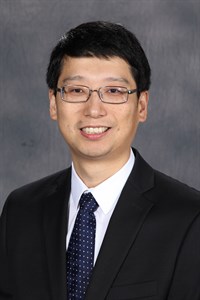
Zhuo Feng is Professor of Electrical and Computer Engineering at Stevens Institute of Technology, directing the HUDSON Lab and holding a Ph.D. from Texas A&M University. His research develops spectral graph methods for VLSI design, including circuit simulation, power grid verification, and machine learning applications. Funded by NSF CAREER and multiple grants, his work has produced award-winning algorithms like GRASS for graph sparsification. Recent publications focus on spectral methods for circuit stability analysis, physics-informed neural networks, and explainable AI frameworks. He teaches graduate courses in VLSI design and GPU programming while co-founding LeapLinear Solutions. NSF CAREER Award (2014) ACM/IEEE DAC Best Paper Award (2013) Multiple Best Paper Nominations (ICCAD 2008, 2006)
Arkadi Nemirovski is the John P. Hunter, Jr. Chair and Professor at the H. Milton Stewart School of Industrial and Systems Engineering, Georgia Tech. He holds a Ph.D. in Mathematics (1974) from Moscow State University, a Doctor of Sciences in Mathematics (1990) from the USSR Supreme Attestation Board, and an honorary Doctor of Mathematics from the University of Waterloo (2009). Ph.D. in Mathematics, Moscow State University (1974) Doctor of Sciences in Mathematics, USSR Supreme Attestation Board (1990) Doctor of Mathematics (Honoris Causa), University of Waterloo (2009) His research focuses on Optimization Theory and Algorithms , with emphasis on complexity analysis, efficient methods for nonlinear convex programs, robust optimization, optimization under uncertainty, and applications in engineering and nonparametric statistics. He has pioneered advancements in interior-point methods, semidefinite programming, and stochastic approximation, shaping modern convex optimization. His article trends highlight a trajectory from foundational interior-point algorithms (1990s) to robust optimization (2000s) and recent works on first-order methods, polyhedral estimates, and applications in machine learning, signal processing, and tomography. Key subfields include matrix norms , large-scale optimization , and stochastic uncertainty handling . Scientific awards include: 1982 Fulkerson Prize (joint with L. Khachiyan and D. Yudin) 1991 Dantzig Prize (joint with M. Grotschel) 2003 John von Neumann Theory Prize (joint with M. Todd) 2017 Member, National Academy of Engineering 2018 Fellow, American Academy of Arts and Sciences 2020 Norbert Wiener Prize (joint with M. Berger) He has supervised students like Dmitry Gabelev (polynomial-time cutting plane algorithms), Daureen Steinberg (matrix norms in robust optimization), and Eitan Rubinstein (SVMs via advanced optimization), with their works later formalized in academic journals.
James E. West is a Professor in the Department of Mathematics at Cornell University, affiliated with the College of Arts and Sciences. He holds a Ph.D. from Louisiana State University (1967). His research focuses on geometric topology, infinite-dimensional topology, and the symmetries of manifolds, particularly exploring Hilbert cube manifolds, function spaces, and equivariant homeomorphisms. He has contributed to understanding stabilization processes in topology and the interplay between finite and infinite-dimensional structures. His teaching includes advanced courses such as MATH 4500 (Matrix Groups), MATH 4900 (Supervised Research), and MATH 4901 (Supervised Reading), alongside foundational courses like MATH 2220 (Multivariable Calculus). His work bridges pure mathematics with applications in transformation groups and representation theory. West has published extensively on topics including fixed point sets, compact group actions, and fibration theory. His research emphasizes the control of homeomorphism theories and the classification of topological spaces with complex symmetries.
Christiana Mavroyiakoumou is a Courant Instructor/Assistant Professor at the Courant Institute of Mathematical Sciences, New York University. She specializes in fluid dynamics and fluid-structure interactions, with a focus on vortex dynamics, membrane flutter, and bio-inspired systems. Her research integrates modeling, numerical simulations, and experimental insights to study phenomena such as bird flock formations and fish swimming hydrodynamics. Mavroyiakoumou holds a Ph.D. from the University of Michigan (2022), an M.Sc. from the University of Oxford (2017), and a B.Sc. from Imperial College London (2016). Education: PhD in Applied & Interdisciplinary Mathematics, University of Michigan (2017–2022) MSc in Mathematical Modeling and Scientific Computing, University of Oxford (2016–2017) BSc in Mathematics, Imperial College London (2013–2016) Her research interests span fluid-structure interactions, vortex dynamics, and collective locomotion. She investigates how fluid flows mediate interactions between bodies, such as the aerodynamics of bird formations and the hydrodynamics of flapping foils. Her work bridges theoretical models with experimental observations, contributing to both fundamental science and bio-inspired engineering. Mavroyiakoumou has received prestigious awards including the Joseph B. Keller Fellowship (NYU), Peter Smereka Award (U-M), and ProQuest Distinguished Dissertation (U-M). She actively engages in academic service, organizing conferences and mentoring students. Her teaching experience includes courses on mathematical modeling, differential equations, and algebra at NYU and the University of Michigan. Key Research Themes: Flow-mediated collective behavior and instability mechanisms Vortex wake interactions and their role in locomotion Membrane dynamics in inviscid and viscous flows She collaborates with experimentalists like Leif Ristroph and Jun Zhang at NYU's Applied Math Lab, focusing on experimental validation of theoretical models. Her recent work explores self-amplifying waves in bird formations and the aerodynamic origins of flight coordination.
Xu Jinchao is a Professor of Applied Mathematics and Computational Sciences at King Abdullah University of Science and Technology (KAUST) and the Verne M. Willaman Professor of Mathematics at Penn State University. He has held distinguished roles, including Director of the Center for Computational Mathematics and Applications at Penn State since 1997 and is an Affiliated Faculty member of the College of Information Sciences and Technology at Penn State. His research focuses on numerical partial differential equations (PDEs), multigrid methods, machine learning, finite element methods, and domain decomposition methods. He is renowned for pioneering contributions such as the Bramble-Pasciak-Xu (BPX) preconditioner, Hiptmair-Xu (HX) preconditioner, Xu-Zikatanov (XZ) identity, and Morley-Wang-Xu (MWX) element. His work bridges computational mathematics and machine learning, including the development of MgNet, which unifies multigrid methods with convolutional neural networks. Xu has been recognized with numerous awards, including Fellowships from SIAM, AMS, AAAS, and the European Academy of Sciences. Notable accolades include the 2008 DOE Top 10 Breakthroughs for his HX preconditioner and the 1995 Feng Kang Prize for Scientific Computing. He has organized over 100 conferences and serves on editorial boards of top journals such as Mathematics of Computations and Numerische Mathematik . His leadership includes directing research centers and advancing computational science through collaborative efforts.
Professor Victor Beresnevich of the University of York, Department of Pure Mathematics, is a leading researcher in Metric Number Theory and Diophantine Approximation . He leads the Number Theory Research Group and collaborates on problems involving algebraic numbers , manifold approximation , and ergodic theory . PhD and DSc from Minsk EPSRC-funded projects on Duffin-Schaeffer conjecture and rational points near manifolds Organiser of conferences on Diophantine approximation, dynamical systems, and quantum chaos His work connects Diophantine approximation with dynamical systems , fractal geometry , and p-adic analysis . Recent projects focus on inhomogeneous approximation and shrink targets problems . He supervises PhD students and mentors collaborations in analytic number theory and measure theory . Scientific Awards : Advanced Research Fellow Current PhD Student : Dorsa Vakilzadeh Hatefi
Ambrose Adegbege serves as Professor of Electrical and Computer Engineering and Coordinator for Engineering Science at The College of New Jersey (TCNJ), where he directs the Laboratory for Embedded Control and Optimization (LECO). A Professional Engineer and IEEE member, he holds leadership roles including Faculty Advisor for the National Society for Black Engineers since 2013. Education: Ph.D. in Electrical and Electronic Engineering, The University of Manchester (2011) M.Sc. in Electrical and Electronics Engineering, The University of Manchester (2006) B.Sc. in Electronic and Electrical Engineering, Obafemi Awolowo University (2004) Professor Adegbege's research centers on constrained control systems , fast optimization algorithms , and analog VLSI circuits for embedded implementations . His work bridges theoretical control theory with hardware design, focusing on real-time model predictive control (MPC) for input-constrained systems. Key innovations include analog solvers for MPC, inexact optimization methods, and anti-windup techniques that maintain stability under physical limitations. Analysis of his 15 most recent publications (2018-2026) reveals a dominant focus on hardware-accelerated MPC implementations, with 70% addressing analog/digital architectures for real-time control. His work consistently tackles computational bottlenecks through novel primal-dual dynamics (40% of publications) and constrained optimization (60%), demonstrating strong industry relevance in robotics and renewable energy systems. Scientific Awards: Fulbright Fellowship (2023) Carnegie African Diaspora Fellowship (2021) Excellence in Student Mentoring Award (2023) SOSA Award (2023) Four consecutive Engineering Research Prizes (2018-2021) Secured $432,235 in external funding including an NSF grant for ultra-fast embedded control architectures ($196,380) and a DOD instrumentation grant ($235,855). His mentoring excellence is evidenced by sustained NSBE leadership and student co-authorship on 12 publications since 2018. Current research in LECO integrates FPGA and analog VLSI to overcome computational barriers in safety-critical control systems. LECO advances embedded control through three core thrusts: analog optimization circuits, constrained primal-dual dynamics, and hardware/software co-design. Recent projects include quadruple-tank system implementations and renewable energy grid controllers developed with MIT collaborators during his Masdar Institute postdoc.
Dr. Xiaofeng Qian is an Associate Professor in the Department of Materials Science & Engineering at Texas A&M University, with joint appointments in Physics and Astronomy, and Electrical & Computer Engineering. His research focuses on materials theory , quantum materials design , and high-throughput computational discovery , particularly for 2D materials and energy applications . Educational Background: Ph.D., Nuclear Science and Engineering, Massachusetts Institute of Technology (2008) B.S., Engineering Physics, Tsinghua University (2001) Research spans first-principles electronic structure methods , nonlinear optical responses , and multiscale modeling of electronic, thermal, and ionic transport. Key areas include quantum spin Hall effect , ferroelectric switching , and machine learning for materials prediction . Notable Awards: Dean of Engineering Excellence Award (2024) Engineering Genesis Multidisciplinary Award (2024) AZZ Faculty Fellow (2021) NSF CAREER Award (2018) Manson Benedict Fellowship (2006) Actively recruiting PhD, MS, and UG researchers with backgrounds in physics, materials science, or computational methods. Collaborates extensively on hybrid AI-materials projects and topological device concepts .
Nikolai Matni is an Assistant Professor in the Department of Electrical and Systems Engineering at the University of Pennsylvania. He holds a secondary appointment in the Department of Computer and Information Science and is a member of the Applied Mathematics and Computational Sciences (AMCS) graduate group. His research focuses on integrating learning, optimization, and control for safety-critical and data-driven cyber-physical systems, with applications in robotics, autonomy, and distributed control. Secondary Appointment: Computer and Information Science (University of Pennsylvania) Labs/Centers: GRASP Lab, PRECISE Center His research bridges machine learning, robust control, and autonomous systems, particularly in developing guaranteed-safe strategies for cyber-physical systems. He emphasizes the importance of reliability and robustness in learning-based control for applications like self-driving vehicles and agile robots, where failures could be catastrophic. Recent publications highlight advancements in vision-based robotic control, neural ODEs for motion planning, adversarial exploration strategies, and stability-constrained learning. These works span conferences such as ICRA, CoRL, WACV, IROS, and L4DC, with a focus on safety-critical applications. Notable scientific awards include the NSF CAREER Award, George S Axelby Award (for his work on System Level Synthesis), AFOSR YIP award, and Google Research Scholar Award. He was also elevated to IEEE Senior Member. Matni advises Ph.D. students in Computer and Information Science (CIS), Electrical and Systems Engineering (ESE), and Applied Mathematics and Computational Sciences (AMCS). His teaching includes courses like ESE 2030 (Linear Algebra with Engineering/AI applications) and others focused on control theory and robotics.
Professor Luke Prendergast is the Deputy Dean of the School of Computing, Engineering & Mathematical Sciences (SCEMS) at La Trobe University (LTU) and holds a Professorship in the Department of Mathematics and Statistics. He previously served as Head of Department (2014–2020) and led LTU's Statistics Consulting Platform. His research focuses on robust statistics, meta-analysis, dimension reduction, and applied statistics, leading the DRAMA research group. Collaborations span fields like endocrinology, disability studies, and respiratory health. He actively contributes to research grants, including projects on Prader-Willi syndrome and exercise for disability populations. Professor Prendergast's recent work emphasizes statistical software development (e.g., the rquest package) and applications in biostatistics, such as metabolomics analysis and health intervention fidelity. His articles address topics like quantile-based hypothesis testing, geospatial accessibility for disability care, and motivational interviewing efficacy. Professional roles include NHMRC grant review panels, editorial boards for Nutrients and Respirology , and leadership in the Statistical Society of Australia (SSA Vic). His teaching includes courses in meta-analysis, linear models, and data-based critical thinking. Grants funded projects on exercise programs for cerebral palsy populations and community-university partnerships for disability inclusion. Luke's work bridges statistical theory with real-world health challenges, emphasizing robust methodologies and interdisciplinary collaboration.
Peer Christian Kunstmann is an Adjunct Professor at the Institute of Analysis, Karlsruhe Institute of Technology (KIT). He teaches advanced mathematics courses for physics, electrical engineering, and mathematics students, including Analysis 4 (2025) and Höhere Mathematik II (2025). His research focuses on functional analysis, partial differential equations, and harmonic analysis. Key topics: Spectral theory, Navier-Stokes equations, and nonlinear Schrödinger equations Co-organized conferences: Parabolic Evolution Equations (2019), Evolution Equations (2010) Recent work explores maximal regularity for parabolic equations, modulation spaces in NLS analysis, and seismic imaging via Radon transforms. Publications span 2015-2023, with collaborations on topics like Banach algebras and inverse problems.
Daniel B. Szyld is a Professor in the Department of Mathematics at Temple University's College of Science and Technology. He is co-Director of the High-Performance Computing for Scientific Applications Professional Science Master’s program and a member of the Center for Computational Mathematics and Modeling. He holds leadership roles as President of the International Linear Algebra Society (ILAS, 2020–2026) and as a Board of Trustees member at ICERM (2024–2028), and previously served as Vice-President of SIAM (2014–2015). His research interests include Numerical Analysis , Scientific Computing , Numerical Linear Algebra , Iterative Methods , Preconditioning , Domain Decomposition , and High-Performance Computing . His work often focuses on Krylov subspace methods like GMRES, block solvers, and asynchronous algorithms, with applications in large-scale scientific simulations. The 15 most recent publications reflect a strong focus on enhancing the stability, convergence, and performance of iterative solvers, especially GMRES variants and domain decomposition methods. Topics include random sketching, deflation, weighted norms, multisketching in QR factorization, and asynchronous Schwarz methods. These works appear in top journals such as SIAM Journal on Matrix Analysis and Applications , Numerische Mathematik , and Electronic Transactions on Numerical Analysis , often in collaboration with leading researchers in the field. Scientific Awards and Recognitions: Commemorative medal, Charles University of Prague, 1997 Featured in Hall of Fame by Henk van der Vorst, SARA, 2010 Dean's Distinguished Award for Excellence in Research, Temple University, 2011 Fellow, American Mathematical Society, 2017 Fellow, Society for Industrial and Applied Mathematics, 2017 Achievement in Mathematics Award, Temple University, 2018 Faculty Senate Outstanding Service Award, Temple University, 2021 Daniel B. Szyld has served on the editorial boards of numerous prestigious journals, including Mathematics of Computation , Linear Algebra and its Applications , Numerical Linear Algebra with Applications , and was Co-Editor-in-Chief of Electronic Transactions on Numerical Analysis (2005–2013) and Editor-in-Chief of SIAM Journal on Matrix Analysis and Applications (2015–2020). His research has been supported by the National Science Foundation and the Department of Energy. He has advised students and postdocs, though specific names are not listed in the provided text. He is also involved in professional service through societies such as SIAM, AMS, ILAS, and NAM, and advocates for equity and ethical engagement in mathematics. Labs and Research Groups: He is a member of the Center for Computational Mathematics and Modeling at Temple University and co-Director of the High-Performance Computing for Scientific Applications Professional Science Master’s program, indicating active leadership in computational research and training.
Maria Elena Valcher is a Professor at the Department of Information Engineering, University of Padova, Italy. She is an IEEE Fellow (since 2012), IFAC Fellow (since 2023), Socio Effettivo of Istituto Veneto di Scienze, Lettere ed Arti (since 2017, previously Socio Corrispondente 2008-2017), and Socio Effettivo of Accademia Galieliana di Scienze, Lettere ed Arti in Padova (since 2022, previously Socio Corrispondente 2017-2022). She currently serves as Administrator of the Istituto Veneto and holds leadership positions including EUCA President (2024-2025) and IEEE Control Systems Society Past President. Her research focuses on control systems, systems theory, optimization, Boolean control networks, multi-agent systems, and consensus problems. She has made significant contributions in distributed control, data-driven methods, and network optimization, with recent work exploring applications in opinion dynamics and social networks. Recent publications demonstrate a strong emphasis on data-driven approaches to control systems, particularly in distributed state estimation, unknown-input observer design, and multi-agent coordination. Her work shows consistent development in theoretical frameworks for networked systems with practical applications. Awards and Honors: IEEE Fellow (2012) IFAC Fellow (2023) Socio Effettivo, Istituto Veneto di Scienze, Lettere ed Arti (2017-present) Socio Effettivo, Accademia Galieliana di Scienze, Lettere ed Arti in Padova (2022-present) She teaches 'Controlli Automatici' (Bachelor in Information Engineering) and 'Systems Theory' (Master in Control Systems Engineering) during the 2024/2025 academic year. She has chaired major conferences including the 61st IEEE Conference on Decision and Control (CDC 2022) and serves as Program Chair for ICSTCC 2025.
Yvain Bruned is a Professor of Mathematics at Université de Lorraine, Nancy, France, where he leads research in singular stochastic partial differential equations and related fields. He serves as Principal Investigator for the ERC Starting Grant LoRDeT (2023-2028), which focuses on advancing the theory of decorated trees and Hopf algebraic structures for solving singular SPDEs and dispersive PDEs at low regularity. Previously, he was a Lecturer at the University of Edinburgh (2019-2022) and completed postdoctoral work at Imperial College London and University of Warwick under Martin Hairer. His educational background includes: PhD in Mathematics (2012-2015), UPMC (Paris 6), on "Singular KPZ type equations" under Lorenzo Zambotti Master 2 in Probability and Statistics, ENS Cachan / Rennes 1, with honors Master 1 in Mathematics, ENS Cachan, with honors Bachelor in Mathematics and Computer Science, University of Rennes 1, with honors Student at ENS Cachan Brittany extension (2009-2013) Classes Préparatoires in Mathematics and Physics (2007-2009) Bruned's research centers on singular stochastic partial differential equations, with particular focus on Regularity Structures, renormalization theory, and their connections to Hopf algebras. His work bridges theoretical mathematics with applications in quantum field theory, wave turbulence, and numerical analysis. He has developed novel approaches using decorated trees to handle renormalization procedures for singular SPDEs and has extended these methods to dispersive PDEs with random initial data. His research program aims to establish existence and uniqueness results for quasilinear and dispersive SPDEs while developing algebraic tools through deformations of Hopf algebras. His extensive publication record demonstrates consistent contributions to the field of singular SPDEs, with a clear trajectory from foundational work on Regularity Structures to more recent applications in dispersive PDEs and numerical methods. The publications reveal a strong collaborative network with leading researchers in stochastic analysis, mathematical physics, and algebra. His work shows increasing sophistication in handling renormalization procedures through algebraic structures, with recent papers exploring connections between different mathematical frameworks. His major scientific recognition includes: ERC Starting Grant LoRDeT (2023-2028) Bruned actively supervises a large group of researchers, currently advising 4 PhD students and 2 postdoctoral researchers at Université de Lorraine, with several former PhD students having completed their degrees at the University of Edinburgh. His ERC grant has enabled him to organize multiple international workshops in Nancy, fostering collaboration between researchers in singular SPDEs, algebraic structures, and numerical analysis. The grant also supports the development of software platforms for decorated trees and their Hopf algebraic structures. As Principal Investigator of the ERC LoRDeT project, Bruned leads a vibrant research team based at the Elie Cartan Institute of Lorraine, which includes postdocs, PhD students, and visiting researchers. The team regularly organizes specialized workshops on topics including operads, symmetries for quantum field theory, and normal forms for singular dynamics, creating a dynamic research environment that bridges multiple mathematical disciplines.
Professor Moncef Gabbouj is a distinguished academic and researcher currently serving as Professor of Signal Processing at the Department of Computing Sciences, Faculty of Information Technology and Communication Sciences, Tampere University, Finland. Previously, he held the same position at Tampere University of Technology before the merger in 2019. He has also held visiting professorships at prestigious institutions including Hong Kong University of Technology and Science, University of Southern California, and Purdue University. Ph.D. and MSc. in Electrical Engineering from Purdue University, USA (1989 and 1986) B.Sc. in Electrical Engineering from Oklahoma State University, USA (1985) Prof. Gabbouj's research spans multiple domains within signal and image processing, with a strong focus on machine learning applications. His primary research interests include artificial intelligence, machine learning, Big Data analytics, multimedia content-based analysis, indexing and retrieval, nonlinear signal and image processing, voice conversion, and video processing and coding. His work bridges theoretical advancements with practical applications across various industries, particularly in multimedia communications and biomedical applications. His extensive publication record demonstrates a clear evolution from traditional signal processing techniques toward more sophisticated machine learning and deep learning approaches. Recent work shows increasing focus on convolutional neural networks for various applications including ECG classification, video processing, financial time-series analysis, and image recognition tasks, reflecting the broader trend in the field toward deep learning methodologies while maintaining strong foundations in signal processing theory. IEEE Fellow (2011) Member, Finnish Academy of Science and Letters (2014) Knight, First Class, of the Order of the White Rose of Finland (2006) Nokia Foundation Recognition Award (2005) Nokia Foundation Visiting Professor Award (2012) Finnish Cultural Foundation for Art and Science Award (2017) TUT Foundation Grand Award (2015) Prof. Gabbouj has supervised 64 doctoral and 72 Master's theses, demonstrating his significant contribution to academic mentoring. His research has been supported by substantial funding, including research grants totaling 8.5 million Euro (2001-2015). He has served as Academy of Finland Professor during 2011-2015 and has been involved in numerous EU research projects including Horizon, ESPRIT, HCM, IST, COST, Tempus and Erasmus programs. As Editor, Guest Editor or member of the Editorial Board of 6 international scientific journals, he has significantly influenced the academic discourse in his field. He leads the Signal Analysis and Machine Intelligence (SAMI) research group at Tampere University and serves as the Finland Site Director of the NSF IUCRC funded Center for Visual and Decision Informatics. His research unit focuses on applying advanced machine learning techniques to solve complex problems in signal processing, computer vision, and multimedia analytics, with applications ranging from healthcare to multimedia communications and financial analysis.