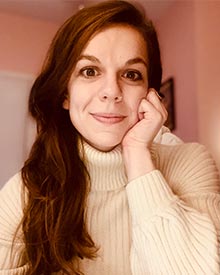
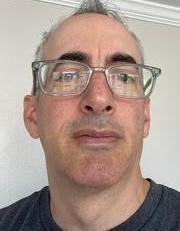
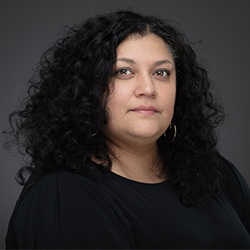
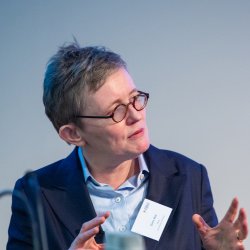
Benjamin C Stroud is a Professor in the Department of English Language and Literature at the University of Toledo , specializing in Creative Writing and 20th-Century American Fiction . He serves as an Undergraduate Advisor and holds degrees from the University of Michigan, including an M.F.A. and Ph.D. Research Interests: Creative Writing Historical Fiction Short Story Structure Regional American Literature Interdisciplinary Narrative Techniques Scientific Awards & Honors: Bread Loaf Writers' Conference Bakeless Fiction Prize (2012) Publisher's Weekly Best Summer Book (2013) Chicago Tribune Best Summer Book (2013) Amazon Best Book of the Month (Literary Fiction) (2013) Pushcart Prize XLII (2017) Publications span journals like Harper's Magazine , Zoetrope: All-Story , and The Antioch Review , with themes crossing historical fiction , regional narratives , and character-driven storytelling . His 2013 book Byzantium: Stories received critical acclaim and awards.
Chris Bevan is an Honorary Research Fellow in the Department of Psychology at the University of Bath and currently teaches immersive technologies at the University of Bristol's School of Computer Science as part of the Bristol Interaction Group. He holds a PhD in Human-Computer Interaction (HCI) from the University of Bath, focusing on pervasive computing and trust in urban systems. His research spans virtual reality (VR), artificial intelligence (AI), social robotics, cybersecurity, and ancient history applications. He leads projects such as the Virtual Reality Oracle (VRO), exploring ancient divination through VR, and collaborates with institutions like Charisma.AI, Kilter Theatre, and the CREATE Laboratory. Key projects include AI in Antiquity (2025-2026), examining AI’s role in engaging with ancient history, and VRDocs (2017-2020), analyzing VR nonfiction media. His work often bridges academia, industry, and the arts, emphasizing ethical considerations and cross-disciplinary innovation. Notable awards include Honorable Mention Awards (2021, 2020) and a Best Paper Award (2016). Bevan’s research explores themes like attention synchrony in 360° video (2020), AI-driven museum interaction (2025), and the ethics of conscious AI in games (2024). He has pioneered location-based services (e.g., Mobile Bristol ) and contributed to foundational studies on trust in Wi-Fi hotspots (2008). His current projects address immersive documentary ethics, telepresence robotics, and VR’s societal impact.
Scott Ellis serves as Professor of English at Southern Connecticut State University (SCSU), where he teaches early American literature, contemporary American literature, and environmental literature. His scholarly profile demonstrates sustained engagement with 19th-century American literary figures and evolving digital pedagogical approaches. Ellis's research centers on narrative structures in early environmental literature, with significant publications examining Charles Brockden Brown, Nathaniel Hawthorne, and Herman Melville. His interdisciplinary work bridges literary studies with digital humanities, particularly through investigations of how technological platforms transform reading habits and classroom engagement. Current projects continue exploring narrative competition in ecological thought and the historical development of nature writing. His publication trajectory reveals consistent scholarly productivity since 2002, with recent emphasis on nature writing history (2024), Melville studies (2020), and digital pedagogy (2014-2002). Key thematic threads include the intersection of literary form with environmental consciousness and the impact of digital tools on humanities education. Scientific Awards: 2010 Connecticut State University System-Level Teaching Award 2010 Southern Connecticut State University-Level Teaching Award Ellis has presented widely at major conferences including the Modern Language Association and International Society for the Study of Narrative, focusing on digital pedagogy and environmental literature. While the source text confirms his role as faculty advisor through publication mentorship (e.g., Pearson co-authorship), specific grant funding details are not provided. No laboratory or research team affiliations are documented in the available materials.
Joe Sutliff Sanders is a University Associate Professor in the Faculty of Education at the University of Cambridge. He holds a PhD from the University of Kentucky and has held roles as a junior high school English teacher in Japan and a Fulbright Fellow at the University of Luxembourg. His research focuses on children’s literature’s intersections with form, genre, and ideology, particularly examining how texts like picture books, comics, and speculative fiction address difference and marginalization. Key research interests include animation, children’s nonfiction, comic books, gender studies, and librarianship. He co-leads the Children’s Literature Research Centre and has published extensively on graphic novels, nonfiction, and classic girlhood narratives. Sanders currently serves as Deputy Director of Learning and Teaching and coordinates the first-year Humanities Paper, alongside teaching courses in children’s literature and research methods. His work has been recognized with awards for articles and edited volumes, including the Children’s Literature Association’s Best Article Award (2015) and a runner-up award for his 2008 article on orphan girl novels. Sanders actively contributes to professional networks, serving on editorial boards for journals like Children’s Literature in Education and Extrapolation , and judges the Young Adult Fiction Festival at the American Library in Paris. Recent projects include an open-access collection on comic books and the Global South, a book on comic history and library gatekeeping, and articles exploring children’s nonfiction, Chinese graphic novels, and autism representation in comics. His teaching and research emphasize interdisciplinary approaches to understanding how literary forms shape cultural narratives.
Wang Dongdong is a Professor and doctoral supervisor at Tongji University's School of Art and Media, serving on the University Academic Affairs Committee and holding leadership roles in national academic societies including the Chinese Sociological Association and Chinese Society of Journalism History. His extensive career bridges academic scholarship with award-winning creative practice in documentary filmmaking and television production. His educational background spans engineering, management, and media: Bachelor of Engineering in Automatic Control from Harbin Institute of Technology (1993) Master of Management from Northeast Forestry University (2000) PhD in Technological Economics and Management from Harbin Institute of Technology (2008) Wang's research focuses on urban-rural communication dynamics, integrated media production, and documentary film theory. His work examines how digital convergence reshapes media practices, with particular attention to city branding, documentary ethics, and the poetics of cinematic expression. He investigates the intersection of traditional Chinese cultural forms with contemporary media technologies, exploring how new narrative frameworks emerge in networked societies. Analysis of his recent publications reveals strong thematic continuity in media convergence research, with evolving emphasis from technical production aspects (2016-2017) toward sociocultural implications (2018-2019). His work consistently bridges film theory, urban studies, and communication practice, demonstrating how media forms mediate social relationships in Chinese contexts. His scientific recognition includes: Third National Top 100 Advanced Individuals in Radio and Television Theory (2010) 11th National Radio and Television Academic Paper Award Second Prize (2010) Wang has supervised over 40 award-winning student projects that have earned international recognition at festivals including Berlin, Amsterdam, and Toronto. His research portfolio includes 19 major grants from national and municipal sources, notably leading the National Radio and Television Administration's 'Belt and Road Cross-Cultural Communication Strategy' project and Shanghai's 'Cultural Brand Core Identity' initiative. He directs the Documentary Creation Teaching Team and develops curriculum through Tongji's Media Experiment and Practice Teaching Center. He actively shapes media education policy as Executive Director of Shanghai's Arts Master's Teaching Steering Committee and leads the 'All-Media Research Institute' focusing on urban cultural communication strategies. His work integrates creative practice with academic research through the 'Lifestyle Research Committee' examining contemporary Chinese social transformations.
Lauren Bowen is an Associate Professor in the Department of English at the University of Massachusetts Boston, specializing in the intersection of aging studies, literacy, and writing pedagogy within higher education contexts. Her work critically examines age inclusivity, disciplinary positioning of retirees, and lifespan literacy practices. Education: PhD in English (writing studies), University of Illinois at Urbana-Champaign MA in English, University of Maine Research Interests: Bowen pioneers research in aging and literacy , investigating how age identity shapes literate practices and how writing studies can integrate gerontological perspectives. Her scholarship spans disciplinary lifecycling in academia, community literacy engagement with older adults, and resistance to age bias in digital environments. She develops frameworks for age-friendly university initiatives while analyzing the material dimensions of older adults' literate lives through ethnographic approaches. Publication Trends: Bowen's 14 publications (2011-2022) reveal a cohesive trajectory from foundational work on age bias in digital literacy toward institutional interventions. Recent scholarship (2020-2022) focuses on operationalizing age inclusivity through campus climate surveys and audit tools, while earlier work (2011-2018) established theoretical frameworks connecting aging studies to composition pedagogy, community literacy, and disciplinary identity formation. Advising and Grants: While specific advising roles and grant funding details are not documented in the provided materials, Bowen's extensive co-authorship with gerontologists (Silverstein, Whitbourne) and composition scholars indicates collaborative research leadership. Her development of the Age-Friendly University Audit suggests potential institutional grant involvement.
Gabriel Kikas is a part-time adjunct instructor in the Department of Political Science and Legal Administration at the University of Detroit Mercy since 2010. He holds a Ph.D. in International Relations from the University of St. Andrews, alongside degrees from Wayne State University, The American University, and the University of Detroit Mercy. Kikas has extensive teaching experience at multiple institutions including Macomb Community College and Henry Ford Community College. His research focuses on British-European Union dynamics, Scottish nationalism, Michigan's literary culture, 19th-century utopian communities, and the political writings of Jim Fairlie. Kikas has published over 20 book reviews in journals like Perspectives on Political Science and Driftwood Review , with recent work including analyses of Winnie Ewing's autobiography and contemporary political narratives. He also maintains a social blog for News that Moves , exploring current social issues through a cultural lens. Teaching specialties include American government, civil liberties, comparative politics, and international relations. His scholarly contributions span European political history, U.S. electoral systems, and labor studies, reflecting a commitment to interdisciplinary analysis across political theory and cultural studies.
Theodora Ziolkowski serves as an Assistant Professor in the Department of English at the University of Nebraska at Kearney. She holds a PhD in Creative Writing and Literature from the University of Houston and an MFA from the University of Alabama. Dr. Ziolkowski's research focuses on Creative Writing, AI Fiction, Poetry, and Creative Nonfiction across multiple forms including stories, poems, essays, novellas, and novels. Her work explores contemporary fiction, body poetics, the Gothic, humor writing, and creative writing pedagogy. Her publications reveal a strong thematic focus on trauma narratives, identity reconstruction, and personal transformation. Her recent work, particularly 'Portrait of My Body in the Land of X,' demonstrates her exploration of coercive control, body dysmorphia, and recovery narratives. Her forthcoming poetry collection 'Ghostlit' continues these explorations through verse. Among her notable accolades are the Next Generation Indie Book Award for her novella 'On the Rocks' and the Inprint Marion Barthelme Prize in Creative Writing. Her work has received support from prestigious organizations including the Vermont Studio Center and Inprint (Houston, Texas). Next Generation Indie Book Award for the Novella Inprint Marion Barthelme Prize in Creative Writing Vermont Studio Center fellowship National Alumni Association (University of Alabama) support Inprint (Houston, Texas) funding Dr. Ziolkowski has significant editorial experience, having served as Poetry Editor for Gulf Coast, Fiction Editor for Big Fiction, and Assistant Poetry Editor for Black Warrior Review. Her teaching portfolio includes Introduction to Creative Writing, Beginning Fiction, Narrative Strategies, and Creative Writing Professionalism courses. Her work has appeared in The Writer's Chronicle, Short Fiction (England), Oxford Poetry (UK), Prairie Schooner, and over sixty other literary journals and publications.
Gary Weissman serves as Associate Professor of English at the University of Cincinnati with dual appointments in the School of Communication, Film, and Media Studies and as affiliate faculty in Judaic Studies. His teaching portfolio spans undergraduate and graduate courses in literary studies (Ways of Reading Literature; Theories of Authorship), film studies (Horror Films; History of Animation), and critical theory (Introduction to Critical Theory; Narrative Theory). His academic credentials include a Ph.D. (1999) and M.A. (1993) in English from the University of Wisconsin-Milwaukee's Modern Studies Program, and a B.A. in Art-Semiotics from Brown University (1990). Ph.D.: University of Wisconsin-Milwaukee, English (Modern Studies Program), 1999 M.A.: University of Wisconsin-Milwaukee, English (Modern Studies Program), 1993 B.A.: Brown University, Art-Semiotics, 1990 Weissman's research integrates Holocaust studies with literary and film theory, examining representation ethics in works like Fantasies of Witnessing: Postwar Efforts to Experience the Holocaust (2004) and pedagogical innovation in The Writer in the Well: On Misreading and Rewriting Literature (2016). His interdisciplinary approach connects photography studies, animation theory, and American ethnic literatures to explore trauma transmission and interpretive practices. Recent publications reveal evolving scholarly trajectories: increasing focus on visual Holocaust documentation (photography/film archives) since 2013, critical interrogation of generational frameworks in Holocaust memory (2016-2020), and sustained innovation in literary pedagogy through writing-based learning models. These threads converge in examinations of ethical representation across media forms. His scholarly recognition includes: University Research Council Summer Fellowship (2008) Faculty Development Council Individual Award (2008) Fulbright Graduate Student Grant (1995-96) Jacob K. Javits Fellowship (1992-96) Dean’s Humanities Prize (1995) Weissman demonstrates active research leadership through University Research Council grants (2016-2017) for The Death and Life of the Mind at Auschwitz and extensive conference presentations (20+ between 1993-2008). His departmental service includes Steering Committee and Curriculum Committee roles, reflecting commitment to program development. While unaffiliated with formal research labs, his work engages interdisciplinary networks through Judaic Studies and Communication programs.
Jen Webb is a distinguished Professor of Creative Practice and Dean of the Graduate Research Office at the University of Canberra. She leads the Centre for Creative & Cultural Research, focusing on the intersection of creative production and sociocultural dynamics. Her research explores creativity, creative labor, and interventions for health and resilience, supported by ARC grants like 'So what do you do? Graduates in the Creative and Cultural Industries.' Webb holds three PhDs: in Creative Arts (University of Technology Sydney), Artistic Production (Central Queensland University), and Research Management (Queensland University of Technology). She is a renowned poet, winning the inaugural ACT Poet of the Year Award, and contributes to literary platforms like Australian Book Review and Meniscus. Her creative works include poetry volumes such as Sentences from the Archive and co-edited anthologies like Open Windows: Contemporary Australian Poetry . Her recent projects include Art and Human Rights: Contemporary Asian Contexts (2016) and Researching Creative Writing (2015). She has collaborated on over 15 projects, including the Australian Writing Programs Network and initiatives like the ACT Play Symposium. Webb actively participates in festivals and academic activities, balancing scholarly rigor with creative practice. Her articles span poetry, trauma narratives, and interdisciplinary art, reflecting her commitment to bridging creative and academic spheres. Awards include literary recognitions and editorial roles, underscoring her influence in both practice and theory.
Sadia Mir is an Associate Professor of English at Virginia Commonwealth University's VCUarts Qatar School of the Arts. She specializes in creative writing, documentary media, and social justice education, with a focus on storytelling's role in education and identity formation. Her work bridges narrative nonfiction, film/video, and immersive media, emphasizing interdisciplinary approaches. Education includes an MFA in Creative Writing and Documentary Media from University of British Columbia and Toronto Metropolitan University, a BA in English from McGill University, and a CELTA certificate from Cambridge University. Research focuses on culturally relevant storytelling in education, particularly mathematics and social justice. Notable achievements include co-authoring Spring Bloom: a math adventure story (2020), which won multiple international awards, and leading projects like the Young Writers Program fostering creative writing in Qatar. Her funded research includes grants from VCUarts Qatar ($20K annually 2021-2022), the Presidential Research Quest Fund ($49,898 in 2019), and a Qatar National Research Fund project ($150K in 2014). She has presented at global forums including the International Research Society for Children’s Literature (Chile, 2021) and Mathematics Education for the Future Project (Ireland, 2019).
Professor Diane Watt is a leading scholar in medieval literature, women's writing, and gender/sexuality studies at the University of Surrey. As Professor of English Literature and Associate Head of School (Research and Innovation), she co-directs the Sex, Gender, and Sexualities Research Centre (SGS). Her work focuses on early medieval women’s literary culture, queer theory, and the intersection of religion and gender. She has co-edited groundbreaking volumes such as Women and Medieval Literary Culture (2023), which won a prestigious 2024 award, and authored works like God's Own Gentlewoman (2024), a biography of Margaret Paston. Her research has been supported by the AHRC, British Academy, and Leverhulme Trust. Notable achievements include her role as Editor-in-Chief of the Palgrave Encyclopedia of Medieval Women's Writing and collaborative projects merging digital humanities with traditional scholarship. She supervises doctoral students, including Teresa Pilgrim (2024), and teaches modules on medieval literature and queer theory. Awards highlight her contributions to recovering marginalized voices in medieval texts. Her publications span monographs, edited collections, and articles in journals like Exemplaria and Philological Quarterly . She actively engages with public media, as seen in her 2024 ABC interview discussing medieval women's agency.
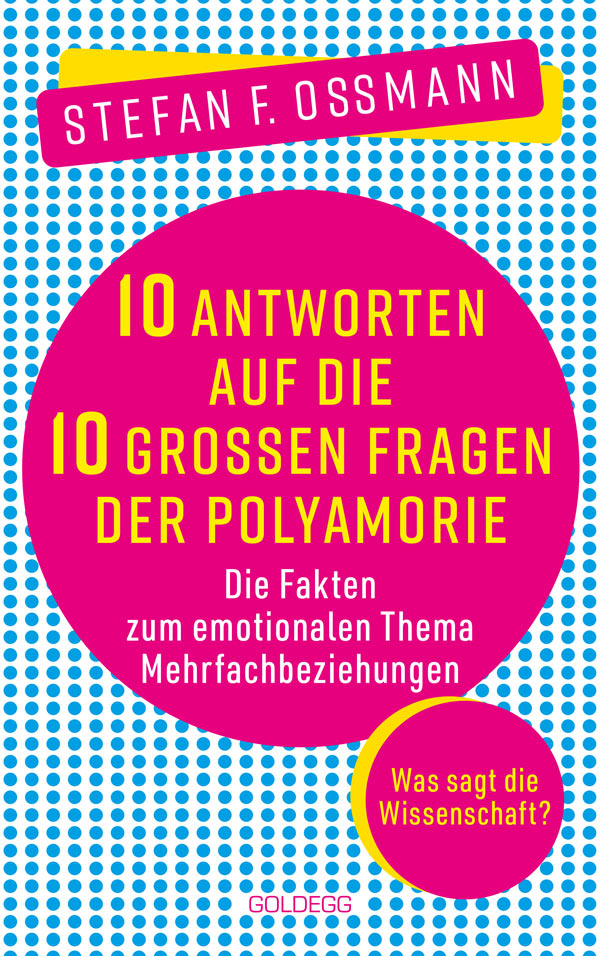
Stefan F. Ossmann is a University lecturer at the University of Vienna, affiliated with the Department of Social and Cultural Anthropology, Department of Economic and Social History, and Department of Development Studies. His research focuses on polyamory, consensual non-monogamous relationships, sexual orientations, and identity formation from a social science perspective. He actively teaches courses on research methods, international development, and sexuality studies. Education: Completed a second-chance education program at the University of Vienna, earning a Master's in International Development Studies (2011), a Master's in Journalism and Communication Studies (2012), and a Doctorate in Social Sciences (2022). Recent publications include the nonfiction book 10 Answers to the 10 Big Questions of Polyamory (2025) and academic works since 2014. He frequently engages in media interviews discussing his research on polyamory and non-monogamy across Austria, Germany, and Switzerland. No scientific awards explicitly mentioned in available texts. His teaching and research involve qualitative/quantitative methods and global perspectives on relationships and development studies.
Nina Werth is a lecturer at the Hochschule für Gestaltung (HfG) Offenbach, where she studied film until 2001 and continues to contribute as an educator and creative practitioner. She is affiliated with the School of Art and Design, specifically in the Department of Film, where she supervises the annual film trip for prospective students, guiding them through screenwriting, directing, camera work, sound, and editing. Her role is part-time and rooted in practical instruction. Her research and artistic interests lie at the intersection of documentary filmmaking, visual storytelling, migration and identity, and intercultural experiences in Germany. She views documentary film as a form of serious inquiry, akin to scientific investigation without formal science. Her work emphasizes deep observation, ethical engagement, and creative exploration of social themes. The recent works reflect a strong focus on longitudinal documentaries, personal narratives, and social integration. Projects like Born in Offenbach and Mannheim School demonstrate her commitment to immersive storytelling. Her creative outputs span film, photography, and scriptwriting, with a consistent emphasis on real-life subjects and societal questions. German Television Award, 2013 (for 'Gods Like Us') As a lecturer, she mentors students through hands-on film projects and promotes interdisciplinary thinking and teamwork. Although no formal advising of graduate students is mentioned, her involvement in educational programs indicates active pedagogical engagement. She has collaborated on media projects with institutions like the Wollheim Memorial and broadcasters such as ZDF, contributing to both cultural and historical documentation. She is involved in creative teams and collaborative projects, such as the six-year script development trio with Rainer Ewerrien and Carsten Strauch. Her current work includes developing a new film format and a documentary with an open-ended approach, reflecting her philosophy of entering lives without fully living them.
Todd Schack is an Associate Professor of Journalism and Media Studies at Ithaca College's Roy H Park School of Communications, where he also serves as Associate Director of the Park Center for Independent Media. His academic work focuses on the intersection of media, power, and social justice, with particular emphasis on independent media forms and critical approaches to journalism. Education: Professional Certificate in Online Teaching, University of Wisconsin-Madison (2013) Ph.D., Media Studies, University of Colorado at Boulder (2006) M.A., Communications, Colorado State University (1996) B.A., English, Creative Writing, Colorado State University (1992) Schack's research interests span multiple dimensions of contemporary media studies, with particular focus on independent media ecosystems, the historical evolution of literary journalism, and critical examinations of media representations related to the wars on terror and drugs. His work explores how social media platforms have become sites of political struggle, examining the weaponization of digital communication and its relationship to rising illiberal tendencies globally. Schack also investigates niche journalism forms including graphic non-fiction, comics journalism, and music journalism, analyzing how these formats challenge conventional journalistic paradigms through innovative narrative techniques and visual-verbal integration. Schack's recent publications reveal a consistent thematic trajectory examining media's role in shaping public understanding of complex social issues. His research demonstrates how media narratives construct meaning around drug policy, border politics, and social control mechanisms, often revealing tensions between journalistic objectivity and committed reporting. The scholarship shows particular attention to how marginalized voices and alternative media forms challenge dominant narratives, especially regarding international sex trafficking, opioid addiction, and the cultural production of war discourse. Schack has been an active participant in academic discourse, presenting his research at numerous international conferences across multiple continents. His recent work includes presentations on social media weaponization, literary journalism traditions, and the cultural production of drug war discourse. He has also engaged in scholarly exchange through visiting positions at the Institut Américan Universitaire in Aix-en-Provence, France. As an educator, Schack has developed curriculum in independent media studies, narrative journalism, journalism history, graphic non-fiction, and critical examinations of the cultural production surrounding the wars on drugs and terror. His teaching reflects his research interests, emphasizing critical media literacy and the historical context of contemporary media challenges.