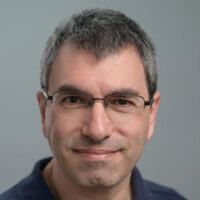
Dr. Xianta Jiang is an Associate Professor in the Department of Computer Science at Memorial University of Newfoundland, Canada. His research focuses on intelligent human-machine interaction, ubiquitous healthcare computing, and bio-signal processing. He leads the UCML (Ubiquitous Computing and Machine Learning) Lab, advancing technologies for human activity sensing, prosthetic control, and surgical training systems. Research Interests: Intelligent Human-Machine Interfaces Medical Applications of Wearable Sensors Eye Tracking & Pupil Dynamics Biomedical Signal Processing Robotics & Grasp Recognition Deep Learning for Healthcare Key Contributions: Developed novel bio-signal processing methods for prosthetic control Advanced eye-tracking techniques for surgical expertise assessment Pioneered multimodal sensor fusion approaches in robotics Labs/Teams: Director of the UCML Lab, collaborating with industry partners in medical robotics and wearable tech. Active in surgical training simulation and rehabilitation engineering projects.
Amin Coja-Oghlan is Professor of Efficient Algorithms and Complexity Theory at TU Dortmund University's Department of Computer Science. His research integrates probabilistic combinatorics, information theory, and statistical physics to solve fundamental problems in theoretical computer science. Education includes a doctorate in Mathematics (University of Hamburg, 2002) and habilitation in Computer Science (Humboldt University Berlin, 2005). Research advances understanding of phase transitions in constraint satisfaction problems, optimization landscapes, and random structures. Recent publications analyze SAT thresholds, group testing, and sparse matrix properties. Academic appointments include professorships at Goethe University Frankfurt and lectureships at Edinburgh and Warwick. Research contributions bridge discrete mathematics with computational complexity.
Prof. Werner Porod is a Professor in the Department of Theoretical Physics II at Julius-Maximilians-Universität Würzburg. His research focuses on extensions of the Standard Model, including composite Higgs models, supersymmetric scenarios, neutrino mass mechanisms, and astro particle physics. He is the developer of the SPheno program, a widely used tool for calculating supersymmetric spectra and decay patterns. Porod's work integrates quantum field theory, flavor physics, and dark matter phenomenology with applications to LHC and future collider experiments. He actively contributes to international initiatives like the Snowmass process and serves as spokesperson for the Graduiertenkolleg 2994 (GRK 2994) research training group. His educational responsibilities include teaching advanced topics in theoretical physics, differential equations, and quantum field theory. Porod collaborates internationally on projects such as the Linear Collider Facility (LCF) at CERN and the International Linear Collider (ILC), emphasizing precision measurements and BSM model testing. His research group explores cutting-edge topics like holographic gauge/gravity dualities, dimensional reduction of higher-dimensional theories, and machine learning applications for parameter space exploration. Key contributions include studies on scotogenic dark matter, electroweak spin-1 resonances, and split Next-to-Minimal Supersymmetric Standard Model (NMSSM) realizations. He emphasizes interdisciplinary approaches combining formal theory development with experimental data reinterpretation strategies to address fundamental questions in particle physics.
Xiangmin (Jim) Jiao is an Associate Professor in the Department of Applied Mathematics and Statistics at Stony Brook University, affiliated with the Computer Science Department and the Institute for Advanced Computational Science. He holds a B.S. from Peking University, M.S. from UC Santa Barbara, and Ph.D. in Computer Science from UIUC. His research focuses on high-performance geometric and numerical computing, including algorithms and software for dynamic surfaces, mesh optimization, and multiphysics coupling in applications like computational fluid dynamics and biomedical engineering. He has received awards such as the Outstanding Teacher Award (2010-2012) and the David J. Kuck Outstanding Ph.D. Thesis Award (2001). His teaching spans courses like AMS 527 (Numerical Methods) and AMS 561 (Computational Science). Key research contributions include work on finite element methods, preconditioning techniques, and surface reconstruction. He has led projects on adaptive mesh refinement and multilevel linear solvers, with applications in climate modeling and structural mechanics. His lab, the Numerical Geometry Group (NumGeom), develops open-source software tools for numerical simulations. Collaborations include interdisciplinary work in biomedical computing and climate science. Recent research emphasizes robust numerical methods for singular systems and high-order surface integration techniques.
Aditya Bhaskara is an Associate Professor in the School of Computing at the University of Utah, where he is part of the Theory Group and the Utah Center for Data Science. His office is located in MEB 3470. Education: Ph.D. in Computer Science, Princeton University (2012) B. Tech in Computer Science and Engineering, IIT Bombay, India Post-doctoral researcher, Google NYC (2013-2015) Post-doctoral researcher, EPFL (2012-2013) Dr. Bhaskara's research spans theoretical computer science and machine learning. He has a strong focus on algorithm design, particularly approximation and online algorithms. On the machine learning side, he investigates robustness of learning models and domain shifts from a theoretical perspective. His work often blends theory and ML, exploring how to leverage ML-based predictions in classical algorithm design and other beyond worst-case models. His research has significant applications in data streaming, dimensionality reduction, and graph analysis. His recent publications demonstrate a clear trend toward bridging theoretical computer science with practical machine learning applications. Many papers focus on spectral algorithms, robustness in network models, and optimization techniques for large-scale data. There is also significant work in wireless communications and spectrum management, showing how his theoretical work translates to real-world problems in telecommunications and data science. Scientific Awards: NSF CAREER award AF Small grant Grants from NRDZ and FMiTF programs Google Faculty Research Award Dr. Bhaskara actively advises students with strong mathematical backgrounds interested in theoretical computer science and machine learning. He has received significant research funding from the National Science Foundation and Google. He is co-organizing the Data Science Lecture Series at the University of Utah and has served on prestigious program committees including SODA 2024, STOC 2023, ICALP 2023, and ITCS 2022. His teaching portfolio includes advanced courses on algorithms, machine learning theory, and probability. As part of the Theory Group and the Utah Center for Data Science, Dr. Bhaskara collaborates with researchers across disciplines to advance theoretical foundations of computing and their practical applications in data science. His work contributes to both the theoretical understanding of algorithms and their real-world implementation in various domains including wireless networks, data analysis, and machine learning systems.
Ankit Srivastava is a Professor of Mechanical Engineering at Illinois Institute of Technology's Armour College of Engineering, affiliated with the Mechanical, Materials, and Aerospace Engineering department and the Center for Sports Innovation. His research focuses on wave propagation in heterogeneous media, metamaterial design, micromechanics, soft robotics, and data-driven mechanics. Applications span cloaking, shock mitigation, transducer design, and structural health monitoring. Education Ph.D. Structural Engineering, University of California, San Diego (2009) M.S. Structural Engineering, University of California, San Diego (2006) B.Tech. Civil Engineering, Indian Institute of Technology, Guwahati (2004) Research Interests His work addresses fundamental aspects of wave control, including inverse design for acoustic/elastic materials, homogenization theory, and soft robotics. Key areas include: Nonlinear wave dynamics and material characterization Metamaterials for shock absorption and energy control Machine learning integration in mechanics simulations Non-destructive evaluation techniques Notable Achievements Recipient of the NSF CAREER Award (2016-2021) for work on elastodynamic metamaterials 2020 MMAE Excellence in Teaching Award 2017 MMAE Excellence in Research Award Grants & Professional Roles Srivastava leads the NSF-funded project on Transformation Elastodynamics and serves as Secretary of the Midwest Mechanics Seminar Series and Associate Editor of Mechanics of Materials . His research emphasizes bridging theoretical mechanics with practical engineering solutions. Labs & Collaborations Affiliated with the Center for Sports Innovation, his work intersects sports technology with advanced materials science and robotics.
Kyle Hambrook is an Associate Professor in the Department of Mathematics and Statistics at San José State University (SJSU), within the College of Science. His research focuses on Harmonic Analysis, Geometric Measure Theory, and Number Theory, with particular emphasis on Fourier restriction phenomena, fractal geometry, and metric Diophantine approximation. He holds a Ph.D. and has contributed significantly to understanding the interplay between Fourier analysis and fractal structures. His research interests include studying Fourier restriction theorems, Salem sets, and their applications to Diophantine approximation. Notably, he explores the sharpness of classical Fourier restriction results in higher dimensions and investigates the Fourier dimension of fractal sets. His work often bridges harmonic analysis with geometric measure theory, yielding insights into the structure of sets with specific dimensional properties. Dr. Hambrook has conducted research on faculty-in-residence programs' impacts on academic development, combining mathematical methodologies with educational policy analysis. His recent grant-funded work (e.g., RUI: Fourier Restriction and Fourier Dimension for Fractals) demonstrates his commitment to advancing theoretical foundations while addressing practical challenges in signal processing and adversarial machine learning defense. His contributions include explicit constructions of Salem sets and analysis of their Fourier properties, as well as investigations into sums/products of sets and their measure-theoretic dimensions. While no scientific awards are listed, his extensive publication record and grant activities highlight his impactful research trajectory.
Paulo Serra is an Assistant Professor at the Mathematics Department of the Faculty of Science at Vrije Universiteit Amsterdam. He holds additional roles including Board Member of the MSc Internship Board for Business Analytics, Examination Board Mathematics and Business Analytics, and the Mathematical Statistics section of VVSOR. Previously, he served as Assistant Professor at Eindhoven University of Technology and held postdoctoral positions at the University of Amsterdam, University of Goettingen, and UNINOVA in Portugal. Education: PhD in Mathematical Statistics (Eindhoven University of Technology, 2009–2013) MSc in Mathematical Sciences (Utrecht University, 2006–2008) Licenciatura in Applied Mathematics (New University of Lisbon, 2000–2005) Research Interests: Focus on non-parametric mathematical statistics, including Bayesian non-parametrics, spline estimators, statistical tracking of time-varying parameters, quantile regression, and Markov processes. His work bridges theoretical foundations with practical applications in algorithm design and implementation, particularly in biomedical and engineering domains. Teaching: Teaches courses in Stochastics, Statistics for Business Analytics, and Stochastic Processes for Finance at VU Amsterdam, as well as the Mastermath Bayesian Statistics course. Provides introductory materials on Probability and Statistics using Python and Jupyter Notebook. Supervision: Currently co-supervises three PhD students, one MSc student, two BSc students, and one MSc internship. Offers thesis projects in areas aligned with his research expertise. Key Themes in Publications: Recent work emphasizes medical applications (e.g., perioperative patient deterioration prediction) and methodological advancements in robust estimation, nonparametric Bayesian techniques, and adaptive algorithms. Earlier contributions include fuzzy logic systems for spacecraft thermal monitoring and network dimension estimation in inhomogeneous graphs.
Dr. Daehyun Yoon is an Assistant Professor and Assistant Adjunct Professor at the University of California, San Francisco (UCSF), focusing on medical imaging techniques for musculoskeletal pain diagnosis. He specializes in PET/MRI and MRI methods to identify pain generators in chronic conditions like low back pain, complex regional pain syndrome, and CSF leaks. His research also addresses metallic implant-related MRI artifacts and high-resolution neuroimaging. Education: PhD, 2012: Electrical Engineering, University of Michigan M.S., 2007: Electrical Engineering, University of Michigan B.S., 2004: Computer Science & Engineering, Seoul National University Postdoctoral Fellowship: Stanford University (2016), focusing on MRI near metal Research Interests: Dr. Yoon’s work integrates advanced imaging technologies to improve clinical protocols for pain management. His NIH-funded project (NIAMS) explores [18F]FDG PET/MRI near hip implants to identify post-surgical pain sources. He develops artifact-free MRI techniques for metallic implants and high-resolution imaging of peripheral nerves. Grants & Collaborations: Co-investigator on an NIH/NIAMS-funded project studying hip implant-associated pain Collaborations with Stanford University, Seoul National University, and industry partners His work bridges biomedical engineering, radiology, and clinical pain management to translate research into patient care. Labs & Teams: Engaged in UCSF’s radiology and biomedical imaging research groups, focusing on multimodal imaging and musculoskeletal pain diagnostics.
Wei-Shih Yang is a Professor in the Department of Mathematics at Temple University, part of the College of Science and Technology. His research focuses on mathematical physics, mathematical finance, and complex networks, with notable contributions to quantum random walks, statistical mechanics, and wireless network analysis. He holds a Ph.D. from Cornell University under Eugene B. Dynkin. Education: Ph.D. in Mathematics, Cornell University, under Eugene B. Dynkin. Research Interests: Dr. Yang's work spans mathematical physics (quantum systems, phase transitions), financial mathematics (ruin probabilities), and complex networks (wireless systems, social networks). His recent studies include quantum random walks' localization on fractal structures and applications of quantum computing, as well as algorithmic advancements in network security and data analysis. Recent Trends in Publications: His recent work emphasizes interdisciplinary applications of mathematics in quantum computing, cybersecurity (botnet detection), and vehicular networks. Collaborations span computer science, engineering, and physics, reflecting his expertise in bridging theoretical concepts with practical network challenges. Advising & Grants: No student advisees or grant details explicitly listed in the provided texts. Labs/Teams: While specific lab affiliations are not mentioned, his research collaborations suggest involvement with interdisciplinary teams in Temple's College of Science and Technology, focusing on network science and quantum systems.
Wasin So is a Professor of Mathematics at San José State University, where he has been a faculty member since 2006. Previously, he served as an Associate Professor at Sam Houston State University from 1999 to 2000, and as an Assistant Professor there from 1992 to 1999. His academic career includes postdoctoral research positions at the Institute for Mathematics and its Applications at the University of Minnesota (1991-1992) and the Center of Linear Structures and Combinatorics at the University of Lisbon (1993). Dr. So received his educational training at prestigious institutions: Ph.D. in Mathematics from the University of California, Santa Barbara (1991) M.Phil. from the University of Hong Kong (1986) B.Sc. from the University of Hong Kong (1983) Professor So's research spans several interconnected areas within pure and applied mathematics. His primary focus is on matrix theory and linear algebra, with significant contributions to quaternion mathematics, graph theory, and numerical analysis. His work on quaternionic matrices has advanced our understanding of non-commutative algebraic structures, while his research on graph spectra has provided insights into the connections between linear algebra and combinatorics. He has also made notable contributions to the theory of matrix exponentials and inequalities, exploring both theoretical foundations and potential applications. An analysis of Professor So's publication record reveals a consistent focus on advanced matrix theory with particular emphasis on non-standard algebraic structures like quaternions. His work bridges pure mathematical theory with potential applications in physics and engineering. The evolution of his research shows progression from foundational work on matrix exponentials and inequalities in the early 1990s to more specialized investigations of quaternionic structures and spectral graph theory in the late 1990s and early 2000s. Among his professional recognitions: Project NExT Fellow (1994-1995) Professor So has taught a wide range of mathematics courses at San José State University, including the Calculus sequence (MATH 30, MATH 32), Discrete Mathematics sequence (MATH 42, MATH 142, MATH 179, MATH 279A, MATH 279B), Linear Algebra sequence (MATH 129A, MATH 129B, MATH 229, MATH 285), Probability and Statistics sequence (MATH 161A, MATH 163), and Applied Math (MATH 203 CAMCOS Project). His teaching portfolio demonstrates expertise across multiple mathematical disciplines and at various levels from undergraduate to advanced graduate courses, with detailed grade distributions provided for his Calculus III courses across multiple semesters. While specific laboratory or research team information is not provided in the available documentation, Professor So's extensive publication record suggests he has likely mentored students and collaborated with colleagues on research projects in matrix theory and related fields, particularly evident through his long-standing engagement with advanced mathematical concepts across nearly two decades of scholarly work.
Dr. Behnam Askarian is an Assistant Professor of Electrical Engineering at West Texas A&M University's College of Engineering, joining in Fall 2021. He holds a B.S. and first M.S. in Electrical Engineering from Shiraz University (Iran), followed by a second M.S. and Ph.D. from Texas Tech University (2020 and 2021, respectively). His research focuses on renewable energy, machine learning, biomedical engineering, IoT, and image/signal processing , with notable contributions to smartphone-based diagnostic tools for eye diseases and arrhythmia detection. He has authored two books on multimedia and learning technologies. **Education**: B.S. & M.S. in Electrical Engineering, Shiraz University, Iran M.S. & Ph.D. in Electrical Engineering, Texas Tech University **Research Highlights**: Dr. Askarian’s work bridges engineering and healthcare, particularly in developing affordable diagnostic tools. His IoT-enabled solutions address challenges in telemedicine, such as keratoconus detection via smartphones and arrhythmia monitoring. He also explores AI-driven precision agriculture and sustainable energy systems. Two patents reflect his innovations in smartphone-integrated medical sensors. **Teaching**: He teaches core electrical engineering courses, including Digital Design, Wind Energy Turbines, and Linear Integrated Circuits , emphasizing hands-on learning in electronics and renewable energy. **Labs & Collaborations**: Affiliated with the College’s engineering research groups, including the ECORE Lab and Human-Machine Teaming Laboratory, where he contributes to interdisciplinary projects in robotics and sensor networks.
Peter Zizler is a Professor in the Department of Mathematics & Computing at Mount Royal University. He teaches calculus, linear algebra, and courses in General Education. His research focuses on Linear Algebra, Wavelet Theory, business mathematical modeling, and statistical crime analysis. He holds a PhD from the University of Calgary. His research interests include advanced mathematical techniques such as singular value decomposition, wavelet transforms, and their applications in data science, signal processing, and education. He explores topics like statistical normalization of grades, sports analytics using SVD, and logic-based pedagogy in general education courses. His publications span over two decades, addressing diverse areas from non-stationary filtering to interdisciplinary applications in chemistry and quantum physics. Notable recent work includes leveraging linear algebra for Anscombe’s Quartet construction and analyzing FIFA 2022 data through SVD. Peter has no listed scientific awards or grants. His academic contributions primarily center on teaching and applied mathematical research without direct mention of lab affiliations or student advisement.
Dr. Moshe Schwartz is a Professor in the Department of Electrical & Computer Engineering at McMaster University. His research focuses on error-correcting codes for improving digital communication and storage systems, particularly in storage technologies and their application in distributed systems. He specializes in coding theory, storage systems, and digital sequences, with a focus on resolving conflicts between storage density, reliability, and energy efficiency. He teaches courses such as 'Introduction to Digital Sequences' and 'Coding Theory,' emphasizing both theoretical foundations and practical applications. His work integrates hardware and software solutions to address challenges in non-volatile memory fragility and data center reliability. Research interests include: Coding theory for DNA storage and bioinformatics applications Error-correcting codes for tandem duplication and substitution errors Network coding and distributed storage systems Algebraic coding and combinatorial optimization Awards: Won the Best Paper Award at the DRCN Conference (2024) for research on covert communication via error-correcting codes. His work bridges theoretical advancements and real-world applications in storage and communication technologies. Dr. Schwartz collaborates on interdisciplinary projects involving genomic data integrity and secure network protocols. His lab focuses on advancing storage efficiency through graph-based coding and asymptotic rate optimization.
Umran Inan is a Professor of Electrical Engineering at Stanford University and Director of the STAR Laboratory. He has held academic positions since 1977, including Assistant Professor (1982–1985), Associate Professor (1985–1992), and full Professor (1992–present). Concurrently, he served as President of Koç University in Istanbul since 2009. His research focuses on plasma physics, electromagnetic wave propagation, and space science, particularly involving VLF wave interactions in the magnetosphere and ionosphere. He leads projects funded by NASA, ONR, and NSF, investigating phenomena like sprites, elves, and lightning-induced ionospheric disturbances. Inan is a Fellow of IEEE, AGU, and the American Physical Society, and has received numerous awards, including the Allan Cox Medal for undergraduate research mentorship. He teaches courses in electromagnetics, plasma physics, and numerical methods. Professionally, he has held leadership roles in URSI and the American Geophysical Union. Education: B.S., Middle East Technical University, Turkey (1972) M.S., Middle East Technical University, Turkey (1973) Ph.D., Stanford University (1977), Thesis: Non-linear Gyroresonant Interactions of Energetic Particles and Coherent VLF Waves in the Magnetosphere Research Interests: Umran Inan’s work combines theoretical, numerical, and experimental approaches to study electromagnetic wave interactions in space plasmas. Key areas include: VLF remote sensing of lightning-induced ionospheric disturbances HF radio wave heating of ionospheric plasma Optical observations of sprites and elves Analysis of plasma wave data from satellites like DSX and CLUSTER Computer simulations of plasma phenomena and energy efficiency in plasma displays Development of instrumentation for magnetospheric and ionospheric studies His research leverages multi-instrument observations (e.g., JEM-GLIMS, DEMETER) and experimental platforms like the DSX satellite to probe fundamental plasma physics processes. Awards & Honors: Fellow, IEEE (2006), AGU (2006), American Physical Society (2009) Appleton Prize (2008), Allan Cox Medal (2007) Multiple NASA Group Achievement Awards (2004, 1998, 1983) Young Scientist Award (1984), Antarctic Service Medal (1993) Grants & Labs: As principal investigator, Inan oversees grants from NASA, ONR, and the Air Force. He directs the STAR Laboratory, which develops instrumentation for space plasma research. His work includes the DSX mission’s broadband receivers and the FIREBIRD-II CubeSat collaboration. Labs/Teams: He leads the STAR Laboratory and the VLF Group , fostering interdisciplinary teams in plasma physics and space science. He also advises the DSX and VPM CubeSat projects.