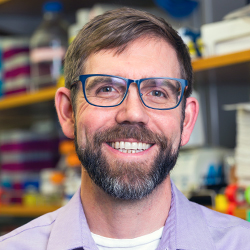
Bin Wuمشاهده پروفایل
دانشیار
Bin Wu is an Associate Professor in the Department of Biophysics at the Johns Hopkins University School of Medicine. His research focuses on visualizing and quantifying biological processes in real time using single-molecule imaging and spectroscopy technologies in live cells, combined with theoretical modeling. He leads an active lab studying gene expression regulation, particularly the dynamics of RNA molecules during transcription, translation, trafficking, and decay. Research Interests: Single-molecule imaging of RNA and protein dynamics Real-time visualization of translation using SINAPS (Single molecule imaging of nascent peptides) Regulation of gene expression in neurons, including dendritic and axonal translation Development of optical tools to manipulate gene expression spatially and temporally Understanding translational bursting, ribosome stalling, and mRNA decay mechanisms His recent publications reveal a strong trend in probing fundamental questions in gene expression using cutting-edge imaging techniques. Work spans from basic biophysical principles of translation to disease-relevant models such as ALS/FTD involving C9ORF72 repeat expansions. A key innovation is the development of SINAPS, enabling direct observation of translation dynamics at the single mRNA level. Scientific Awards: No formal awards listed in the provided text. Advising and Grants: Actively mentors multiple graduate students, master’s students, undergraduates, and research specialists. Lab members include Leslie Watkins, Blake Nelson, Mulin Li, and others working on RNA biology and imaging. Given the high-impact publications in journals like Science , Nature Communications , and Molecular Cell , it is likely that Dr. Wu holds external research funding, though specific grants are not mentioned. Labs and Teams: Dr. Wu leads a multidisciplinary team integrating physics, biology, and computational modeling. The lab is based at the Rangos Building, Room 454, and collaborates with experts in neuroscience, genomics, and biophysics. The team develops and applies novel optical methods to address previously intractable biological questions in live systems.