Thomas M. Scalea is The Honorable Francis X. Kelly Distinguished Professor of Trauma Surgery at the University of Maryland, where he serves as Director of the Program in Trauma and Physician-in-Chief of the R Adams Cowley Shock Trauma Center. He also holds the role of System Chief for Critical Care Services across the University of Maryland Medical System's 18 ICUs. Dr. Scalea earned his BA from the University of Virginia (1974), MD from Medical College of Virginia (1978), completed residency in General Surgery at Upstate Medical Center (1983), and a Critical Care/Trauma fellowship at New York Medical College (1984). His research focuses on advancing trauma surgery, critical care protocols, and resuscitation science. Key interests include damage control surgery, hemorrhagic shock management, and military/civilian trauma system integration. His recent work emphasizes predictive analytics in trauma resuscitation and innovative surgical techniques. Dr. Scalea's publications predominantly explore trauma system optimization, critical care innovations, and evidence-based surgical protocols, with consistent themes of hemorrhage control and resuscitation efficiency. Scientific Awards: NIAF Award (2010) Lifetime Achievement Award in Trauma Resuscitation Science (2011) He leads the Program in Trauma and founded CSTARS, training over 4,000 military personnel. His clinical work includes 600+ annual operations and oversight of a 300-bed critical care network. No specific grants or student advisees are detailed in the source text.
Dongyi Wang is an Assistant Professor in the Department of Biological and Agricultural Engineering at the University of Arkansas, where he directs the Smart Agriculture and Food Engineering (SAFE) Lab. His work bridges advanced technologies like artificial intelligence, robotics, and machine vision with agrifood manufacturing to enhance product quality, safety, and worker welfare. Ph.D. in Bioengineering from the University of Maryland, College Park B.S. in Electrical and Computer Engineering from Fudan University Visiting experience at The Chinese University of Hong Kong Research interests span smart agrifood manufacturing , robotics , machine vision , and artificial intelligence , with applications in crop monitoring, food safety, and healthcare. His lab develops solutions like automated defect detection, pathogen sensing, and sustainable processing systems. Article analysis reveals a focus on AI-driven agricultural automation , hyperspectral imaging , robotic manipulation of bio-products , and food safety innovations . Recent works include YOLO-based tomato defect segmentation, E. coli biosensing, and UAV-based blackberry monitoring. Awards & Memberships College of Engineering Dean’s Award of Excellence Rising Star Research Award (UARK) Outstanding Mentor Award (UARK) Professional memberships in ASABE and IEEE As an educator, he teaches instrumentation and artificial intelligence in agrifood manufacturing . The SAFE Lab, funded by USDA NIFA, NSF, and federal/local agencies (> $7M), prioritizes workforce development in AI/robotics for agrifood industries.
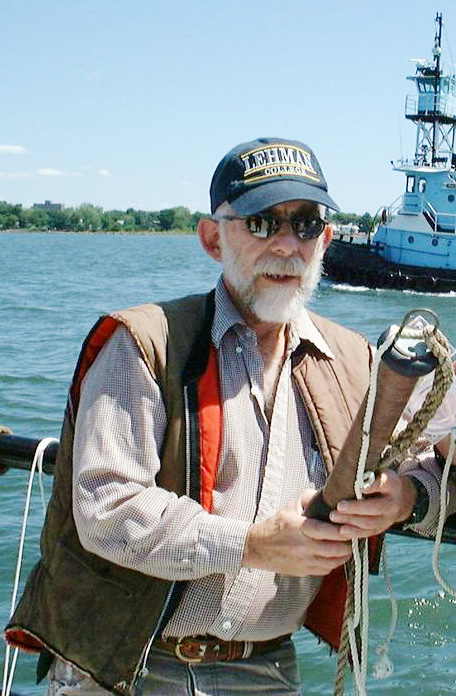
Dr. Joseph W. Rachlin serves as Professor of Biological Sciences at Lehman College, City University of New York (CUNY), and holds a concurrent professorship in the Biology Ph.D. Program at the CUNY Graduate School and University Center. He directs Lehman College's Laboratory for Marine and Estuarine Research (LaMER) and serves on the Advisory Board for the National Institutes of Health's Minority Access to Research Careers Programs at Lehman College. Dr. Rachlin's educational background includes: B.S. in Biology, 1957, City College of New York M.S. in Biology, 1962, New York University Ph.D. in Biology, 1967, New York University His research spans Fish Ecology (population dynamics, niche overlap), Fish Systematics (phylogeny, cytogenetics), and broader Aquatic and Estuarine Ecology, with specialized focus on archaeological sub-fossils from Pakistan's Ghazi Shah site. LaMER employs cytogenetics for evolutionary studies, mathematical modeling for population dynamics, and computational approaches for resource partitioning analysis in aquatic environments. Analysis of Dr. Rachlin's publications (1977-2011) reveals persistent investigation of urban aquatic ecosystems (notably the Bronx River), marine species interactions, and cytogenetic relationships. His work integrates field ecology with computational methods, evolving from foundational sturgeon diet studies to contemporary analyses of invasive species and urban stream resilience. Scientific recognition includes: Fellow of The Linnean Society of London (with transcription of the historic 1858 Darwin/Wallace paper) Dr. Rachlin contributes to national research standards through the American Fisheries Society's Guidelines for the Use of Fishes in Research (2004) and mentors underrepresented scholars via NIH programs. His laboratory continues developing high-end computer graphics for virtual morphological modeling of aquatic organisms, advancing form-function analysis in comparative biology. LaMER (Rooms 231-A & 231-B, Davis Hall) maintains active research programs in phylogenetic relationships, life history strategies, and anthropogenic impacts on marine and estuarine species, supporting both undergraduate and graduate student research.
Dr. Tim Hulsen is a Professor of AI & Data-Supported Healthcare at the Knowledge Center for Healthcare Innovation, Rotterdam University of Applied Sciences, where he leads research on the application of data science and artificial intelligence in healthcare. He is also actively involved in the HR Datalab Healthcare and maintains a dual role as Senior Data & AI Scientist at Philips. His work bridges academic research and industry application, focusing on practical implementations of AI technologies in healthcare settings. Tim completed his Biology studies at Radboud University Nijmegen with a strong medical-biological component. After internships in Molecular Animal Physiology and Bioinformatics, he pursued a PhD and postdoctoral position at Radboud University Nijmegen in collaboration with NV Organon (later Schering-Plough). His academic journey transitioned into industry when he joined Philips Research in Eindhoven in 2009, where he has held various scientific positions focused on data management, big data, and artificial intelligence in healthcare. Dr. Hulsen's research focuses on the practical application of data science and AI in healthcare, emphasizing the importance of good data quality through sound data management practices, adherence to the FAIR Guiding Principles, and the use of ontologies and standards. He places particular emphasis on the explainability and responsible use of AI systems in clinical settings. His recent research interests have expanded to include generative AI (GenAI) applications in healthcare, where he seeks to connect various professorships and departments within the Rotterdam University of Applied Sciences with the broader medical technology sector. An analysis of Dr. Hulsen's recent publications reveals a strong focus on AI applications in healthcare, particularly in oncology and prostate cancer research. His work demonstrates a progression from foundational data management and bioinformatics to cutting-edge AI applications, with increasing emphasis on responsible implementation and practical healthcare solutions. The publications span technical aspects of data science, clinical applications, ethical considerations, and future directions for AI in healthcare. Dr. Hulsen has made significant contributions to the academic community through his editorial work, serving as an Editorial Board Member for BMC Cancer and Frontiers Medicine and Public Health, and regularly reviewing scientific publications. While specific awards aren't detailed in the available information, his extensive publication record (over 50 scientific publications) and leadership roles indicate recognition within his field. Throughout his career, Dr. Hulsen has demonstrated strong leadership in research projects, having led various initiatives, co-authored international project proposals, and managed work packages within grant projects. His collaborative approach is evident in his work connecting academic research with industry applications, particularly through his dual roles at Rotterdam University of Applied Sciences and Philips. His work with the Movember GAP3 consortium and PIONEER big data platform for prostate cancer demonstrates his commitment to large-scale collaborative research that addresses real-world healthcare challenges. Dr. Hulsen is actively involved with the HR Datalab Healthcare and the AI & Data-Supported Healthcare research group. He collaborates extensively with various stakeholders in the healthcare ecosystem, including medical institutions like Erasmus MC, technology companies, and research consortia. His current work focuses on practical applications such as registration burden reduction using generative AI, non-invasive monitoring, and optimization of diagnostics and prevention strategies. Through these initiatives, he aims to develop explainable knowledge that will train future healthcare professionals in the responsible use of AI.
Prof. Dr. Volker Bucher serves as a Professor at Hochschule Furtwangen University (HFU) at the Schwenningen campus, maintaining regular office hours on Wednesdays from 10:00 AM to 11:00 AM in room D 1.09. His direct contact email is volker.bucher@hs-furtwangen.de, reflecting his active engagement with the academic community. His research centers on biomedical engineering with emphasis on medical implant development and microsystem technology. Key focus areas include biopotential recording for ophthalmic applications, atomic layer deposition (ALD) for biocompatible coatings, and intraocular sensor design. His work bridges engineering and clinical medicine to advance diagnostic and therapeutic devices, particularly for vision correction and neural interfaces. Recent projects explore ciliary muscle biopotentials for presbyopia treatment and antibacterial hydrogel coatings for orthopedic implants. Analysis of his 2023-2025 publications reveals dominant trends in minimally invasive biopotential monitoring systems, especially wireless intraocular sensors for accommodation measurement. Parallel research advances surface engineering techniques like area-selective ALD and catalytic etching to improve electrode integration and longevity in active implants. His work consistently addresses critical challenges in medical device encapsulation, sterilization resilience, and biocompatibility. Prof. Bucher actively supervises student research in medical device engineering, though specific advisee names are not documented in available sources. His extensive publication record spanning over 25 years (1997-2025) indicates sustained grant funding for projects at the intersection of microfabrication, biomaterials, and ophthalmic/neural engineering, with recent work heavily concentrated on presbyopia correction technologies and implantable sensor systems.
Dr. Hadi Afsharan is a Research Fellow at The University of Western Australia (UWA), focusing on translational biomedical engineering and medical device innovation. He holds dual fellowships from the WA Department of Health’s Future Health Research and Innovation Fund (FHRI) and UWA, supporting cardiovascular research totaling over $1.8M. His expertise spans non-invasive diagnostics, optical coherence tomography (OCT), retinal imaging, and radar-based physiological monitoring. Education: PhD in Biomedical Engineering (UWA, 2023); RTP Scholarship recipient (2019). Professional memberships include SPIE, OPTICA, European Society of Cardiology, CSANZ, and WACRA. Research Interests: Developing OCT-based tools for cardiovascular disease screening, retinal biomarker discovery, and non-invasive jugular venous pressure measurement using radar. His work bridges biomedical optics and clinical translation, with applications in hypertension, diabetes, and burn scar assessment. Grants & Awards: Over $1.8M in funding from FHRI, UWA, and national grants. Notable awards include the Western Australian Cardiovascular Research Alliance Publication Prize (2023) and RTP Scholarship (2019). Collaborations: Active with clinical and academic partners globally, including presentations at SPIE Photonics West, CSANZ, and European Society of Cardiology Congress. Peer reviewer for journals in biomedical optics and cardiovascular science. Labs/Teams: Leads projects on retinal imaging and radar-based monitoring, collaborating with multi-disciplinary teams in engineering and medicine.
Branden Ghena is an Assistant Professor of Instruction in the Department of Computer Science at Northwestern University, part of the McCormick School of Engineering. His research focuses on embedded systems, networking protocols for IoT, and operating systems, particularly through the Tock project. He holds a PhD in Electrical Engineering and Computer Science from UC Berkeley (2020), an MSE in Computer Science and Engineering from the University of Michigan (2017), and a BS in Computer Engineering and Electrical Engineering from Michigan Technological University (2013). His research interests include resource-constrained embedded hardware/software, wireless protocols like Bluetooth Low Energy, LoRaWAN, and LTE-M, and energy-harvesting platforms such as Signpost and PowerBlade. He emphasizes open-source contributions and practical embedded systems education. Teaching includes courses like CS211 (C/C++), CS213 (Computer Systems), CS343 (Operating Systems), CE346/CS346 (Microcontroller Design), and CS433 (Wireless IoT Protocols). He has received notable awards, including the 2022 Cole-Higgins Excellence in Teaching Award and the Instructor of the Year award. His teaching philosophy centers on bridging theory to real-world engineering challenges. Awards : Cole-Higgins Award for Excellence in Teaching (2022) Instructor of the Year (2022) Outstanding Graduate Student Instructor (UC Berkeley, 2018) NSF Graduate Research Fellowship (2014–2017) Labs/Teams : Principal contributor to Tock OS, an open-source embedded OS Signpost platform for city-scale sensing Design of PowerBlade energy meters and Buckler development boards His advising includes supporting undergraduate research, with several students proceeding to PhD programs. He has also contributed to curriculum design, including redesigning labs for embedded systems courses using modern tools like Git, Make, and Rust. Branden actively participates in academic service roles, such as faculty search committees and workshop program committees.
Rasool Keshavarz is a Senior Research Fellow at the University of Technology Sydney (UTS), affiliated with the School of Electrical and Data Engineering within the Faculty of Engineering and Information Technology. He holds a Ph.D. in Telecommunications Engineering from Amirkabir University of Technology, Iran. His research focuses on RF/microwave/mm-wave systems, antennas, sensors, and electromagnetic compatibility (EMC), with a strong emphasis on applications in precision agriculture and IoT. He leads projects like 'Sustainable Sensing for Precision Agriculture' (funded by Food Agility-CRC and NTT) and collaborates with Zetifi Company on rural connectivity solutions. Education: Ph.D. in Telecommunications Engineering (Amirkabir University of Technology), M.Sc./B.Sc. details not specified. Professional roles at UTS include Senior Research Fellow (2023–present), Postdoctoral Research Fellow (2022–2023), and Visiting Fellow (2019–2021). He teaches courses such as 'Introduction to Satellite Communication and Sensing' and supervises graduate projects in 5G antennas, energy harvesting, and sensor design. Research interests span metamaterials, wireless power transfer, agricultural sensing systems, and antenna design for IoT. Key projects involve developing compact, low-cost RF systems for rural connectivity and sensor PCBs for soil quality analysis. His work integrates AI-driven data fusion strategies and advanced electromagnetic modeling. Recent publications highlight innovations in THz beamforming, soil permittivity spectroscopy, and reconfigurable antennas for smart agriculture. He is a technical leader in EMC compliance testing and contributes to industry partnerships for agricultural technology advancements.
Dr. Lirong Yan is a tenured Associate Professor at Northwestern University's Feinberg School of Medicine and McCormick School of Engineering. She specializes in developing MRI techniques for cerebrovascular and perfusion imaging, particularly arterial spin labeling (ASL) and 4D MRA. Her research focuses on translating innovations into clinical applications for stroke, Alzheimer’s disease, and neurodegenerative conditions. She directs the Neurovascular Imaging Technology and Translation (NITT) lab, emphasizing non-invasive diagnostic tools and imaging biomarkers. Education: PhD in Biophysics from Chinese Academy of Sciences (2010), Postdoc at UCLA (2013). Professional roles include leadership in ISMRM and American Society of Neuroradiology. Research interests span MRI sequence development, fast imaging, and clinical translation. Key areas include cerebral vascular disease, neurovascular coupling, and aging-related vascular changes. Awards include Alzheimer’s Greater Los Angeles Young Investigator Award (2018) and multiple ISMRM accolades. Active clinical trials investigate cerebrovascular dysfunction in neurodegenerative diseases, using MRI to assess collateral flow and microvascular health. Her work bridges basic science and clinical practice, advancing early detection and treatment monitoring strategies.
Howard P. Nelson is a University Affiliate Lecturer in the Department of Geography at the University of Cambridge and holds the title of FFI Lecturer in Conservation Leadership with Fauna & Flora International. He is a Fellow of Lucy Cavendish College and a member of the Vital Geographies research group. His career spans over three decades in wildlife conservation, policy development, and academic leadership across institutions in the Caribbean, including the University of the West Indies and the Government of Trinidad and Tobago. Education: PhD in Wildlife Ecology & Forestry (2004) – University of Wisconsin-Madison MPhil in Zoology (1996) – University of the West Indies BSc in Zoology & Chemistry (1989) – University of the West Indies PG Cert. Teaching and Learning in Higher Education (2015) – University of Chester Research Interests: Dr. Nelson focuses on island ecology, particularly Caribbean ecosystems, emphasizing wildlife population dynamics, socio-ecological resource use, and the science-policy interface for protected areas. His applied research addresses climate change adaptation in dry forests, endangered species conservation, and capacity-building for local stakeholders. External Roles: Chairman, Darwin Plus Advisory Group (DEFRA) Trustee, The Linnean Society of London Co-chair, Endangered & Threatened Species Working Group (BirdsCaribbean) Technical Advisor, Caribbean Natural Resources Institute Policy Contributions: Key achievements include national policies for Trinidad and Tobago such as the Protected Areas Systems Plan (2018), Wildlife Policy (2012), and Forest Policy (2010). His work bridges academic research with actionable conservation strategies, prioritizing stakeholder collaboration and knowledge transfer. Labs/Teams: Vital Geographies research group within the University of Cambridge Department of Geography.
Dr Toby Waine is a Professor in Applied Remote Sensing at Cranfield University, affiliated with the Cranfield Environment Centre. He holds an EngD in Non-invasive soil property measurement for precision farming (Cranfield University, 1999). His career includes commercial roles in IT-agronomy and mobile software before returning to academia in 2004 to focus on remote sensing applications in agriculture and environmental monitoring. Research Themes: Land Resources Monitoring: Specializing in crop inventory via multi-spectral satellite integration, including opium production monitoring in Afghanistan and vegetation assessments in semi-arid regions. Precision Agriculture: Developing remote sensing tools for crop canopy management, yield prediction, and nutrient optimization through projects like the European Space Agency’s FarmingTruth initiative. Key Collaborations: Works with clients such as the UN, Department for Energy Security and Net Zero, and Unilever. Active in projects like regenerative tea production systems and soil management for smallholder farmers in Kenya. Publications: Over 100 peer-reviewed articles, focusing on remote sensing applications in agriculture, environmental monitoring, and urban sanitation. Recent work includes spatial modeling of faecal matter flow in unsewered cities and agent-based models for farmer decision-making in arid regions. Awards & Recognition: No specific named awards listed, but recognized for contributions to applied remote sensing through industry-academia partnerships. Labs/Teams: Leads the Applied Remote Sensing Group and collaborates with the Environment and Agrifood research theme at Cranfield.
Dr. Beth H. Baker is an Associate Extension Professor and Assistant Director of Extension for Environmental Stewardship at Mississippi State University. Her work focuses on water quality, watershed conservation, and sustainable agriculture practices. She holds a PhD in Forest Resources from Mississippi State University, an MS in Biological Sciences, and a BS in Biomedical Sciences from St. Cloud State University. Her research emphasizes agricultural runoff mitigation, cover crop implementation, and low-technology best management practices like low-grade weirs. She has pioneered studies on tailwater recovery systems and their impact on nutrient recycling, water conservation, and carbon sequestration. Her extension programs, such as the Mississippi Water Stewards initiative, engage communities in biomonitoring and environmental education. Key Projects: Catalpa Creek Carbon Climate Collaborative, Redbud-Catalpa Creek watershed case study, Climate-Smart Commodities Pilot Program. Impact Areas: Soil health, carbon credits in agriculture, and microbial community dynamics in agricultural drainage systems. Baker has authored over 30 peer-reviewed articles and numerous extension publications. Her awards include the Soil and Water Conservation Society's Conservation Innovation Award and the MSU Extension Teamwork Award. She mentors graduate students and leads interdisciplinary teams addressing environmental stewardship challenges. Her lab focuses on bridging science and practice, with ongoing projects evaluating cover crop efficacy, wild pig impacts on water quality, and climate-smart agricultural practices. She collaborates with farmers, policymakers, and communities to advance sustainable land management.
Courtney Conway is a Professor of Wildlife Sciences and Unit Leader of the Idaho Cooperative Fish & Wildlife Research Unit at the University of Idaho's College of Natural Resources. Their research focuses on wildlife management, conservation biology, behavioral ecology, and life history evolution, with a strong emphasis on applied conservation of species like greater sage-grouse, burrowing owls, and northern Idaho ground squirrels. Conway leads collaborative projects with federal and state agencies to address ecological challenges such as habitat management, climate impacts, and population recovery. Education: Ph.D., University of Montana (1998); M.S., University of Wyoming (1990); B.S., Colorado State University (1985) Research Interests: - Effects of land use (e.g., grazing) on wildlife populations - Migration and hibernation behavior in birds and mammals - Conservation of imperiled species through habitat restoration and genetic monitoring Publications highlight advancements in understanding differential migration patterns, predator-prey dynamics, and the impacts of human activities on wildlife. Conway has received numerous awards, including recognition from The Wildlife Society and the American Ornithological Society, and actively mentors graduate students in field and laboratory research. Awards: Over 15 accolades, including 2024 University of Idaho Excellence Award and 2019 Fellow of The Wildlife Society Labs/Teams: The Conway Lab at the USGS Idaho Cooperative Unit trains students and conducts interdisciplinary research to inform wildlife management policies.
Julie Paprocki is an Assistant Professor in the Department of Civil and Environmental Engineering at the University of New Hampshire (UNH), serving as the Ocean Engineering Minor Coordinator within the College of Engineering and Physical Sciences. Her research focuses on geotechnical engineering applications in coastal and estuarine environments, leveraging remote sensing technologies like synthetic aperture radar and satellite imagery. She specializes in sediment characterization, intertidal zone analysis, and developing frameworks for assessing coastal soil properties using non-invasive methods. Dr. Paprocki teaches advanced courses including CEE 502 (Project Engineering), CEE 796/896 (Marine Geotechnics), and OE 758/858 (Design of Ocean Structures). Her work integrates field measurements with remote data collection to improve understanding of coastal geotechnical challenges, particularly in extreme event contexts. Recent publications emphasize satellite-based moisture content assessment, sediment classification, and portable instrumentation for site characterization. No scientific awards or grants are explicitly listed in the provided materials. Her research lab focuses on advancing coastal infrastructure resilience through innovative geotechnical methodologies.
Dr. Andrew Hemmings is an Associate Professor in Equine Research Leadership at the Royal Agricultural University (RAU). He holds a PhD in The Neurobiology of Equine Stereotypic Behaviour from Aberystwyth University, complemented by an MSc and BSc in Equine/Animal Science. His research focuses on equine behavioral neuroscience , particularly the neurobiological basis of stereotypic behaviors, welfare indicators, and cognitive profiling. He leads collaborative projects on topics like stable lighting effects, racehorse welfare, and neurocognitive differences between horse breeds. Roles: Chair of Research Ethics Committee, Student Support Champion Education: PhD: The Neurobiology of Equine Stereotypic Behaviour (Aberystwyth University) MSc: Equine Science (Aberystwyth University) BSc (Hons): Equine/Animal Science (2:1) Research Interests: Dr. Hemmings pioneers non-invasive techniques such as blink rate analysis to study dopaminergic systems and equine welfare. His work bridges neuroscience and applied equitation science, aiming to improve animal management practices. Key areas include stress physiology, cognitive dysfunction, and the development of brain-based welfare indicators. Collaborations: His projects involve institutions like Hartpury University, Bristol Vet School, and Charles Sturt University. Notable studies include: - Environmental impact of horse grazing systems - Neurocognitive phenotypes of stereotypic behaviors - Predictors of competition performance in equine athletes Teaching & Engagement: He emphasizes knowledge transfer through workshops and public lectures, ensuring research findings inform practical horse management. His lab supports both undergraduate and postgraduate research, with over a dozen supervised students completing MScR and PhD programs. Grants & Impact: His work on blink detection technology and genetic variants in racehorses demonstrates applied research potential. Recent studies address rider weight impacts and equine stress biomarkers, contributing to evidence-based practices in equine welfare.