معرفی
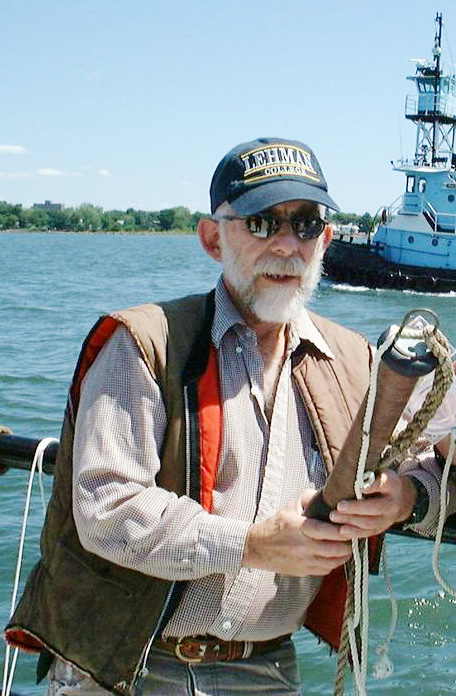
Dr. Joseph W. Rachlin serves as Professor of Biological Sciences at Lehman College, City University of New York (CUNY), and holds a concurrent professorship in the Biology Ph.D. Program at the CUNY Graduate School and University Center. He directs Lehman College's Laboratory for Marine and Estuarine Research (LaMER) and serves on the Advisory Board for the National Institutes of Health's Minority Access to Research Careers Programs at Lehman College.
Dr. Rachlin's educational background includes:
- B.S. in Biology, 1957, City College of New York
- M.S. in Biology, 1962, New York University
- Ph.D. in Biology, 1967, New York University
His research spans Fish Ecology (population dynamics, niche overlap), Fish Systematics (phylogeny, cytogenetics), and broader Aquatic and Estuarine Ecology, with specialized focus on archaeological sub-fossils from Pakistan's Ghazi Shah site. LaMER employs cytogenetics for evolutionary studies, mathematical modeling for population dynamics, and computational approaches for resource partitioning analysis in aquatic environments.
Analysis of Dr. Rachlin's publications (1977-2011) reveals persistent investigation of urban aquatic ecosystems (notably the Bronx River), marine species interactions, and cytogenetic relationships. His work integrates field ecology with computational methods, evolving from foundational sturgeon diet studies to contemporary analyses of invasive species and urban stream resilience.
Scientific recognition includes:
- Fellow of The Linnean Society of London (with transcription of the historic 1858 Darwin/Wallace paper)
Dr. Rachlin contributes to national research standards through the American Fisheries Society's Guidelines for the Use of Fishes in Research (2004) and mentors underrepresented scholars via NIH programs. His laboratory continues developing high-end computer graphics for virtual morphological modeling of aquatic organisms, advancing form-function analysis in comparative biology.
LaMER (Rooms 231-A & 231-B, Davis Hall) maintains active research programs in phylogenetic relationships, life history strategies, and anthropogenic impacts on marine and estuarine species, supporting both undergraduate and graduate student research.