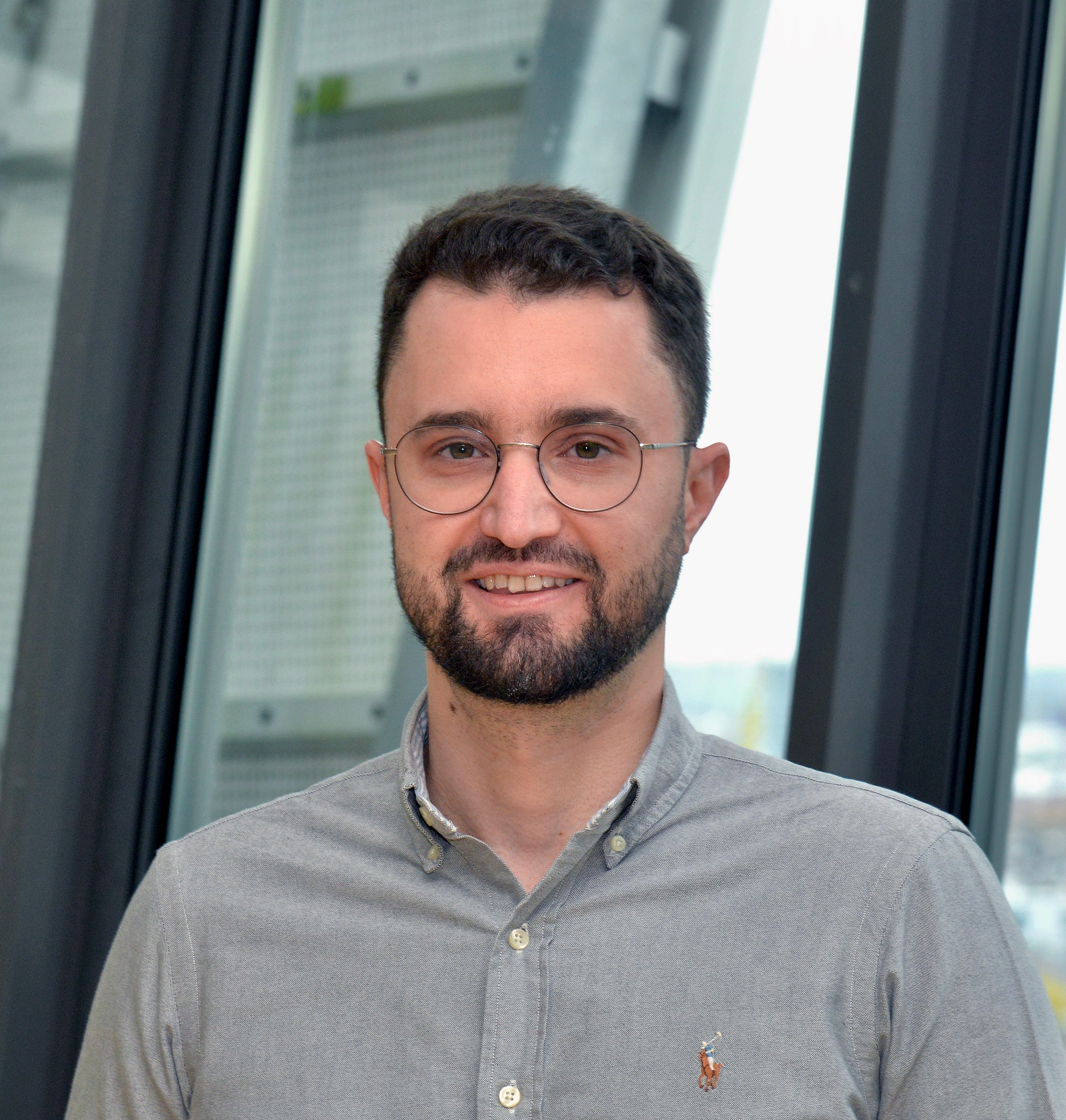
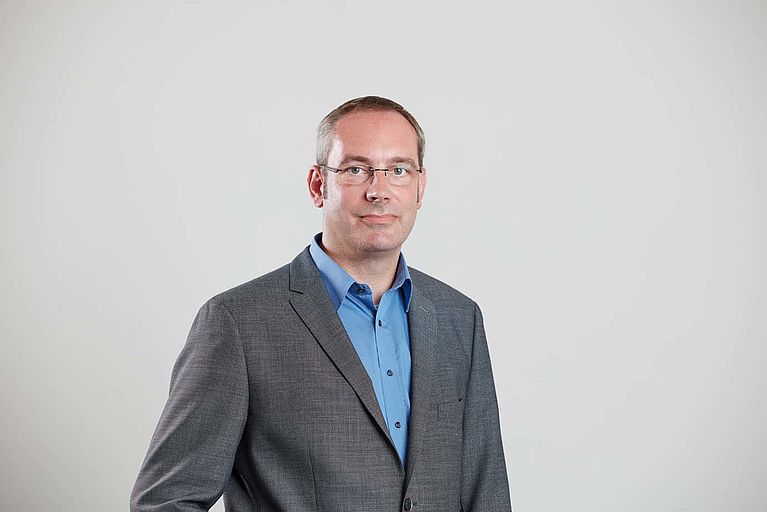
Christopher Morris is a tenure-track Assistant Professor at RWTH Aachen University and a DFG Emmy Noether fellow. He leads the Learning on Graphs (LoG) research group, focusing on machine learning methods for structured data, particularly graph neural networks. His work bridges machine learning, computer science theory, and discrete mathematics, addressing challenges in generalization, expressivity, and algorithmic efficiency. Education: PhD in Computer Science from TU Dortmund University (advised by Petra Mutzel and Kristian Kersting), postdoctoral research at Mila - Quebec AI Institute (Siamak Ravanbakhsh) and McGill University, and Polytechnique Montréal (Andrea Lodi). Research interests emphasize graph machine learning, including generalization theory, combinatorial optimization, and scalable graph embeddings. Notable contributions include analyzing Weisfeiler-Leman algorithms' impact on GNNs' expressivity and generalization (VC dimension connections). Awards: DFG Emmy Noether Fellowship. Supervises six PhD students in Aachen. Active in teaching, offering courses on graph-based machine learning foundations and applications since 2022. Labs/Teams: LoG group at RWTH Aachen, collaborating with institutions like Mila and Polytechnique Montréal. Erdős number 3 through Petra Mutzel’s collaboration network.
Dr. Wanja Hofer is a former research staff member at the Department of Computer Science 4 (Distributed Systems and Operating Systems) at Friedrich-Alexander-Universität Erlangen-Nürnberg (FAU). She specialized in embedded systems, real-time operating systems, and aspect-oriented programming. Her research focused on optimizing hardware-centric systems like Sloth and CiAO, addressing challenges in interrupt handling, scheduling, and software product line variability. Her academic journey includes a PhD in 2014 titled Sloth: The Virtue and Vice of Latency Hiding in Hardware-Centric Operating Systems . She contributed to key projects such as Sloth (time-triggered RTOS) and CiAO (aspect-oriented OS family), emphasizing scalability and configurability for automotive and embedded domains. Hofer also held roles like Web chair for EuroSys 2009 and co-maintained the EuroSys Research Directory. Her teaching involved Basics of Systems Programming in C and OS-related seminars. She advised over 15 graduate students on topics ranging from MPU-based task isolation to filesystem-level variability management. Notable contributions include hardware-accelerated interrupt handling, aspect-oriented OS design, and embedded system energy optimization. Hofer currently works at Brose Fahrzeugteile, applying her expertise in embedded systems and real-time computing to automotive technologies. Her work bridges academic innovation with industrial applications, particularly in safety-critical and resource-constrained environments.
Prof. J. Rod Franklin, PhD is a Full Professor of Logistics and Academic Director of Executive Education at Kühne Logistics University (KLU) in Hamburg, Germany. With an extensive background spanning both academia and industry, Professor Franklin brings deep practical experience to his academic role. He has held significant leadership positions at KLU, including Dean of Programs, and was instrumental in the university's planning stages as he states: "KLU is near and dear to my heart, because I was one of the individuals that helped plan the university." His unique blend of academic rigor and industry expertise makes him a central figure in KLU's mission of providing world-class logistics education and research. Professor Franklin's academic foundation is impressive: Doctorate of Management, Case Western Reserve University, USA (2000) Master of Business Administration, Harvard Graduate School of Business, USA (1979) Master of Science in Mechanical Engineering, Stanford University, USA (1975) Bachelor of Science in Mechanical Engineering, Purdue University, USA (1974) His research focuses on applying modern management techniques to supply chain operations, with pioneering work in sustainable business models, green logistics, corporate social responsibility, and cloud-based supply chain management. Professor Franklin is a leading authority on the Physical Internet concept, which seeks to revolutionize logistics through interconnected systems inspired by the digital internet. His research consistently bridges theoretical frameworks with practical industry applications, addressing critical challenges in modern logistics networks while promoting sustainability and efficiency. Professor Franklin's publication record over the past two decades reveals a clear evolution from traditional logistics service innovation toward cutting-edge research on the Physical Internet, predictive analytics, and big data applications in supply chains. His recent work demonstrates increasing emphasis on urban logistics solutions, sustainability challenges, and the integration of digital technologies with physical logistics networks. His seminal 2020 paper "From the Digital Internet to the Physical Internet" has significantly advanced the conceptual framework for this emerging field, while his 2024 protocol design work continues to push the boundaries of practical implementation. Professor Franklin leads significant research initiatives including "Accelerating the Path Towards Physical Internet - SENSE," "Internet of Food and Farm 2020," and "URBANE - Upscaling innovative green urban logistics solutions." His work has been published in top-tier journals including Journal of Business Logistics, IEEE Transactions on Systems, Man and Cybernetics, and International Commerce Review, demonstrating substantial scholarly recognition. While specific individual awards aren't detailed in available information, his leadership in major funded research projects indicates significant institutional support for his work. As Academic Director of Executive Education at KLU, Professor Franklin oversees programs that effectively bridge academic theory with industry practice. His teaching portfolio includes MBA courses on Critical Thinking, Design Thinking, Managing Multiple Complex Expectations, and Systems Thinking - all emphasizing practical application of theoretical concepts. His extensive industry background, including executive roles at Kühne + Nagel and other major logistics firms, directly informs his approach to academic supervision and executive education. Professor Franklin has successfully secured research funding for multiple projects focused on sustainable logistics innovation, demonstrating his ability to translate theoretical concepts into impactful research initiatives. Professor Franklin leads collaborative research teams focused on the Physical Internet concept and its applications in modern logistics. Through projects like SENSE and URBANE, he works with international researchers, industry partners, and policymakers to develop innovative solutions for sustainable urban logistics. His research integrates expertise from computer science, operations research, and business management to address complex supply chain challenges. The BizSLAM App, developed as part of his work on multi-level SLA management, exemplifies his team's ability to create practical tools with direct industry applications, demonstrating the real-world impact of his research vision.
Eric Leclercq is a researcher at the University of Burgundy, affiliated with the LE2I Lab in Dijon, France. His work spans database systems, social network analysis, and biomedical data integration. He has contributed extensively to polystore systems, tensor decompositions, and category theory applications in data modeling. Fields of Interest : Database Systems, Data Mining, Social Network Analysis, Big Data Analytics, Semantic Web Leclercq's recent research focuses on formal frameworks for data lakes using category theory, multi-level tensor decomposition for social network stratification, and schema migration in multi-model systems. He has published in venues like CAiSE, IDEAS, and RCIS. His collaborations include Annabelle Gillet, Marinette Savonnet, and Nadine Cullot. Notable works include Lambda+ architecture for data processing, polarization analysis in social networks, and tools for tweet collection and biomedical data integration.
Gerhard Wellein is a Professor for High Performance Computing at the Department of Computer Science of Friedrich-Alexander-Universität Erlangen-Nürnberg (FAU). He is the head of NHR@FAU (Erlangen National Center for High Performance Computing) and a member of the board of directors of the German NHR-Alliance. Since 2024, he has also served as a Visiting Professor for HPC at the Delft Institute of Applied Mathematics, Delft University of Technology. He holds a PhD in theoretical physics from the University of Bayreuth and has over two decades of experience in HPC education and research. Research Interests: His research focuses on performance modeling and engineering, architecture-specific code optimization, novel parallelization techniques, and the development of hardware-efficient building blocks for sparse linear algebra and stencil solvers. His work bridges computer science, applied mathematics, and computational physics, aiming to maximize efficiency on current and future HPC architectures, including exascale systems. Publication Trends: His recent publications emphasize analytical performance modeling (e.g., Roofline, oscillator models), energy efficiency, GPU optimization, and scalable linear algebra. They reflect a strong focus on both theoretical modeling and practical implementation, with applications in CFD, quantum physics, and molecular dynamics. Scientific Awards: 2011 Informatics Europe Curriculum Best Practices Award (shared with Jan Treibig and Georg Hager) for outstanding teaching contributions in HPC. Grants and Advising: He has led numerous third-party funded projects from the EU, BMBF, and DFG, including EoCoE-III, ESSEX, EXASTEEL, and ProPE. These projects focus on exascale software, performance engineering, fault tolerance, and multiscale simulation. He has mentored multiple researchers and students, contributing to the development of tools such as LIKWID, ClusterCockpit, and GEOPM. Labs and Teams: He leads the HPC research group at FAU and is deeply involved in national and international HPC initiatives. His team collaborates extensively on open-source HPC software and performance tools, fostering a strong community-driven approach to performance engineering.
Dominic Henze is a Professor at the Technical University of Munich (TUM), affiliated with the Faculty of Informatics and the Chair of Software Engineering . He leads research initiatives in Cyber-Physical Systems , Smart Environments , and Machine Learning Applications , with a particular focus on Fog Computing architectures. His research spans theoretical frameworks and real-world implementations, including collaborations with institutions like Carnegie Mellon University and industry partners such as Siemens AG and Zeiss IMT . His work addresses challenges in resource allocation , predictive maintenance , and blockchain integration within industrial contexts. Dr. Henze's publications reveal a consistent focus on Fog Computing architectures, IoT resource management, and educational software engineering. Key trends include self-organizing network systems , decentralized supply chain traceability , and smart environment coordination . He has advised numerous students on topics ranging from QoS negotiation to autonomous drone coordination . As an educator, he has taught multiple iPraktikum courses and seminars on iOS development and Agile Project Management since 2014, with publications exploring team composition strategies and distributed programming pedagogy.
Bing Qin is a Researcher specializing in computational linguistics, artificial intelligence, and multimodal learning. Their work focuses on enhancing large language models' capabilities in temporal knowledge graph forecasting, cross-lingual alignment, and safety mechanisms. Core Research Areas: Knowledge graphs, multimodal systems, reasoning frameworks Technical Innovations: Analogical replay, gain signal estimation, cross-modal attention intervention Recent Trends: 2025 publications emphasize training-free methods and preference alignment in LLMs
Dr. Georg Hager is Head of Research at the Erlangen National High Performance Computing Center (NHR@FAU), Friedrich-Alexander-Universität Erlangen-Nürnberg, and an associate lecturer at the Institute of Physics, University of Greifswald. His work focuses on performance engineering, node-level optimization, and analytic modeling in high performance computing. Research Interests: High Performance Computing (HPC) Performance Engineering and Modeling Architecture-Specific Optimization Energy Efficiency in Computing Scientific Code Optimization Execution-Cache-Memory (ECM) Model Development Computer Architecture for HPC His recent publications and tutorials emphasize performance modeling, node-level engineering, hybrid programming (MPI+OpenMP), and benchmarking on modern architectures such as Ice Lake, Sapphire Rapids, and A64FX. He has contributed to the development of the LIKWID tool suite and promotes best practices in HPC education. Scientific Awards: ISC Gauss Award (2018) Informatics Europe Curriculum Best Practices Award (2011) Georg Hager has been instrumental in developing and teaching international tutorials on performance engineering and hybrid programming, often in collaboration with HLRS Stuttgart and TU Wien. He is the co-author of the widely used textbook Introduction to High Performance Computing for Scientists and Engineers . His work bridges theoretical modeling and practical application, aiming to improve time-to-solution and resource efficiency in large-scale scientific computing.
Prof. Dr. Jana Giceva is a Professor for Database Systems at the TUM School of Computation, Information and Technology since 2020. Her research bridges database systems with modern computer architecture, focusing on hardware-aware data processing, operating system integration, and efficient execution of big data workloads. She previously held roles at Imperial College London, Microsoft Research, and Oracle Labs. Education: PhD in Computer Science from ETH Zurich (2017) Awards: ERC Starting Grant (2024), ETH Medal (2018), VMware Early Career Faculty Award (2019), Google PhD Fellowship (2014) Her work explores database/operating system co-design , chiplet-aware scheduling , and disaggregated systems programming , with publications covering query optimization, graph data structures, and hardware acceleration. Collaborations with institutions like Imperial College London and ETH Zurich highlight her cross-disciplinary impact. Key Research Themes: Hardware-Software Integration High-Performance Query Execution Asynchronous I/O Optimization Adaptive Runtime Systems
Prof. Dr. Alexander Carôt is a Professor of Media Informatics at Anhalt University of Applied Sciences, leading the Faculty of Computer Science and Languages as its Dean. His work bridges physics, computer science, and music, with a focus on networked music performance and low-latency audio systems. He developed the SoundJack software, enabling remote collaborative music-making, and contributed to projects like FAST-MUSIC and 5GUK trials for distributed music sessions. His research spans telemedicine applications, real-time streaming optimization, and quantum effects in telecommunications. Education: Ingenieursdiplom (2004) Doctorate in Engineering (2009) Research Interests: Prof. Carôt explores interdisciplinary fields combining technology and music. Key areas include: Real-time audio networking for live performances 5G-enabled tele-music systems Medical tele-rehabilitation using music feedback Low-latency multimedia streaming protocols Grants & Projects: Led initiatives like the FAST-MUSIC project and 5G trials, focusing on distributed music collaboration. Active in EU-funded research on telematic systems and networked audio. Labs/Teams: Directs the SoundJack development team and collaborates with industry partners on 5G infrastructure for arts and healthcare.
Professor Raimo Michaelsen serves as Professor of Railway Engineering, especially Control and Safety Engineering at the Department of Traffic and Transport at University of Applied Sciences Erfurt. He holds multiple leadership roles including Head of the Bachelor's program in Industrial Engineering in Railway Engineering (B.Eng.), Member of the Study Commission, Member of the Examination Board, and Member for Research and Teaching Affairs in the Faculty Council. Doctorate in Civil Engineering at TU Braunschweig (2004) Civil Engineering studies (Transport Engineering specialization) at University of Hanover (1993-1999) Professor Michaelsen's research focuses on railway engineering with special emphasis on control and safety technology. His work spans railway operations science, risk and hazard analyses of operating procedures, timetable and infrastructure concepts, and analysis of operating procedures. The railway system research encompasses the components track, safety technology, rolling stock, and operations interfaces. His extensive publication record demonstrates expertise in railway infrastructure optimization, safety systems implementation, timetable construction, and capacity analysis. Recent work shows particular focus on digitalization in rail operations, ETCS implementation challenges, and infrastructure adaptation for the Germany Takt concept. FH Erfurt study prize (first place, 2010) Professor Michaelsen supervises numerous Master's and Bachelor's theses in railway engineering topics, with recent work covering infrastructure optimization, safety technology, timetable construction, and operational concepts. His teaching spans both the Industrial Engineer in Railway Engineering and Industrial Engineer in Traffic, Transport, Logistics programs, with specialized courses in control and safety technology, timetable construction, and railway network simulation. He also teaches at St. Pölten University of Applied Sciences in their Railway Technology and Mobility program. His department maintains strong industry connections through excursions to railway infrastructure sites, signaling technology companies, and operational centers, providing students with practical exposure to the railway sector.
Lukas Gosch is a PhD student at the Technical University of Munich , affiliated with the TUM School of Computation, Information and Technology and the Department of Computer Science . He is part of the DAML research group under the supervision of Prof. Stephan Günnemann and the relAI graduate school . Research Focus : Robustness in machine learning, graph neural networks (GNNs), combinatorial optimization, adversarial verification, and efficient ML. Education : M.Sc. in Computational Science (2018-2021, University of Vienna), B.Sc. in Physics (2013-2017, Vienna University of Technology). His work investigates how to certify and improve the robustness of neural networks, particularly against label/data poisoning and backdoor attacks. He leverages techniques like neural tangent kernels and mixed-integer programming to derive theoretical guarantees on model behavior. Recent papers analyze robustness plateaus and semantic-aware adversarial examples. Recent Scientific Recognition : Best Paper Award @ NeurIPS 2024 AdvML Frontiers Workshop Selected Oral Talk @ NeurIPS TSRML 2022 Best Master's Thesis Award @ Austrian Society for Operations Research 2021 Performance Scholarship @ University of Vienna 2020
Laura Carrington is a researcher at the University of California, San Diego, specializing in High Performance Computing (HPC) with a focus on energy efficiency, memory management, and performance optimization. She has contributed to the development of tools like PEBIL for binary instrumentation, ADAMANT for data movement analysis, and frameworks for power management in large-scale systems. Her research spans multiple domains including ARM processor evaluation, Xeon Phi vectorization, and communication reduction in graph algorithms. Key collaborations include work with Michael Laurenzano, Allan Snavely, Ananta Tiwari, and Pietro Cicotti. Laura's work addresses critical challenges in HPC such as DVFS configuration optimization, workload colocation, and energy-aware algorithm design. While no explicit academic rank is stated, her extensive publication record across 2002-2019 in top venues like SC, IPDPS, and IJHPCA establishes her as a significant contributor to HPC research. Her work has influenced practices in system-level power management, scientific application characterization, and energy-efficient computing for both CPU/DRAM domains and emerging memory technologies.
Dr. Fabio Gratl is a former Researcher (Wissenschaftlicher Mitarbeiter) at the Chair of Scientific Computing in Computer Science (SCCS) at the Technical University of Munich (TUM). He holds a M.Sc. in Informatics from TUM (2017) and completed his doctoral studies (Dr. rer. nat.) in 2020. His research focuses on high-performance computing, molecular dynamics simulations, and auto-tuning algorithms for particle systems. He contributed to the development of the AutoPas library, which enables node-level auto-tuning for optimal performance in molecular dynamics. Key research interests include parallel computing (shared memory/task-based/mpi), vectorization, and algorithm selection strategies. He has advised numerous theses on topics like GPU acceleration, auto-tuning with machine learning, and space debris modeling. His work integrates software development (C++, Python) with computational engineering challenges. Teaching activities included courses on scientific computing, molecular dynamics, and numerical programming at TUM. He also organized seminars on leadership and future HPC trends. Notable software contributions include AutoPas, ls1 mardyn extensions, and tools for polyhedral gravity modeling. Publications span computational science journals and conferences, emphasizing algorithm optimization and cross-domain applications. Despite leaving the SCCS chair, his research legacy persists through ongoing AutoPas development and collaborations.
Dr. Torsten Wilde is a researcher at Technical University Munich , Germany, with a focus on High Performance Computing (HPC) and Energy Efficiency in data centers. His work spans over a decade, integrating Machine Learning , Simulation and Modeling , and Operational Data Analytics to optimize HPC systems.