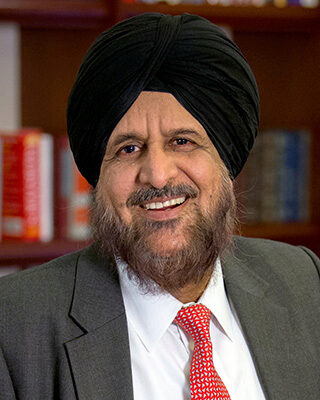
Dimitrios Skalkos serves as a Professor at the Department of Chemistry, University of Ioannina, holding the specific title of Professor of Innovation Management in Food Businesses. His office is located in building X2, room X2-206c on the Ioannina Campus (45110 Ioannina), and he leads the Food Chemistry Laboratory. He earned his Basic Degree in Chemistry from the University of Ioannina (1980-1985) followed by a Doctoral Degree from the University of Toledo, USA (1986-1989) with dissertation research on "Di- and Tetrahydroporphyrins: Syntheses and Antitumor Activities". Skalkos's research spans Food Business Management, Food Innovation, and Innovation Management, with specialized focus on Innovation & Entrepreneurship, Aromatic Plants, Innovative Foods, and Strategic Marketing. His work bridges academic research with industry applications in food systems, emphasizing Greek agricultural products and pandemic-era consumer behavior. His 36 publications (2020-2024) reveal strong trends in post-pandemic food innovation, consumer perception of traditional Greek foods, functional food development (particularly olive oil, cheese, and grape by-products), and sustainable agri-food supply chains. Key thematic clusters include traceability systems, bioactive properties of novel foods, and economic impacts on food choices. He has actively supervised Master's and PhD students through departmental presentations, directed 23 research programs, and organized 15 seminars and conferences. His laboratory website ( https://foods.chem.uoi.gr ) showcases ongoing food chemistry innovations.
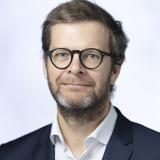
Oscar Westlund serves as Professor at the Department of Journalism and Media Studies within the Faculty of Social Sciences at Oslo Metropolitan University (OsloMet), where he co-leads the OsloMet Digital Journalism Research Group. He maintains a secondary appointment at the University of Gothenburg and acts as Editor-in-Chief of Digital Journalism . His research spans digital journalism, fact-checking, platform dynamics, media management, news consumption, and mobile media. Westlund's scholarly focus centers on journalism safety in digital environments, sociotechnical dimensions of misinformation combat, and platform-induced challenges for news organizations. His work examines professional fragilities of journalists, epistemological foundations of data journalism, and legitimacy paradoxes in public service media-platform relationships. Current projects address disinformation countermeasures through the SCAM initiative (Source Criticism And Mediated Disinformation). Analysis of his 2022-2024 publications reveals dominant themes: journalism safety frameworks (33%), platform-journalism tensions (27%), and fact-checking as sociotechnical practice (23%). Key methodological approaches include cross-national comparative studies, epistemological analysis, and practice theory applied to digital news production. Westlund actively contributes to academic discourse through editorial leadership at Digital Journalism and special issue guest editing. His research group coordinates interdisciplinary collaboration on digital journalism studies, while the SCAM project develops practical methodologies for disinformation detection in democratic contexts. Recent work demonstrates increasing emphasis on mobile news ecosystems and journalist safety cultures. He co-leads the OsloMet Digital Journalism Research Group, which investigates platform impacts on news production, mobile journalism evolution, and epistemological shifts in data-driven reporting. The group maintains strong international partnerships, particularly with Swedish institutions through his University of Gothenburg affiliation.
Brett Welch is an Assistant Professor and Biostatistician at the University of Houston with dual appointments in the Department of Communication Sciences and Disorders and the Department of Psychological, Health, and Learning Sciences within the College of Liberal Arts and Social Sciences. Dr. Welch's educational background includes: Ph.D. in Communication Science and Disorders from the University of Pittsburgh M.S. in Communication Sciences and Disorders from the University of Texas Rio Grande Valley B.S. in Linguistics from the University of Texas at Austin B.A. in Communication Sciences and Disorders – Speech-Language Pathology from the University of Texas at Austin Dr. Welch's research sits at the intersection of psychology and communication. He seeks to understand how psychological processes like personality and psychopathology influence communication behaviors, and conversely, how communication behaviors impact psycho-social well-being. His work leverages quantitative methods, cross-sectional studies, and intensive longitudinal designs to interrogate the dynamic interplay between psychological processes and voice and communication behaviors. This research aims to advance understanding of functional voice disorders, improve assessment of psychopathology, and promote well-being for people with and without communication disorders. Dr. Welch has received several notable awards: Honors Council of Academic Programs in Communication Sciences and Disorders PhD Scholarship (2024) New Century Scholars Doctoral Scholarship from the American Speech-Language-Hearing Foundation (2023) New Investigator Forum from The Voice Foundation (2021) As an academic, Dr. Welch serves as an ad hoc peer reviewer for various scientific journals in speech-language pathology and psychology. He is also a mentor in the Students to Empowered Professional Mentoring Program and a member of the American Speech-Language-Hearing Association. His teaching includes Special Problems: Introduction to Quantitative Modeling (COMD 8398). Dr. Welch maintains an active research program focused on the intersection of psychology and communication, with particular emphasis on voice disorders and their psychological correlates. His work combines biostatistical approaches with clinical insights to advance understanding in this specialized field.
Prof. Dr. Sebastian Conrad holds the Chair of Modern History at Freie Universität Berlin , specializing in Global History , (Post-)colonial History , and Intellectual History . He joined the faculty in 2010 after teaching at European University Institute in Florence and serving as visiting scholar at institutions including NYU Abu Dhabi and The New School, New York. Director of MA "Global History" (FU Berlin/Humboldt University joint program) Director of Graduate School "Global Intellectual History" Principal Investigator, Cluster of Excellence "Temporal Communities" (2024) Research Interests focus on transnational historical frameworks , globalization of historical narratives , and postcolonial historiography . His latest book Die Königin: Nofretetes globale Karriere (2024) analyzes cultural globalization through Nefertiti's iconography, while his current project explores global history of bodily aesthetics and identity formation since the 19th century. Recent Publications include: 2022: "Empire and Nationalism" (American Historical Review) 2021: "Globalizing the Beautiful Body" (Journal of World History) 2020: "Greek in Their Own Way" (American Historical Review) Scientific Honors : Elected member, Berlin-Brandenburg Academy of Sciences and Humanities (2024) Elected member, Academia Europaea (2024) Finalist, German/NDR non-fiction book awards (2024) for Nefertiti study Academic Leadership includes editorial roles at Geschichte und Gesellschaft , Past & Present , and Globalgeschichte book series (Campus Verlag). His work bridges historical analysis with contemporary debates on memory, identity, and global cultural dynamics.
Aaron Chatterji is the Mark Burgess & Lisa Benson-Burgess Distinguished Professor at Duke University's Fuqua School of Business and Chief Economist at OpenAI. His work bridges academia, public policy, and business, focusing on AI's societal impacts, innovation, entrepreneurship, and economic growth. He has held senior roles in the Biden Administration, including White House CHIPS coordinator and Acting Deputy Director of the National Economic Council, overseeing U.S. competitiveness and supply chain resilience. Previously, he served as Chief Economist at the U.S. Department of Commerce and worked at the White House Council of Economic Advisers under President Obama. Chatterji also holds a secondary appointment at Duke's Sanford School of Public Policy and is a Research Associate at the National Bureau of Economic Research. Education: Ph.D. in Business Administration, Haas School of Business, UC Berkeley B.A. in Economics, Cornell University Research Interests: Chatterji examines the intersection of business and public policy, with expertise in entrepreneurship, innovation policy, AI ethics, and economic development. His work addresses critical issues like global supply chains, technology competition, and the role of corporate activism in societal challenges. He has authored over 30 peer-reviewed articles and two influential books: Can Business Save the Earth? and The Role of Innovation and Entrepreneurship in Economic Growth . Teaching & Advising: A屡屡 award-winning educator, Chatterji created a popular course on business and politics at Duke. He advises top firms across industries, including finance, healthcare, and technology, and leads OpenAI's research team exploring AI's economic implications. Honors: Kauffman Prize Medal for Entrepreneurship Research Aspen Institute Rising Star Award Strategic Management Society Emerging Scholar Award Public Engagement: Chatterji has written for Harvard Business Review , Wall Street Journal , and Brookings Institution. He previously ran for North Carolina State Treasurer and served on state policy commissions under Governor Roy Cooper.
Dr. Simon A. Morrison is a Senior Lecturer in the Division of Communication, Screen & Performance within the Faculty of Arts, Humanities and Social Sciences at the University of Chester. He serves as Programme Leader for the Music Journalism degree, which he helped design, build and deliver from its first cohort in 2014. With 25 years of experience as a writer, broadcaster, and academic, Morrison brings extensive industry knowledge to his teaching and research, having worked as a music journalist reporting from locations worldwide including Beijing, Brazil, Moscow, and Marrakech. Dr. Morrison holds a PhD from the University of Leeds (completed 2018), an MA from the University of Manchester (1995-1997), and a BA Hons from the University of Manchester (1989-1992). Prior to his position at Chester, he worked as an Associate Lecturer at Manchester Metropolitan University (2012-2014) and as a Visiting Lecturer at Leeds University (2011-2013). His academic journey follows a substantial career in media where he presented TV for Rapture TV, hosted radio shows in Ibiza, produced and presented for Kiss Radio, and appeared on BBC Breakfast and BBC 5 Live. Dr. Morrison's research centers on the intersection of words and music , with particular focus on Popular Music , Musico-Literary Intermediality , and Electronic Dance Music Culture . His work explores how music subcultures, particularly rave and dance music scenes, are represented in literature and journalism. He examines the connections between different countercultural movements, notably drawing parallels between the Beat Generation writers and contemporary 'Chemical Generation' authors who write about club culture. His research also investigates the relationship between music journalism and subcultural movements across different historical periods. His recent publications reveal a clear trajectory connecting historical dance music developments across continents and eras. Morrison's work traces the evolution of electronic dance music from its American roots in Chicago and Detroit through its transatlantic journey to Europe and back again, examining how cultural exchange shaped musical innovation. His analyses of Pink Floyd demonstrate how rock bands interact with media landscapes, while his investigations of music journalism document the changing nature of music criticism in digital eras. The recurring theme across his scholarship is the examination of how subcultural experiences are translated into written form, whether through journalism, fiction, or academic analysis. Dr. Morrison actively supervises undergraduate dissertation projects and Negotiated Study production projects across all three years of undergraduate study. He has successfully supervised an MRes project to completion and examined PhDs (including one internal and two external, one being an Australian PhD by Artefact & Exegesis). He has served as an External Examiner for Music Journalism programs at Southampton Solent University (2016-2019) and BIMM London, Birmingham and Manchester (2016-2020). His teaching spans modules including Introduction to Journalism, Live Journalism, Dancing About Architecture: Popular Music Media, Histories and Technologies, The Cultural Politics of Music Journalism, The Politics of Social Media, Magazine Publishing and Music PR and Promotional Writing.
Thomas Lemke is Professor of Sociology with a focus on 'Biotechnology, Nature and Society' at the Institute of Sociology, Faculty of Social Sciences, Goethe University Frankfurt am Main. He has held this position since September 2008 and is an active faculty member in the Graduate Research College (GRK) 'Life Sciences – Life Writing,' contributing his expertise in biopolitics and science and technology studies. His educational background includes studies in Political Science, Sociology and Law in Frankfurt am Main, Southampton and Paris. He obtained his doctoral degree at Goethe University in 1996 for research on the concept of power in Michel Foucault's work. Lemke's research focuses on the intersection of social theory, biopolitics, and science and technology studies. His work explores governmentality, new materialism, and the sociological implications of biotechnology. He approaches these topics through a critical lens that challenges conventional understandings of life, agency, and power relations in contemporary society. His recent publications demonstrate ongoing scholarly productivity with works published in 2025, including the third revised edition of 'Biopolitics for introduction' and a Spanish translation of 'Foucault, Governmentality and Critique.' These works reflect his continued engagement with theoretical frameworks for understanding power dynamics in biomedicine and the life sciences. Heisenberg scholarship from DFG (2007) Lemke contributes significantly to interdisciplinary research through his involvement with the GRK program, which brings together expertise from medicine, life sciences, and social sciences. He is currently working on a book project entitled 'The Government of Things: Foundations and Perspectives of New Materialism' funded by the Volkswagen Foundation, exploring posthumanist concepts of agency and self-organization.
Dong Hoon Kim is an Associate Professor in the Cinema Studies department at the University of Oregon's College of Arts and Sciences . His work bridges media history and cultural studies, focusing on the ideological and visual frameworks of cinema in East Asia and beyond. Research Interests: His scholarship critically examines colonial cinema , socialist cinema , transnational media flows , and the intersection of media spectatorship with national identity. His studies span East Asian film, media, and popular culture, emphasizing historical and discursive formations. University of Oregon | Cinema Studies Email: donghoon@uoregon.edu Office Hours: Mondays 12-1:30p.m., Winter 25 Key Publications: Kim authored Eclipsed Cinema: The Film Culture of Colonial Korea (2017) and co-edited The Bloomsbury Handbook of North Korean Cinema (2025). His articles explore topics like socialist star-making in North Korea, transcolonial benshi practices, and the global impact of South Korea's Parasite . Teaching: Courses include Introduction to Korean Cinema , Studio Ghibli Animation , and seminars on Japanese New Wave cinema, transnational film genres, and violence in Korean cinema. He emphasizes interdisciplinary approaches to East Asian cultures.
Professor Jagmohan S. Raju serves as the Joseph J. Aresty Professor of Marketing at the University of Pennsylvania's Wharton School, where he also directs the Wharton Co-Sponsorship of the Indian School of Business. An internationally renowned pricing expert, he has taught extensively across Wharton's MBA, EMBA, and Executive Education programs and previously served as Vice Dean of Executive Education for six years. His academic credentials include a PhD in Business, MS in Operations Research, and MA in Economics from Stanford University, complemented by an MBA from the Indian Institute of Management Ahmedabad and a BTech in Electrical Engineering from the Indian Institute of Technology Delhi. Raju's research focuses on pricing strategy , retailing dynamics , and competitive positioning , with significant contributions to understanding private labels, coupon economics, and strategic channel management. His work bridges theoretical rigor with practical applications, frequently addressing real-world challenges in product launches and market competition through game-theoretic and empirical approaches. Recent publications reveal evolving expertise in digital-era retail challenges, particularly showrooming behavior, omnichannel competition, and the strategic implications of network neutrality. His scholarship consistently addresses the intersection of consumer psychology and corporate strategy across diverse sectors including pharmaceuticals, entertainment, and consumer goods. Fellow, INFORMS Society for Marketing Science (2017) Multiple Excellence in Teaching Awards (2012, 2011, 2009) Miller-Sherrerd MBA Core Course Teaching Award (2006) President of INFORMS Society for Marketing Science (2004) Marketing Professor of the Year at UCLA (1992) As an educator, Raju directs flagship executive programs including the General Management Program and Owner/President/CEO Program, while consulting for industry leaders like Johnson & Johnson, Medtronic, and Warner Home Video on pricing architecture and new product launches. His research grants and industry projects frequently examine category management dynamics and the strategic value of customer heterogeneity. He spearheads the Wharton-Indian School of Business partnership, fostering academic exchange and executive development initiatives that leverage his deep expertise in India's business landscape and global market dynamics.
Dr. Hester Lees-Jeffries is a University Associate Professor at the University of Cambridge and Fellow of St Catharine's College, where she serves as Director of Studies in English. She earned her BA and MA (Hons.) from the University of Canterbury, New Zealand, before completing her PhD at Cambridge as a Commonwealth Scholar. Her academic career includes a Research Fellowship at Magdalene College (2003-2006) and ongoing fellowship at St Catharine's since 2006. Her research focuses on Shakespeare and early modern literature, with particular expertise in performance studies, visual culture, and material textuality. She investigates topics including Renaissance textiles, costume semiotics, garden symbolism, and material objects in literature. Her interdisciplinary approach connects literary analysis with cultural history and performance theory. Lees-Jeffries maintains an active publication record with scholarly works spanning Shakespearean criticism, material culture studies, and Renaissance literature. Her research demonstrates consistent focus on textual materiality, performance interpretation, and interdisciplinary methodologies bridging literary analysis with visual and material culture. Her forthcoming publications include monographs on textile symbolism in Shakespeare and an introduction to Shakespeare's histories. Honors and Awards: Commonwealth Scholarship Research Fellowship, Magdalene College (2003-2006) Fellowship, St Catharine's College (since 2006) She coordinates exhibitions for the Centre for Material Texts and regularly contributes to Shakespeare Survey as London theater reviewer. Her innovative #SlowShakespeare projects provide daily literary analysis of Shakespeare's plays through social media platforms.
Associate Professor Judy Hart is a materials scientist at the School of Materials Science & Engineering, UNSW Sydney , specializing in the development of semiconducting materials for renewable energy applications. Her work integrates computational (DFT) and experimental approaches to understand composition-property relationships in systems like solid solutions , heterostructures , and doped materials for photocatalysis and solar cells . She leads projects funded by ARC Discovery and Linkage grants , including work on photo-electro-catalysis systems and stabilizing ceramic materials . Education: PhD in Materials Engineering (Monash University, 2007), BEng (Materials) (Monash, 2002) Professional Experience: Senior Lecturer (UNSW, 2017–), Lecturer (UNSW, 2013–2017), University of Bristol (2007–2012) Research Interests Her research focuses on designing materials for renewable energy , particularly photoelectrochemical water splitting and organic oxidation reactions . Key areas include Density Functional Theory (DFT) , defect engineering , band gap tuning , and nanostructured materials . She investigates ferroelectric polarization effects , metal oxide heterostructures , and stability of battery components , with applications in hydrogen production , CO2 conversion , and advanced battery materials . Scientific Awards Ramsay Memorial Fellowship (University of Bristol, 2007–2009) Teaching Contributions She is co-author of the 1st Australian & New Zealand edition of "Materials Science and Engineering: An Introduction" , and teaches courses on computational materials science , corrosion-resistant surfaces , mechanical behavior of metals , and materials design .
Introduction Jonathon Hutchinson is an Associate Professor and Chair of the Media and Communications Discipline at the University of Sydney. He holds roles as Editor-in-Chief of the Policy & Internet journal and Chief Investigator on major projects like the International Digital Policy Observatory (ARC LIEF) and the eSafety Commission's Emerging Online Safety Issues initiative. His work bridges digital media studies, policy analysis, and cultural theory. Education BComm (Hons), RMIT University PhD, ARC Center of Excellence for Creative Industries and Innovation, QUT Research Interests Hutchinson focuses on digital intermediation processes in cultural production, algorithmic governance, and public service media adaptation. Key areas include: Algorithmic influence on news diversity Social media policy and youth safety Platform politics and regulatory frameworks Recent Article Trends His 2020–2025 work emphasizes global digital policy challenges, generative AI ethics, and Vietnamese media dynamics. Recent projects highlight cross-national comparisons (e.g., China/South Korea news ecosystems) and participatory co-design approaches to online safety education. Awards & Grants 2023 ARC LIEF Grant 2021 eSafety Online Safety Grant Multiple industry partnerships (e.g., eSafety Commissioner, Hans-Bredow-Institut) Advising & Grants Supervised over 15+ graduate students (PhD/Master's/Honours) in media studies and digital culture. Active in interdisciplinary grants addressing cybersecurity, AI governance, and platform regulation. Labs & Networks Member of the Sydney Centre for Healthy Societies, Sydney Southeast Asia Centre, and Charles Perkins Centre. Leads the International Digital Policy Observatory project tracking global regulatory trends.
Ben Marder is a Personal Chair in Digital Marketing and Consumer Behaviour at the University of Edinburgh School of Business , where he specializes in the unintended consequences of digital technologies on consumer behavior and service ecosystems. He serves as Director of Research Degrees and teaches Introduction to Business Research online. Education PhD in Marketing/Information Systems (2013), University of Bath MSc in Marketing (Distinction, 2008), University of Leicester BSc in Financial Economics (First Class, 2007), University of Leicester His research bridges social psychological theory with digital marketing, focusing on: Social media surveillance and self-presentation Instagrammability and visual culture AI ethics and human factors Influencer marketing dynamics Augmented/Virtual Reality applications Online reviews and service recovery His recent work explores vertical video formats (TikTok), emoji/GIF communication , and virtual item consumption in gaming/Metaverse environments. He advocates for student and academic wellbeing and has contributed to public discourse via LinkedIn and media outlets like BBC and The New York Times . Ben's 92+ research outputs emphasize mixed-method approaches, prioritizing quantitative experiments . Key trends include: Behavioral impacts of social media surveillance Psychological drivers of digital consumption Algorithmic trust and service innovation Scientific Awards Best Paper Prize (2018) Literati Prize - Commendable contribution (2018) Most Read Article (2025) Ben supervises quantitative research projects and collaborates on digital marketing trends with journals like Journal of Retailing and Journal of Service Research . He has led projects on social media's impact on service workers, consumer self-awareness, and Facebook post engagement metrics.
Prof. Louis Mulotte is a Full Professor at Tilburg University's Tilburg School of Economics and Management (TiSEM), Department of Strategy and Entrepreneurship. He holds editorial roles at journals like Strategic Management Journal and Academy of Management Discoveries. His research focuses on corporate strategy, mergers and acquisitions, strategic alliances, and governance modes. He has been a visiting scholar at Duke University, Université de Louvain, IAE Paris Sorbonne, and LUISS Business School. Education: PhD in Management from HEC Paris (2008). Academic career progression includes tenure at Tilburg since 2007, advancing from Assistant to Full Professor by 2023. Recognized for teaching excellence in courses like Corporate Strategy and Management Consulting, earning multiple awards (2012–2018). Research spans industries including aerospace, medical systems, and hospitality. Key themes include firm renewal via strategic activities and governance structure optimization. Recent work examines resource control post-acquisitions and knowledge base impacts on technology sourcing. Awards include repeated Excellent Teacher Awards and contributions to editorial boards. Active in academic dissemination through conferences and publications on strategic management topics.
Megan J. Elias is an Associate Professor of the Practice and Director of the Food Studies Program at Boston University. She holds a PhD from the City University of New York (CUNY), an MA from San Francisco State University, and a BA from Cornell University. Her research explores the intersection of food, culture, and history, with a focus on food writing, markets, home economics, and gender. Dr. Elias is the author of seven books, including *Food on the Page: Cookbooks and American Culture* (2017) and *Food in the United States, 1890–1945* (2009), which received the American Library Association’s Outstanding Academic Text award. She serves as editor-in-chief of *Food, Culture & Society* and has been a co-recipient of multiple National Endowment for the Humanities grants. Elias teaches courses such as *History of Food*, *Introduction to Gastronomy*, and *Food and Gender*, emphasizing interdisciplinary approaches. Her work bridges historical analysis with public engagement, including contributions to Sundance Channel’s *Love/Lust* series and collaborations on museum podcasts like the *Making Objects Speech* project. Her research interests span business history, cultural history, food technology, and the scholarship of teaching and learning. In grants and fellowships, she secured $350,000 as Lead Faculty Mentor for the *Bridging Historias* program and a $74,937 NEH grant for the *Foodways and Humanities Project*. Her awards include the CUNY Chancellor’s Fellowship (2014) and the Culinary Historians of New York Amelia Scholars Grant (2007). She actively mentors faculty and curricular development, reflecting her commitment to academic innovation and educational equity.