Merja Voutilainen is an Adjunct Professor at the University of Helsinki's Faculty of Pharmacy, Division of Pharmacology and Pharmacotherapy. Her work spans pharmacology, neuroscience, and regenerative medicine, focusing on neurodegenerative diseases like Parkinson's and ALS. She supervises doctoral programs in Brain & Mind and Drug Research. Education: PhD in Pharmacology, University of Helsinki (2004-2010) Research Interests: Merja’s research centers on neuroprotection, remyelination, CDNF-based therapies, and gene transfer applications for dopamine neuron preservation. She also investigates biofouling prevention in neural implants and ER stress regulation in neurodegenerative models. Scientific Awards: Adjunct Professor (Docent) of Pharmacology and Drug Development (2016) Innoopeli Prize 2022 Grants & Collaborations: She has secured grants from the European Commission (ERC-POC), Sigrid Juséliuksen Säätiö, Jane and Aatos Erkko Foundation, and others. Collaborations include institutions in Finland and international partners.
Dr. Artur Gunia is a researcher at the Department of Cognitive Science within the Faculty of Philosophy at Jagiellonian University in Kraków, Poland. His work spans the interdisciplinary field of cognitive science with particular focus on human-technology interaction, neurotechnology, and philosophical aspects of cognition. His research interests encompass brain-computer interfaces, cognitive enhancement technologies, virtual and augmented reality systems, robotics, and the ethical implications of emerging technologies. Gunia's work demonstrates a strong interdisciplinary approach, bridging cognitive science, computer science, philosophy, and psychology to explore how technologies can augment human cognitive capabilities while addressing associated ethical concerns. Analysis of his recent publications reveals a consistent focus on the intersection of cognitive science and technology, particularly examining how emerging technologies like brain-computer interfaces, virtual reality systems, and social robots affect human cognition, perception, and behavior. His work spans both theoretical investigations of cognitive frameworks and practical applications of cognitive enhancement technologies across various domains including education, safety systems, and assistive technologies. Gunia has made significant contributions to understanding the phenomenological aspects of body schema in virtual environments, trust dynamics in human-machine interaction, and ethical considerations in robotics. His publications demonstrate a consistent trajectory of research exploring how humans adapt to and integrate with technological systems, with particular attention to cognitive, affective, and ethical dimensions.
Anastasia Ludwig is a University Researcher and Associate Professor in Neuroscience at the University of Helsinki, affiliated with the Neuroscience Research Center under the Faculty of Biological and Environmental Sciences . She holds a PhD in Physiology (2008) and a Docent title in Neuroscience (2013) from the University of Helsinki, along with an MSc in Biochemistry (1997) from Moscow State University. Education MSc in Biochemistry (Moscow State University, 1997) PhD in Physiology (University of Helsinki, 2008) Docent in Neuroscience (University of Helsinki, 2013) MSc in Bioinformatics (University of Helsinki, expected 2024) Ludwig’s research focuses on neuroscience , particularly the KCC2 protein and its role in chloride homeostasis , neuronal development , and neurodegenerative disorders . Her work spans molecular biology , neurogenetics , and neuropharmacology , with applications in epilepsy and schizophrenia . Recent publications highlight her contributions to inorganic voltage nanosensors and ITPR3 mutations in neurological diseases. Her research integrates functional ultrasound imaging , in vivo cellular imaging , and iPSC modeling to explore neuronal-glial interactions and synaptic maturation . She has led projects such as Modulators of chloride homeostasis for treating neurological disorders and StopSeizures R2B , supported by the Magnus Ehrnrooth Foundation and Business Finland. Ludwig currently serves as a Senior Scientist at Herantis Pharma Plc (2024–2025) and has participated in international collaborations, including a postdoctoral fellowship at the Institute of Biology of the École Normale Supérieure (2016–2019). Her laboratory utilizes advanced equipment like two-photon microscopes and fiber photometry systems for neuronal studies.
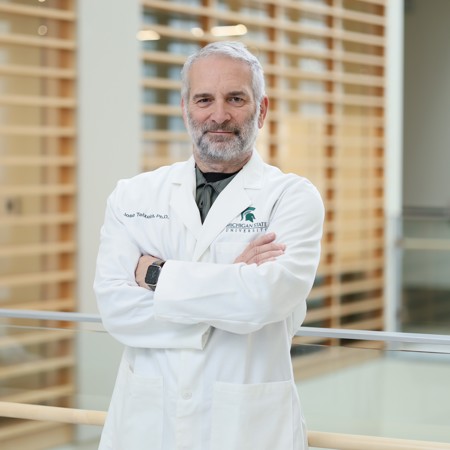
Jose Teixeira is a Professor at Michigan State University's College of Human Medicine, affiliated with the Department of Obstetrics, Gynecology and Reproductive Biology. His research focuses on developmental biology and genetics, particularly in the context of gynecological disorders and cancers. Studied fibroid tumors, endometrial/ovarian cancers Investigates genetic pathways for disease progression Pioneered molecular understanding of reproductive tract development His recent publications highlight work on HMGA2 overexpression, stem cell markers like CRIP1, and epigenetic mechanisms in fibroid pathogenesis. Key trends include the intersection of developmental genetics and tumor biology, with applications in precision medicine for uterine disorders. Active in methodological advances like STORM-seq for single-cell analysis and exploring racial disparities in fibroid biology. Email: teixei15@msu.edu .
William Royle is a Part-Time Lecturer at the University of Salford's School of Health & Society, contributing to both the School of Health & Society and School of Science, Engineering & Environment. His academic profile combines teaching leadership in psychology modules with active research in cognitive and biological psychology. His research interests focus on: Alcohol hangover mechanisms and cognitive restoration Technology-enhanced research methodologies Nature exposure effects on mental health Neural correlates of communication technologies Recent work includes developing the Salford Nature Environments Database (SNED) and investigating pandemic-related diet changes. His publication record shows consistent output from 2017-2025 across journals including Journal of Clinical Medicine and Journal of Neurophysiology, with research spanning cognitive neuroscience, public health, and psychological methodology. Articles demonstrate expertise in hangover symptomatology, stress recovery mechanisms, and virtual reality neuroimaging. Key recognitions include: BPS/ATSiP Psychology Technician of the Year for Research (2019) Papin Prize Highly Commended for Newcomer (2019) BPS/ATSiP Psychology Technician of the Year for Teaching (2018) Papin Prize Highly Commended for Outreach (2017) As an educator, he leads core psychology modules while developing innovative teaching tools like the 'Coding in R for Psychology' course. His doctoral research (completed 2025) on hangover symptom clusters represents significant scholarly contribution to the field. Current research continues to explore cognitive restoration pathways and pandemic health impacts. His work bridges laboratory neuroscience with real-world health applications, particularly through technology-mediated data collection methods and open-access research resources like SNED.
Jaspreet Kaur Daniil is an Assistant Professor at the Center for Translational Neuromedicine (CTN) within the Faculty of Health and Medical Sciences at the University of Copenhagen, Denmark. She also serves as a Guest Researcher in the Department of Neuroscience, focusing on Neuronal Signalling. Her academic journey spans institutions across Europe and India, with a strong foundation in biophysics and neurobiology. Dr. Daniil's educational background includes: PhD in Neurobiology from Scuola Internazionale Superiore di Studi Avanzati (SISSA), Trieste, Italy (2013-2017) Master of Science in Biophysics from Panjab University, Chandigarh, India (2010-2012) Bachelor of Science in Biophysics from Panjab University, Chandigarh, India (2007-2010) Her research focuses on unraveling the complex motor system, particularly examining how movement is generated in mammals and orchestrated from the brain to the spinal cord. Dr. Daniil employs advanced techniques including Adeno-associated viruses (AAV), optogenetics, in vivo electrophysiology, and chronic neural implants such as optical fibers and high-density probes in rodent models. Her work spans multiple model systems including adult rats (in-vivo) and post-mortem human spinal cord tissue, with particular emphasis on understanding spinal population dynamics during locomotion and movement arrest. Analysis of Dr. Daniil's research publications reveals a strong focus on neural interfaces, motor control systems, and neural regeneration. Her work bridges the gap between basic neuroscience and translational applications, particularly in developing novel approaches for spinal cord injury treatment and neural repair. The recurring themes in her research include optogenetic manipulation of neural circuits, development of advanced neural interfaces, and understanding the fundamental mechanisms of motor control. Dr. Daniil has received several prestigious awards and grants throughout her career: PhD fellowship from International School for Advanced Studies (SISSA) FENS-IBRO/PERC Grant A.P. Møller Fonden Grant for Medical Science Advancement Graduate Aptitude Test in Engineering at national level in India Special Student trophy from SISSA Federation of European Neuroscience Virtual Forum Grant Her collaborative work with Dr. Rune W. Berg has been particularly influential in advancing our understanding of motor control systems. Dr. Daniil's research has significant implications for developing therapeutic interventions for movement disorders and spinal cord injuries. She works within interdisciplinary teams that combine expertise in neuroscience, engineering, and clinical medicine to translate basic research findings into potential clinical applications.
Changsi Cai is an Associate Professor in the Department of Neuroscience at the University of Copenhagen, where he leads the Cai Lab focused on neurovascular research. His work bridges neural signaling, vascular biology, and neuroengineering. Research Focus: Dr. Cai investigates neurovascular coupling mechanisms with emphasis on aging and neurodegeneration. His lab studies: Calcium dynamics in vascular mural cells Pericyte physiology in capillary regulation Magnetic neuromodulation technologies for neurological disorders Sex differences in Alzheimer's pathophysiology Real-time neurovascular imaging techniques Publication Trends: Recent work (2021-2025) shows consistent focus on: 1) Age-related decline in neurovascular function, 2) Advanced micro-coil neuromodulation systems, 3) Cellular mechanisms of brain capillary perfusion, and 4) Validation of novel Alzheimer's disease models. Laboratory: The Cai Lab develops cutting-edge methods for studying neurovascular interactions, including MEMS-based devices and in vivo imaging platforms.
Salk Institute for Biological StudiesUnited States
John Reynolds, PhD is a Professor at the Salk Institute for Biological Studies, holding the Fiona and Sanjay Jha Chair in Neuroscience. He leads the Systems Neurobiology Laboratory where he investigates the neural mechanisms underlying vision, perception, and conscious awareness. Reynolds earned his BS in Economics from the University of Pennsylvania and his PhD in Cognitive and Neural Systems from Boston University. He completed his Intramural Research Fellowship at the Laboratory of Neuropsychology, National Institute of Mental Health. Dr. Reynolds' research focuses on understanding how the brain constructs our perception of the external world. His laboratory develops computational models to explain neural mechanisms of vision and tests these using neurophysiology, optogenetics, and visual psychophysics. Key discoveries include developing an influential computational model of attention, demonstrating how brain activity fluctuations affect perception, and revealing that neural activity in the visual system is organized as traveling waves that regulate perceptual sensitivity. Analysis of his recent publications shows a strong focus on visual perception mechanisms, with particular emphasis on cortical layer-specific processing, traveling brain waves, and the relationship between neural activity patterns and perceptual outcomes. His work increasingly incorporates aging research, examining how cognitive decline relates to neural changes in the prefrontal cortex and visual system. 2022 AAAS Fellow - Recognized for distinguished efforts to advance science Reynolds has mentored numerous students and postdoctoral researchers who have gone on to establish independent careers, including Dr. Zachary Davis (now at University of Utah), Dr. Tom Franken (Washington University), and Dr. Anirvan Nandy (Yale University). His research is supported by significant funding, including a $1.2 million award from the Larry L. Hillblom Foundation to study age-related cognitive decline and its relationship to mitochondrial function and neuron metabolism. The Reynolds Lab maintains a collaborative environment with multiple research scientists, postdoctoral fellows, and students working together using advanced techniques including neurophysiology, computational modeling, visual psychophysics, two-photon microscopy, and optogenetics to decipher the neural mechanisms enabling perception and awareness.
California State University, NorthridgeUnited States
Joel Rothman is a Distinguished Professor and Wilcox Family Chair in Biotechnology in the Department of Molecular, Cellular, and Developmental Biology at the University of California, Santa Barbara. He also serves as Director of the Biomolecular Science and Engineering Program and is a member of the Neuroscience Research Institute. Rothman's research focuses on developmental plasticity and resilience using Caenorhabditis elegans and tardigrades as model organisms. His educational background includes a B.S. from the University of California, Davis (1978), followed by work as Winemaster at Buena Vista Winery until 1983, and a Ph.D. from the University of Oregon (1988). After postdoctoral work at the Medical Research Council in Cambridge, England, he was a faculty member at the University of Wisconsin, Madison (1991-96) before joining UCSB in 1996. Rothman's research explores the molecular genetic mechanisms controlling how cells acquire specific identities during animal development, with particular focus on developmental plasticity, cellular reprogramming, stem cell proliferation, apoptosis, left-right handedness determination, and mitochondrial genome maintenance. His lab applies advanced genetic, genomic, and cell biological tools to investigate these processes in C. elegans , while also collaborating on Project Starlight to study the effects of near light-speed travel on microscopic animals. Analysis of his recent publications reveals a strong emphasis on developmental biology, with particular focus on gene regulatory networks, mitochondrial DNA quality control, stress response mechanisms, and evolutionary developmental biology. His work demonstrates how fundamental developmental processes are conserved across species and how they interact with aging pathways. Searle Scholars Award recipient Shaw Scientists Award recipient Member of Board of Trustees of Cancer Center of Santa Barbara Member of International C. elegans Meeting Organizing Committee Former Chair of NIH Molecular Genetics B Study Section Rothman has advised numerous graduate students including Paige Shukwit, Samantha Fiallo, and Pradeep Joshi. His lab collaborates with researchers across disciplines, including Philip Lubin in Physics (Project Starlight), Carl Meinhart in Mechanical Engineering, and Luke Theogarajan in Engineering. His research has been supported by multiple NIH grants including R01 HD081266, R01 GM143771, and R21 AG068915. The Rothman Lab maintains strong connections with the international scientific community, particularly in the field of C. elegans research, and continues to push boundaries with innovative projects like sending microscopic animals into interstellar space to understand biological responses to extreme environments.
Icahn School of Medicine at Mount SinaiUnited States
Denise Cai, PhD serves as an Associate Professor in the Department of Neuroscience at the Icahn School of Medicine at Mount Sinai, where she leads a research program investigating the fundamental mechanisms of memory formation and storage. Her laboratory employs a multi-level approach integrating molecular, cellular, circuit-level, and behavioral techniques to explore how the brain optimizes its memory capacity and links memories across time. PhD, University of California, San Diego Dr. Cai's research addresses profound questions about whether our brains will eventually 'max out' on memory storage capacity and how memory processes change with age. Her lab specializes in three primary research themes: memory capacity optimization strategies, temporal memory-linking mechanisms, and the role of sleep in memory consolidation. She utilizes advanced techniques including optogenetics, chemogenetics, in vivo imaging, and activity-dependent tagging to investigate hippocampal function, age-related cognitive deficits, and anxiety-related disorders. Her laboratory is particularly noted for developing open-source tools that advance neuroscience methodology while fostering collaborative research communities. Analysis of Dr. Cai's recent publications reveals a strong focus on developing innovative neuroimaging technologies and understanding molecular mechanisms underlying complex behaviors. Her work bridges computational approaches with experimental neuroscience to address fundamental questions about memory dynamics. 2023 Friedman Brain Institute Scholar Award 2022 American College of Neuropsychopharmacology Member 2021 Irma T. Hirschl/Monique Weill-Caulier Research Award 2019 NIH Director's New Innovator Award (DP2) 2019 NIMH Research Grant (R01) Dr. Cai has secured substantial research funding including the prestigious NIH Director's New Innovator Award and NIMH R01 grant, supporting her innovative research program. She serves as an educator at Mount Sinai, having received the 2018 Outstanding Teaching Award, and actively mentors students and postdoctoral researchers in her laboratory. Her laboratory maintains multiple facilities at the Hess CSM Building (10th Floor Room 116, 10th Floor Room 301, and 9th Floor Room 23) at 1470 Madison Avenue, equipped for advanced neuroscience research. Dr. Cai's commitment to the open-source movement has led to the development of valuable shared resources for the neuroscience community, including software tools for calcium imaging analysis and miniscope technology.
Icahn School of Medicine at Mount SinaiUnited States
Hirofumi Morishita, MD, PhD is a Professor of Psychiatry, Ophthalmology, and Neuroscience at the Icahn School of Medicine at Mount Sinai. His laboratory is an active member of both the Center for Neurotechnology and Behavior and the Center for Affective Neuroscience at Mount Sinai. Dr. Morishita's research focuses on understanding cortical mechanisms of perceptual, cognitive, and social development through the study of critical periods in brain development. Dr. Morishita's research interests span cortical plasticity, critical periods in brain development, perceptual development, cognitive behavior, social behavior, and their relevance to neurodevelopmental and psychiatric disorders. His work particularly investigates how neural circuits are sculpted by experience during critical developmental windows and how these mechanisms might be leveraged to improve diagnosis, prevention, and treatment of mental health conditions. His laboratory employs an integrated approach combining molecular, anatomical, imaging, and electrophysiological methodologies including in vivo viral gene transfer, optogenetics, chemogenetics, and two-photon time-lapse imaging. Current research focuses on three main areas: maturation of prefrontal circuits controlling social behavior, regulation of critical periods for sensory cortical plasticity, and maturation of prefrontal circuits controlling cognitive behavior. Dr. Morishita's recent publications reveal significant advances in understanding how specific excitatory and inhibitory cell-types contribute to social behavior development, how prefrontal circuits mature during adolescence to establish proper attentional behavior, and how nicotinic signaling regulates input balance in frontal circuits. His work bridges basic neuroscience with clinical applications for conditions including amblyopia, neurodevelopmental disorders, and psychiatric conditions. His research is currently supported by multiple prestigious funding sources including NIMH R01 grants, One Mind, Simons Foundation, and National Eye Institute R01 awards. Dr. Morishita's laboratory represents a vibrant research environment dedicated to unraveling the fundamental mechanisms of brain development and plasticity.