معرفی
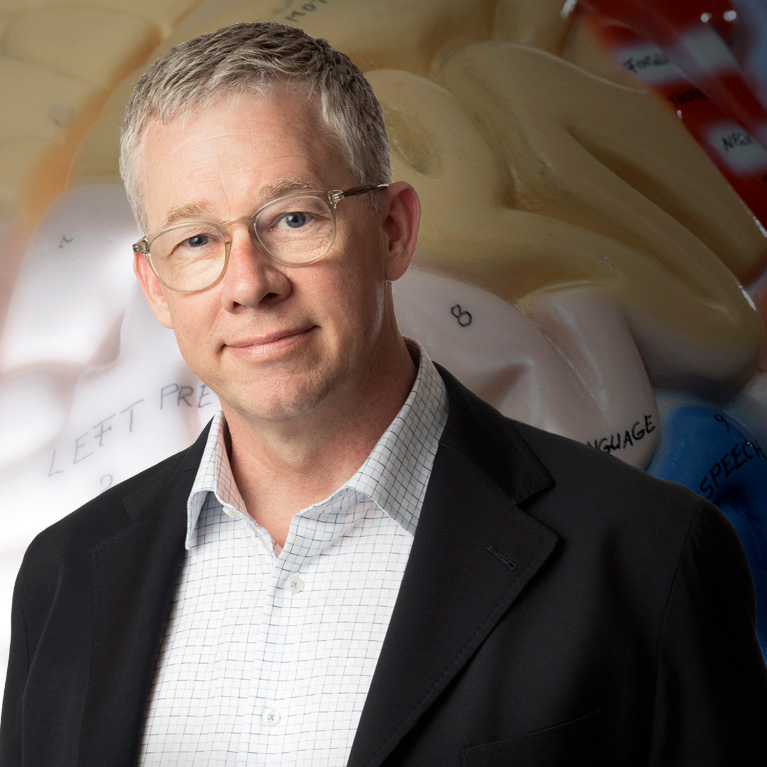
John Reynolds, PhD is a Professor at the Salk Institute for Biological Studies, holding the Fiona and Sanjay Jha Chair in Neuroscience. He leads the Systems Neurobiology Laboratory where he investigates the neural mechanisms underlying vision, perception, and conscious awareness.
Reynolds earned his BS in Economics from the University of Pennsylvania and his PhD in Cognitive and Neural Systems from Boston University. He completed his Intramural Research Fellowship at the Laboratory of Neuropsychology, National Institute of Mental Health.
Dr. Reynolds' research focuses on understanding how the brain constructs our perception of the external world. His laboratory develops computational models to explain neural mechanisms of vision and tests these using neurophysiology, optogenetics, and visual psychophysics. Key discoveries include developing an influential computational model of attention, demonstrating how brain activity fluctuations affect perception, and revealing that neural activity in the visual system is organized as traveling waves that regulate perceptual sensitivity.
Analysis of his recent publications shows a strong focus on visual perception mechanisms, with particular emphasis on cortical layer-specific processing, traveling brain waves, and the relationship between neural activity patterns and perceptual outcomes. His work increasingly incorporates aging research, examining how cognitive decline relates to neural changes in the prefrontal cortex and visual system.
- 2022 AAAS Fellow - Recognized for distinguished efforts to advance science
Reynolds has mentored numerous students and postdoctoral researchers who have gone on to establish independent careers, including Dr. Zachary Davis (now at University of Utah), Dr. Tom Franken (Washington University), and Dr. Anirvan Nandy (Yale University). His research is supported by significant funding, including a $1.2 million award from the Larry L. Hillblom Foundation to study age-related cognitive decline and its relationship to mitochondrial function and neuron metabolism.
The Reynolds Lab maintains a collaborative environment with multiple research scientists, postdoctoral fellows, and students working together using advanced techniques including neurophysiology, computational modeling, visual psychophysics, two-photon microscopy, and optogenetics to decipher the neural mechanisms enabling perception and awareness.