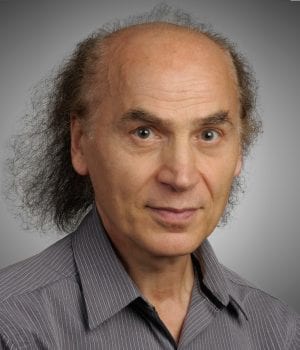
Dr. Richard Jiang is a Senior Lecturer (Associate Professor) at Lancaster University's School of Computing and Communications. His research focuses on Artificial Intelligence, Neurocomputing, Quantum AI, Privacy Computing, and Medical Computing. He has pioneered secure pattern recognition in encrypted domains and quantum neuromorphic computing. With over £1M in research grants from EPSRC and others, he has authored 100+ publications and supervised over 20 PhD students. Dr. Jiang's work includes the Face2Brain method for neurodegenerative assessment and explainable models for brain aging analysis. He contributes actively to academic committees, editorial boards, and conferences like the World Conference on eXplainable AI. His research spans ethical AI frameworks, quantum algorithms for medical imaging, and privacy-preserving biometric systems.
Joergen Kornfeld is a researcher at the University of Cambridge, affiliated with the MRC Laboratory of Molecular Biology (LMB) in the Connectomics of Learned Behaviour group. His work focuses on understanding how learned behaviors are encoded in neural circuits through connectomic analysis. Institution: University of Cambridge Role: Connectomics Researcher Research Interests: • Connectomics and synaptic connectivity mapping • High-throughput 3D electron microscopy • Deep learning applications in neural network analysis • Behavioral memory storage mechanisms • Comparative neuroanatomy of learned behaviors • Computational modeling of neural circuits. Recent publications highlight his expertise in developing deep learning tools (e.g., DeepFocus, SyConn2) for connectomic reconstruction, with applications in zebra finch song learning and larval zebrafish neural circuits. His work bridges advanced imaging techniques, computational methods, and behavioral neuroscience. Techniques: High-throughput 3D electron microscopy, flood-filling networks Model Systems: Zebra finch, larval zebrafish
Joyce M. McDonough is a faculty member at the University of Rochester specializing in Linguistics, with a focus on the mental lexicon and complex morphologies in Dene (Athabaskan) languages. She collaborates extensively with the Auditory Neuroscience Lab led by PI Laurel Carney (BME) to model neural representations of speech. Research Interests: Phonetics, Phonology, Morphology, Laboratory Phonology, Dene Linguistics, Neural Coding of Vowels Courses: LING 107, LING 210/410, BME/LING 216/416, LING 227/427, LING 237/437, LING 527, LING 529, LING 537 Her recent work explores the intersection of auditory neuroscience and linguistic theory, particularly in speech coding and vowel representation. She contributes to language documentation through projects like the Dene Speech Atlas (2013, updated 2017), which provides interactive resources for preserving speech patterns in under-resourced communities.
Thomas Longden is an Associate Professor in the Department of Physiology at the University of Maryland School of Medicine. He leads a research group focused on neurovascular interactions in health and disease, with particular emphasis on understanding how blood flows through the brain under normal conditions and how this process is disrupted in diseases like Alzheimer's. Dr. Longden received his B.Sc (Hons) and Ph.D. in Pharmacology from the University of Manchester in the UK (2006 and 2010), followed by postdoctoral training at the University of Vermont under Professor Mark Nelson (2011-2015). He was promoted to Assistant Professor at Vermont in 2015 before joining the University of Maryland in February 2019. His research focuses on the control of blood flow in the brain, particularly the mechanisms of neurovascular coupling where neuronal activity triggers changes in blood flow. His lab has made significant discoveries including identifying the brain's capillary network as a 'sensory web' that translates neural activity into vasodilatory electrical signals, and demonstrating how pericytes function as metabolic sentinels that control blood flow through KATP channel-dependent mechanisms. Analysis of Dr. Longden's recent publications reveals a strong focus on pericyte function in neurovascular coupling, electrical signaling in the capillary network, and how these mechanisms are disrupted in Alzheimer's disease and other dementias. His work increasingly incorporates advanced imaging techniques, computational approaches, and innovative tools to study vascular plasticity. 2023: Fellow of the American Physiological Society Cardiovascular Section 2020: NIH Director's New Innovator Award 2017: American Heart Association Scientist Development Grant Multiple travel awards and postdoctoral fellowships Dr. Longden currently mentors several graduate students and postdoctoral fellows in the Longden Lab, which is supported by multiple NIH grants including an NINDS New Innovator Award and an NIA R01 grant. His lab develops and employs advanced techniques including multiphoton microscopy, electrophysiology, optogenetics, and molecular biology to study vascular cells in the brain. The lab is particularly focused on understanding vascular signaling plasticity and how pericytes control brain blood flow in health and Alzheimer's disease.
Bjoern Menze is a Professor and Rudolf Mößbauer Tenure Track Chair at the Technical University of Munich (TUM), leading the Image-based Biomedical Modeling Group within the Munich School of Bioengineering. His research focuses on medical image computing, tumor growth modeling, and computational physiology, with applications in clinical neuroimaging and personalized radiotherapy design. He holds a Ph.D. in Computer Science from Heidelberg University and has held positions at ETH Zurich, INRIA Sophia Antipolis, MIT, and Harvard Medical School. His academic journey includes a postdoc at MIT’s CSAIL and Harvard Medical School, followed by roles at ETH Zurich and INRIA. His work bridges biomedical imaging with machine learning, emphasizing model-driven analysis of physiological processes. He has been a visiting professor at Maastricht University and contributes to initiatives like the Center for Translational Cancer Research at TUM. Key research areas include tumor growth modeling, quantitative imaging biomarkers, and integrating mathematical models with clinical data. His awards include the MICCAI Young Scientist Award (2014), Leopoldina Fellowship (2009), and DFG Research Fellowship (2008). He advises on medical AI, leads interdisciplinary projects, and publishes extensively in top journals like Nature Neuroscience and IEEE Transactions on Medical Imaging. His lab’s work spans applications such as glioblastoma radiotherapy optimization, whole-body bone lesion detection, and neural connectivity imaging. Collaborations include institutions like Harvard, MIT, and ETH Zurich. He emphasizes translating computational methods into clinical practice for personalized healthcare solutions.
Dr. Raj Rajakumar is an Associate Professor at Western University's Department of Anatomy and Cell Biology, cross-appointed with the Department of Psychiatry. His work focuses on molecular mechanisms underlying schizophrenia symptoms and autism neurobiology, employing animal models to study drug effects and neural signaling. He holds a PhD from the University of Western Ontario, with prior degrees in M.B.B.S. (University of Peradeniya) and M.Sc. (University of Western Ontario). Educations: Ph.D., Anatomy and Cell Biology, University of Western Ontario M.Sc., Anatomy and Cell Biology, University of Western Ontario M.B.B.S., Medicine, University of Peradeniya Research Interests: Molecular pathways in schizophrenia symptom manifestation Neurobiological basis of autism spectrum disorders Pharmacological interventions using antipsychotics and psychotropic drugs Neuroimaging techniques (fMRI, MRS) to study brain connectivity His research combines molecular biology, neuroanatomy, and behavioral assays in animal models to explore schizophrenia pathophysiology. Recent work includes maternal immune activation effects on fetal brain development, cannabinoid impact on executive function, and white matter inflammation in Alzheimer's models. Collaborations with Dr. W.J. Rushlow and others highlight translational research in neuropsychiatric disorders. Key contributions include automated MRI algorithms for medial temporal lobe analysis and longitudinal studies of glutamatergic deficits in schizophrenia. His work bridges basic science with clinical applications in mental health. Dr. Rajakumar's lab focuses on understanding brain circuitry disruptions in psychiatric disorders, with implications for novel therapeutic targets. No formal advisees are listed, but his research team actively engages in interdisciplinary collaborations.
Kathryn Hess Bellwald is a Full Professor at École Polytechnique Fédérale de Lausanne (EPFL) in both the School of Life Sciences and School of Basic Sciences . She leads the Laboratory for Topology and Neuroscience and serves as Academic Director for the Euler Programme . Her work bridges pure mathematics and interdisciplinary applications in neuroscience, materials science, and data analysis. Education : PhD in Mathematics (MIT, 1989), preceded by positions at Stockholm, Nice, and Toronto universities. Her research spans algebraic topology , homotopy theory , operad theory , and algebraic K-theory , with applications in neuroscience and materials science . She has pioneered topological data analysis methods for classifying neuronal morphologies , microglia phenotypes , and nanoporous materials , creating a parameter-free framework linking neural network structure to activity. The 15 most recent publications highlight her work on topological inverse problems , neuroinflammation , and equivariant homotopy . These studies often involve collaborations with the Blue Brain Project and EPFL teams in neuroscience , machine learning , and materials science . Scientific Awards : Fellow, American Mathematical Society (2017); Distinguished Speaker, European Mathematical Society (2017); Crédit Suisse Teaching Prize (2012); Polysphère d'Or (2013); Full Member, Swiss Academy of Engineering Sciences (2016); Chaire de la Vallée Poussin (2023); Fellow, Association for Women in Mathematics (2024). She has mentored numerous PhD students in mathematics and neuroscience, including Adélie Eliane Garin , Varvara Karpova , and Dimitri Zaganidis . Her EPFL Mathematics affiliations include the DIVISION MATH , while her Neuroscience lab operates under the Brain Mind Institute (BMI) in the School of Life Sciences (SV). Grants and collaborations are evident in her work on neurodegenerative diseases , synthetic materials , and machine learning frameworks .
Liqiang Wang is a Professor in the Department of Computer Science at the University of Central Florida (UCF), where he directs the Big Data Lab. Previously, he served as faculty at the University of Wyoming (2006-2015). He holds a Ph.D. in Computer Science from Stony Brook University (2006) and spent a visiting research period at IBM T.J. Watson Research Center (2012-2013). His research focuses on big data analytics, high-performance computing, parallel systems optimization, and applying deep learning to detect programming errors and enhance model robustness. Education: Ph.D., Computer Science, Stony Brook University (2006); Visiting Researcher, IBM Watson (2012-2013). Research Interests: Improving accuracy and security of big data models, optimizing parallel computing systems (HPC, Cloud, GPUs), program analysis for concurrency errors, and deep learning applications in anomaly detection and adversarial robustness. Notable projects include scalable LSQR algorithms for seismic tomography and the OpenMP Analysis Toolkit (OAT) for concurrency error detection. Key Awards: NSF CAREER Award (2011), Castagne Faculty Fellowship (2013-2015), UCF Mid-Career Refresh Award (2020), and grants including a $50K NSF CIVIC-PG grant (2022) and Google/Meta donations. Advising and Grants: Supervises over 20 Ph.D./M.S. students and has secured grants totaling over $100K. Notable collaborations include seismic tomography with NCAR and cloud computing optimization. Labs/Teams: Director of UCF’s Big Data Lab, collaborating on projects like Parallel LSQR and Anti-Neuron Watermarking.
Thomas Wachtler-Kulla is a Professor in the Department of Biology II at Ludwig-Maximilians-University Munich, where he leads the Computational Neuroscience research group. He is a GSN full member and serves as the GSN Ombudsperson, offering neutral and confidential counseling for students. He is also the Group Leader and Scientific Director at the German Neuroinformatics Node (G-Node), contributing significantly to neuroscience data infrastructure. His research focuses on how the brain processes sensory signals, particularly in the visual system, aiming to understand neural coding, perceptual stability, and color vision under natural conditions. He employs neurophysiology, psychophysics, and computational modeling to investigate sensory processing, eye movement compensation, and efficient coding mechanisms. At G-Node, he develops software and hardware tools for organizing, storing, analyzing, and sharing neurophysiological data, promoting reproducible research. His recent work spans Bayesian models of hue perception, data management frameworks like DataLad and odML, and studies on honeybee neuroethology. He actively supervises graduate students and contributes to major initiatives such as NFDI-Neuro and the International Neuroinformatics Coordinating Facility, advancing standards for open and FAIR neuroscience. Scientific Contributions and Leadership: Scientific Director, German Neuroinformatics Node (G-Node) GSN Ombudsperson for student conflict resolution Key contributor to NFDI-Neuro and INCF Developer of tools for metadata management and data sharing He advises several current and former graduate students and is deeply involved in shaping data policies and infrastructure for the neuroscience community, ensuring scientific rigor and accessibility.
David Weisblat is a Professor in the Department of Molecular and Cell Biology at UC Berkeley's College of Letters & Science. His research focuses on developmental and evolutionary processes in glossiphoniid leeches (e.g., Helobdella ), particularly their segmentation mechanisms and molecular phylogeny within Lophotrochozoa. He leads studies integrating embryological, genomic, and genetic approaches to understand how developmental pathways evolved across bilaterian animals. Research Interests: Weisblat’s work addresses how cell fates and signaling pathways (WNT, NOTCH, TGFβ) shape leech development, with emphasis on the evolutionary origins of segmentation. His lab combines microinjection techniques, transcriptome analysis, and CRISPR mutagenesis to explore stem cell dynamics and conserved developmental programs. Key Projects: Current efforts investigate grandparental stem cell divisions in segmentation and intercellular signaling during early embryogenesis. The lab’s genomic resources—including BAC libraries and EST databases—facilitate comparative studies across Lophotrochozoan taxa. Lab Contributions: The Weisblat lab pioneered Helobdella as a model organism, enabling breakthroughs in Evo-Devo. Their findings bridge developmental plasticity and evolutionary innovation, particularly in annelids versus arthropods/deuterostomes.
Dr. Suren Tatulian is a Professor in the Department of Physics at the University of Central Florida (UCF), with a joint affiliation at the Biomolecular Sciences Center. He holds a BS in Physics from Yerevan State University, Armenia, and a PhD in Biology from the Institute of Cell Biology, St. Petersburg, Russia. Research Focus: Molecular biophysics, protein-membrane interactions, amyloidogenesis, interfacial enzymology, and neurodegenerative disease mechanisms. Key Techniques: Protein engineering, spectroscopy (FTIR, fluorescence), computational modeling, and structural analysis of toxins and amyloid peptides. His recent work explores amyloid β peptide behavior in lipid membranes, cholera toxin disassembly mechanisms, and peptide-based inhibitors of neurotoxic aggregation. Dr. Tatulian has mentored students in biophysical research and leads studies on membrane pore formation and protein folding dynamics. Lab Affiliation: Biomolecular Sciences Center at UCF, where he investigates biophysical aspects of neurodegenerative diseases and toxin translocation.
Philbert Tsai is an Associate Teaching Professor in the Department of Physics at the University of California, San Diego (UCSD). He has held roles as QBio Lab Coordinator/Project Scientist (2015–Present) and Associate Project Scientist (2011–2015), overseeing advanced laboratory setups and bio-imaging research projects. His work focuses on neurovascular systems, microscopy techniques, and cortical blood flow dynamics. Education: Ph.D., Physics, UC San Diego, 2004 Research Interests: Quantitative analysis of cortical microvascular networks Development of ultra-high-resolution imaging systems (e.g., STED, two-photon microscopy) Neurovascular coupling mechanisms and their impact on brain oxygen supply Biomedical engineering applications in neuroscience research Lab & Projects: QBio Lab: Advanced instrumentation including confocal microscopes, 3D printers, and wet-lab equipment Developed vectorized models of mouse brain vasculature and ultra-wide-field multiphoton imaging systems Grants & Awards: No specific awards listed in provided text Collaborations: Worked extensively with colleagues like Dr. David Kleinfeld and Dr. Berislav Zlokovic on neurovascular projects.
Dr. Alex Tang is a Senior Lecturer and Senior Research Fellow at the School of Biomedical Sciences (Pharmacology and Toxicology), University of Western Australia. He holds the inaugural Sarich Family Research Fellowship and founded the Healthy Brain Ageing and Repair Lab at UWA and the Perron Institute. His research focuses on understanding age-related neurological functions and disorders, particularly stroke, aiming to develop interventions for healthy brain ageing. Tang completed his PhD in neuroscience at UWA and conducted postdoctoral research at the Okinawa Institute of Science and Technology. He has received multiple awards, including the Masao Ito Award (2018) and WA Young Achiever of the Year (2016). Education: PhD in Neuroscience, University of Western Australia Postdoctoral Research, Okinawa Institute of Science and Technology (Japan) Research Interests: His lab investigates the impact of ageing on learning, memory, and neurological disorders using techniques like transcranial magnetic stimulation (TMS) and transcranial alternating current stimulation (tACS). Key areas include neuroplasticity mechanisms, stroke recovery, and developing non-invasive brain stimulation therapies. Recent Articles: Recent work includes studies on bifocal tACS improving bimanual dexterity and interhemispheric inhibition (2025), subthreshold rTMS-induced neural plasticity (2025), and axonal remodeling post-stroke (2025). These highlight his focus on innovative stimulation techniques and their applications in aging neuroscience. Awards: Masao Ito Award (2018) Early Career Research Award (2022) WA Premier's Awards Finalist (2021) Grants & Activities: He leads grants such as WA Near Miss Awards Ideas (2025) and collaborates on pediatric audiological equipment projects. He serves on editorial boards for Frontiers in Neuroscience journals and is a member of the Australian Brain Alliance. Labs & Teams: Directs the Healthy Brain Ageing and Repair Lab, focusing on translational research to address age-related neurological challenges through novel interventions.
Dr. Tsz-Yan Milly Lo is an Honorary Reader at the University of Edinburgh’s Usher Institute and a Consultant Paediatric Intensivist at the Royal Hospital for Children and Young People in Edinburgh. She leads the Research Programme in Paediatric Critical Care Medicine and holds the NHS Research Scotland Career Research Clinician Award. Her work focuses on leveraging data informatics to improve outcomes for critically ill children, particularly in neurocritical care and brain trauma. She leads international initiatives like KidsBrainIT (a EU-funded pediatric brain trauma data initiative) and Window in the Brain (developing seizure detection tools). Dr. Lo’s education includes clinical training across Edinburgh, Birmingham, and Melbourne, complemented by a PhD and post-doctoral fellowships in Edinburgh and Toronto. Her research spans clinical informatics, multi-disciplinary data integration, and translational medicine. Key collaborations include academic, clinical, and industry partnerships (e.g., with BrainsView Ltd and engineers at the University of Edinburgh). Her scientific impact includes over 20 peer-reviewed publications, with recent work emphasizing intracranial pressure monitoring, EEG-based seizure detection, and pediatric critical care quality improvement. Her grants total over €1M, including EU NEURON funding and MRC support. She supervises a dynamic research team focusing on innovation in critical care informatics and clinical excellence. Grants: £90,953 (G-WiB), £298,740 (WiB-2), £103,164 (WiB-1), €621,834 (KidsBrainIT). Public Engagement: Launched Scotland’s first PPIE group for pediatric critical care (Intensive-Share). Her lab, IMPACT-ACE, emphasizes clinician-scientist collaboration to drive evidence-based improvements in pediatric critical care. Current projects include global seizure detection tools and pediatric brain trauma big-data analytics.
Rick Dobrowsky is a Professor and Director of the Graduate Program in Neuroscience at the University of Kansas School of Pharmacy , Department of Pharmacology & Toxicology. His research focuses on diabetic peripheral neuropathy, molecular chaperones, and sphingolipid signaling in neuronal degeneration. Location: Malott Hall, Room 5064, Lawrence, KS Contact: dobrowsky@ku.edu | 785-864-3531 Research Overview : The Dobrowsky Lab investigates how hyperglycemia alters neurotrophin signaling and mitochondrial proteomes in diabetic neuropathy. Key projects include: Hyperglycemia and IGF-1 signaling effects on superoxide generation Neuregulinism's role in segmental demyelination Development of HSP90 inhibitors for neuroprotection Publications (15 Most Recent): 2025: PERK signaling and Cemdomespib therapy in Charcot-Marie-Tooth disease 2024: Demyelination progression in R75W-Connexin 32 models 2023: Biphenyl amides as HSP90/HSP70 modulators 2022: Cyclohexyl noviomimetics and mitochondrial function 2021: HSP70/thioredoxin interactions in diabetic neurons 2020: HSP90 inhibition and c-Jun proteasomal clearance 2019: Mitochondrial superoxide reduction with KU-596 2018: HSP70 targeting for demyelination 2016: Cemdomespib and neurotrophin receptor dynamics 2015: Molecular chaperones and mitochondrial bioenergetics 2014: KU-32 and heat shock protein mechanisms 2013: Neuregulin-1 isoforms in diabetic neuropathy 2012: C-terminal HSP90 inhibitors in sensory neuron protection 2011: Mitochondrial proteome changes in diabetes 2010: P35/CDK5 in beta-amyloid toxicity