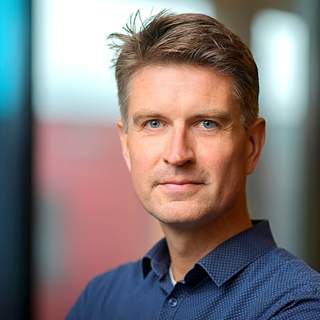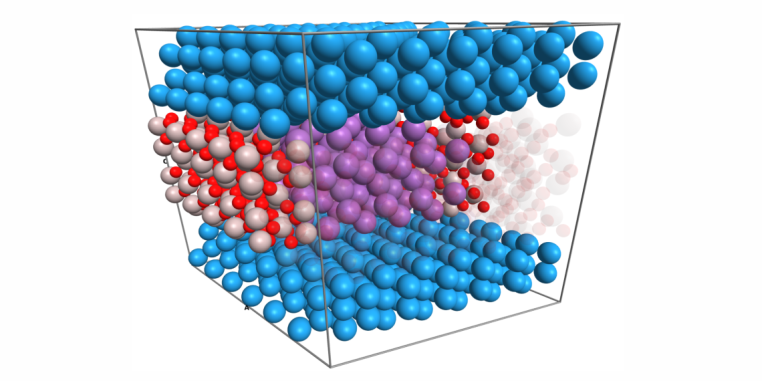
Prof. Dr. Martin Salinga leads the research group at the Institute of Materials Physics , University of Münster. His work focuses on the dynamics of resistive switching materials, particularly phase-change materials, and their applications in novel electronic and photonic devices. He collaborates with institutions like IBM Zurich, the Pernice group, and European research centers. Investigates structural and electronic behavior of amorphous semiconductors Develops neuromorphic and in-memory computing hardware Utilizes ultrafast optical experiments and ab initio simulations Research Interests center on understanding how atomic configurations influence electrical properties in phase-change materials. His group explores non-equilibrium states, switching kinetics, and material optimization for applications in: Neuromorphic processors High-speed data storage Photonic waveguides Temperature-activated structural dynamics His Publications highlight advancements in phase-change material modeling, ultrafast switching mechanisms, and atomic-level insights into resistance drift. Key trends include leveraging density functional theory for nanoscale transport analysis and optimizing materials for adaptive nanosystems. Scientific Awards include an ERC Starting Grant for the NEURAMORPH project, supporting the development of neuromorphic hardware. He also secured funding through DFG Collaborative Research Centers Intelligent Matter (CRC 1459) and Nanoswitches (CRC 917). ERC grant: €1.5 million for synaptic component design DFG CRC 1459: Millions in funding for adaptive nanosystems IAPP DIASPORA: Industry-academia collaboration with IBM Team members like Nils Holle (summa cum laude PhD) and Sebastian Walfort (EDISON Young Researcher Award) contribute to projects on atomic simulations and optical measurements, while the Characterization Lab enables experimental validation of material properties.