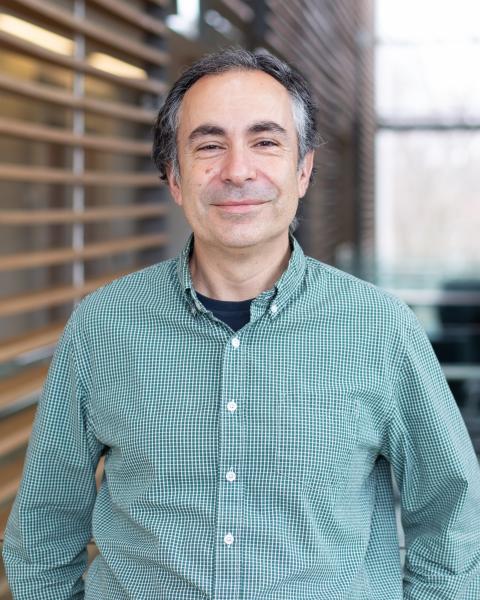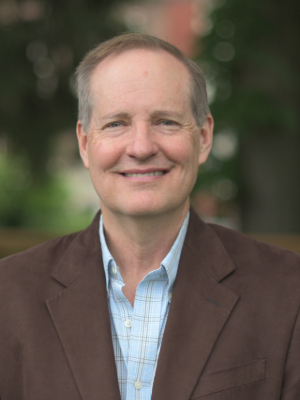
Russell T. Johns is a Professor of Petroleum Engineering at Texas A&M University with extensive contributions to enhanced oil recovery methods. Elected to the National Academy of Engineering in 2025, he maintains active leadership roles in the Society of Petroleum Engineers (SPE) including serving as Editor in Chief for all SPE Journals (2018-2020). Educational Background: Ph.D. in Petroleum Engineering, Stanford University (1992) M.S. in Petroleum Engineering, Stanford University (1989) B.S. in Electrical Engineering, Northwestern University (1982) His research program centers on advanced recovery techniques for conventional and unconventional reservoirs, with particular expertise in miscible gas flooding, chemical EOR processes, and thermodynamics of microemulsion systems. Recent work integrates machine learning with traditional reservoir engineering to model complex fluid behaviors under extreme conditions, while maintaining strong experimental validation through laboratory studies of wettability alteration and phase behavior. Publication trends from 2020-2024 reveal consistent focus on computational modeling of enhanced recovery mechanisms, with growing emphasis on AI-driven approaches for relative permeability prediction and precise characterization of microemulsion systems. His work bridges fundamental thermodynamics with practical field applications across diverse recovery methods. Scientific Awards and Honors: Anthony F. Lucas Gold Medal, AIME (2023) IOR Pioneer Award, SPE (2022) International Award in Reservoir Description and Dynamics, SPE (2016) Faculty Pipeline Award, SPE (2013) Cedric K. Ferguson Medal, SPE (1993) Member, National Academy of Engineering (2025) Honorary Member, SPE (2025) Distinguished Member, SPE (2009) Dr. Johns' editorial leadership as SPE Journals Editor in Chief demonstrates his influence in shaping petroleum engineering research discourse. While specific grant details aren't provided, his sustained publication record and SPE recognition indicate substantial ongoing research funding. His mentorship extends through SPE's Faculty Pipeline Award initiatives and editorial guidance for emerging scholars. Current research activities focus on high-pressure/high-temperature microemulsion modeling and low-salinity waterflooding mechanisms, with future directions likely expanding machine learning applications in reservoir simulation and geothermal energy integration.