معرفی
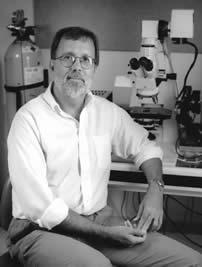
Christopher Fetsch is an Assistant Professor of Neuroscience at Johns Hopkins University, affiliated with the Zanvyl Krieger Mind/Brain Institute. He leads the Fetsch Lab, which investigates the neural mechanisms underlying multisensory perception and decision-making using nonhuman primates. His research integrates quantitative behavioral modeling, neural recordings, and optogenetic manipulations to understand how the brain processes ambiguous sensory information.
His research focuses on systems, cognitive, and computational neuroscience, particularly how visual and vestibular cues are combined to perceive self-motion and environmental dynamics. The lab employs advanced technologies such as flight simulators and virtual environments to deliver controlled 3D motion stimuli while recording neural population activity. A key interest is in bounded accumulation models of decision-making and the neural basis of metacognition and confidence.
The recent publications reflect a strong trend in understanding neural circuit mechanisms of perception and decision-making, with emphasis on causal dissection using optogenetics, computational modeling of evidence accumulation, and multisensory integration in primates. His work bridges experimental neuroscience with theoretical frameworks in cognitive science.
- AAV-mediated expression of Jaws in macaque cortex
- Bounded accumulation model for decisions
- Neural basis of multisensory decisions
- Optogenetic circuit dissection
- Confidence and posterior odds modeling
Dr. Fetsch is actively involved in interdisciplinary research, including membership in the Foundations of Mind group at Johns Hopkins, which fosters collaboration across philosophy, cognitive science, and neuroscience. His lab is part of the Center for Hearing and Balance, indicating institutional integration and collaborative funding. While specific grants are not listed, the lab's technological sophistication implies substantial research support.
The Fetsch Lab is located in Krieger Hall and is actively engaged in training and outreach, contributing to seminars and interdisciplinary events. The lab collaborates with experts in histology and neural engineering, as seen in joint image production with researchers from Columbia University and the University of Washington.