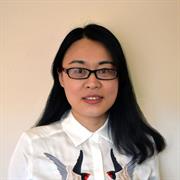
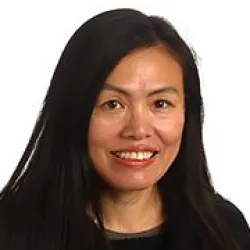
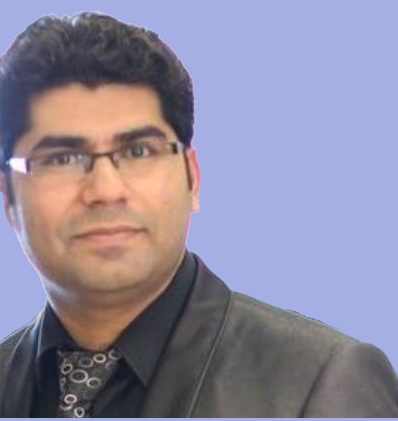
Rebecca Yang is a Visiting Professor at RMIT University's School of Property, Construction and Project Management, specializing in building, construction, and distributed renewable energy research. She integrates theoretical knowledge with cutting-edge technologies to advance sustainable urban development. Her research focuses on solar energy applications in buildings, construction innovation, and international energy policy frameworks through her leadership roles in the International Energy Agency's Photovoltaic Power Systems Programme (PVPS) Task 15 and Solar Heating and Cooling Programme (SHC) Task 66. She established RMIT's Solar Energy Application Lab and has 8 years of BIPV expertise. Notable achievements include: Australian representative in international BIPV standardization (IEC 63092) 2019 Facilitator Prize for BIPV Tool development She supervises research projects related to: Solar building envelope optimization Machine learning for energy systems Fire safety in BIPV installations Blockchain-enabled energy trading Circular economy for PV waste
Associate Professor Jean (Jiayu) Wen holds positions at The Australian National University (ANU), including Group Leader of The Wen Group, ARC Future Fellow, and Deputy Director of The Shine-Dalgarno Centre for RNA Innovation. She specializes in computational and molecular biology, focusing on RNA regulation, gene expression, and cancer genomics. Her affiliations include ANU’s Division of Genome Sciences and Cancer, and the Centre for Computational Biomedical Sciences. Education: BEng in Electronic Engineering (Beijing), MSc in Computer Science (Lakehead University), PhD in Computational Biology (ANU). Postdoctoral training at Copenhagen University and Memorial Sloan-Kettering Cancer Center. Research interests span RNA structures, microRNA biogenesis, transcriptome dynamics, and epigenetic regulation. Her work addresses intragenomic conflicts, cancer mechanisms, and neural development. Notable projects include RNA-based machine learning models for RNA-RNA interactions and immune cell differentiation studies. Publications highlight contributions to RNA interference pathways, tumor development, and Drosophila genetics. Awards include the ARC Future Fellowship. She leads interdisciplinary teams advancing computational and experimental approaches in genomics and systems biology.
Associate Professor Xiu Wang is affiliated with the School of Computer Science at The University of Sydney, where she serves as Associate Director of the Multimedia Lab and a member of the Biomedical & Multimedia Information Technology (BMIT) Research Group. Her research focuses on panoramic data analysis, biomedical computing, image processing, and medical data fusion. Key projects include tumor treatment outcome prediction using deep learning, collaborative learning of multimodal medical imaging, and deformable image registration techniques. She teaches courses such as COMP5214 (Software Development in Java) and supervises graduate students in AI-driven medical diagnostics and imaging. Notable collaborations involve Dr. Hui Cui and Mr. Chaojie Zheng. Her work bridges computer science and healthcare, emphasizing AI applications in oncology, radiology, and neuroimaging. Recent articles highlight advancements in MRI segmentation, PET/CT radiomics, and graph neural networks for disease diagnosis. She actively contributes to interdisciplinary research, integrating computational methods with clinical data for precision medicine.
Xiaoning Du is a Senior Lecturer (equivalent to Associate Professor) in the Department of Software Systems & Cybersecurity at Monash University's Faculty of Information Technology. She holds a PhD from Nanyang Technological University (2020) and a Bachelor's from Fudan University (2014). Her research focuses on software security and quality assurance for traditional and AI-based systems, with notable contributions to DevOps for AI, vulnerability detection, and runtime verification. Education: PhD in Computer Science, Nanyang Technological University (2015–2020) Bachelor of Software Engineering, Fudan University (2010–2014) Research Interests: Security of intelligent software systems, AI-driven software testing, DevOps for AI, and trustworthy AI services . Her work emphasizes practical applications like Devign (vulnerability detection), DeepStellar (deep learning system analysis), and BigCodeBench (code generation benchmarking). Recent Projects: Collaborations include CSIRO cybersecurity initiatives, Algorand Center of Excellence, and IBM-funded research. She leads projects addressing AI ethics, federated learning security, and code completion robustness. Awards: 2024 Google Research Scholar Award, 2024 FIT Dean’s Early Career Award, and multiple distinguished paper awards at top venues like ACM SIGSOFT and ICLR. Labs/Teams: Active in Monash’s cybersecurity and AI research groups, contributing to open-source tools like DeepStellar and BigCodeBench . She advises PhD students and mentors on scholarships.
Dr. Khoa Phan is a Senior Lecturer in the Department of Computer Science and Information Technology at La Trobe University, Australia. He holds an ARC DECRA Senior Research Fellowship (2020-2023) and has held prior positions at UCLA, Monash University, and others. His academic background includes a B.Eng. (UNSW), two M.Sc. degrees (University of Alberta and Caltech), and a Ph.D. in Electrical Engineering from McGill University. Dr. Phan's research focuses on optimizing next-generation communication networks, particularly in wireless communications, IoT, satellite systems, and machine learning applications. He has secured significant grants, including ARC Discovery Projects and industry partnerships. His work emphasizes secure cyber-physical systems, federated learning, and edge computing. He has received prestigious awards such as the ARC DECRA and Atwood Fellowship. His research spans over 100 publications, with contributions to areas like OTFS modulation, secure satellite communications, and graph-based anomaly detection. He actively supervises PhD students and collaborates internationally, including initiatives to strengthen ties between La Trobe University and Vietnamese institutions. Grants include ARC Discovery Projects (totaling $1.3M+), CRC SmartSAT, and industry scholarships. His work addresses energy efficiency, secure resource allocation, and AI-driven solutions for 5G/6G networks and the metaverse.
Professor Sarah Johnson is a distinguished academic in the School of Engineering at the University of Newcastle, specializing in Electrical and Computer Engineering. She holds a PhD in Electrical Engineering from the same institution and has been awarded prestigious fellowships including an ARC Future Fellowship. Her research applies engineering solutions to digital information processing and error correction coding, with significant applications in secure communications and biomedical technologies. Her research interests span: Signal processing for secure data transmission Error correction codes for reliable communication systems Biomedical applications of digital signal processing Quantum-enabled secure communications Internet of Things communication protocols Her publications primarily focus on information theory, wireless communication systems, and biomedical engineering. Recent work shows strong emphasis on index coding optimizations, quantum cryptography implementations, and biomedical signal processing techniques for neuroimaging applications. Significant awards include: NSW Premier's Prize for Excellence (2017) Pro Vice-Chancellor's Research Excellence Award (2007) Professor Johnson has secured multiple ARC Discovery grants and industry-sponsored projects, including collaborations with Quintessence Laboratories on quantum key distribution. She co-founded HunterWISE to promote women in STEM fields and has supervised numerous graduate students across engineering disciplines. She leads interdisciplinary collaborations with biomedical researchers on rehabilitation technologies and neuroimaging analysis, developing systems to monitor recovery processes and brain activity patterns.
Dr. Usman Naseem is a Lecturer in Computing at Macquarie University’s School of Computing, Australia. Previously, he held academic roles at James Cook University and research fellowships at the University of Sydney and the University of South Australia. He earned his PhD in Computer Science from the University of Sydney and has over 10 years of industry experience in technical and leadership roles. Research Interests: NLP, multimodal analysis, and social computing, with focuses on socially aware methods for applications like cyber informatics, online sarcasm/opinion mining, low-resource language processing, and health informatics. He actively contributes to top-tier venues like ACL, EMNLP, and SIGIR. Grants & Awards: Recipient of the IEEE Transactions Best Paper Award (2022), DAAD AINet Fellowship (2023), and the Rising Star in AI Fellowship. His research has been funded by grants including Macquarie University’s MQRAS and Data Horizons initiatives. Recent Activities: Leads projects on combating AI-generated misinformation (VaxGuard grant), and has published extensively on topics like health misinformation detection, multimodal learning, and bias mitigation in AI systems. He is currently recruiting PhD and Master’s students in NLP, multimodality, and AI for social good. Labs & Collaborations: Affiliated with Macquarie’s Data Horizons Research Centre, Future Communications Research Centre, and Frontier AI Research Centre. Collaborates internationally on health informatics, social media analysis, and AI ethics.
Lim Mei Kuan is a Senior Lecturer at the School of Information Technology, Monash University Malaysia. She holds a PhD in Computer Vision from Universiti Malaya and has conducted post-doctoral research in Artificial Intelligence. Her career includes roles as a researcher at MIMOS Berhad (2004-2007) and visiting researcher at Kingston University (2012-2013). Education: BSc (First Class Honours) in Computer Science, Universiti Malaysia Sarawak (2007) PhD in Computer Vision, Universiti Malaya (2015) Research Interests: Her work spans computer vision, machine learning, and their applications in smart manufacturing and digital health. Current projects include social media analytics for mental health monitoring, anomaly detection in manufacturing, and collaboration on clinical teletherapy systems. She actively explores swarm intelligence and deepfake detection technologies. Grants & Collaborations: DELTA: Inclusive Teletherapy (2022-2024) ADSM: Anomaly Detection for Smart Manufacturing (2022-2023) Sense-ED: Eating Disorder Relapse Detection (2021-2022) Awards: ITEX 2022 Silver Award for Self-Mind mental health app Labs & Teams: Active contributor to interdisciplinary projects with industry partners, focusing on AI-driven solutions for healthcare and manufacturing sectors.
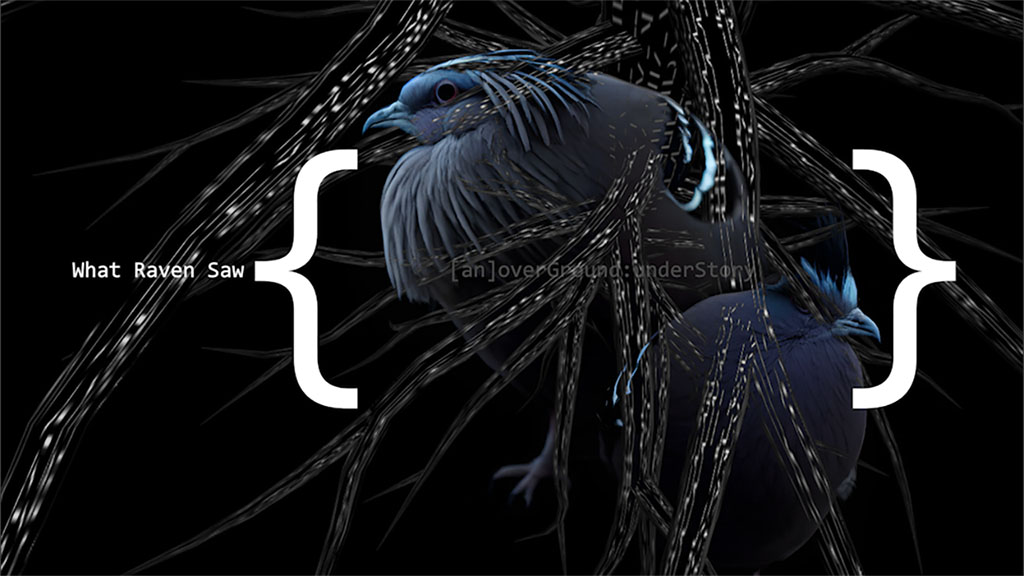
Dr. Andrew Burrell is a Senior Lecturer in Visual Communication at the University of Technology Sydney's Faculty of Design and Society. He is a practice-based researcher and educator exploring virtual and digitally mediated environments as sites for the construction, experience, and exploration of memory as narrative. His work sits at the intersection of digital media, virtual reality, and environmental humanities, with a particular focus on more-than-human ecologies and queer approaches to virtual environments. Andrew's research investigates the relationship between imagined and remembered narrative and how the multi-layered biological and technological encoding of human subjectivity may be portrayed within, and inform the design of, virtual environments. His networked projects in virtual and augmented environments have received international recognition, with recent works including "Twice, again" and "overGround:underStory," which explore the role of memory and forgetting in machine-mediated spaces and more-than-human encounters between physical and virtual ecologies. His creative practice informs his traditional research outcomes, which include publications in journals such as the Leonardo Electronic Almanac and Virtual Creativity. Andrew is particularly interested in how emerging and speculative technologies are implicated in more-than-human ecologies, and he uses creative practice to research and understand the complexities of these technologies. Andrew is a member of the UTS Visualisation Institute, a multidisciplinary research group focused on the creation of data visualizations, stories, and immersive experiences, and the School of Design's Critical Visualisation research group. He has received funding from various sources including the Australian Research Council (ARC) Discovery Projects and Create NSW. Research Interests Virtual and Augmented Reality as narrative spaces Memory construction in digital environments More-than-human ecologies and digital storytelling Queer approaches to virtual embodiment Creative applications of machine learning and AI Data visualization and environmental storytelling Accessibility and ethics in digital humanities Notable Projects Twice, again : Examines the role of memory and forgetting in machine-mediated spaces overGround:underStory : Explores entangled networks between physical and virtual ecologies Waves of Words : ARC Linkage initiative investigating language movement in pre-colonial times can't buy me love : A virtual environment collaboration with Amala Groom Layered Horizons : A geospatial humanities research platform Scientific Recognition MMUVE IT - Inter-Arts Office Australia Council Grant (2008) International presentations at conferences including ISEA (International Symposium on Electronic Art) Teaching and Supervision Andrew is an advocate for studio-based learning in which students design solutions to real-world questions through iteration and experimentation. He considers design as an anchor for interdisciplinary practice and regularly brings cross-disciplinary perspectives into his teaching. He currently supervises five PhD and master's students, with an interest in working with students at the intersection of traditional and practice-based research approaches. Research Themes in Recent Publications Andrew's recent publications demonstrate a consistent focus on the intersection of virtual environments, narrative construction, and ecological thinking. His work explores how digital technologies can be used to create new forms of storytelling that acknowledge our entanglement with non-human entities. There's a strong emphasis on ethical considerations in digital design, particularly regarding accessibility and representation. His research also investigates the application of machine learning technologies in creative practice, examining both their potential and limitations for representing human experience.
Toby Murray is a Professor in the School of Computing and Information Systems at the University of Melbourne, where he serves as Director of the Defence Science Institute and Co-Lead of the Computer Science Research Group. His work bridges formal methods, cybersecurity, and practical system security, with significant contributions to verified security and vulnerability detection. Murray's research focuses on building highly secure computing systems cost-effectively, with expertise in formal verification, information flow security, and vulnerability detection. His current research projects include Verisimilar (Verified, Secure Machine Learning), EDEFuzz (Detecting excessive data exposure in web applications), COVERN (Proving information flow security of concurrent programs), and Time Protection (Proving timing channel freedom for seL4). His work combines theoretical rigor with practical implementation, resulting in multiple open-source tools including SecC, Legion, and Underflow. Murray's recent publications demonstrate a consistent focus on verified security properties across diverse domains, from neural networks to concurrent systems. His work often bridges the gap between formal methods and practical security concerns, with increasing attention to machine learning security and policy implications of technical security measures. His publications span top venues in security, formal methods, and software engineering. Distinguished Paper Award at ICSE 2024 for EDEFuzz work on detecting excessive data exposure in web applications Extensive media commentary on cybersecurity issues including CrowdStrike outage analysis and social media regulation Regular contributions to The Conversation and Pursuit on cybersecurity policy matters Murray has advised numerous PhD students to completion, including Lianglu Pan (EDEFuzz), Zhiyuan Zhang, Mo Zhang, and Renlord Yang. He currently supervises multiple PhD students working on security verification, machine learning security, and web application security. His service includes being Program Chair for CSF'25, Associate Editor for IEEE Security & Privacy and ACM TOPS, and membership in IFIP's WG 1.7 and WG 2.3. His research group has developed multiple significant software tools including SecC (Verified Security for Concurrent C Programs), Legion (Principled Automatic Test Case Generation), and Underflow (Compositional Vulnerability Detection for C Programs), all available under open source licenses. Murray's work often involves discovering and reporting bugs in security analysis tools during his research, demonstrating the practical impact of his verification approaches.
Dr. Vera Miloslavskaya is a Lecturer in Information Technology at the University of New England's School of Science and Technology. She holds a PhD from Peter the Great St. Petersburg Polytechnic University and specializes in error-correction coding and AI applications for telecommunications. Research Focus: Miloslavskaya develops machine learning-enhanced coding schemes for next-generation wireless systems. Her work on neural network-based polar coding and graph neural network applications in MIMO detection aims to improve reliability and efficiency in 6G networks. She maintains collaborations with the University of Sydney where she previously worked as a Postdoctoral Research Associate. Recognition: Awarded the IEEE Transactions on Communications Exemplary Reviewer (2022) and multiple Russian academic awards including the Gold Medal of the Russian Academy of Science (2012).
Professor Kay Double is a member of the Brain and Mind Centre and the Theme of Neuroscience within the School of Medical Sciences at the University of Sydney. Her research focuses on the interplay between neuropathological findings and quantitative neurochemistry, particularly investigating disease mechanisms in Parkinson’s disease. She has been funded by prestigious fellowships including the Alexander von Humboldt Foundation and consecutive Australian Research Fellowships. Her work challenges previous dogma about neuromelanin’s role in Parkinson’s, demonstrating its neuroprotective function in healthy cells and its dysregulation in disease contexts. Her current research projects explore copper dyshomeostasis and SOD1 proteinopathy in Parkinson’s and ALS, emphasizing translational research applications. Collaborations include interdisciplinary teams working on molecular pathways, diagnostic tools, and therapeutic strategies. Key approaches in her work include aetiological studies, cellular metallation analysis, and 3D neurochemical imaging. Scientific Awards: Alexander von Humboldt Research Fellowship (Germany) Australian Research Fellowships Advising and Grants: Professor Double advises current PhD student Anne LI. She has secured grants from organizations like the National Health and Medical Research Council (NHMRC), Motor Neurone Disease Research Institute of Australia, and the University of Sydney. Her grants include projects on SOD1 assays, copper pathways, and Parkinson’s diagnostics. Labs/Teams: She is part of the Brain and Mind Centre, collaborating with researchers such as Dr. Hare, Dr. Trist, and Dr. Genoud on projects involving metal-binding proteins, neurodegenerative mechanisms, and translational neuroscience.
Yaqub Jonmohamadi is a former Associate Investigator at the QUT Centre for Robotics. He holds a PhD in neuroimaging and has conducted postdoctoral research since 2015 in computer vision, biomedical engineering, and neuroimaging. His research interests span computer vision, deep learning, multimodal data fusion, and signal processing. He has contributed to advancements in medical imaging, robotic surgery, and neuroimaging through interdisciplinary collaborations. His work includes 3D semantic mapping for surgical robotics, illumination control in arthroscopy, and EEG-fMRI data fusion techniques. Publications focus on applying machine learning and computer vision to healthcare challenges, such as surgical scene restoration and knee arthroscopy segmentation. His research demonstrates expertise in both theoretical and applied aspects of robotics and biomedical engineering. Jonmohamadi’s GitHub repository hosts code related to his projects, reflecting a commitment to open science. He has collaborated with institutions like Elsevier and Springer on works advancing robotic surgery and medical imaging. Despite no listed awards, his academic contributions are evident through his peer-reviewed publications and technical innovations in medical robotics. His work bridges computer science and healthcare, addressing real-world surgical and diagnostic challenges.
Adjunct Professor Shuai Wan is affiliated with the School of Engineering at RMIT University (City Campus, Australia). His research focuses on computer vision, machine learning, 3D point cloud compression, neural video coding, and remote sensing . Key contributions include lightweight deep learning frameworks for image/video compression, spatio-temporal context models for point clouds, and adaptive quantization techniques. Research Outputs Insights : Wan’s work spans 2024–2025 , emphasizing end-to-end deep learning solutions for challenges in Exemplar-based colorization with semantic attention Rendering-oriented 3D point cloud compression Slimmable video codecs with variable bitrate G-PCC standard enhancements for quantization and entropy coding Adversarial example detection in remote sensing Technical Domains : His articles intersect artificial intelligence, signal processing, and computer graphics , with applications in cloud gaming, SAR systems, and industrial data compression. Methods include transformers, attention networks, and 3D convolutional architectures .
Cara MacNish serves as an Associate Professor in the Department of Computer Science and Software Engineering at The University of Western Australia's School of Physics, Maths and Computing. Her academic role spans computational intelligence research and teaching with interdisciplinary applications in biomedical engineering and materials science. Her research expertise encompasses adaptive systems, artificial intelligence, neural networks, bioinformatics, cognitive science, evolutionary algorithms, machine learning, optimisation, and robotics. These converge in medical image processing (OCT denoising via GANs) and materials analysis (digital image correlation for displacement fields), reflecting her dual focus on algorithmic innovation and real-world engineering solutions. Recent publications demonstrate consistent advancement in two domains: deep learning applications for Optical Coherence Tomography enhancement (using GANs and deep feature loss) and novel digital image correlation techniques for materials science (handling discontinuities and nonlinear behavior). These areas show growing citation impact in medical imaging and fracture mechanics. MacNish has supervised 3 research students and secured 4 competitive grants, including Office for Learning & Teaching projects on engineering education (student experiences and gender inclusivity) and Defence Science and Technology Group funding for red teaming computational tools, alongside university research on evolutionary programming for code analysis. She maintains active collaborations across biomedical optics and materials engineering disciplines, evidenced by co-authorship with clinicians, computer scientists, and mechanical engineers on interdisciplinary projects addressing complex imaging and material behavior challenges.