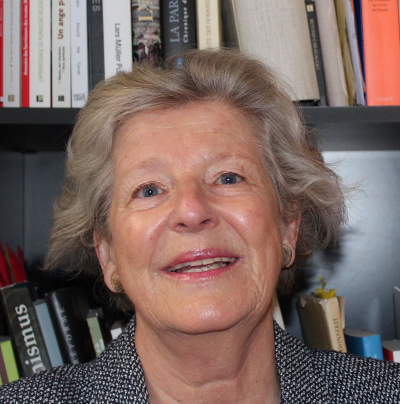
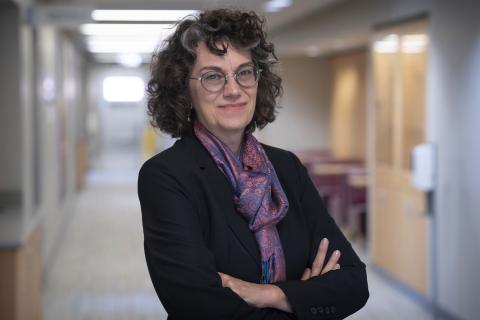
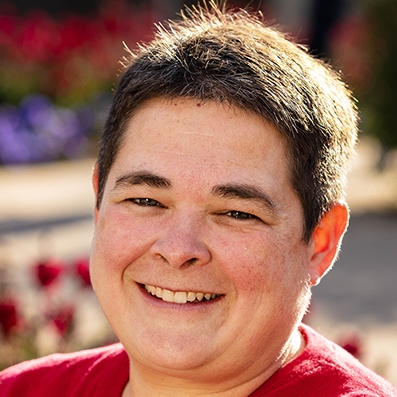
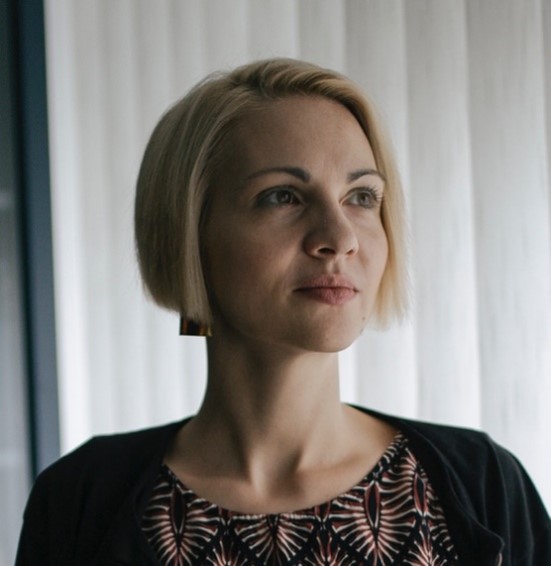
Béatrice Nicollier-de Weck is an Associate Researcher at the University of Geneva , affiliated with the Institute of Reformation History . Her academic career spans roles as a Lecturer in paleography and modern history at the Universities of Geneva (1995-2010) and Fribourg (2002-2008). Doctorate of Letters (1995), University of Geneva Bachelor's degree in Social Sciences, History major (1968), University of Geneva Her research focuses on Politics and Religion in Europe during the Reformation , with a specialization in Theodore Beza and the History of Students and Universities . She has dedicated decades to analyzing the Correspondance de Bèze , contributing to its critical edition by collecting comments, errata, and addenda. Recent and main publications highlight her expertise in Genevan Geopolitics , Protestant International Networks , and 16th-century Educational Systems . Her work spans critical editions of historical texts, analysis of diplomatic failures in Reformation Europe, and studies on museological practices.
Leonard van der Kuijp is a Professor at Harvard University in the Department of South Asian Studies/East Asian Languages and Civilizations/Inner Asian and Altaic Studies. His research spans Tibetan Studies, Tibetan History, Sino-Tibetan Relations, and Tibeto-Mongol Relations , with a focus on religious and textual history. Research Themes : Tibetan Buddhist textual transmission and translation practices Indic-Tibetan-Indian Buddhist master collaborations Impact of xylography on Tibetan literature Cross-cultural exchanges between Tibet and Islamic/Christian traditions Mongol-Tibetan political and religious dynamics Article Trends : Chronological analysis of key Tibetan texts (e.g., Deb gter sngon po, Chos 'byung) Examination of rang 'gyur translations and indigenous Tibetan scholarship Study of tantric traditions and their Indian sources Interdisciplinary exploration of medical, astronomical, and philosophical texts Contributions : Co-author on 4 works 2,700+ public views across publications Active in Tibetan textual criticism and historiography
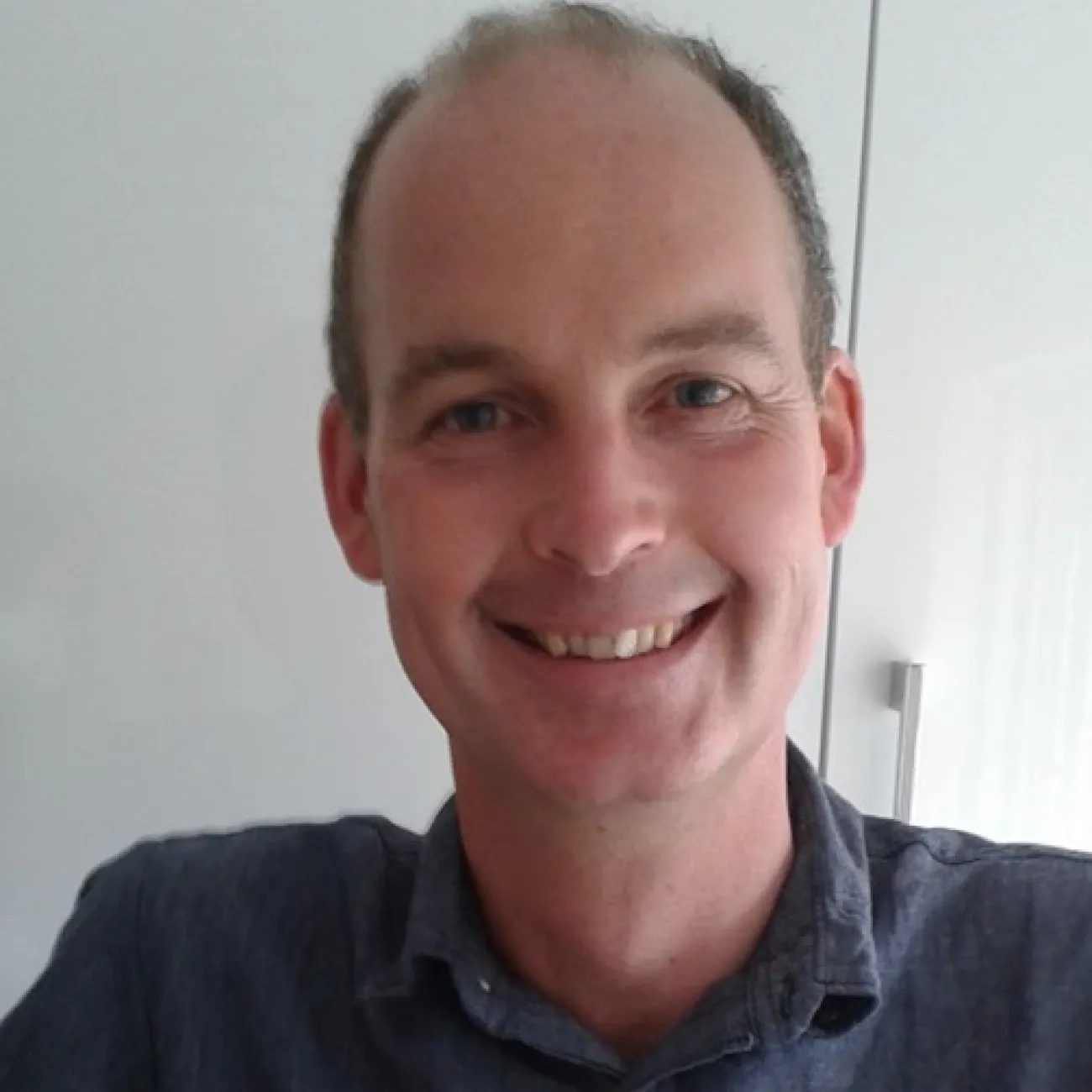
Tim Wildschut is a Professor of Social and Personality Psychology at the University of Southampton's Department of Psychology within the Faculty of Social Sciences. He received his PhD from the University of North Carolina at Chapel Hill and is a distinguished Fellow of the Academy of Social Sciences (FAcSS). His research has significantly reshaped understanding of nostalgia as a psychological phenomenon and explores critical aspects of intergroup relations. Wildschut's research fundamentally challenges the historical view of nostalgia as a negative emotion, instead presenting it as a complex, multi-faceted experience with positive psychological functions. His work demonstrates how nostalgia enhances social connectedness, fosters meaning in life, and strengthens self-continuity. He also investigates intergroup relations, particularly the interindividual-intergroup discontinuity effect, which explains why groups tend to be more competitive than individuals acting alone. His research spans diverse contexts including refugee experiences, aging populations, conflict zones, and social movements. Analysis of Wildschut's recent publications reveals a strong focus on nostalgia's multifaceted psychological functions across various populations and contexts. His work consistently demonstrates how nostalgia serves as a psychological resource that enhances well-being, strengthens social bonds, and provides meaning. The research spans multiple disciplines including social psychology, cross-cultural psychology, environmental psychology, and gerontology, showing the breadth of nostalgia's applications. His collaborative approach is evident in the extensive co-authorship network, particularly with Constantine Sedikides. Fellow of the Academy of Social Sciences (FAcSS) Gordon Allport Intergroup Relations Prize for work on interindividual-intergroup discontinuity effect Professor Wildschut actively supervises PhD students, currently guiding Emma Louise Bayford (DClin) and Luke Edward Spencer Chandaman (PhD Psychology). His research is conducted through membership in the Institute for Life Sciences and the Centre for Research on Self and Identity at the University of Southampton. He is currently accepting PhD applications and continues to lead active research projects including 'Dyadic Nostalgia in Couple Relationships.' His work bridges theoretical psychological concepts with practical applications in diverse real-world contexts from refugee integration to social activism against ageism.
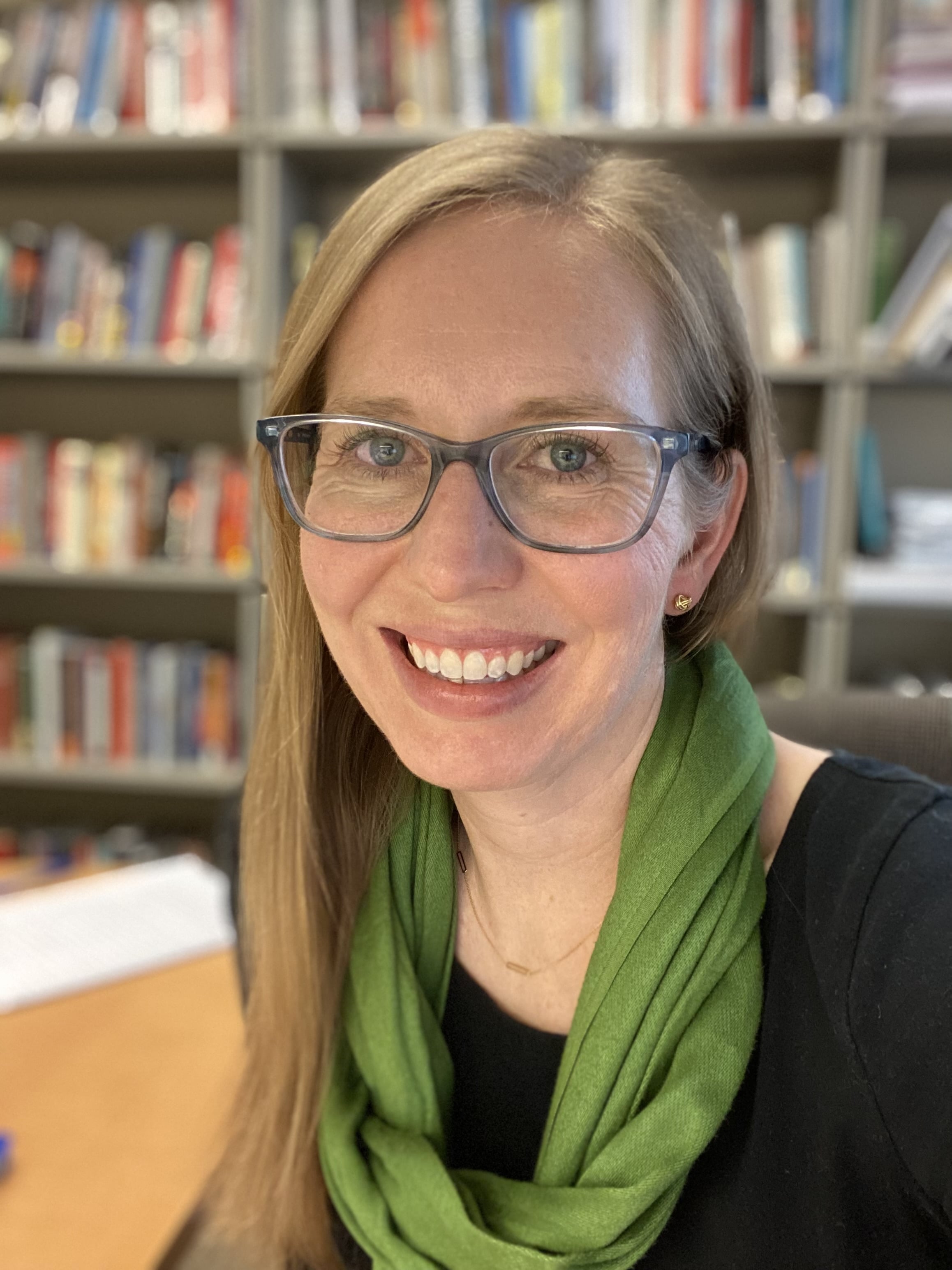
Professor Christian Liddy, affiliated with Durham University's Department of History, specializes in Late Medieval History with a focus on comparative urban studies. His research interrogates the concept of 'town-ness' and challenges national historiographical traditions in analyzing medieval European urban centers. Research Themes: Family and lineage dynamics in medieval cities Citizenship definitions and practices Popular revolt and political discourse Comparative urban history His recent work explores urban families across Europe and the intersection of household structures with political life. Articles trends highlight late medieval governance, citizenship evolution, and comparative analysis of urban rebellion. Scientific awards include a British Academy Mid-Career Fellowship (2014-15) and grants from the British Academy. Academic Roles: Associate Editor, Urban History (2007-12) Academic Curator, Magna Carta and the Changing Face of Revolt exhibition (2015) Visiting Professor at the University of Turin (2025)
Leticia Alvarez is an Associate Professor at the University of Utah’s College of Education , specifically within the Education, Culture & Society department. A first-generation Purépecha Xicana scholar and educator, her work is deeply informed by her upbringing in a working-poor, mixed-status family along the San Diego-Tijuana border and her experiences navigating both underfunded K-12 schools and elite higher education institutions. Her research focuses on the educational experiences of BIPOC and Latinx communities , particularly those racially profiled, academically tracked, or undocumented. Education: Ph.D. in Educational Psychology (University of Wisconsin-Madison), Ed.M. in Human Development and Psychology (Harvard), BA in Liberal Arts with Spanish minor (CSU San Marcos) Research strands include: (1) Latinx immigrant students’ navigational strategies in U.S. education; (2) family-school engagement through community-based research; and (3) culturally sustaining praxis for teachers. Theories employed include critical social theory , Chicana feminist theory , and participatory action research (PAR) . Recent publications address COVID-19’s impact on Latinx education , resisting the school-to-sweatshop pipeline , and undocumented youth agency . Awards include the Distinguished Faculty Service Award (2022), Social Justice & Transformation Award (2022), and multiple honors from the Mestizo Arts & Activism Collective (2016, 2019). She served on the Utah Board of Juvenile Justice and contributed to community engagement initiatives like the Afghan Refugee Leadership Training Series (2023).
Julia Ault is an Associate Professor and Associate Chair in the Department of History at the University of Utah 's College of Humanities. She specializes in modern European history with emphases on postwar communism, environmental history, and transnational networks, particularly focusing on East Germany. Her research examines how environmental policies intersected with socialist governance and cross-border activism during the Cold War. Education: Ph.D. and M.A. from University of North Carolina, Chapel Hill B.A. from Grinnell College Research Focus: Her work investigates the environmental dimensions of socialism, including transnational activism between East/West Germany and Poland, the role of science in East German global engagements, and ecological constraints under authoritarian regimes. Current projects analyze East German experts' impact in socialist and non-aligned nations through scientific diplomacy. Publications: Ault's scholarship consistently explores environmentalism under socialism, with recent articles analyzing border security through river management (2023), critiques of environmental governance in dictatorships (2022), and transnational activism. Her award-winning 2021 monograph Saving Nature under Socialism established her as a leading voice in Cold War environmental history. Awards & Fellowships: Faculty Teaching Award for Excellence (2022) Tanner Humanities Center Fellowship (2021) ACLS Incentive Fellowship (2020) Fulbright Fellowship (2008-2009) Multiple University of Utah research/travel grants (2015-2022) She teaches courses on Nazi Germany, the Holocaust, Cold War Europe, and historical methodology, reflecting her expertise in 20th-century German and transnational history.
Camilla Rondot is a PartTime Lecturer at the Interuniversity Department of Territorial Sciences, Planning and Policies (DIST) at Politecnico di Torino. Her email address is camilla.rondot@polito.it . 2024/25 Academic Year (Master's Degree Course: Architecture and Urban Space - Urban Planning Module) 2024/25 Academic Year (1st Level Degree Course: City and Territory Atelier E - Urban Planning Module) 2023/24 Academic Year (City and Territory Atelier E - Urban Planning Module) 2023/24 Academic Year (Urban Design Workshop - Urban Planning Module) 2022/23 Academic Year (City and Territory Workshop E - Urban Planning Module) 2022/23 Academic Year (Urban Design Workshop - Urban Planning Module) Her research focuses on urban planning , territorial sciences , and rural-urban dynamics . She investigates resistance spaces, infrastructure impacts on contemporary cities, and regional production systems like Central Italy's hidden champions. Recent work examines logistics platforms and redefinitions of rural territories in Southern Europe. Recent publications show strong engagement with spatial activism , territorial resilience , and metropolization . Her studies bridge urban economics and political geography , often analyzing infrastructure as lifelines and rural transformations.
Sue Wiseman is Professor of Seventeenth Century Literature at Birkbeck, University of London's School of Creative Arts, Culture and Communication. She leads the London Renaissance Seminar and serves as Principal Investigator for the Leverhulme Trust-funded project Written Worlds in Seventeenth-Century England: the Work of Non-elite Writing . Her academic leadership includes supervising 15 doctoral researchers to completion on diverse topics spanning love elegy, civil war writing, supernatural discourse, and women's poetry. Wiseman's research centers on Renaissance and seventeenth-century writing with specific focus on non-elite literary production, women's writing, civil war literature, and the cultural history of love. Her work examines textual practices across social strata—from Derbyshire elites to London widows—using material evidence alongside literary analysis. Current projects explore wolf-transformation narratives, captivity accounts, legal constructions of 'gypsies', and psalm usage in Reformation contexts. She has published on Katherine Austen, John Donne, Elizabeth Delaval, and Mary Rowlandson, demonstrating interdisciplinary engagement with history, law, and material culture. Her publications reveal consistent engagement with marginalized voices and textual forms. Recent articles analyze non-elite networks ( Textual Practice 2022), 'gypsy' discourses in Reformation law ( Proceedings of the British Academy 2022), and early modern beast literature ( Textual Practice 2019). Monographs like Writing Metamorphosis (2014) and Conspiracy and Virtue (2006) establish her expertise in Ovidian reception and women's political writing. She frequently examines how material contexts shape literary production, particularly in edited collections like Early Modern Women and the Poem (2013). Wiseman actively mentors doctoral researchers through both literary-focused and interdisciplinary projects. Current supervisees examine classical reception in Burton/Browne, psalm usage in Reformation England, and Protestant identity in sixteenth-century portraiture. Alumni theses cover topics including civil war elegy, early modern piracy, women's mausoleums, and customary culture in Shakespeare. Her supervision philosophy welcomes proposals bridging literary studies with history, theology, and material culture. She teaches postgraduate modules including Postgraduate Research , The Woman Question: Medieval to Renaissance , and Medieval and Renaissance Literatures , emphasizing historical contextualization and methodological innovation. Her Leverhulme project Written Worlds exemplifies commitment to recovering non-canonical writing practices through collaborative digital humanities approaches.
Aniko Bodroghkozy is a Professor of Media Studies at the University of Virginia, where she has served as a founding faculty member of the Media Studies Program since 2001. She currently co-directs the Media Studies Distinguished Majors Program and teaches courses including American Broadcast News (MDST 3811) and Media and the Kennedy Era (MDST 4106), with office hours in Wilson Hall 221. Her academic background includes a Ph.D. in Communication Arts from the University of Wisconsin-Madison (1994), an M.A. in Film from Columbia University, and a B.A. with High Honors in Film Studies from Carleton University. She previously served as Interim Director of UVA Media Studies (2004-2006) and Director of Undergraduate Programs (2007-2012). Bodroghkozy specializes in American television history with emphases on civil rights movement media coverage, 1960s social change movements, and contemporary media-white supremacy dynamics. Her research examines how media frames historical events across eras, particularly analyzing connections between 1960s civil rights protests and the 2017 Charlottesville 'Unite the Right' rally. Recent work investigates television journalism's development through crisis events like the JFK assassination. Her scholarly publications span Cinema Journal, Screen, and Television and New Media, while public commentary appears in The Boston Globe's The Emancipator, NBC News, and Slate. Key publications include Making #Charlottesville: Media from Civil Rights to Unite The Right (2023), Equal Time: Television and the Civil Rights Movement (2012), and Groove Tube: Sixties Television and the Youth Rebellion (2001). She edited A Companion to the History of American Broadcasting (2018). Bodroghkozy's research demonstrates consistent thematic threads across decades: media's role in framing racial justice movements, the evolution of broadcast journalism during national crises, and comparative analysis of protest media coverage. Her work connects historical civil rights media strategies with contemporary white supremacist tactics, revealing persistent patterns in how visual culture shapes public understanding of race and resistance. As a public intellectual, she engages through interviews with Washington Post, WAMU, and USA Today, and co-hosts the 'Democracy in Danger' podcast discussing media-white supremacy connections. Her scholarship bridges academic rigor and public discourse, particularly regarding Charlottesville's legacy as a media event.
Gesa Ingendahl serves as Senior Academic Councillor (akademische Oberrätin) at the Ludwig Uhland Institute for Cultural Studies within the Faculty of Economics and Social Sciences at the University of Tübingen, a position she has held since 2018 following promotion from Academic Councillor (akademische Rätin) since 2012. Her dual role encompasses scientific research and administrative responsibilities for study advisory services and career orientation, operating from the institute's Burgsteige 11 address in Tübingen. Her academic formation includes: Studies in Folklore/Empirical Cultural Studies and Modern History at the Universities of Münster and Tübingen Magisterarbeit analyzing gender imagery in baroque world theater through Pastor Daniel Pfisterer's work from Köngen Doctoral research on widowhood's cultural significance in early modernity, supported by the Gesellschaft Oberschwaben scholarship Ingendahl's research centers on cultural-historical analysis of gender transitions, everyday practices, and localized historical phenomena. Her methodological approach interweaves archival ethnography with gender theory, particularly examining how social structures shape lived experiences. Key contributions include reconceptualizing widowhood as both economic strategy and cultural performance in early modern urban settings, and documenting grassroots protest cultures in 1970s-1980s Tübingen through collaborative museum interventions. Her work consistently bridges academic scholarship with community engagement, especially in women's history projects. Analysis of her 15 most recent publications reveals persistent engagement with power dynamics in marginalized communities. Early works focus on widowhood's intersection with craft economies and kinship networks in Ravensburg, while later research shifts toward documenting protest tactics in university towns. Recent outputs demonstrate methodological expansion into theater studies and museum curation, maintaining her core interest in how ordinary people navigate institutional constraints through creative resistance. Scientific recognition includes: Promotionsstipendium der Gesellschaft Oberschwaben für Geschichte und Kultur (Doctoral Scholarship) Her institutional impact extends beyond research through dedicated academic advising and organizational leadership. Ingendahl has coordinated study services since 2007 while maintaining active scholarly output, demonstrating rare integration of administrative and intellectual labor. Her collaborative projects with Wiebke Ratzeburg on the "Protest!" exhibition exemplify her commitment to public history, transforming university archives into community dialogue spaces. Additional professional engagement includes archival work with the Evangelical Church in Württemberg and the Women's History Archive (BAF e.V.). Current activities center on the Ludwig Uhland Institute's cultural studies framework, particularly through ongoing analysis of theater institutions and historical protest movements. Her leadership in the Institute's study advisory services directly shapes student experiences while informing her research on academic culture's historical evolution.
Jennifer Earl is a Professor and Chair of the Department of Sociology and Criminal Justice at the University of Delaware. She holds a B.A. from Northwestern University and M.A./Ph.D. from the University of Arizona. Her research focuses on social movements, digital activism, youth political engagement, and the impact of digital media on protest dynamics. Earl previously served as faculty at the University of California, Santa Barbara (2002–2011) and the University of Arizona (2012–2023). She directed the Center for Information Technology and Society and the Technology and Society PhD Emphasis at UCSB. Her work integrates studies of social movement repression, digital media usage, and youth activism. Key research interests include: (1) how digital tools reshape protest strategies, (2) generational differences in political engagement, and (3) state responses to activism. Notable publications include *Digitally Enabled Social Change* (MIT Press, 2011), which explores internet affordances in activism. Earl has received over $1.25M in grants, including an NSF CAREER Award (2006–2011). Honors include induction into the Sociological Research Association (2016) and university awards for teaching and mentoring. She has advised numerous projects on topics like counterdemonstrations, online misinformation, and protest policing. Her work bridges academia and public policy, addressing how digital platforms both empower and constrain activism in modern democracies.
PD Dr. Daniela Renger is a Researcher at the Department of Psychology, University of Kiel, affiliated with the Philosophical Faculty. She holds a habilitation in Social Psychology (2019) and a PhD from Kiel University (2009). Her research focuses on social recognition, self-respect, and the consequences of social inequality, with emphasis on assertiveness, collective action, and mental health. She leads projects like 'Toleranz im Ranzen' (2024) and 'Women in Philosophy' (BMBF-funded). Recent work explores gender stereotypes in academia, socioeconomic status impacts on self-respect, and the role of respect in workplace burnout. Active in academic service, she organizes the Woman Scientists Network at Kiel University and reviews for top journals like Political Psychology and Personality and Social Psychology Bulletin . Education : Habilitation in Social Psychology, Kiel University (2019) PhD in Psychology, Kiel University (2009) Research Interests : Self-respect as internalized equality Social recognition dynamics Gender effects in education and organizations Health psychology and work environments Collective action and protest Notable Projects : Toleranz im Ranzen : School-based intervention promoting tolerance and self-respect (funded by City of Kiel) BMBF-funded Bildersturm project to highlight women in philosophy Public Engagement : Interviews in GEO WISSEN , Süddeutsche Zeitung , and Deutschlandfunk Media contributions on tolerance, prejudice, and self-respect
Dr. Jelena Vasiljević is an Associate Professor at the Faculty of Media and Communications, University Singidunum, and a Senior Research Associate at the Institute for Philosophy and Social Theory, University of Belgrade. Her research focuses on citizenship transformations in post-Yugoslav states, memory politics, and social movements, with a regional emphasis on Southeast Europe. She holds a PhD, M.Phil, and BA in Ethnology and Anthropology from the University of Belgrade. Currently, she coordinates the Horizon 2020 project EnTrust , examining trust and distrust in governance. Education: PhD in Ethnology and Anthropology, University of Belgrade M.Phil in Ethnology and Anthropology, University of Belgrade BA in Ethnology and Anthropology, University of Belgrade Research Interests: Her work explores political solidarity, cultural rights, and the intersection of memory and citizenship. Recent projects include analyses of anti-instrumentalism discourses in urban protests and comparative studies of social movements in Serbia and North Macedonia. Publications: Her recent articles analyze citizenship agendas post-socialism, contentious politics in Eastern Europe, and the legacy of Yugoslav nationalism. She also authored a seminal book on citizenship anthropology. Grants & Projects: Coordinator of the EU-funded EnTrust project; former research fellow in ERC-funded CITSEE (University of Edinburgh) and the Centre for South East European Studies (University of Graz).
Dr. Alexandra Orlova is a Professor in the Department of Criminology and the Faculty of Law at Toronto Metropolitan University. With a Ph.D. in Law from Osgoode Hall Law School (2004) and an LLB from the same institution, she has been a full-time faculty member since 2005. Her teaching portfolio includes courses on Canadian Criminal Justice, Criminal Law, International Perspectives, and Security Threats. Education : Ph.D. in Law (Osgoode Hall Law School, 2004), LLB (Osgoode Hall Law School) Dr. Orlova's research focuses on transnational organized crime, international terrorism, sovereignty issues, and human rights. Her work examines how geopolitical shifts influence legal frameworks and criminal justice systems, particularly in Russia. Publications span topics like cryptocurrency regulation, judicial dissent, and civil society suppression under authoritarian regimes. Key trends in her research include sovereignty challenges in digital governance, legal responses to corruption, and the weaponization of anti-Western narratives. She has secured multiple research grants from Toronto Metropolitan University (formerly Ryerson) for studies on anti-corruption, internet governance, and state violence. Scientific Awards : Arthur L. Galub Best Faculty Paper Award (2019) Her work has been cited in landmark legal decisions, including the Supreme Court of Canada. She contributes to edited volumes and comparative legal analyses, often collaborating across disciplines to address systemic governance issues.
Professor Philip McDermott is a Full Professor of Sociology at Ulster University, affiliated with the School of Applied Social and Policy Sciences. He holds the Ulster University Distinguished Research Fellowship (2022) and serves as editor of the Anthropological Journal of European Cultures and the Irish Journal of Sociology. His research focuses on heritage policy, minority rights, migrant languages, and climate change adaptation through cultural heritage. He has secured funding from the British Academy, AHRC, and the National Trust. In 2021, he received the Breaking Barriers Award for civic work with migrant communities. He also serves on the board of the Northwest Migrants Forum. His teaching includes undergraduate sociology and medical school modules on society and health. Education: Doctorate in Sociology (not explicitly stated but implied by senior academic role) Awards: Charlemont Scholarship (2015-16), SFHEA (2018) Research interests span the intersection of social policy and cultural heritage, linguistic diversity in public spaces, and heritage activism. His recent work examines intangible cultural heritage's role in climate change resilience, as seen in his 2025 special journal edition on the topic. He has published widely in peer-reviewed journals and edited collections, focusing on Northern Ireland's sociocultural dynamics and post-conflict reconciliation. Grants include AHRC funding for heritage activism symposiums (2024) and collaborative projects on museums and community wellbeing during the pandemic (2022). His civic engagements include policy dialogues on language rights and migrant integration. He leads research teams exploring transcultural memory and museum innovation. Lab/team affiliations include the Ulster University Sociology Department and collaborative networks with NGOs like the North West Migrants Forum.