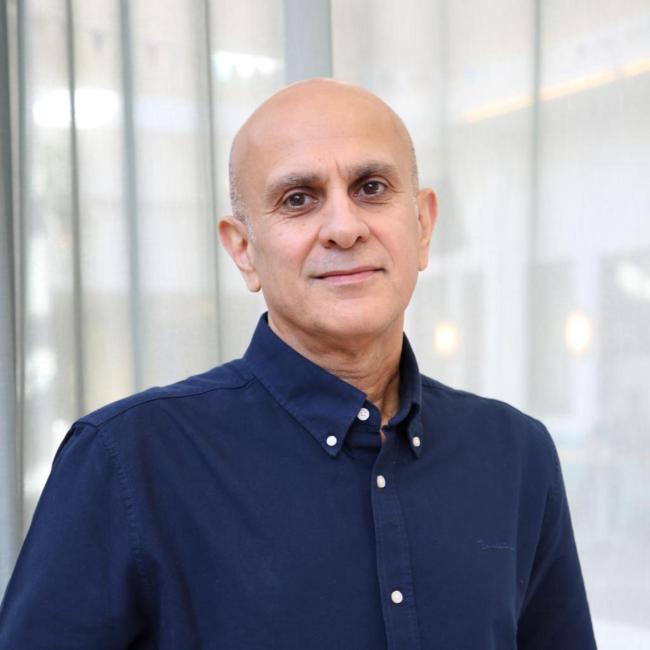
Margit Neisig is an Associate Professor and Head of Study for Business Programs at Roskilde University's Department of Social Sciences and Business Management. Her work focuses on management and organizational systems theory, particularly addressing the Twin Transition (sustainability and digitalization). She leads Interreg projects like CONSIDERATION (enhancing SMEs' digital/sustainable transformation) and the Fehmarn Belt Learning Region (cross-border collaboration methods). She is authoring a book on Regenerative Leadership using Luhmann’s social systems framework. Research interests include circular economy, systemic processes, and structural couplings between social/non-social systems. Her projects emphasize practical collaboration between academia and industry. Recent media coverage highlights her work on cross-border education initiatives and SME sustainability. Key contributions involve developing intervention methods via digital platforms for SME transformation and creating facilitation tools for Danish-German organizational collaboration. She actively participates in transnational research networks and academic conferences like EURAM.
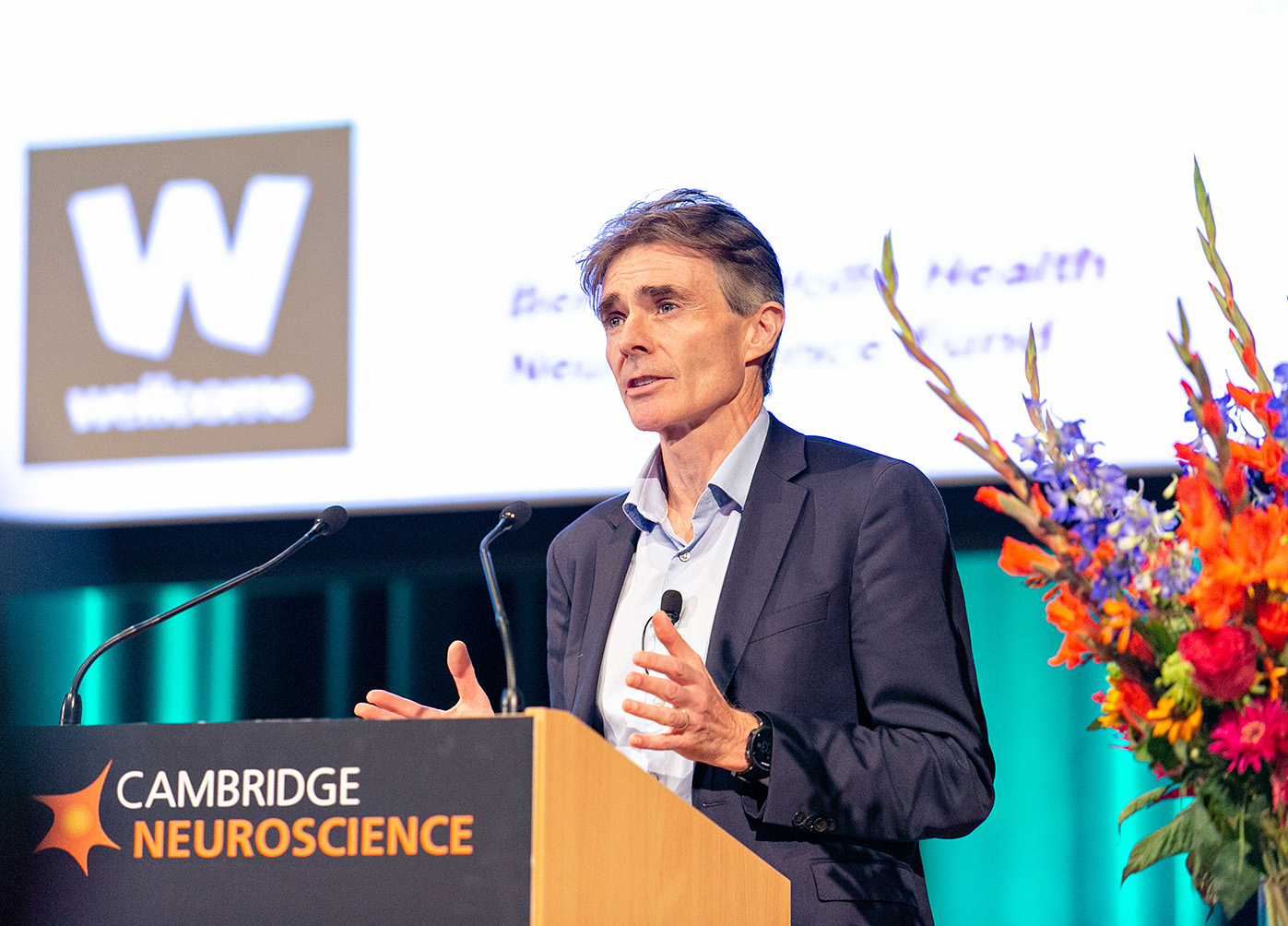
Professor Paul Fletcher serves as the Bernard Wolfe Professor of Health Neuroscience at the University of Cambridge Department of Psychiatry and Clinical Director of the Cambridge Neuroscience Interdisciplinary Research Centre. He holds concurrent appointments as a Wellcome Trust Investigator and Honorary Consultant Psychiatrist with the Cambridgeshire and Peterborough NHS Trust and Cambridge University Hospitals NHS Trust. His research centers on neurobiological mechanisms of psychosis , computational psychiatry , and appetite control in disordered eating . Fletcher pioneered influential theories linking prediction error signaling to psychotic symptoms, demonstrating how perturbations in frontal lobe responses explain hallucinations and delusions. His work integrates neuroimaging, psychopharmacology, and computational modeling to bridge clinical observations with neural mechanisms. Analysis of his recent publications reveals a dominant focus on prediction error computation in psychosis cortical structural changes in mental illness neurobiological correlates of eating disorders computational modeling of perceptual inference dopaminergic mechanisms in learning translational neuroscience approaches His work increasingly incorporates multimodal neuroimaging and real-world applications like the Hellblade: Senua's Sacrifice project. Key recognitions include: BAFTA Award for Games Beyond Entertainment (2017) James Bull Lectureship (2017) Election to Academy of Medical Sciences (2012) WFSP Research Award in Biological Psychiatry (2005) Fletcher maintains significant research funding through Wellcome Trust appointments spanning over two decades, including current status as a Wellcome Trust Investigator. His clinical neuroscience program bridges the Department of Psychiatry with NHS trusts, emphasizing translational pathways from basic mechanisms to clinical applications. The Fletcher Group operates within the Cambridge Neuroscience network, collaborating extensively across departments and healthcare systems.
Elizabeth City is a Senior Lecturer on Education at Harvard University's Graduate School of Education (HGSE). She holds an Ed.D. from Harvard University (2007). Her career spans roles as a teacher, instructional coach, principal, and consultant, all focused on empowering educators and students through strategic leadership. She emphasizes collaboration, evidence-based practice, and systemic change in K-12 education. City's research and publications center on education reform, leadership development, and organizational change. Notable works include Leading Strategically: Achieving Ambitious Goals in Education (2025) and Data Wise (2006, 2020), which provide frameworks for using data to improve teaching and learning. She also co-authored Instructional Rounds in Education (2009), a seminal text on collaborative school improvement strategies. Her courses at HGSE include Accelerating Instruction: Principals Leading Instructional Improvement and Using Instructional Rounds to Cultivate High-Quality Learning . She advocates for leaders to balance ambition with actionable, iterative steps ('think big, act small, learn fast'). City's work bridges theory and practice, addressing challenges like educator burnout and systemic inequities through strategic, relationship-driven approaches. Her contributions extend to nonprofit leadership and organizational change, reflecting her commitment to pragmatic yet imaginative solutions in education.
J.J. Buchanan is a Professor at the Department of Health and Kinesiology, Texas A&M University, and Program Chair of Kinesiology and Sport Management. He is also affiliated with the Faculty of Neuroscience at Texas A&M. His research focuses on motor neuroscience, bimanual coordination, observational learning, and neurorehabilitation. Ph.D. in Complex Systems from Florida Atlantic University (1996) M.A. in Experimental Psychology from Florida Atlantic University (1992) B.A. in Psychology from University of Texas at San Antonio (1985) His research explores the dynamics of motor skill acquisition, the role of perceptual feedback in motor performance, and the application of augmented reality in rehabilitation. Google Scholar articles highlight advancements in transcranial stimulation, coordination stability, and memory consolidation during wakefulness. Buchanan has secured numerous grants from federal and private institutions, including the National Science Foundation, Morton Cure Paralysis Fund, and Qatar National Fund, for projects involving stroke rehabilitation, robotic limb creation, and motor learning enhancement. He has mentored multiple doctoral students and contributed to over 15 book chapters. His work bridges neuroscience, kinesiology, and robotics to improve human motor function and understanding of perceptual-motor integration.
Dr. Eduardo Benitez Sandoval is a social robotics researcher at UNSW Sydney, affiliated with the School of Arts, Design & Architecture. His work focuses on reciprocity in Human-Robot Interaction (HRI), robots in education and healthcare, and ethical implications of social robotics. He holds a PhD in Human Interface Technology from the University of Canterbury (2016) and a Master's in Industrial Design from UNAM (2012). He has received notable awards including the 1st Place Video HRI Award (2016) and recognition as one of Mexico's 30 Promising Young Mexicans (2015). His research explores decision-making in HRI, robot design principles, and the societal impact of AI. He emphasizes 'robot ergonomics' and 'human-centric design' in creating socially meaningful machines. Current supervision includes two master’s students at UNSW's School of Computer Science and availability to mentor PhD candidates in HRI, social robotics, and interaction design. Teaching includes 'Research Foundations' and 'Human Centred Design' courses. Key research themes include addiction to robots, conflict mediation via robots, and cultural preservation through robotic agents (e.g., Robot Maori Haka project). He advocates for robots 'in the wild' testing, combining quantitative and qualitative HRI evaluation. Collaboration opportunities exist in multidisciplinary projects blending robotics, psychology, and design. His work has led to over 50 publications including designs/architecture works like the 3D-printed social robot prototype (2020). Awards reflect both academic excellence (e.g., Alfonso Caso Medal) and innovation (e.g., Startup Weekend recognition). He actively engages in public discourse via media appearances and maintains professional profiles on LinkedIn, ResearchGate, and Google Scholar.
Jamal Jokar Arsanjani is a full professor in Geoinformatics and Earth Observation at Aalborg University (Denmark), leading the Geoinformatics & Earth Observation group. He holds a PhD from the University of Vienna (2011), with postdoctoral research at Heidelberg University supported by an Alexander von Humboldt fellowship (2012–2015). His academic career includes roles as a UN consultant in Vienna and senior scientist at Heidelberg's GIScience group. Research focuses on integrating geospatial data with computational models to address complex environmental challenges, including land use change, climate impacts, and natural hazards. Key methodologies include agent-based modeling, machine learning, and remote sensing. He contributes to UN Sustainable Development Goals, particularly SDGs related to climate action, sustainable cities, and responsible consumption. Recent projects include 'PROMISE' (micro-mobility integration in urban transport) and 'AI4Covid' (AI-driven pandemic monitoring). Awards include the Springer Outstanding PhD Dissertation (2012) and an Earth Observation award (2020). He serves on the European Environment Agency board and edits the journal Land . Research outputs span 105+ publications since 2008, emphasizing urban sustainability, disaster resilience, and geospatial technologies. Active in 7 ongoing projects and 45+ academic activities, he advises on policy and innovation in smart cities and climate adaptation.
Lyndon Estes is an Associate Professor in the Graduate School of Geography at Clark University. His research focuses on the drivers and impacts of agricultural change, utilizing Earth Observation technologies and modeling techniques such as neural networks. He has contributed to interdisciplinary studies in conservation biology, agricultural economics, and geospatial analysis, with a particular emphasis on African ecosystems and smallholder farming systems. Dr. Estes' work spans multiple domains, including landscape connectivity for wildlife conservation, transportation infrastructure impacts on agricultural supply chains, and the application of advanced machine learning methods to remote sensing data. He has authored over 19 publications, with recent contributions appearing in journals like Remote Sensing , Field Crops Research , and Agricultural Systems . In editorial roles, he serves as Specialty Chief Editor for 'AI in Food, Agriculture and Water' at Frontiers in Artificial Intelligence . His research integrates technical innovation with practical applications, addressing global challenges in sustainability and food security.
Michael Zurel is a NSERC Postdoctoral Fellow in the Department of Mathematics at Simon Fraser University, working under Dr. Nadish de Silva, Canada Research Chair in the Mathematics of Quantum Computation. His research focuses on foundational aspects of quantum computation, quantum information, and nonclassical physics. Key interests include quantum contextuality, negativity in quasiprobability representations, and classical simulation algorithms for quantum systems. He holds a PhD, MSc, and BSc in Physics and Mathematics from the University of British Columbia (2024, 2020, 2019), all supervised by Dr. Robert Raussendorf. His doctoral work explored classical descriptions of quantum computations via hidden variable models and quasiprobability representations. His master’s thesis addressed hidden variable models and classical simulation algorithms for quantum computation with magic states on qubits. Research interests emphasize bridging quantum foundations with computational efficiency, particularly how nonclassical features like contextuality enable quantum advantage. Collaborators include prominent figures such as Robert Raussendorf, Juani Bermejo-Vega, and Cihan Okay. His scientific achievements include the NSERC Postdoctoral Fellowship. Advising and grants are not explicitly detailed, but his work is supported by foundational research grants. He collaborates actively within quantum information theory and computational physics communities.
Robert Fickler is an Associate Professor at Tampere University's Faculty of Engineering and Natural Sciences , leading the Experimental Quantum Optics Group in the Photonics department. His work focuses on quantum photonics, high-dimensional quantum information, and structured light interactions with matter. He holds a PhD from the University of Vienna (2014) and has held postdoctoral positions at institutions like the University of Ottawa and IQOQI Vienna. Fickler is an ERC Starting Grant recipient (2021) and leads the BIQOS project on integrated operations for structured photons. Education: PhD in Physics, University of Vienna (2014) Master’s in Physics, Ulm University (2009) Bachelor’s in Philosophy, Ulm University (2008) Research interests include quantum plasmonics , nonlinear optics , and atom physics . His lab explores structured photons for quantum communication and high-dimensional systems, with breakthroughs like the quantum Gouy phase observation and twisted photon entanglement. Over 55 publications appear in top journals like Science , Nature Photonics , and Physical Review Letters . Awards include the Young Scientist Award from IUPAP (2015) and Springer Thesis Award (2015). His grants include the Academy Research Fellowship (2019) and Banting Postdoctoral Fellowship (2016). Advising focuses on experimental quantum optics, with a lab emphasizing spatiospectral vector beams and multi-plane light conversion . Collaborations span international teams in quantum communication and nonlinear optics.
Zoran Obradovic holds the prestigious L.H. Carnell Professorship of Data Analytics at Temple University where he serves as Professor in the Computer and Information Sciences Department and the Statistics Department. He also directs the Center for Data Analytics and Biomedical Informatics and maintains secondary appointments at Temple's Fox School of Business. Internationally, he serves as Research Professor at The Mathematical Institute of the Serbian Academy of Sciences and Arts, and as Visiting Professor at both the School of Medicine and School of Management at the University of Belgrade. His research spans multiple cutting-edge domains of data science: Bioinformatics and protein disorder prediction Healthcare informatics and clinical decision support systems Machine learning for complex networks and big data Spatial and temporal data analytics Applications in healthcare management, social networks, and earth science Dr. Obradovic pioneered research on intrinsically disordered proteins, earning multiple CASP awards. His work addresses challenges related to heterogeneous, spatial, and temporal data analytics with applications across healthcare, power systems, earth science, and social sciences. His research has been funded by prestigious organizations including NIH, NSF, DARPA, DOE, and industry partners. With approximately 450 publications and an H-index of 68 (over 33,000 citations), his scholarly impact is substantial. He serves as editor-in-chief of the Big Data journal and chairs the SIAM Data Mining conference steering committee, reflecting his leadership in the field. Scientific Recognition Elected Member of Academia Europaea (2015) Foreign Member of Serbian Academy of Sciences and Arts (2015) Asia-Pacific Artificial Intelligence Association Fellow (2021) Multiple best paper awards at international conferences Temple University's President's Outstanding Faculty Research Award (2009) Three consecutive CASP awards for protein structure prediction (2002-2006) Dr. Obradovic has mentored approximately 50 postdoctoral fellows and Ph.D. students, many of whom now hold positions at leading academic institutions and tech companies including Amazon, Facebook, IBM, Microsoft, and Uber. He has served on editorial boards for 13 journals and organized numerous international conferences in data mining and bioinformatics. His Center for Data Analytics and Biomedical Informatics develops advanced data science methods addressing real-world challenges in healthcare, science, engineering, and business applications, with active recruitment for Ph.D. students and postdoctoral researchers.
Rachele Dominguez is an Associate Professor of Physics at Randolph-Macon College in Ashland, Virginia, where she teaches a broad range of courses including introductory physics, quantum mechanics, computational physics, and special topics like the physics of light and the atomic bomb. She holds a PhD in Physics from Boston University (2010), an MS from the University of Washington (2004), and a BS from the College of William and Mary (2002) in Physics and Philosophy. Her research focuses on statistical physics, particularly computational simulations of phase transitions and earthquake fault systems. Notable projects include modeling spatial symmetry breaking, earthquake fault dynamics, and complex networks. She has also pioneered coastal storm impact studies, developing the Cumulative Storm Impact Index (CSII) to assess beach erosion along the U.S. East Coast. Dr. Dominguez has been recognized with awards such as the Distinguished Chapter Award (2024), Omicron Delta Kappa Outstanding Advisor Award (2021), and the Frank Haig Prize (2015). Her teaching spans foundational courses to advanced labs and independent studies, emphasizing hands-on research and interdisciplinary problem-solving. Her work bridges computational methods with real-world applications, including collaborations on geophysical modeling and STEM education initiatives to recruit underrepresented students in the sciences.
Hamid Asghari is an Associate Professor at the Department of Educational Studies, Faculty of Humanities and Social Sciences, Karlstad University, Sweden. His research focuses on narrative studies, vocational teacher education, refugee youth integration, and vocational skills analysis. He collaborates with Opole University (Poland) and Oslo Metropolitan University (Norway). Key areas include professional skills of refugees, vocational education methodologies, and life course research. Research interests prominently feature narrative analysis applied to vocational education challenges. His 2025 work examines newly arrived women's educational choices, while 2024 studies emphasize industrial teacher narratives and employability in Sweden. Articles consistently bridge vocational pedagogy with sociological analysis of labor market integration. Published extensively in Scandinavian Journals of Vocations in Development and Nordic Journal of Vocational Education and Training, his work highlights contradictions in vocational program design and teacher-student interactions in workshop settings. Supervises thesis work across vocational, preschool, and subject teacher programs. Labs/Teams: Active in cross-national research networks through collaborations with Polish and Norwegian institutions. Leads projects on refugee vocational integration and industrial training effectiveness.
Simone Ferlin is an Adjunct Senior Lecturer at Karlstad University and a Senior Performance Engineer. She holds a PhD in Computer Science from Simula Research Lab and Universitetet i Oslo (2017), focusing on robustness in multipath transport protocols like MPTCP. Her research spans network performance, security, and congestion control in mobile/5G networks and the Internet. She collaborates actively with academia and industry, co-supervising students in areas such as edge computing, container orchestration, and distributed systems. Affiliations: Department of Informatics, Karlstad University; Red Hat Research; Ericsson R&D. Education: PhD (2017), Simula/UiO; Master’s and Undergraduate studies emphasized networking and electronics. Her work includes projects like AIDA (AI-driven edge networking) and DRIVE (latency-sensitive mobile services). She has published over 50 papers on topics like QUIC, eBPF, and containerized microservices. Awards include the Best Paper at IEEE ICIN 2021 and ANRP 2025 Prize. Teaching responsibilities include Future Internet Design and Service Quality . Advising spans 15+ students across institutions like TU Berlin, KTH, and Unifesp. She chairs conferences (e.g., ACM SIGCOMM 2025) and serves on editorial boards (IEEE Communications Magazine). Key interests: network observability, low-latency protocols, and sustainability in networking.
Johan Bos is a Professor of Computational Semantics at the University of Groningen. His research focuses on formal semantics, natural language processing, and semantic parsing, with contributions to tools like Boxer and the C&C parser. He leads the Groningen Meaning Bank project, creating multilingual semantic annotations. His work bridges computational linguistics and AI, emphasizing structured meaning representations. Key contributions include foundational textbooks such as Representation and Inference for Natural Language and Learn Prolog Now! . His research spans semantic analysis, discourse representation theory, and cross-lingual meaning parsing. Collaborations include projects on annotated corpora and neural semantic parsing advancements. Publications address challenges in semantic parsing, discourse structures, and interdisciplinary applications like tombstone inscription analysis. He actively contributes to computational semantics conferences and workshops, driving semantic tagging and interlingual meaning representation initiatives.
Niko Mäkitalo is an Assistant Professor at the University of Jyväskylä's Faculty of Information Technology and a member of the University Consortium Chydenius. His research focuses on advancing cyber-physical systems through innovative software architectures for AI, IoT, and the Cloud-Edge Continuum, with significant emphasis on hardware and network infrastructures. He teaches and mentors graduate students in these areas. Research Interests: Mäkitalo's work centers on creating intelligent environments via novel software frameworks, engineering methodologies for distributed AI/ML applications, and addressing ethical/privacy challenges in edge computing. He explores the intersection of agile development practices, third-party code management, and industry standards like IDSA/GAIA-X for AI integration. Key Contributions: His recent work includes studies on software ownership dynamics, regulatory-aware AI deployment, and liquid AI systems. He leads the Empirical Software Engineering Research group and collaborates on initiatives like 6GSoft for edge-cloud software solutions. Advising & Grants: Mäkitalo supervises Master's and Ph.D. candidates in software engineering and systems architecture. His projects often involve industry partnerships to address real-world challenges in smart manufacturing, autonomous systems, and networked environments. Labs/Teams: Active in the Empirical Software Engineering Research group, contributing to cross-disciplinary projects at the University of Jyväskylä's tech innovation ecosystem.