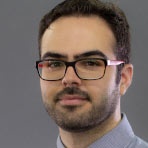
Jorge Gallego Madrid is a Research Fellow at Universidad de Murcia's Faculty of Informatics in the Department of Information and Communication Engineering, affiliated with the Intelligent Systems and Telematics group. His research focuses on AI-driven network programmability for 5G/B5G infrastructures, IoT systems, and zero-touch management. Recent publications explore eBPF/XDP technologies, ML-powered traffic processing, and vehicular network architectures. He earned his PhD in 2024 with the dissertation 'Towards AI-based Network Programmability as an enabler for Zero-touch management and orchestration in B5G infrastructures'.
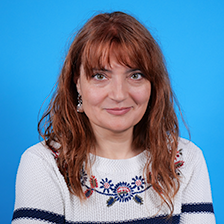
James Karlsen is a Full Professor in the Department of Working Life and Innovation at the University of Agder, Norway. He also holds senior research positions at Agderforskning and Orkestra-Basque Institute of Competitiveness, reflecting a strong transnational research profile in regional development and innovation. His work bridges academic inquiry with practical policy and community engagement, particularly through long-term action research initiatives. His research focuses on territorial development , action research , regional innovation , and organizational learning . He emphasizes co-generative knowledge production, where researchers and regional actors collaboratively shape development processes. A key project is Gipuzkoa Sarean , a long-term action research initiative in the Basque Country. His recent work explores temporality in complex processes, emergent strategies in universities, and knowledge flows under the Norwegian VRI research programme. The recent scholarly output shows a consistent focus on the intersection of higher education and regional development. Themes include the university’s third mission, engaged governance, co-creation with students, and the operationalization of innovation policy through collaborative research. His publications span books, book chapters, and high-impact journal articles that contribute to both theoretical and practical understandings of regional transformation. Scientific Awards: No specific awards mentioned in the provided text. James Karlsen has advised on regional and industrial development at national, regional, and local levels in Norway, including roles in the Ministry for Local Government and Modernisation and as Chief County Planning Officer in Finnmark. His academic work is deeply informed by this practical experience. He has co-authored a major book, Territorial Development and Action Research: Innovation through Dialogue (2015), and numerous articles on regional innovation systems, policy learning, and university engagement. He collaborates extensively with scholars like Miren Larrea, Romulo Pinheiro, and Arne Isaksen. No direct mention of PhD or master’s students is found. He is actively involved in transformative research labs and networks connecting Norway and the Basque Country. His current research under the VRI programme examines knowledge flows between organizations, continuing his focus on linking academic research with regional innovation ecosystems. His work is central to understanding how universities can act as agents of change in peripheral and complex regional contexts.
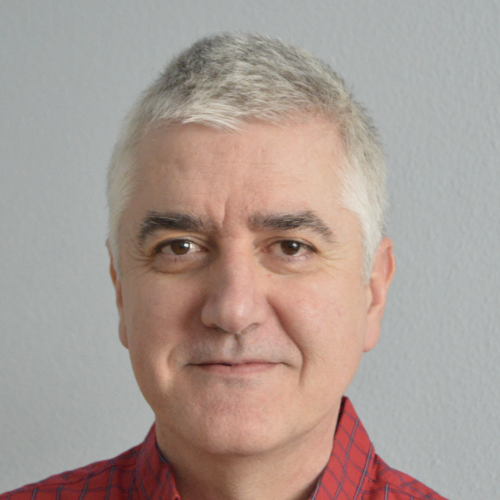
Alfonso Alejandro Sanchez Macian Perez serves as an Associate Professor in the Telematics Engineering Department at Carlos III University of Madrid, specializing in cutting-edge telecommunications and cybersecurity research. His work spans optical networking, fault-tolerant systems, and space applications, with significant contributions to 6G infrastructure development and privacy-preserving data structures. His research focuses on optical networking innovations for next-generation communications, including space-division multiplexing and multi-band migration techniques critical for 6G deployment. In cybersecurity , he investigates vulnerabilities in probabilistic data structures like Bloom filters and KMV sketches, developing countermeasures against privacy attacks. His space systems research addresses radiation-hardened memory architectures and FPGA reliability for spacecraft applications, with emphasis on error correction and fault tolerance. As principal investigator for major projects including FUN4DATE Redes (2023-2026), Agile uLtra Low EnerGy secuRe netwOrks (2023-2026), and PROTEUS-6G (2024-2026), he leads EU and nationally funded initiatives advancing optical transport networks and sustainable high-capacity infrastructure. His publication record shows consistent high-impact output across IEEE Transactions and optical networking journals, with growing emphasis on 6G-enabling technologies since 2021. His laboratory work centers on the Telematics Engineering Research Group at UC3M, collaborating with Telefónica Innovation Digital and European Commission agencies on photonic integrated circuits and non-terrestrial networks. Current efforts focus on programmable optical transport for 6G services and self-managed sustainable optical networks through the SEASON project.
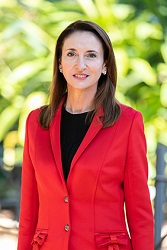
Jesús Martínez Frutos is a Professor specializing in computational mechanics and soft robotics, with a strong focus on integrating machine learning with multiphysics simulations. His research bridges constitutive modeling, topology optimization, and electroactive polymers to advance soft robotic systems and smart material design. His primary research domains include: Computational Mechanics (finite strain electromechanics, hyperelasticity) Physics-Informed Machine Learning (neural networks, Gaussian processes) Topology Optimization (lattice structures, band gap engineering) Soft Robotics (shape-morphing actuators, dielectric elastomers) Multiphysics Simulation (thermo-electro-mechanics, flexoelectricity) He pioneers methods for embedding physical constraints into data-driven models, particularly for nonlinear material behavior under large deformations. Analysis of his 15 most recent publications (2022-2025) reveals three dominant trends: (1) Physics-augmented neural networks for constitutive modeling that enforce thermodynamic consistency; (2) Multi-material topology optimization for programmable electroactive structures; (3) Gradient-enhanced machine learning frameworks that capture material uncertainties. His work consistently targets real-world applications in soft robotics and energy-efficient actuation systems. Professor Martínez Frutos actively supervises graduate theses as indicated by his profile's dedicated section, though specific student names aren't listed. His research is supported by institutional funding referenced in the profile's funding section, with emphasis on computational methods for next-generation soft robotic systems. Current projects focus on 3D-printed dielectric elastomer actuators and probability-based optimization for safety-critical applications.
Alba Bala serves as Executive Director of the UNESCO Chair in Life Cycle and Climate Change and Director of the Master of Science in Sustainability Management at ESCI-UPF (School of International Studies, Pompeu Fabra University). She teaches core courses in the MSc program and Postgraduate Programme in Management of Sustainable Transition and Climate Emergency. Her educational background includes a PhD in Environmental Sciences from Universitat Autònoma de Barcelona (UAB). Previously, she held lecturer and researcher positions at ELISAVA School of Design, School of Industrial Design (ESDI), and Institute of Environmental Science and Technology (ICTA) at UAB, alongside environmental consultancy work. Dr. Bala's research focuses on Life Cycle Analysis (LCA), EcoDesign, and sustainability assessment methodologies. As a member of the Spanish Network of Life Cycle Analysis, she develops practical tools for environmental impact evaluation and corporate sustainability strategies, integrating circular economy principles with business management frameworks. Her scientific recognition includes: Design for Recycling Award (Generalitat de Catalunya, 2000) Finalist for the European Innova Award (European Commission, 2008) She leads the UNESCO Chair in Life Cycle and Climate Change research team, directing projects on sustainability assessment while teaching courses covering environmental impact analysis, product lifecycle evaluation, and integrated waste management systems.
Juan Antonio Carral Pelayo is a Full Professor at the University of Alcalá (UAH), affiliated with the Polytechnic School and the Department of Automática . He has held academic positions since 1998, starting as an Assistant Professor and advancing to his current role. His research focuses on Software Defined Networks (SDN), Internet of Things (IoT), network protocols, and advanced switching architectures . Education: Telecommunications Engineering degree from the Polytechnic University of Madrid (UPM), 1993. PhD in Telecommunications from UAH (2013) with a thesis on advanced Ethernet switch design. Research Contributions : He coordinates the NetIS research group (High-Performance classified) at UAH, exploring intelligent networks and systems. His work spans SDN hybrid protocols, IoT integration, and scalable resource management in dense networks. He has published over 20 articles in top journals and actively participates in national/international conferences. Administrative Roles : Director of Transparency at UAH since 2019, equivalent to a dean-level position. Collaborates with the Madri+d Foundation (VERIFICA panel) and ANECA (Teacher Evaluation Programme). Collaborations & Grants : Extensive involvement in EU, national, and regional projects since the 1990s. His FPU grant (1994-1998) supported early research. Currently leads the NetServ subgroup within NetIS. Labs/Teams : Leads the NetIS group , with 25 researchers focusing on intelligent network systems and SDN/IoT integration.
Dr. Jesús Bernardino Alonso Hernández is a Professor in the Department of Signals and Communications at the University of Las Palmas de Gran Canaria , affiliated with the College of Engineering . His research spans signal processing, biomedical applications, and communications engineering, with a focus on real-time systems and acoustic analysis. Key research areas include: Speech processing for Alzheimer's detection Neural network design for hardware acceleration Biometric identification via neural signatures Acoustic methodologies for voice and machinery diagnostics Markovian transformations in shape recognition He has supervised doctoral theses in diverse topics such as: Reverse emission techniques for musical instruments Cellophane-based vocal emission analysis Vibration signal monitoring for preventive maintenance Task-independent brainwave identification Markovian contour transformation methodologies
Ramon Sarrate Estruch is a Professor at the Universitat Politècnica de Catalunya (UPC), affiliated with the Escola Superior d'Enginyeries Industrial, Aeroespacial i Audiovisual de Terrassa (ESEIAAT) and the Department of Systems Engineering and Automation. His professional category is 'Professor Agregat,' reflecting his senior academic role. He leads research in the SIC (Sistemes Intel·ligents de Control) and CS2AC-UPC (Supervision, Safety and Automatic Control) groups, focusing on advanced control systems, fault diagnosis, and automation. His educational background includes a degree in Industrial Engineering and a Doctorate in Industrial Engineering from UPC. He has consistently contributed to academic projects and collaborations, evidenced by over 159 documented activities, including research projects, conference presentations, and publications in peer-reviewed journals such as Engineering Applications of Artificial Intelligence and International Journal of Applied Mathematics and Computer Science. Ramón's research interests revolve around fault-tolerant control, model predictive control (MPC), and reliability-aware systems. He has pioneered work in actuator fault estimation, LPV system control, and health-aware frameworks for critical infrastructure. His work emphasizes practical applications in industries like aerospace (UAV systems) and energy (gas turbines). Notable projects include coordination of autonomous vehicles, health management for UAVs, and safety-critical control systems. His contributions span 30+ years, with impactful publications from 1993 to 2024. He collaborates extensively with peers like F. Nejjari, V. Puig, and J. Quevedo, driving advancements in supervision, safety, and automatic control.
Jon Legarda Macon is a Lecturer at the Faculty of Engineering of the University of Deusto. He has held academic roles since 2001, initially as an assistant in Network Theory at TECNUN, University of Navarra, where he later became an associate professor. In 2011, he joined the University of Deusto, teaching subjects such as Elektronika Digitala and Communication Networks in the Digital Industry Degree program. He is actively involved in teaching innovation research, having published multiple articles on the topic. He serves on the Academic Committee of the Doctorate Programme at the Faculty of Engineering. His professional activities include participation in Bologna Process reforms and maintaining office hours in Room D538 (Vitoria campus) on Mondays (09:00-10:00, 14:00-15:00) and Thursdays (14:00-15:00).
Cristina Fernández is a lecturer specializing in European Union studies, media coverage, and youth engagement. Her research examines how experiences like the Erasmus program shape European identity and political perceptions among students. She employs comparative analysis of media representations across Spain, France, and Italy. Her seminal work on the Erasmus program demonstrates that participants develop stronger European identity, better understanding of EU institutions, and maintain international networks. Recent research investigates social media's transformation of youth communication patterns, microinfluencer economies, and football governance conflicts like the European Super League controversy. Fernández analyzes how digital platforms reshape political engagement, tracing the evolution from communicative tools to self-promotion channels. Her studies on media coverage reveal patterns in how extreme right politics are represented across European contexts.
Dr. José Augusto Berrocal serves as a Group Leader at the Institute of Chemical Research of Catalonia (ICIQ), where he leads research in stimuli-responsive materials. He joined ICIQ in July 2023 through the Starting Career Programme (ICIQ-SCP) funded by the Severo Ochoa Excellence Grant, bringing with him an ERC Starting Grant for the project 'Reversible Heterolytic Mechanophores for Dynamic Bulk Materials' (ReHuse). Dr. Berrocal's research focuses on designing and synthesizing stimuli-responsive polymers that change properties in response to external stimuli such as heat, light, chemical reagents, and mechanical force. His work integrates organic, supramolecular, and polymer chemistries to develop materials with potential applications in sustainable development. His recent publications demonstrate significant advances in transient supramolecular polymerization, chemical upcycling of polymers, and force-induced bond cleavage mechanisms. These works collectively point toward more sustainable and sophisticated adaptive materials that can respond to external stimuli while maintaining recyclability. 2025 : PMSE Early Investigator Awardee by the American Chemical Society 2024 : Joven Investigador en Polímeros by Spanish Royal Society of Chemistry 2023 : Thieme Chemistry Journals Award 2022 : ERC Starting Grant 2021 : EIC Pathfinder Open Grant Dr. Berrocal leads a diverse research team comprising PhD students and postdoctoral researchers working on advanced polymer systems. His group emphasizes cultural diversity, sustainability, and collaborative approaches to scientific discovery. The laboratory environment fosters international perspectives through cultural exchanges, with food and music serving as important connectors among team members.
Jorge Longás Mayayo is a Lecturer in the Department of Educational Sciences at the Blanquerna School of Psychology, Education and Sports Sciences, Universitat Ramon Llull. His research focuses on socioeducational networks, school success, and social vulnerability in Ibero-American contexts. He has been actively involved in projects like RELEXIT (2023-2026) analyzing local educational networks and the PSITIC research group (2022-2025), which explores pedagogical innovation with ICT support. His work emphasizes qualitative methods to study social vulnerability and its impact on academic outcomes, particularly in marginalized communities. Notable contributions include evaluations of programs like CaixaProinfancia, addressing educational support for disadvantaged youth and pandemic-era socioeducational gaps. He has collaborated on 14+ projects since 2003, focusing on networked leadership, territorial collaboration, and educational equity. His research outputs span peer-reviewed articles, books, and policy-oriented studies, with a strong emphasis on bridging theory and practice in socioeducational interventions.
Marta Jacob Escauriaza is a Full Professor of Applied Economics at the Universitat de les Illes Balears' Faculty of Economics and Business since 2009, with extensive experience in international economics and tourism research. Her academic career includes previous positions as Full-time Associate Professor at the University of Las Palmas de Gran Canaria (1991-2000), Part-time Associate Professor at UIB (2000-2002), Contract Researcher at IMEDEA (CSIC-UIB) (2000-2001), and Full Professor at UIB's University School (2002-2009). Education: MA in Econometrics, University of Essex, England (1993) PhD in Economics and Business Administration, University of Las Palmas de Gran Canaria (1996) Her research focuses on international economics with specialization in agricultural economics, tourism competitiveness and innovation, hotel sector pricing strategies, and circular economy applications in tourism. She has developed significant expertise in analyzing tourism economics through both theoretical frameworks and practical policy applications, with particular emphasis on sustainable development models for Mediterranean tourism destinations. Her publication record spans high-impact journals including Annals of Tourism Research , Journal of Agricultural Economics , Tourism Management , and Sustainability , demonstrating consistent contributions to tourism economics and agricultural policy analysis over the past two decades. Recent work shows increasing focus on circular economy integration within tourism sectors and innovation-driven competitiveness models. Scientific Recognition: Member of Los 100 de Cotec (prestigious innovation leadership network) Co-editor of Innovation and Tourism book series (Cognizant Communication Corporation) Co-author of Encyclopedia of Tourism (2nd edition, Springer, 2015) Professor Jacob Escauriaza has supervised numerous Final Degree Projects in Economics and Business Administration programs while maintaining active research funding through diverse channels. She has participated in CYCIT projects, EU Framework Programme initiatives (including VI Framework Programme), INTERREG cross-border cooperation projects, and consultancies for the Chilean government, Balearic Islands government, Cotec Foundation, and European Commission (across DG Regional Policy, DG Competition, and DG Employment). As principal investigator for the GEDETUR (Demographic, Economic and Tourism Studies) research group, she leads interdisciplinary work connecting economic theory with tourism sector applications. Current Research Infrastructure: Principal Investigator, GEDETUR (Consolidated R&D Group) Member, Business R&D Commission (Cotec Foundation) Member, R&D Governance Commission (Cotec Foundation)
Ángeles Solanes Corella is a Professor of Philosophy of Law and Politics at the University of Valencia's Faculty of Law and currently serves as Vice-Rector for Continuing Education, Teaching Transformation and Employment. She holds a degree and PhD in Law from the University of Valencia with special honors. Vice-Rector for Continuing Education, Teaching Transformation and Employment Professor of Philosophy of Law and Politics Principal investigator of Multihuri research group since 2013 Director of the Yearbook of Philosophy of Law President of the Forum for the Social Integration of Immigrants Professor Solanes Corella's research focuses on legal philosophy and human rights from Spanish and comparative law perspectives, with special emphasis on racism, discrimination, immigration, and human rights protection. Her scholarly work spans theoretical legal frameworks and practical applications in social integration and anti-discrimination policies. She has participated in over thirty national and international research projects, including the Consolider-Ingenio-2010 project 'The Time of Rights' (HURI AGE), Prometeo program projects, and EU's DAPHNE project. Currently, she leads the Ministry of Science and Innovation project 'Racism and Discrimination: Human Rights under Threat' which examines contemporary challenges to human rights protections. Consolider-Ingenio-2010 project 'The Time of Rights' (HURI AGE) Ministry of Science and Innovation project 'Racism and Discrimination: Human Rights under Threat' Two projects in the Prometeo programme DAPHNE project (EU) Her research demonstrates a consistent trajectory from theoretical legal philosophy to applied human rights work, with increasing focus on migration, discrimination, and social integration issues in contemporary European contexts. Professional Recognition: Four six-year research periods recognition One six-year transfer period recognition Excellent rating at advanced level for teaching Educational Innovation Award from University of Valladolid's Social Council International recognition for five doctoral theses supervision Professor Solanes Corella has supervised eight doctoral theses and has been involved in numerous teaching innovation initiatives, including coordinating the Interuniversity Network for Teaching Innovation in Human Rights. She has directed postgraduate programs in Immigration, Integration, and Rights, as well as professional specialization diplomas in services for immigrants. Her research group Multihuri (UV) serves as a hub for interdisciplinary research on human rights, migration, and discrimination issues.
Javier Manuel Valle López is a Professor at the Autonomous University of Madrid, affiliated with the Department of Pedagogy in the Faculty of Teacher Training and Education. His work focuses on supranational education policies, comparative education, and teacher training. He has authored over 90 journal articles, 13 books, and directed 29 doctoral theses. His research explores global educational trends, including the European Education Area, PISA performance analysis, and the impact of international organizations on education systems. Key contributions include studies on supranational frameworks for education, competency-based learning (e.g., LifeComp), and the evaluation of programs like Erasmus+. He has coordinated international research projects and serves on editorial boards of journals like Journal of Supranational Policies of Education . His work emphasizes aligning national policies with EU directives, particularly regarding key competencies and educational equity. Notable collaborations include analyses of educational reforms in Spain (LOMLOE), Colombia-Spain PISA comparisons, and the design of curricula for decentralized systems. He has advised on policy initiatives related to teacher professionalism, educational values, and lifelong learning. His expertise spans global educational challenges, including citizenship education, intercultural dialogue, and the role of UNESCO in shaping educational agendas. He actively participates in academic networks and policy dialogues to advance evidence-based educational practices.