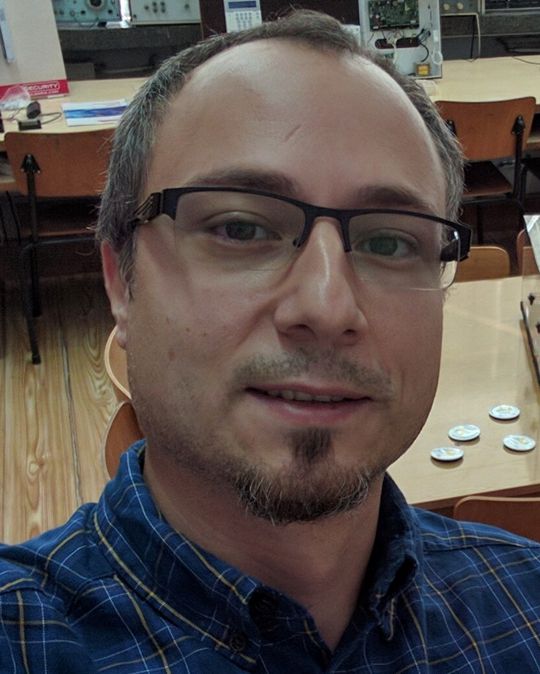
Paolo Giaccone is a Full Professor at the Department of Electronics and Telecommunications (DET) of Politecnico di Torino. He serves as Course Coordinator for the Master's Degree in Communications Engineering and contributes to teaching in the College of Electronic, Telecommunications and Physics Engineering. His research focuses on cloud computing, 5G networks, programmable data planes, WiFi-based crowd monitoring, and network softwarization . His recent publications highlight edge computing, microservice orchestration, and resource optimization in cloud and network systems. Collaborations with researchers like Carla Chiasserini and Holger Karl dominate his work. He has received honors such as the Open badge Learning to Teach (L2T) and served as Associate Editor for IEEE/ACM Transactions on Networking. He advises PhD candidates including Antonio Calagna and Madhura Adeppady, and leads projects like SmartShires and TrialsNet for next-generation networks.
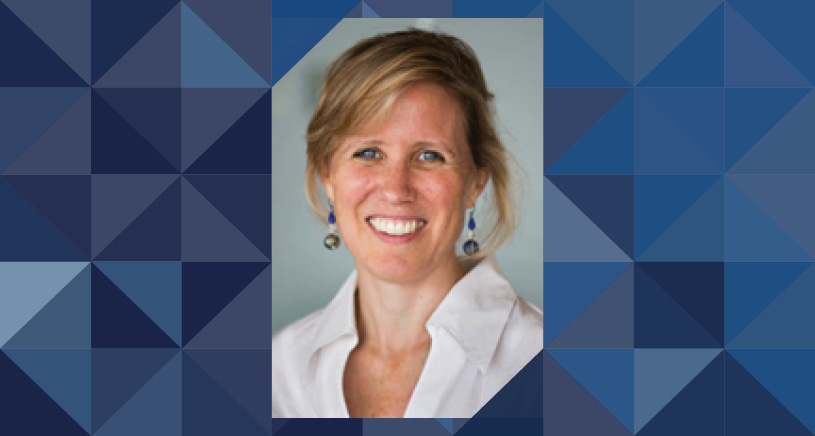
Rochelle Winikoff is an Assistant Clinical Professor in the Department of Pediatrics within the Faculty of Medicine, affiliated with CHU Sainte-Justine in Montreal, Canada. She specializes in hematology-oncology with a focus on hemostasis disorders. Dr. Winikoff completed her medical degree (1995) and Master of Science in Epidemiology and Biostatistics (2003) at McGill University, followed by specialized training in internal medicine, adult hematology, and hemostasis pathologies. Her research focuses on: Hemostasis abnormalities in women and children Von Willebrand Disease management Pediatric thrombotic thrombocytopenic purpura Bleeding disorders in obstetric and gynecological contexts Development of international clinical guidelines She leads the Interdisciplinary Women's Hemostasis Program and directs clinical programs for von Willebrand Disease and Pediatric TTP at CHU Sainte-Justine. Her publication record demonstrates consistent focus on bleeding disorders across pediatric and obstetric contexts, with recent work expanding into COVID-19 coagulopathies and international classification systems. Research themes include: Prophylactic management of inherited bleeding disorders Consensus guidelines for menorrhagia/postpartum hemorrhage Gender-specific approaches to hematological care International collaborative research networks Dr. Winikoff holds leadership positions including: Chair of the Women and Bleeding Disorders Committee (AHCDC) Co-chair of ISTH Women's Health Issues Subcommittee Honorary chair of Code Red program (Canadian Hemophilia Society) Active member of Canadian Pediatric Thrombosis Network She regularly presents at international conferences on women's hematology topics.
Dr. Gaoyang Dai is an Assistant Professor at Uppsala University's Department of Information Technology, specializing in Computer Systems research. His work focuses on real-time systems, embedded computing, and scheduling algorithms for complex task models. Research interests include: Deterministic timing analysis in distributed systems Priority inversion handling in multicore environments Non-preemptive node scheduling for DAG tasks Cyber-physical system design paradigms Deep learning applications in wireless networks Recent publications demonstrate expertise in IEEE Transactions and DATE conference proceedings, with particular emphasis on sporadic DAG task scheduling and resource sharing protocols. Collaborative work includes development of the TIMES-Pro toolchain for CPS implementation.
Na Li is an Adjunct Assistant Professor in the Department of Computing and Software at McMaster University's Faculty of Engineering. Her interdisciplinary research bridges computational methods with clinical hematology through extensive collaborations with transfusion medicine experts. Key contributions in biostatistical modeling for immune thrombocytopenia diagnosis Innovations in healthcare logistics for blood product management Pioneering AI-human collaboration frameworks for electronic health record analysis Her scholarly work spans machine learning applications in disease detection, operational research for blood inventory optimization, and clinical decision support systems development. Recent publications demonstrate integration of large language models with medical expertise for improved diagnostic accuracy. Notable research themes include: Pandemic resource allocation fairness Perioperative anticoagulant management Platelet transfusion analytics Blood product demand forecasting Privacy-preserving federated learning Her work has been cited extensively across transfusion medicine , critical care , and healthcare technology domains, with implementations in major clinical trials and policy documents.
Hamid Mehmood serves as an Adjunct Assistant Professor at McMaster University's School of Earth, Environment & Society, contributing to interdisciplinary environmental and societal research through computational methods. His scholarly focus spans multiple domains: Environmental Science (flood/reservoir mapping, carbon cycle analysis) Geospatial Informatics (GNSS/WLAN positioning, Landsat/GIS platforms) Machine Learning (neural networks for urban/environmental applications) Public Health (AMR, cardiovascular coping, clinical trials) ICT for Development (Urdu systems for farmers, mobile scaling) Recent publications demonstrate a shift toward urgent global challenges: 2024 machine learning-driven urban slum mapping in Indonesia, 2022 environmental health reviews on antimicrobial resistance, and 2021 geospatial platforms for flood management. His work consistently bridges technical innovation (e.g., Google Earth Engine, IVIG trials) with socio-economic contexts in Pakistan, Saudi Arabia, and Southeast Asia, while earlier research (2013-2015) established foundations in neural network-optimized positioning systems.
Sandor Ujvari is a Senior Lecturer in Logistics at the University of Skövde , associated with the School of Business and the Department of Commerce and Entrepreneurship. His research focuses on Supply Chain Management , Information Fusion in Manufacturing/Maintenance , Multi-Agent Systems (MAS) in Logistics , and AGV Modeling . His scholarly work spans interdisciplinary collaborations, particularly in healthcare quality improvement, where he explores Trust dynamics in management-initiated reforms System reliability in service delivery Cross-sectoral knowledge transfer He has published extensively on simulation-based optimization, stochastic transportation models, and institutional entrepreneurship. Recent trends in his publications highlight Integration of multi-agent systems for logistics Sustainability in supply chains Adaptation of industrial methods to healthcare His teaching involves Bachelor-level logistics courses and training programs, emphasizing ERP systems and digital transformation in supply chains. He currently leads the ongoing project "Labour Market Challenges of Green Transition in West Sweden" (2023–2029), analyzing societal impacts of automotive industry transformation. His co-authors include prominent researchers like Thomas Andersson , Nomie Eriksson , and Per Hilletofth . No scientific awards are explicitly mentioned in the provided texts.
Krassen Kirov Angelov is a full professor at the Department of Communication Equipment and Technologies within the Faculty of Electrical Engineering and Electronics at Technical University - Gabrovo . He has led and participated in 15 research projects, focusing on wireless communication platforms, IoT systems, and optical network optimization. Head, Department of Communication Equipment and Technologies Project Manager for 5G/IoT research (2022) Co-author of 3 textbooks on communication circuits Research Interests include: 5G network design and optimization IoT communication protocols Optical network modeling Secure data transmission Satellite broadcasting systems Smart infrastructure development His recent publications (2021-2025) demonstrate expertise in: Chaotic encryption techniques Neural network applications LoRaWAN coverage planning DVB-S2 signal transmission Passive optical network modeling Radio frequency optimization PhD Students : Plamen Tashev (Radio Channel Monitoring) Mikhail Angelakis (Wireless Resource Management) Victor Krustev (Security Identification) Ivan Zlatev (Network Resource Allocation) Evelina Vaseva (Beekeeping Monitoring)
Enrica Valeria Zola is a Professor Agregat at the Polytechnic University of Catalonia (UPC), affiliated with the Department of Telecommunications Engineering within the School of Telecommunications and Aerospace Engineering of Castelldefels (EETAC). She is an active member of two research groups: GRXCA (Group for Research in Cellular and Ad-hoc Communication Networks) and ISG-MAK (Information Security Group - Mathematics Applied to Cryptography). Her research focuses on wireless networking technologies, with particular expertise in Wi-Fi positioning systems (especially IEEE 802.11mc/RTT), 5G, ad-hoc networks, and mobile networking. With over 100 publications spanning from 2001 to 2025, her work demonstrates consistent contributions to the field. Recent publications (2021-2025) show a strong focus on Wi-Fi positioning technologies, particularly addressing challenges in accuracy, scalability, security, and implementation of the IEEE 802.11mc standard and RTT (Round Trip Time) positioning. Analysis of her 15 most recent publications reveals a cohesive research trajectory centered on improving wireless positioning systems. Her work spans theoretical analysis, practical implementation, security considerations, and performance optimization of Wi-Fi-based positioning technologies. She frequently addresses real-world challenges including NLOS (Non-Line-of-Sight) environments, hardware limitations, scalability issues in dense networks, and the integration of multiple positioning techniques for improved accuracy. Best Short Paper Award - International ACM Conference on Modeling, Analysis and Simulation of Wireless and Mobile Systems 2023 Best paper award - ICNS 2012 Professor Zola has served on scientific committees for numerous international conferences including the International ACM Conference on Modeling, Analysis and Simulation of Wireless and Mobile Systems, IEEE PE-WASUN, and IEEE International Conference on Wireless and Mobile Computing. Her extensive collaboration network includes researchers such as Israel Martin-Escalona, Francisco Barcelo, and Andreas Kassler, reflecting her integration within the international wireless communications research community.
Nagham Saeed serves as Associate Professor in Electrical and Electronic Engineering at the School of Computing and Engineering, University of West London, a position she has held since April 2023. Previously, she was Senior Lecturer in Electrical Engineering at the same institution from November 2017 to April 2023, following roles as Electronic Lecturer at Uxbridge College (2012-2017) and Electronic/Control Lecturer at Brunel University (2007-2012). Her academic credentials include: Ph.D. in Optimization in Wireless Networks and Communications (Brunel University, 2007-2011) M.Sc. in Mechatronics (University of Technology, Baghdad, 1997-1999) B.Eng. in Computer and Control (University of Technology, Baghdad, 1988-1992) DTLLS Diploma in Teaching (University of Westminster, 2012-2014) BAPP in Learning and Teaching (Brunel University, 2009-2010) Assessing Competence Certification (Uxbridge College, 2014) Dr. Saeed's research spans wireless communications, IoT, electric vehicles, and AI-driven energy optimization. Her work focuses on Bluetooth Low Energy applications for healthcare monitoring, battery management systems for EVs, sustainable ICT practices, and GIS-based land use analysis. She pioneers solutions for energy-efficient radio access networks and develops AI models for vehicle classification and low-resource language processing. Analysis of her 2022-2025 publications reveals three dominant trends: (1) AI integration for sustainable energy systems in telecommunications and transportation, (2) blockchain-secured vehicular networks for 6G infrastructure, and (3) cross-disciplinary applications of IoT in healthcare and environmental monitoring. Her research consistently bridges electrical engineering with computer science to solve real-world sustainability challenges. Professional recognition includes: MDPI Reviewer Acknowledgements (2020) for Algorithms, Applied Sciences, and Information journals While her 2022 educational research on feedforward teaching approaches demonstrates pedagogical engagement, no student supervision or grant management details are documented. Current institutional affiliations show no dedicated laboratory facilities or research teams specified in available records.
Amy Cohn is a Professor at the University of Michigan School of Public Health and College of Engineering, with appointments in the Department of Health Management and Policy and Industrial and Operations Engineering. Her work focuses on applying operations research methodologies to healthcare systems optimization. Education PhD in Operations Research from Massachusetts Institute of Technology (2002) AB in Applied Mathematics from Harvard University (1991) Research Interests Dr. Cohn's research centers on improving healthcare delivery through operations research and systems engineering approaches, particularly for patient scheduling , resource allocation , and health information technology . She has developed simulation models for chemotherapy deferrals, surgical training efficiency, and glaucoma clinic wait times. Scientific Awards Arthur F Thurnau Professorship - recognizing excellence in teaching and research Publications Trends Her publications demonstrate a consistent application of discrete-event simulation , stochastic programming , and optimization techniques to address healthcare challenges including telehealth scheduling , residency training logistics , and patient safety improvements through engineering-clinical collaborations. Leadership Roles As Associate Director of the Center for Healthcare Engineering and Patient Safety, she leads multidisciplinary teams in developing practical solutions for complex healthcare operations problems.
Kasım Sinan Yildirim is an Assistant Professor in the Computer Engineering Department at Ege University, Turkey. His work focuses on embedded systems, operating systems, and time synchronization in wireless sensor networks (WSNs). He previously worked as a software engineer at Beko Electronics R&D (2003-2007) and as a research assistant at Ege University (2007-2013). B.Sc. in Computer Engineering, Ege University (2003) M.Sc. in Computer Engineering, Ege University (2006) Ph.D. in Computer Engineering, Ege University (2012) His research introduces adaptive-value tracking for energy-efficient time synchronization in WSNs, achieving 97% less CPU overhead and 80% reduced memory allocation compared to flooding-based methods. This work addresses critical challenges in distributed algorithms and network protocol optimization.
Tie Cui serves as a Lecturer in Service Management at the University of Edinburgh Business School since April 2023, specializing in public service design and transformation. Her academic journey includes prior lecturing positions at the University of Greenwich (2021-2022) and Edinburgh Napier University (2022-2023). Dr. Cui holds a PhD from the University of Edinburgh (2021), fully funded by the Centre for Service Excellence (CenSE), following an MSc in Public Administration from Lanzhou University and a BSc in Public Administration from Shandong University. Her research centers on public service ecosystems , examining value co-creation and destruction in addressing grand challenges like climate change and pandemics. She employs qualitative methodologies to investigate policymaking, collaborative governance, and social innovation. Her work appears in leading journals including Public Administration Review , Public Administration , and Public Management Review . Analysis of her 24 publications reveals consistent focus on service ecosystem theory applied to crisis management (particularly pandemic responses) and environmental challenges. Her recent work increasingly integrates digital transformation themes with traditional public administration frameworks, demonstrating evolving research trajectories toward AI implementation and data-driven governance. Dr. Cui actively contributes to scholarly discourse through presentations and panel chairing at major conferences including IRSPM, PMRC, and PUBSIC. Her international collaborations span multiple continents, reflecting the global relevance of her public service research. She mentors students in public administration and service management, though specific advisee names aren't documented in available sources. Her research has secured funding through competitive channels including the Centre for Service Excellence, enabling fieldwork on Scottish public service innovations. Dr. Cui participates in the university's Service Innovation Lab, contributing to interdisciplinary projects examining healthcare service redesign and climate adaptation strategies through ecosystem lenses. Her current work explores AI ethics in public service algorithms and post-pandemic service recovery frameworks.
Louis Rossi is a Professor and the inaugural Dean of the University of Delaware Graduate College, affiliated with the Department of Mathematical Sciences in the College of Arts & Sciences. His research focuses on numerical methods, computational fluid dynamics, and swarm dynamics, with applications to fluid flows, ecological systems, wireless networks, and robotics. He has advised students such as Riu Fang, Zhenyu He, and Claudio Torres in these domains. Research interests span mathematical biology, environmental modeling, network protocols, and control systems. Notable projects include modeling predator-prey interactions, optimizing wireless sensor networks, and analyzing information transfer in swarms. Rossi has developed computational tools like BlobFlow for fluid simulations and contributed to slime mold-inspired routing algorithms for sensor networks. His educational efforts include organizing international study programs, such as a mathematical modeling trip to Melbourne, and enhancing foundational math courses. Rossi’s work bridges theoretical mathematics with practical applications, emphasizing interdisciplinary collaboration and computational innovation.
Adam Ali is an Assistant Professor of Arabic Language in the Department of Near and Middle Eastern Civilizations at the University of Toronto. His research focuses on warfare, military slavery, and revolts in medieval Islamic societies, utilizing medieval Arabic chronicles and biographical documents. He teaches Arabic language courses at beginner and intermediate levels across multiple campuses and offers specialized courses on Islamic history topics. Education: PhD in Islamic History from the University of Toronto (Department of Near and Middle Eastern Civilizations), with prior M.A. degrees from the University of Western Ontario and the University of Toronto. Research Interests: Medieval Arabic military traditions, military slavery systems, rebellions, and violence dynamics in pre-modern Muslim societies. His work bridges historical analysis with primary sources, examining themes like the Zanj Revolt and Mamluk military structures. Publications include books like Slavery in Egypt under the Mamluks (Oxford UP, 2023) and Zanj Revolt in the Abbasid Caliphate (Oxford UP, 2022). His articles explore topics such as Ottoman military strategies, medieval warfare, and the socio-political role of slavery in Islamic empires. Teaching: Has developed advanced Arabic reading courses at the Mississauga campus and contributed to curriculum design for Islamic history modules. Active in pedagogical innovation for language education and historical content delivery.
ÖMER KORÇAK is an Associate Professor and Vice Chair at the Department of Computer Engineering, Faculty of Engineering, Marmara University in Istanbul, Turkey. He holds a B.S., M.S., and Ph.D. in Computer Engineering from Boğaziçi University (2002, 2004, 2009). He served as a visiting researcher at Deutsche Telekom Laboratories in Berlin in 2011. His research focuses on network optimization, game theory applications in wireless/broadband networks, and IoT systems. Education: B.S. (High Honors) in Computer Engineering, Boğaziçi University, 2002 M.S. in Computer Engineering, Boğaziçi University, 2004 Ph.D. in Computer Engineering, Boğaziçi University, 2009 Research interests include: Network Economics and Game Theory Wireless Network Optimization IoT Architectures and Applications Federated Learning and Edge Computing Secure Communication Protocols Recent work trends show strong focus on: Edge caching with machine learning Federated learning frameworks IoT-driven smart systems for waste/warehouse management Game-theoretic models for network resource allocation He has advised 4 theses and led 6 research projects. His lab (insyslab.com.tr) explores next-generation networking solutions.