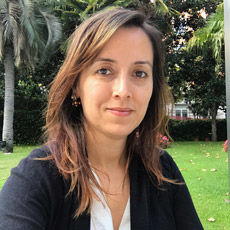
Celine Bencker is an External Lecturer and Academic researcher in the Department of Clinical and Health Psychology at the University of Vienna. Her research focuses on psycho-biological interactions in premenstrual symptomatology and stress responses during daily life. Her primary research interests include Premenstrual Dysphoric Disorder, stress neuroscience, and psychobiological interactions across the menstrual cycle. She employs ecological momentary assessment to investigate real-time psychological and biological stress responses in clinical populations. She has received prestigious awards including the Early Career Award (2025) SBSM Scholar Award (2025) She leads the research project: Investigating psycho-biological interactions in premenstrual symptomatology and stress during daily life , funded through the ÖAW-DOC Fellowship.
Josh Reiss is a Professor of Audio Engineering at Queen Mary University of London (QMUL), part of the School of Electronic Engineering and Computer Science . He holds additional roles including President-Elect and Fellow of the Audio Engineering Society (AES), and Visiting Professor at Birmingham City University. His research focuses on audio signal processing, procedural audio, and intelligent music production. He earned degrees including BSc in Physics, BSc in Mathematics, and a PhD. Research & Awards : Reiss has published over 200 papers, authored books like Intelligent Music Production , and received awards such as the AES Board of Governors Award (2009, 2010) and Best JAES Paper 2016. His work spans sound synthesis, dynamic range compression, and live audio systems. Teaching & Industry : Teaches modules like Artificial Intelligence and Sound Design. Co-founded startups LandR (AI mixing), Tonz, and Nemisindo. Leads the Centre for Digital Music at QMUL, advancing research in audio technology. Labs & Teams : Active in the Centre for Digital Music, collaborating on projects like the Open Multitrack Testbed and semantic audio evaluation tools.
Dr. Yan Feng is a Reader (Associate Professor) in Health Economics at Queen Mary University of London's Wolfson Institute of Population Health. She holds a BSc in Statistics from Capital University of Economics and Business (2005), an MSc in Economics from the University of Edinburgh (2006), and a PhD in Health Economics from the University of Aberdeen (2010). She is a Fellow of the Higher Education Academy (2019) and serves as Associate Editor of Health and Quality of Life Outcomes . Education BSc Statistics, Capital University of Economics and Business (Beijing, China), 2005 MSc Economics, University of Edinburgh, 2006 PhD Health Economics, University of Aberdeen, 2010 Research Interests Economic evaluation of clinical trials and health policies Pay-for-performance incentives in healthcare Quality of life measurement and utility valuation Applied micro-econometrics in health systems Key Projects Principal Investigator: Evaluation of bedside electronic transfusion checks (funded by Barts Charity) Co-Investigator: Cost-effectiveness studies for NIHR/Horizon 2020-funded trials Awards Fellow of the Higher Education Academy (2019) Teaching MSc Global Health: Health Economic Analyses Module Wellcome Trust PhD Programme: Effective and Efficient Evaluation Module
Rachel Mayberry's Academic Profile Rachel I. Mayberry is a Professor in the Department of Linguistics at the University of California San Diego (UCSD), where she holds affiliations with the Center for Research on Language, Cognitive Science Program, and the Center for Academic Research and Training in Anthropogeny (CARTA). She holds a Ph.D. from McGill University, M.Sc. from Washington University, and B.A. from Drake University. Her work focuses on the critical period for language acquisition through sign language and deafness studies. Her research integrates psycholinguistic and neuroimaging methods to explore how delayed language exposure impacts syntactic processing, brain development, and reading proficiency in deaf individuals. Key areas include neurolinguistic processing differences between early and late first-language learners of ASL, the role of modality in syntactic comprehension, and the relationship between gesture and language development. Mayberry teaches courses such as Sign Language and Its Culture (Lign 7), Child Language Acquisition (Lign 171), and Biology and Environment in Language Acquisition (Lign 282). She has received grants from NIH, the Kavli Foundation, and the National Science Foundation. Her work has been published in high-impact journals like Developmental Science , Proceedings of the National Academy of Sciences , and Brain and Language . Notable contributions include demonstrating that critical period effects are stronger for first-language acquisition than second-language learning, and revealing how early language deprivation alters neural language pathways in adulthood. Her lab collaborates with institutions like the Salk Institute and UCSD's Neuroscience Program to bridge cognitive science and linguistics.
Dr. Jill Hayden is a Professor in the Department of Community Health and Epidemiology at Dalhousie University's Faculty of Medicine. She leads the BACK Program, focusing on prognosis research and systematic reviews, funded by multi-year CIHR grants. Her work addresses improving healthcare decision-making through evidence synthesis and low back pain management. She contributes to the Cochrane Collaboration and serves as Nova Scotia Science Lead for the Maritime SPOR SUPPORT Unit. Education: PhD (University of Toronto) Chiropractic Clinical Sciences Residency (Canadian Memorial Chiropractic College) DC (Canadian Memorial Chiropractic College) BSc Honours (Dalhousie University) Research Interests: Dr. Hayden's research integrates clinical epidemiology with systematic review methodologies, emphasizing prognosis studies, individual participant data (IPD) analyses, and network meta-analyses. She investigates opioid prescribing practices, exercise therapy efficacy, and knowledge translation strategies to bridge research evidence and clinical practice. Key Awards: Researcher of the Year (Canadian Chiropractic Association, 2014) CIHR/CCRF New Investigator Award (2007–2012) Research Professorship in Epidemiology (2011–2016) Grants & Advising: Her CIHR-funded research supports prognosis studies and systematic review innovations. She advises on spinal manipulative therapy efficacy and has collaborated across institutions on pain management protocols. Labs/Teams: Leads the BACK Program and co-convenes the Cochrane Prognosis Methods Group, fostering interdisciplinary collaboration in evidence-based healthcare.
Amanda Forest, PhD, is an Associate Professor in the Department of Psychology at the University of Pittsburgh's Dietrich School of Arts & Sciences. Her research focuses on social psychology, particularly how communication styles, self-esteem, and emotional expression impact romantic relationships and social support dynamics. She holds a PhD from the University of Waterloo. Education: PhD in Psychology, University of Waterloo Her research interests include the role of self-disclosure, partner responsiveness, and social media in relationship processes. She has explored topics such as how expressing negativity can enhance support from romantic partners, the effects of positive expressivity in negative contexts, and the interplay between self-esteem and intimacy-building behaviors. Her recent work emphasizes the psychological mechanisms underlying relationship quality, including shared reality, gratitude dynamics, and instrumentality in goal achievement. Notable articles include studies on gender stereotypes in STEM education and the impact of social networks on relationship decisions. Awards: Dietrich School of Arts and Sciences Award for Excellence in Graduate Mentoring (2023), Fellow of the Society of Experimental Social Psychology, and multiple early-career recognitions including the Warren Ober Award (2013). She advises graduate students Emily O'Brien and Kirby Sigler. Her research lab, the Pitt Relationship Processes Lab , investigates interpersonal dynamics across contexts, from online interactions to romantic partnerships.
Dr. Anna Cronin De Chavez is a Research Fellow in Global Mental Health at the London School of Hygiene & Tropical Medicine (LSHTM) and holds a part-time position at the University of Exeter. She leads the SUCCEED Africa project’s communications workstream, focusing on community-based mental health rehabilitation in Zimbabwe, Malawi, Sierra Leone, and Nigeria. Her research spans global mental health, climate change adaptation, and maternal-child health, with a focus on equity and policy implementation in low- and middle-income countries (LMICs). She also supports the Mental Health Innovation Network and serves on Save the Children’s Research Ethics Committee. Education: PhD in Medical Anthropology (Durham University), MSc Health Education (Edinburgh University), MA Social Anthropology (Edinburgh University). Research Interests: Ethnographic methods, health systems responsiveness, green spaces for child development, and climate resilience strategies. Her work integrates mixed methods, including participatory approaches like photovoice and co-design. Publications highlight maternal mental health screening in sub-Saharan Africa, medicines pricing policies in Ghana, and barriers to health system integration in Vietnam. Her part-time role at Exeter explores community-led climate change adaptations. Affiliations: LSHTM’s Department of Population Health, University of Exeter, and advisory roles in Save the Children’s global research ethics.
Matthew Page is an Associate Professor and NHMRC Emerging Leadership Investigator Fellow at Monash University's School of Public Health and Preventive Medicine, leading research on methods for evidence synthesis. He holds roles such as Deputy Head of the Methods in Evidence Synthesis Unit and co-chair of the PRISMA Executive. His work focuses on improving systematic review quality, including co-developing the PRISMA 2020 statement and the RoB 2 tool for assessing bias in clinical trials. Page has led numerous studies addressing transparency, reproducibility, and bias in health research. He has held editorial roles at journals like the Cochrane Database of Systematic Reviews and the Journal of Clinical Epidemiology. His research spans interventions for musculoskeletal conditions, ADHD, and postpartum hemorrhage, with over 179 peer-reviewed publications. Awards include the Cochrane Bill Silverman Prize and multiple early-career recognitions. Education: PhD in epidemiology (2011-2015), visiting postdoctoral fellow at University of Bristol (2015-2017). Research Interests : Systematic review methodology, risk of bias assessment, reporting guidelines (PRISMA), health economics, and improving research transparency. His work bridges methodological innovation with applied clinical research, influencing global standards for evidence synthesis. Awards : NHMRC Fellowships, Cochrane Bill Silverman Prize (2018), Australasian Epidemiological Association awards (2011-2013). Grants & Projects : Leads projects on enhancing systematic review quality, updating PRISMA guidelines, and improving reporting/peer review practices. Active in initiatives like the PRISMA Executive and Cochrane Methods Group. Labs/Teams : Methods in Evidence Synthesis Unit at Monash University, collaborating internationally on guideline development and bias assessment frameworks.
Antoine Geissbuhler is a Full Professor at the University of Geneva's Faculty of Medicine, Department of Radiology and Medical Informatics. He serves as Dean of the Faculty of Medicine since July 2023, following his role as Vice-Rector for Digital Strategy and Innovation. Additional leadership positions include Director of the HUG Innovation Center and Chief Physician of the eHealth and Telemedicine Department at Geneva University Hospitals (HUG), recognized as a WHO collaborating center. He also presides over BioAlps, Western Switzerland's life sciences cluster. Geissbuhler's research focuses on designing and implementing IT tools in healthcare, with emphasis on telemedicine networks and digital health strategies. His work spans global contexts including Africa, Asia, and Latin America through the RAFT project connecting hundreds of healthcare professionals across 20 countries. Key domains include maternal health monitoring, shared medication plans, AI chatbots for patient education, and digital solutions for non-communicable diseases. His publications reveal strong trends in implementation science, particularly frameworks for reporting digital health interventions (iCHECK-DH) and learning from implementation failures. WHO Collaborating Center designation for eHealth department President of BioAlps life sciences cluster (since 2022) Architect of Swiss eHealth strategy implementation Developer of RAFT telemedicine network As an educator, Geissbuhler has pioneered telemedicine training across resource-limited settings through the RAFT network. His leadership extends to digital health policy, including contributions to global standards for health information systems and ethical frameworks for health data reuse. Current initiatives emphasize patient-centered digital tools and strengthening health system resilience through technology.
Ceren Ozgen is an Associate Professor in the Department of Economics at the University of Birmingham , affiliated with the Birmingham Business School . She is the University of Birmingham director of the Big Data and Economics Research Network (BVRN), a collaborative initiative with Vrije Universiteit Amsterdam, focused on data-driven research in urban, environmental, labour, and migration economics. Education: PhD in Economics, VU University Amsterdam, 2008–2013 MSc in Economics, University of Trento, Italy, 2004–2005 Her research lies at the intersection of labour and urban economics , with a strong emphasis on international migration, firm innovation, technological change, skills mismatch, and green innovation . She has published extensively in top-tier journals and her work has been supported by prestigious grants, including an ESRC/UKRI award of £1.4 million for the Diversity and UK Firm Performance project. Her recent publications highlight a growing focus on sustainability, green jobs, and the impact of automation on labour markets. The body of her recent work reveals a consistent trend in applying big data and advanced econometric methods to assess how demographic and technological changes affect urban economies and firm performance. Her research spans migration policy, eco-innovation, and intergenerational mobility, often leveraging large-scale national datasets. Scientific Awards and Honors: Marie Skłodowska-Curie Fellowship (European Commission) Research Fellow, IZA Institute of Labor Economics Professional Roles and Grants: Dr. Ozgen leads the BVRN and serves on the ESRC Peer Review College and Royal Economic Society Peer Learning Sets. She has acted as an external reviewer for research councils in Luxembourg, Canada, Singapore, and the US-Israel Binational Science Foundation. Her grant for the Diversity and UK Firm Performance project underscores her leadership in collaborative, policy-relevant research. Labs and Research Networks: She is actively involved with IRiS (Institute for Research into Superdiversity) and co-directs the Big Data and Economics Research Network (BVRN) , fostering interdisciplinary and international research collaborations focused on urban and economic challenges.
Dr. Antoine Cully is the director of the Adaptive and Intelligent Robotics Lab at Imperial College London. He previously served as a Research Associate in the Personal Robotics Lab (2016–present) and earned his PhD in Robotics and Artificial Intelligence from UPMC (Paris), focusing on algorithms enabling robots to adapt to mechanical damage swiftly. His work has been internationally recognized, including a Nature cover publication and awards for his PhD thesis. His research interests span evolutionary robotics, stochastic optimization, and quality-diversity algorithms, with current projects involving the EU H2020 'PAL' initiative to develop adaptive robotics for user preferences. Education: M.Sc. in Intelligent Systems and Robotics (UPMC, 2012), Engineer degree in Robotics (Polytech-Paris UPMC, 2012), PhD in Robotics and AI (UPMC, 2015). Research emphasizes adaptive robotics, damage recovery, and autonomous learning. Notable contributions include the T-Resilience algorithm and MAP-Elites optimization framework. Awards include the 'Outstanding Paper 2015' and 'Best Thesis' accolades. His lab focuses on advancing AI-driven robotics for real-world applications.
Dr. Angela Madden is a Clinical Professor and Clinical Researcher in Nutrition and Dietetics at the University of Hertfordshire, where she initiated and led the Nutrition and Dietetics program (2006–2020). She holds a PhD in Nutrition from University College London (UCL). Her research focuses on enhancing health through nutritional interventions, particularly in clinical dietetics and public health, with expertise in liver disease, obesity, and energy expenditure assessment. She is a Fellow of the British Dietetic Association (BDA) and Trustee of its General and Education Trust. Her academic roles include teaching research-informed practices and mentoring over 12 peer-reviewed papers co-authored with students. Key research interests include nutritional assessment tools, energy expenditure prediction, and dietary interventions for chronic conditions like cirrhosis and coeliac disease. She supervises PhD students exploring behavior change in obesity and post-transplant nutrition. Major projects include systematic reviews on gallstone disease management and resting energy expenditure in children. She has contributed to national guidelines, such as improved height prediction equations for ethnically diverse populations. Awards include BDA Fellowships and collaborative grants from NIHR and the MRC.
Zheng Zhang is a Ph.D. candidate in the Department of Computer Science and Engineering at the University of Notre Dame, where he focuses on human-AI interaction. He also works as an Applied Scientist in Adobe's GenAI team, developing interactive AI systems for user experience enhancement. He has held internships at Apple, AWS AI, and Meta Reality Labs. Education: Ph.D. (in progress) at University of Notre Dame M.S. in Computer Science from University of Rochester and University of Minnesota B.Eng. in Software Engineering from Shaanxi Normal University His research explores the intersection of human-computer interaction (HCI) and machine learning (ML), emphasizing systems that provide adaptive, context-sensitive support for complex cognitive tasks. Key areas include collaborative tools for team ideation, incremental learning from user demonstrations, and multimodal context-aware interfaces. Recent publications demonstrate a focus on AI-augmented collaboration through large shared displays (LADICA), audio-visual annotation (PEANUT), and interactive qualitative coding (PaTAT). His work increasingly integrates generative AI with real-time human input, particularly for co-located teams and educational applications. He serves as a Program Committee member and reviewer for top HCI/ML conferences including CHI, UIST, IUI, and ACL. Teaching experience spans courses in human-AI systems, algorithms, and data structures.
Sravan Perla is an Associate Research Scientist in the Department of Pharmacology at Yale School of Medicine, where he conducts research under the mentorship of Dr. Anton Bennett. His work focuses on elucidating the molecular mechanisms of Protein Tyrosine Phosphatases (PTPs) in congenital heart diseases and metabolic regulation. Education: Ph.D. in Molecular Medicine and Pathology from New York Medical College and the University of Toledo; M.Sc. in Medical Biochemistry from JIPMER, India; B.Sc. in Biochemistry from Silver Jubilee Govt. Degree College. His primary research interests include cardiovascular signaling pathways , particularly the PZR/Shp2/Irx3/Irx5/BMP10 axis in Noonan Syndrome and related disorders. He investigates epigenetic regulation of genes like angiotensinogen and explores therapeutic interventions such as low-dose dasatinib and recombinant BMP10 for hypertrophic cardiomyopathy. His work bridges molecular pharmacology and translational medicine. The recent publications highlight a strong trend in signal transduction , cardiovascular pathophysiology , and therapeutic repurposing , with a focus on tyrosine phosphatases and TGF-β pathways. His research also extends into neurological applications, as seen in his co-authored work on post-stroke seizures. Best Poster Presentation , Yale Center for Molecular and Systems Metabolism (YMSM), 2024 Armed Forces Medical College Quiz Award , Association of Clinical Biochemists of India, 2010 Sravan Perla actively contributes to peer review for journals including Frontiers , Healthcare-MDPI , and International Journal of Environmental Research and Public Health . He is a key member of the Bennett Laboratory , where he advances research on PTP signaling and its implications for human disease. His work is supported by institutional affiliations at Yale and collaborative networks across neuroscience and cardiology.
Ehud Reiter is a Professor of Natural Language Generation at the University of Aberdeen's School of Natural and Computing Sciences, Department of Computing Science. With over three decades of research experience, he is recognized as one of the world's leading experts in Natural Language Generation (NLG), particularly in data-to-text systems, evaluation methodologies, and healthcare applications. Reiter's research primarily focuses on creating systems that generate accurate, useful, and understandable natural language from structured data. His work spans multiple domains including healthcare (medical note generation, patient-facing systems), sports reporting, and explainable AI. A significant portion of his recent research addresses the critical challenge of evaluating NLG systems, with particular emphasis on human evaluation methodologies, reproducibility of results, and factual accuracy in generated text. His work on Bayesian Networks and causal graph discovery represents his ongoing interest in knowledge representation and reasoning behind natural language explanations. His research has evolved from foundational work on reference generation and document planning to current projects addressing large language models, reproducibility crises in NLP evaluation, and human-AI collaboration frameworks. The SPHERE evaluation card framework he co-developed represents a systematic approach to evaluating human-AI interaction systems across five key dimensions. Reiter has been instrumental in organizing multiple shared tasks focused on reproducibility in NLG evaluations, demonstrating his commitment to improving research methodology in the field. His work on consultation checklists for medical note evaluation has introduced standardized protocols that increase objectivity in clinical text assessment. Through projects like BabyTalk (generating neonatal intensive care unit summaries) and DrivingBeacon (providing driving behavior feedback), Reiter has demonstrated the practical applications of NLG technology in critical domains. His research consistently bridges theoretical advances with real-world implementation challenges.