Norwegian University of Science And TechnologyNorway
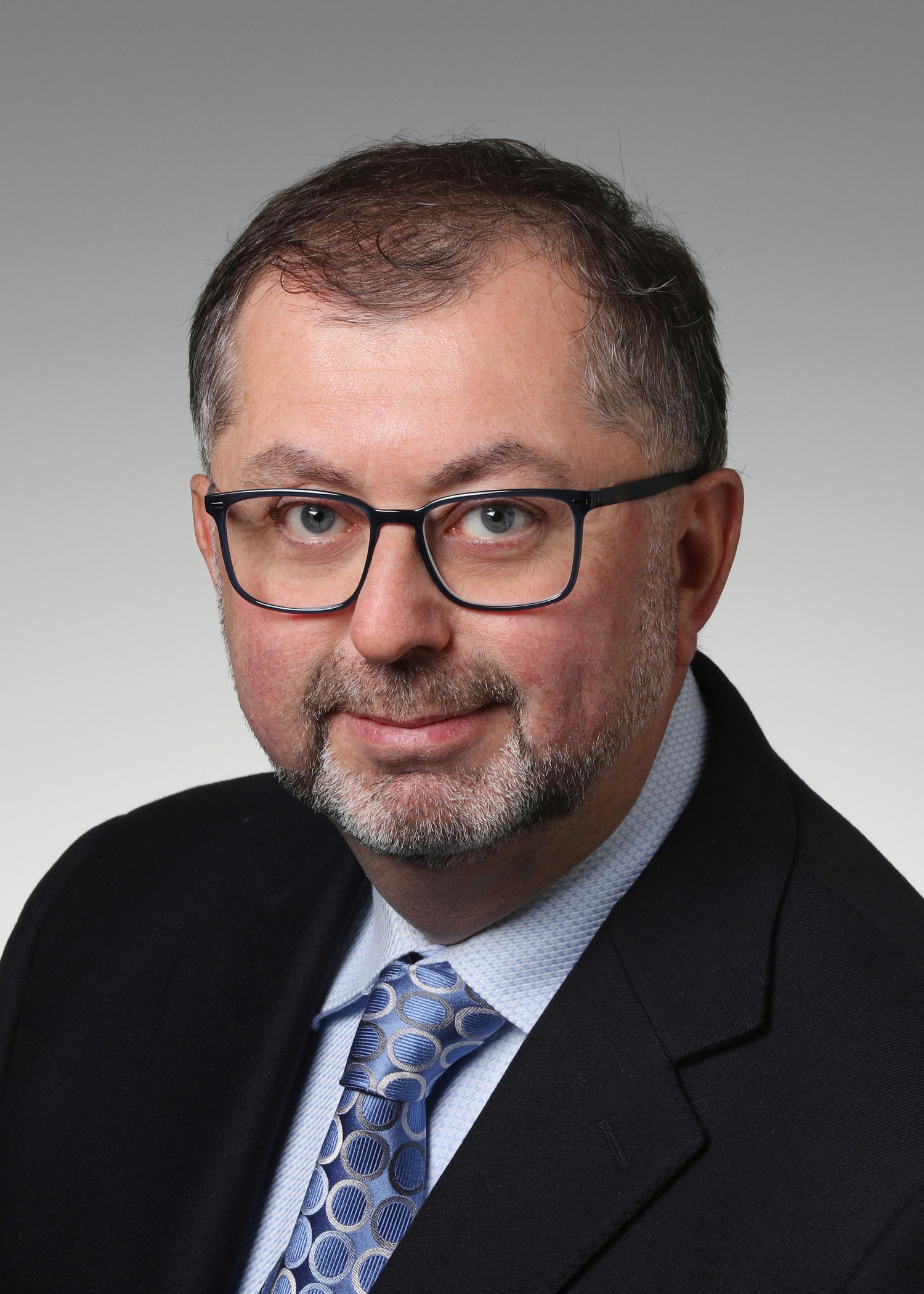
Irina Oleinikova is a Professor at the Norwegian University of Science and Technology (NTNU) in the Department of Electric Energy, Faculty of Information Technology and Electrical Engineering. She leads the Power System Operation and Analysis research group and serves as the NTNU Smart Grid Team Leader. She is a steering committee member of the European Energy Research Alliance (EERA) Joint Programme on Smart Grids and an expert in the International Smart Grid Action Network (ISGAN) WG6. Research Interests : Power System Operation, Digital Power System Protection and Control, Grid Resilience, Energy Flexibility, Cybersecurity in Power Systems, and Hydrogen Technology Integration. Her work focuses on advancing smart grids, grid flexibility, and cybersecurity through projects like FME CINELDI, HONOR, ASAP, and ZeroKyst. Key Projects : CINELDI : Developing intelligent electricity distribution grids. HONOR : Cross-sectoral energy flexibility markets. ASAP : Next-generation system protection schemes. ZeroKyst : Hydrogen and charging infrastructure along Norway’s coast. COSPAT : Stability of AC/DC transmission grids via co-simulation. Advising & Grants : Supervises PhD students in digital protection and cybersecurity. Active in projects funded by RCN, STATNETT, and EU Horizon 2020. Leads the Power System Operation and Analysis group and collaborates with SINTEF and industry partners. Labs/Teams : NTNU Smart Grid Team and the Power System Operation research group.
Swiss Federal Institute of Technology in LausanneSwitzerland
Thomas Demeester is an Associate Professor at the Internet Technology and Data Science Lab (IDLab), Ghent University - imec, Belgium. Appointed as Assistant Professor in 2019, he leads an AI research group focused on health applications and drug design, co-directing the Text-to-Knowledge research cluster with Prof. Chris Develder. His educational background includes: M.Sc. in Electrical Engineering from Ghent University (2005), completed with thesis work at ETH Zurich Ph.D. in Computational Electromagnetics from Ghent University (2009), funded by Research Foundation - Flanders (FWO) Demeester's research spans artificial intelligence with emphasis on deep learning and neuro-symbolic methods. Current tracks include energy-based models (Hopfield Networks, Deep Equilibrium Models), diffusion models for drug design, and clinical reasoning systems. His work bridges NLP, healthcare informatics, and generative AI with strong industry partnerships. Recent publications (2023-2025) reveal strategic expansion from NLP into health-centric AI: BioLORD biomedical encoders (2023), synthetic medical data frameworks (UAI/NeurIPS 2024), and novel diffusion model guidance (ICLR 2025). This evolution demonstrates convergence of generative modeling, clinical data analysis, and protein design. He actively mentors 24 PhD students across diverse AI domains: Current Research: Conversational agents, emotion analysis, clinical reasoning, antibody design, and diffusion model optimization Recent Graduates: Interpretable language models, biomedical semantics, task-oriented dialogue, and social media knowledge extraction Research is supported by imec funding and collaborations with Flemish biotech companies, building on his post-doctoral experience securing media-sector projects. Within IDLab, he co-leads the Text-to-Knowledge cluster driving NLP innovations for healthcare, legal, and economic applications.
Dr. Karim El-Basyouny is a Killam Laureate Professor and City of Edmonton Urban Traffic Safety Research Chair at the University of Alberta's Faculty of Engineering, where he serves as Associate Dean (Research Infrastructure and Innovation) in the Civil and Environmental Engineering Department. A licensed Professional Engineer in Alberta, he holds advanced degrees in Transportation Engineering from the University of British Columbia and has dedicated his career to advancing road safety through data-driven management frameworks. His academic credentials include: Doctor of Philosophy, Civil Engineering, University of British Columbia, 2011 Engineering Management Sub-specialization, Civil Engineering, University of British Columbia, 2010 Master of Applied Science, Civil Engineering, University of British Columbia, 2006 Bachelor's degree (ABET Equivalent), Civil & Environmental Engineering, United Arab Emirates University, 2003 El-Basyouny's research pioneers the integration of remote sensing, machine learning, and statistical modeling to enhance transportation safety. His work develops automated tools for infrastructure digitization, collision prediction, and speed management, treating safety as a systemic product requiring management frameworks. Key contributions include LiDAR-based road feature extraction, network-level safety evaluations, and frameworks for vision-zero outcomes that address both human-driven and autonomous vehicle contexts. His recent publications demonstrate a cohesive research trajectory centered on leveraging point cloud data and computational intelligence for safety management. Over 15 major publications since 2021 focus on automated infrastructure assessment (light pole detection, clear zone mapping, vertical clearance evaluation), weather-impact modeling, and enforcement resource optimization. This body of work bridges transportation engineering with computer vision and operations research to create scalable safety solutions. His scientific contributions have been recognized with prestigious honors including: 2024 Killam Annual Professorship Award 2024 Road Safety Achievement Award from TAC 2023 Donald Stanley Award for environmental engineering 2022 Faculty of Engineering Graduate Teaching Award 2021 Daniel B. Fambro Student Paper Award As an academic leader, El-Basyouny actively mentors graduate students and secures significant research funding through his endowed chair position. He currently recruits fully-funded PhD and postdoctoral candidates specializing in remote sensing applications, machine learning, and geomatics for road digitization projects. His research group collaborates with national safety committees and municipal agencies to translate findings into policy, while he serves on editorial boards for Transportation Research Record and Analytic Methods in Accident Research. The research group operates at the intersection of transportation engineering and computational science, developing automated frameworks that merge sensor technologies with data processing tools. Current projects focus on semantic segmentation of 3D point clouds, safety implications of infrastructure digitization, and machine learning applications for road feature extraction in both urban and rural environments.
Ki-Woong Park is a tenure-track full Professor in the Department of Computer and Information Security at Sejong University. He leads the System Security and Computer Engineering Research (SysCore) Lab, which focuses on system security research with numerous ongoing projects funded by major Korean research institutions including IITP, NRF, and KRIT. Sejong University, Department of Computer and Information Security System Security and Computer Engineering Research (SysCore) Lab Leader Member of IEEE, IEEE Computer Society, and ACM Education: Ph.D. in Electrical Engineering & Computer Science, KAIST (Advisor: Prof. Kyu-Ho Park) M.S. in Electrical Engineering & Computer Science, KAIST (Advisor: Prof. Kyu-Ho Park) B.S. in Computer Science, Yonsei University (Summa Cum Laude) Exchange Student at University of California, Los Angeles (UCLA) Professor Park's research focuses on designing, building, and analyzing secure systems, particularly for cloud computing, networked systems, and embedded systems. His work often involves reevaluating existing security mechanisms and actual system implementations with subsequent evaluation in real computing environments. He has made significant contributions to areas including cloud security, IoT security, ransomware detection, moving target defense, and metaverse security. His research approach emphasizes both theoretical foundations and practical implementation, with numerous publications in top-tier security and systems venues. His recent publications (2023-2024) demonstrate a strong focus on emerging security challenges in modern computing environments, particularly in metaverse platforms, UAV systems, and edge computing. These works span both theoretical security frameworks and practical implementations, with an emphasis on visualization techniques, hardware-based security mechanisms, and AI-enhanced security analysis. His research shows a clear progression from traditional cloud and network security toward next-generation security challenges in immersive virtual environments and cyber-physical systems. Scientific Awards: Microsoft Research Fellowship (2009-2010) Best Poster Gold Award at WISA 2020 Best Paper Award at MobiSec'18 Professor Park actively mentors numerous graduate and undergraduate students through the SysCore Lab, with current members including Ph.D. students, MS students, and undergraduate researchers. His research is supported by multiple significant grants, including the NRF Outstanding Researcher-Mid-career Researcher project, IITP Information Security Core Source Technology Development, and Defense Technology Advancement Research Institute projects. These grants total tens of billions of Korean won and address critical national security challenges in cyber defense, cloud security, and metaverse technologies. The SysCore Lab, under Professor Park's leadership, maintains a strong industry and government collaboration network, with part-time researchers from organizations including Hyundai Duty Free, Astron Security, Korea University, and various military cyber commands. This unique structure enables the lab to address both theoretical security challenges and practical implementation issues in real-world systems.
Professor Gregor Verbic is a faculty member at the University of Sydney in the School of Electrical and Computer Engineering , where he serves as Director of the Centre for Future Energy Networks . Previously, he held an assistant professor position at the University of Ljubljana and was a NATO-NSERC Postdoctoral Fellow at the University of Waterloo. His career spans academic research, industry leadership as Head of Interenergo's Investment Department, and extensive collaboration with IEEE. PhD in Electrical Engineering (University of Ljubljana) Senior IEEE Member Research Interests focus on transforming power systems to zero-carbon grids through: Aggregation and control of distributed energy resources (DERs) Frequency control with wind generation and electric vehicles Stochastic optimization for multi-energy systems Smart home energy management with phase change materials Notable Contributions include: 2006 IEEE prize paper for voltage instability prediction 2010-2024: 15 recent publications on DER coordination, network tariffs, and low-inertia grid stability Teaching includes courses on: ELEC3203/ELEC9203: Electricity Networks ELEC5213: Engineering Optimisation ELEC5206: Sustainable Energy Systems Labs & Initiatives Centre for Future Energy Networks The Net Zero Institute
Zhuo Feng is Professor of Electrical and Computer Engineering at Stevens Institute of Technology, directing the HUDSON Lab and holding a Ph.D. from Texas A&M University. His research develops spectral graph methods for VLSI design, including circuit simulation, power grid verification, and machine learning applications. Funded by NSF CAREER and multiple grants, his work has produced award-winning algorithms like GRASS for graph sparsification. Recent publications focus on spectral methods for circuit stability analysis, physics-informed neural networks, and explainable AI frameworks. He teaches graduate courses in VLSI design and GPU programming while co-founding LeapLinear Solutions. NSF CAREER Award (2014) ACM/IEEE DAC Best Paper Award (2013) Multiple Best Paper Nominations (ICCAD 2008, 2006)
Halim Yanikomeroglu is a Full Professor and Chancellor's Professor at Carleton University's Department of Systems and Computer Engineering, part of the Faculty of Engineering and Design. His research focuses on wireless communications, including 5G/6G networks, non-terrestrial systems (HAPS/LEO satellites), MIMO, and cognitive radio. He has supervised numerous graduate students and holds IEEE Fellow status and the Harold Sobol Award. His work integrates machine learning, federated learning, and sustainability into next-generation networks. Affiliations: Carleton University, IEEE Education: Ph.D. (Toronto), M.A.Sc. (Toronto), B.Sc. (Middle East Technical University) Research interests span cellular networks, relay architectures, and energy-efficient systems. He pioneered cell-switching strategies for green networks and contributed to HAPS and UAV-based infrastructure. His recent work addresses NTN integration, AI-driven spectrum management, and 6G innovations. Awards include IEEE Fellow (2017) and multiple Research.com leadership accolades. His 150+ publications span journals like IEEE Transactions and conferences like ICC. Advising over 50 students, he emphasizes interdisciplinary solutions for future wireless challenges.
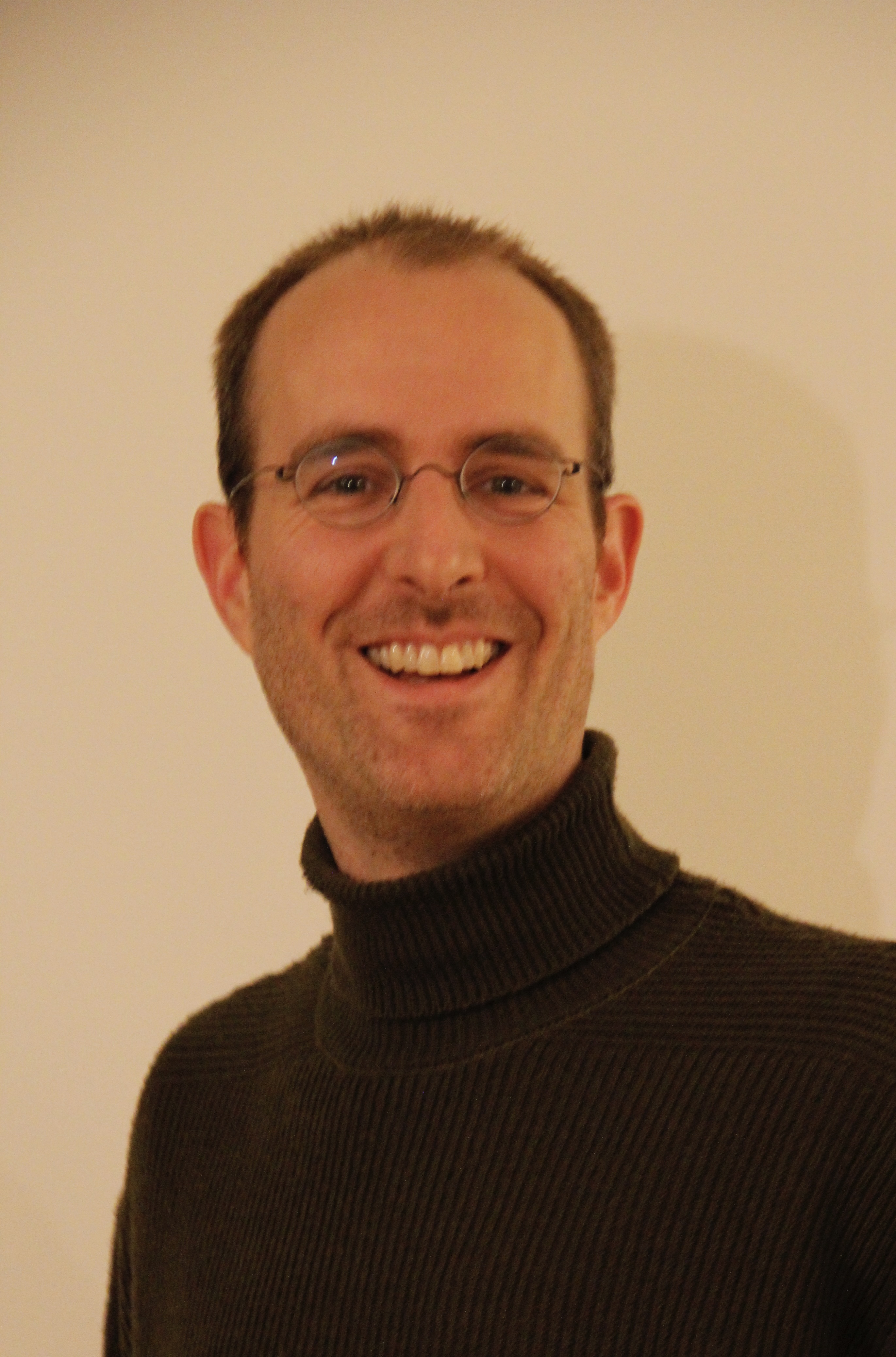
Kord Eickmeyer is a Lecturer at Technische Universität Darmstadt in the Department of Mathematics, specializing in the mathematical logic group. He holds a PhD in mathematics from Humboldt University Berlin and has held postdoctoral positions at TU Darmstadt (2011–2017) and the National Institute of Informatics in Tokyo (2011–2013). His research focuses on finite model theory, graph structure theory, and computational complexity, particularly in descriptive and parameterized complexity, as well as randomization and derandomization techniques. Research interests include exploring the boundaries of computational complexity through logical frameworks, analyzing graph structures for efficient algorithm design, and investigating the role of randomness in computation. His work bridges theoretical computer science and mathematical logic, with applications in algorithm design and formal methods. Publications span topics from model-checking on ordered structures to gap-planar graphs and randomized logics. Collaborations include prominent institutions like the National Institute of Informatics and Humboldt University Berlin. No scientific awards are explicitly listed, but his extensive academic contributions reflect a strong research trajectory. Advising and grants are not detailed in the provided text, though his academic career includes supervision roles during his PhD and postdoctoral phases. His involvement with the mathematical logic group at TU Darmstadt highlights collaborative research efforts in foundational areas of computer science and mathematics.
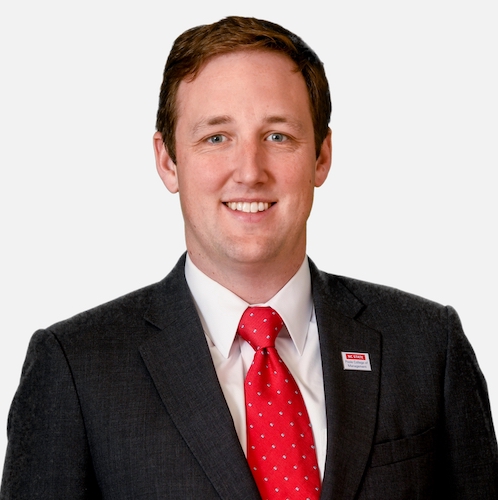
Patrick Flynn is the Matthew and Soogi Hong Fellow and Assistant Professor of Management at North Carolina State University's Poole College of Management, Department of Management, Innovation & Entrepreneurship. He holds a Ph.D. in Organizational Behavior and Human Resources from the University of South Carolina and a B.S. in Supply Chain Management from the University of Maryland. His research focuses on dynamic individual and group processes, including event-based adaptation, team citizenship behaviors, and resilience. He teaches courses in people analytics, management consulting practicum, and leadership consulting. Dr. Flynn’s work has been published in top journals such as Journal of Management , Journal of Applied Psychology , and Annual Review of Organizational Psychology . He serves on the editorial board of Group & Organization Management . His research explores transitions, sustainability, and organizational change, with media features in CNBC, MSN, and the Raleigh News & Observer . His academic contributions emphasize practical applications of organizational behavior theories, particularly in post-pandemic workplace dynamics, remote work adaptations, and employee well-being strategies. His recent work addresses collective turnover, trust dynamics, and proactive sustainability approaches in volatile environments.
Sean Lubner is Core Faculty at the Boston University Institute for Global Sustainability (IGS) and Assistant Professor in Mechanical Engineering within the College of Engineering. He holds a PhD from UC Berkeley and BS degrees in Mechanical Engineering and Applied Physics from Carnegie Mellon University. His research focuses on energy transport and storage systems, including thermal energy storage, battery diagnostics, and CO₂ capture technologies. Education: PhD in Mechanical Engineering, UC Berkeley (NSF Fellow) BS in Mechanical Engineering & Applied Physics, Carnegie Mellon University Research Interests: Lubner specializes in grid-scale thermal energy storage, non-invasive sensors for harsh environments, and decarbonization strategies. His work integrates machine learning with materials science to develop advanced energy systems. He collaborates with industry on patents involving battery safety, photonic surfaces, and phase change materials. Article Trends: Recent publications emphasize high-temperature materials, battery failure prediction via thermal signatures, and femtosecond laser processing for photonic surfaces. His work bridges nanoscale phenomena with macro-scale energy systems, leveraging interdisciplinary methods. Awards: Lubner was an NSF Graduate Research Fellow during his PhD. Advising & Grants: While no advisees are listed, his research is supported by industry partnerships and grants focusing on energy storage innovation. He leads the Lubner Group, which develops novel sensing and storage technologies. Labs/Teams: The Lubner Group at BU focuses on sustainable energy solutions, combining experimental and computational approaches to address climate challenges.
Laureate Professor Behdad Moghtaderi is a globally recognized chemical engineer at The University of Newcastle's School of Engineering. He leads research in clean energy technologies, including the GRANEX heat engine, greenhouse gas abatement, and chemical looping processes. His work addresses critical challenges in energy efficiency, renewable energy systems, and reducing fugitive methane emissions from coal mines. With over $48M in research funding and 220+ publications, he directs the Newcastle Institute for Energy and Resources (NIER) and holds leadership roles in national and international energy initiatives. Education: PhD (University of Sydney), MEng (University of Sydney), BSc (Shiraz University) Administrative Roles: Director of NIER, former Head of School of Engineering, and member of global energy advisory bodies Research interests span energy systems, combustion science, and sustainable technologies. Notable innovations include the VAMCO system for methane abatement and solar thermal GRANEX installations. Awards include the Carrick Teaching Citation and multiple engineering excellence recognitions. Scientific contributions include 14 PhD completions and over 20 funded projects. Current focus areas include hydrogen safety, carbon capture, and thermochemical energy storage. His labs (NIER) collaborate with industry partners like Siemens Energy and the Australian Hydrogen Council.
Associate Professor Steven Lu is a faculty member at the University of Sydney Business School, serving as Deputy Head of Discipline (Education). He holds a PhD in Marketing from the University of Toronto, an MA in Economics from York University, and a BA from Nankai University. His research focuses on quantitative modeling, machine learning, and big data analytics applied to digital economy challenges such as digital retailing, search advertising, and blockchain. He co-directs the Consumer Insights Research Group and is affiliated with the Sydney Institute of Agriculture. Dr. Lu has published in top journals including Marketing Science , Production and Operations Management , and Journal of Retailing . His awards include the CNS Vithala Rao Award, ANZMAC Best Paper Awards (2022-2024), and the 2021 Vice Chancellor's Teaching Award. He teaches courses on machine learning in marketing, marketing research, and new product development. He leads research grants such as 'The Era of Mobile Payment' (2021) and 'Digital Transformation of Food Sensory Quality' (2017). His advising focuses on topics like neural recommender systems, e-coupon effectiveness, and heterogeneous treatment effects analysis.
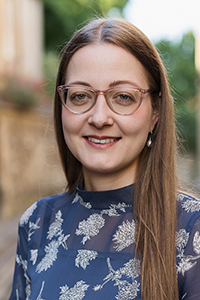
Melanie Weber is an Assistant Professor of Applied Mathematics and Computer Science at Harvard University's John A. Paulson School of Engineering and Applied Sciences (SEAS), leading the Geometric Machine Learning Group. Her research focuses on leveraging geometric structures in data for designing efficient machine learning and optimization algorithms with theoretical guarantees. She holds a PhD from Princeton University (2021) and has held fellowships at the Mathematical Institute of Oxford, Brasenose College, and the Simons Institute. Her work bridges geometry, optimization, and machine learning, with funding from NSF, Sloan Foundation, and Harvard initiatives. Education : PhD in Applied Mathematics, Princeton University (2021) BSc/MSc in Mathematics and Physics, University of Leipzig (2016) Research Interests : Dr. Weber's research integrates geometric principles into machine learning and optimization, focusing on non-Euclidean spaces, graph structures, and manifold-based methods. Key areas include optimization on Riemannian manifolds, curvature-based analysis (e.g., Ricci curvature), and developing algorithms resilient to data geometry challenges like over-smoothing in graph neural networks. Her work emphasizes theoretical foundations while addressing practical scalability in high-dimensional data. Awards & Recognition : 2024 Sloan Research Fellowship 2023 Leslie Fox Prize in Numerical Analysis 2023 NSF Grant for Geometric Optimization Grants & Funding : Supported by National Science Foundation (NSF), Alfred P. Sloan Foundation, Aramont Foundation, Harvard Dean’s Fund, and Harvard Data Science Initiative. Labs & Collaborations : Leads the Geometric Machine Learning Group at SEAS, collaborating with institutions like MIT, Max Planck Institute, and industry labs (Facebook, Google, Microsoft). Active in organizing workshops on geometric methods and curvature analysis.
Fabian E. Bustamante is a Professor of Computer Science at the McCormick School of Engineering, Northwestern University. His research focuses on experimental analysis of large-scale Internet networks and distributed systems, emphasizing network measurement, infrastructure characterization, and system design improvements. He leads the AquaLab research group. Education: Ph.D. Computer Science, Georgia Institute of Technology (200?) M.S. Computer Science, Georgia Institute of Technology Licenciado en Ciencias de la Computacion, Universidad Nacional de la Patagonia San Juan Bosco, Argentina Analista Programador Universitario, same university Research Interests: Professor Bustamante's work spans network survivability, crisis-driven network analysis (e.g., Venezuela's internet), and re-architecting internet infrastructure. His lab develops tools to improve network visibility and system resilience. Recent Work Trends: 2023-2024 publications emphasize geopolitical network impacts, infrastructure interdependencies, and latency optimization across global networks. His team collaborates with institutions like ACM and Springer on measurement-driven system redesign. Lab/Team: AquaLab focuses on applied networking research with real-world deployment implications. Current projects include crisis network analysis and internet topology optimization.
University of Illinois Urbana-ChampaignUnited States
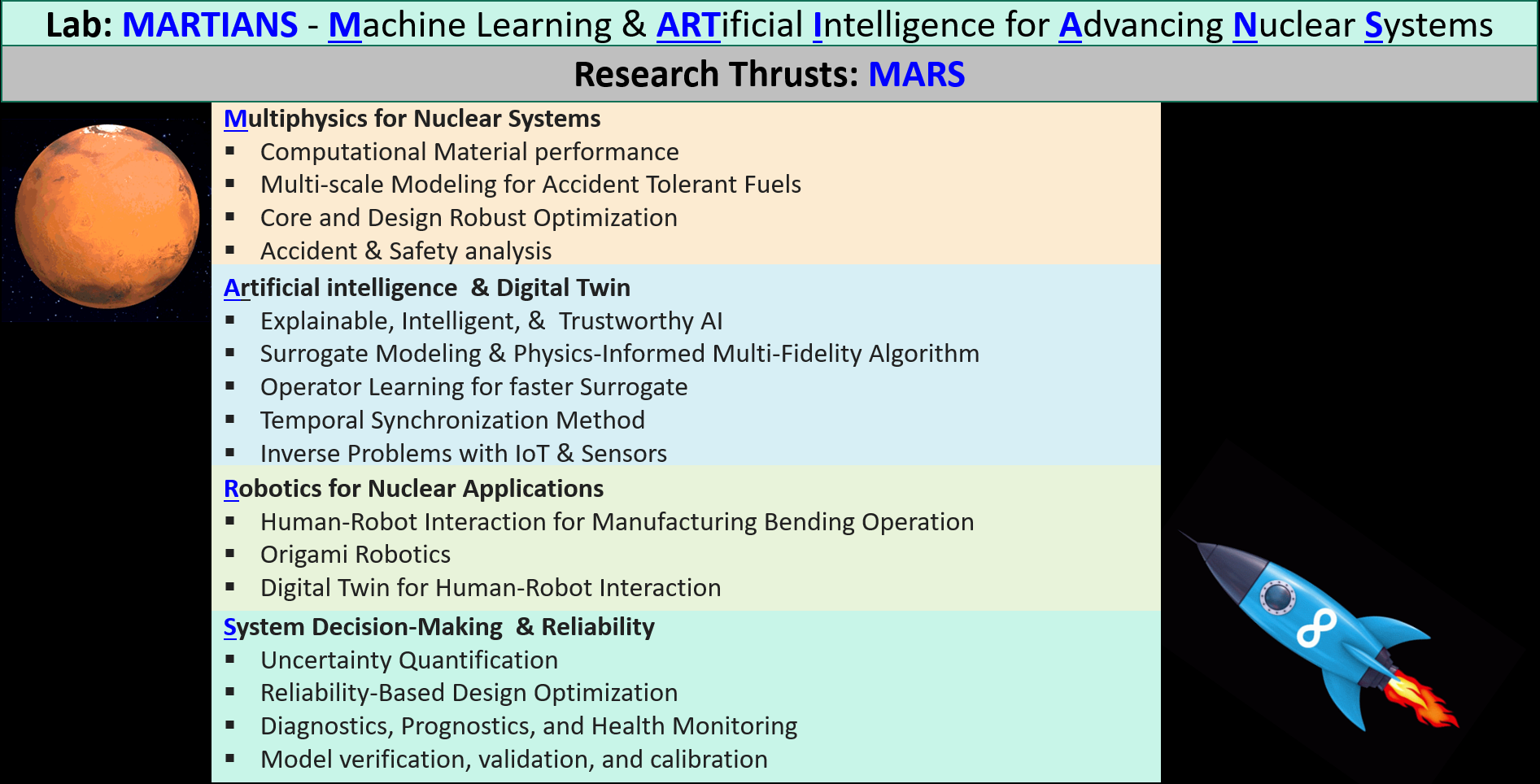
Syed Bahauddin Alam is an Assistant Professor at the University of Illinois Urbana-Champaign (UIUC) in the Nuclear, Plasma & Radiological Engineering department. He holds appointments in the Grainger College of Engineering and the National Center for Supercomputing Applications (NCSA). His research focuses on AI-driven digital twins, uncertainty quantification, and cybersecurity for nuclear systems. Education: B.Sc. in Electrical and Electronics Engineering, Bangladesh University of Engineering and Technology (BUET), 2011 MPhil in Nuclear Energy, University of Cambridge, 2013 PhD in Nuclear Engineering, University of Cambridge, 2018 Research Interests: AI and Digital Twins for Nuclear Energy Multiscale Modeling with Uncertainty Quantification Cybersecurity for Nuclear Systems Sensors and Instrumentation for Reactor Monitoring His work emphasizes explainable AI (XAI), physics-informed machine learning, and robust design optimization. Key contributions include AI-powered digital twins for nuclear systems, which received global media coverage and top 5% Altmetric scores. Awards & Honors: 2025 Dean’s Award for Excellence in Research (UIUC) 2024 Illinois Innovation Award Finalist 2022-2021 Outstanding Teaching Award (Missouri S&T) 2017 Cambridge Philosophical Society Research Studentship Award Grants & Funding: $700,000 U.S. Nuclear Regulatory Commission (NRC) Distinguished Faculty Development Award (2024) $2 million DOE grant for nuclear fuel storage solutions (2023) $500,000 NRC R&D Grant (2024) Labs & Teams: Leads the MARTIANS Lab (Machine Learning and ARTificial Intelligence for Advancing Nuclear Systems), focusing on hybrid data-physics-driven AI and explainable machine learning for nuclear engineering challenges.