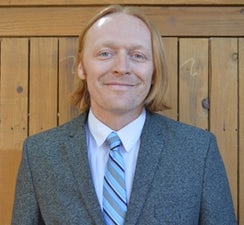
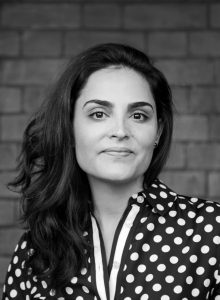
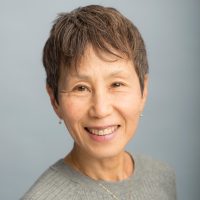
Ben Nobbs-Thiessen is an Assistant Professor of History and Chair of Mennonite Studies at the University of Winnipeg. He holds a PhD from Emory University (2016), with prior roles as a research associate at Arizona State University (2016–18) and a teaching fellow at Washington State University (2018–2020). His research focuses on Mennonite migrations across the Americas, environmental change, and indigenous-settler relations. He teaches courses on Latin American Mennonites and Mennonite Studies II. His research combines archival work, field studies, and oral histories from Bolivia, Paraguay, Mexico, Canada, and the U.S. His 2020 book Landscape of Migration examines Bolivia’s lowland colonization and its intersection with Mennonite and indigenous communities. Current projects include a century-long study of Mexico-Canada Mennonite migrations linked to water scarcity and neoliberal reforms. His publications span journals like Journal of Latin American Studies and Agricultural History , addressing topics like frontier development, foodways, and border conflicts. His transnational approach bridges environmental, migration, and colonial histories. He contributes to interdisciplinary initiatives such as the Newberry Consortium in American Indian Studies and the Centre for Rupert's Land Studies.
Anette Mikes is an Associate Professor of Accounting at the University of Oxford’s Saïd Business School and a Hertford College Fellow. She specializes in risk management, corporate governance, and sustainability, with a focus on the intersection of ethics and organizational control systems. Her research explores how risk frameworks shape corporate decision-making, particularly in climate change and decarbonization contexts. Education: PhD in Accounting from the London School of Economics (2005) Pre-doctoral work in the City of London (2006–2007) studying Chief Risk Officer roles Research Interests: Behavioral approaches to risk management Management control systems for sustainability Ethics in corporate governance Decarbonization strategies in heavy industries Her 2012 Harvard Business Review article (with Robert Kaplan) on risk frameworks remains influential, while her documentary on the Kursk submarine disaster highlights crisis management failures. Awards: 2025 Honorary Doctorate from Uppsala University 2017 ACA Prize for Risk Management Contributions 2014 Global Risk Forum Film Award Key Contributions: Co-developed Harvard’s Risk Management executive program Leads research on ‘Values at Risk’ and corporate purpose Published widely on climate risk governance and ethical leadership Her recent work emphasizes decarbonization strategies and moral accountability in business, bridging accounting practices with environmental and ethical imperatives.
Gilah Kletenik is a Research Fellow in Jewish Studies at the Stroum Center for Jewish Studies, University of Washington, holding the Hazel D. Cole Fellowship (2024-2026). She specializes in Jewish philosophy from medieval through modern periods with concentrated expertise in Spinoza's thought and its intellectual lineage. Her educational background includes: Ph.D. in Hebrew and Judaic Studies, New York University (2020) M.A. in Hebrew and Judaic Studies M.A. in Bible and Talmud Kletenik's research interrogates how power structures shape Western conceptions of reality, reason, and humanity, excavating alternatives in Jewish naturalism and immanence. She critically engages Spinoza's philosophy through medieval precursors (Maimonides, Gersonides), early modern contemporaries (Descartes, Anne Conway), and modern heirs (Marx, Deleuze), while situating this work within critical theory, new materialism, object-oriented ontology, affect theory, and queer theory frameworks. Her scholarship consistently bridges historical philosophical analysis with contemporary sociopolitical critique. Her public scholarship demonstrates thematic continuity across publications, examining institutional power dynamics in Jewish Studies through lenses of gender, antisemitism, and decolonization. These works reveal persistent patterns connecting medieval philosophical concepts to modern systemic issues in academia and society. Her distinguished fellowships include: Hazel D. Cole Fellow in Jewish Studies, University of Washington (2024-2026) Postdoctoral Associate, Elie Wiesel Center for Jewish Studies, Boston University Alan M. Stroock Fellow, Center for Jewish Studies, Harvard University Currently completing her monograph "Sovereignty Disrupted: Spinoza and the Disparity of Reality," Kletenik maintains active public engagement through lectures and critical commentary, advancing interdisciplinary dialogue between Jewish philosophy and contemporary theoretical movements while challenging institutional norms in academic Jewish Studies.
Abby Innes is an Associate Professor of Political Economy at the European Institute, London School of Economics , where she has been a faculty member since 1997. Her academic career includes a Visiting Fellowship at MIT (1995–1997) and a Jean Monet Fellowship at the European University Institute (2001–2002) . She has received multiple teaching awards , including the LSE Teaching Prize and European Institute Departmental Teaching Prize, and currently serves as the Teaching Chair of her institute. Research Interests : Dr. Innes specializes in the political economy of Central Europe , neoliberalism , and materialist utopias . Her work explores state capture , systemic transitions , and comparative capitalism , with a focus on the UK’s neoliberal transformation. Recent research addresses the political economy of the green transition and neoliberal institutional failures . British Academy Mid-Career Fellowship (2017-2018) LSE Teaching Prize (2002) LSE/ASRC Excellence in Education Award (2020) European Institute Departmental Teaching Prize (2011, 2013, 2015) Nominee for LSE Student-Led Teaching Excellence Awards (2014, 2020) Publications : Her 2023 book Late Soviet Britain: Why Materialist Utopias Fail argues that UK neoliberalism parallels Soviet economic dogma, leading to institutional rigidity , democratic erosion , and governance crises . She has published in journals such as The Review of International Political Economy and Comparative Politics , alongside frequent contributions to LSE Blogs and The London Review of Books .
Bai Gao is a Professor of Sociology at Duke University. His research focuses on political economy, globalization trends, and industrial policy, particularly in the context of China and East Asia. He holds a Ph.D. from Princeton University (1994). Research Interests : Impact of state industrial policy on emerging technologies (e.g., electric vehicles in China) Globalization dynamics and post-neoliberal policy paradigms Comparative analysis of developmental models (China, Japan, Germany) Geopolitical implications of China's Belt and Road Initiative Key Contributions : Author of Japan’s Economic Dilemma (2001) and High-Speed Rail: An Analysis of the Chinese Innovation System (2021) Edited volumes on China-Pakistan Economic Corridor and global political economy Grants & Funding : "FDI and the Chinese Model of Economic Development" (2005-2007) "Institutional Analysis of Global Production Networks" (2003-2004) Courses Taught : SOCIOL 541: The United States and the Asian Pacific Region SOCIOL 344: Technology and Organizational Environments
Ian Greer is a Research Fellow at Cornell University's School of Industrial and Labour Relations , with a career focused on marketisation , industrial relations , and transnational solidarity . He holds a PhD from Cornell University and has previously studied at Bard College. His work examines labor dynamics in globalised industries , welfare states , and multinational corporations , often through qualitative comparative methods . Education : BSc (Bard College), MSc/PhD (Cornell University) Greer's research spans marketisation of employment services , social movement unionism , and labour policy in crisis situations . His publications include studies on European welfare-to-work schemes , healthcare privatisation , and labour migration . He is associated with the Centre for Employment Relations, Innovation and Change (CERIC) at the University of Leeds. Greer's recent work analyses precarious labor and project-based employment in social services across Slovenia and France. He also contributes to debates on social dumping , work-first welfare states , and activist labor strategies in sectors like healthcare and automotive manufacturing. He has no listed scientific awards. His work often involves collaboration with scholars like Marco Hauptmeier , Charles Umney , and Nathan Lillie , though no formal advisees are named in the provided text. His email is icg2@cornell.edu .
Deval Desai serves as Reader in International Economic Law at the University of Edinburgh's Edinburgh Law School, a position he has held since 2020 after serving as Lecturer from 2020-2023. His academic career includes research positions at Harvard Law School and the Geneva Graduate Institute. Dr. Desai also brings extensive practical experience from a decade working with the World Bank on rule of law and governance in sub-Saharan Africa, as well as advising the United Nations on rule of law issues. Dr. Desai's educational background includes an MA in History and French Literature from Oxford University, followed by legal training at City University/BPP Law School (PGDipL and PGDipLP), and advanced law degrees (LLM and SJD) from Harvard Law School. At Harvard, he held prestigious fellowships including the Byse Fellowship, Program on Negotiation Next Generation Fellowship, and Institute for Global Law and Policy Fellowship. MA (Oxon), History and French Literature PGDipL, PGDipLP, City University/BPP Law School LLM, Harvard Law School SJD, Harvard Law School Dr. Desai's research centers on law and development, administrative law and regulation, theories of the state, and patterns of knowledge and authority across the Global North and South. His work examines institutional reform processes, particularly how expertise and knowledge operate within rule of law initiatives. His interdisciplinary approach draws from legal and social theory, development studies, international relations, and performance studies, as evidenced in his monograph Expert Ignorance (Cambridge University Press). His recent work focuses on fiscal sociology, administrative law in the Global South, and the politics of social welfare provision. Dr. Desai's publications span leading journals in law, political science, and development studies, revealing a consistent focus on the intersections between legal institutions, governance, and development. His work demonstrates increasing engagement with comparative methodologies and critical perspectives on knowledge production in global governance. Recent articles show particular attention to fiscal policy, welfare systems, and responses to global crises like the Covid-19 pandemic, with comparative studies between India and European contexts. Dame Muriel Spark Medal (2024, Royal Society of Edinburgh) Chancellor's 'Rising Star' Award (2023, University of Edinburgh) Member of the Young Academy of Scotland Fellow of the Royal Society of Arts Fellow of the Young Academy of Europe Dr. Desai has secured significant research funding from diverse international sources, including a £2.1 million Swiss National Science Foundation Sinergia grant titled 'Reversing the Gaze: Towards Post-Comparative Area Studies' where he serves as PI. He also leads projects funded by the British Academy, University of Edinburgh's Big Ideas Accelerator, Scottish Funding Council, and Foreign, Commonwealth, and Development Office. His commitment to mentoring is evident through his recognition with the Susan Manning Award for Inspiring Mentor and his leadership in establishing programs like the Global Scholars' Academy at the Geneva Graduate Institute and the Global Justice summer school at CEU. As editor-in-chief of the Cambridge University Press book series 'Elements in Legal Theory and the Global South' and serving on multiple editorial boards, Dr. Desai plays a significant role in shaping scholarly discourse. His current research projects examine 'loss' in legal institutions guiding transitional processes, constitutional implications of fiscal arrangements in fragile contexts, and social welfare provision in India and Italy.
Michelle Arrow is a Professor at Macquarie University's School of Humanities and Centre for Media History. Her research focuses on cultural history, post-war Australia, and feminist movements. She holds a PhD from the University of Sydney (1999), with notable works including Upstaged (2002), Friday on Our Minds (2010), and The Seventies (2019), which won the Ernest Scott Prize. Her work explores how culture shapes identities and responds to political shifts. She has led projects like 'Public Intimacy: A Biography of Anne Deveson' and contributed to media initiatives such as ABC TV's Rewind . Awards include Fellowships from the Academy of the Social Sciences (2023) and the Royal Historical Society (2025). Her current projects include a biography of Anne Deveson and studies on gender citizenship and LGBTQIA+ activism. Michelle has been a media commentator on topics like historical representation and social policy. Education: PhD in History, University of Sydney (1999) Thesis: Social and cultural history of Australian women playwrights (published as Upstaged ) Research Interests: 1970s Australia, Royal Commissions, feminist politics Popular culture and its political dimensions Historical representation in media and film Awards: Ernest Scott Prize (2020) NSW Premiers' Multimedia History Prize (2014) Elected Fellowships (2023, 2025) Grants/Projects: ARC-funded projects on women's refuges and children's rights Audio-visual archive prototyping (2017) Biography of Anne Deveson (2020–2023) Media Engagement: ABC TV presenter ( Rewind ) Contributions to The Conversation and public talks
Keith Ewing is a Professor of Public Law at The Dickson Poon School of Law, King's College London since 1989. Previously, he held visiting professorships at the University of Western Australia (1992), University of Alberta (1987-88), and Osgoode Hall Law School (1982). Earlier roles included positions at the University of Edinburgh (1978-83) and University of Cambridge (1983-1989). His research focuses on labour law and constitutional reform, particularly the intersection of social rights and constitutional frameworks. He teaches undergraduate Public Law and graduate European Labour Law. His publications span constitutional law, human rights, and labour rights, with recent works addressing post-Brexit legal frameworks, trade agreements' labour provisions, and emergency governance during the pandemic. Notable books include MI5, the Cold War, and the Rule of Law (2020) and co-edited volumes on the Right to Strike in International Law (2020). His articles frequently analyze judicial roles, electoral democracy, and transnational legal challenges. Ewing has led projects such as the CONPRE initiative (2015-2017) on parliamentary human rights protections and a British Academy-funded study on counter-terrorism and human rights (2007). His work contributes to UN SDGs related to justice, equality, and sustainable development through legal reforms.
Jason Brownlee is a Professor in the College of Liberal Arts at the University of Texas at Austin. His research focuses on comparative politics, democracy, and authoritarianism, with a regional emphasis on the Middle East and Southeast Asia. Ph.D., Princeton University Contact: brownlee@austin.utexas.edu Research Interests : Brownlee investigates the persistence of authoritarian regimes, the political economy of repression, and the impact of foreign intervention on domestic politics. His work often analyzes Egypt, Iran, Malaysia, and the Philippines. Key Publications : Authoritarianism in an Age of Democratization (Cambridge, 2007) Democracy Prevention: The Politics of the U.S.-Egyptian Alliance (Cambridge, 2012) The Arab Spring: Pathways of Repression and Reform (Oxford, 2012, co-authored with Tarek Masoud and Andrew Reynolds) Teaching : Brownlee offers courses such as "War/Freedom in South Asia/Middle East" and "Issues & Policies in American Government," delivered both in-person and online.
Asef Bayat is Professor of Sociology and the Catherine and Bruce Bastian Professor of Global and Transnational Studies at the Department of Sociology, University of Illinois, Urbana-Champaign. He has held previous academic positions at the American University in Cairo, Leiden University (where he held the Chair of Society and Culture of the Modern Middle East), and visiting appointments at UC Berkeley, Columbia University, Oxford, and Brown University. His research interests include: Political Sociology Collective Behavior and Social Movements Sociology of Religion Urban Life and Politics Islam and Modernity Contemporary Middle East Bayat's research focuses on the role of ordinary people and subaltern classes in social and political transformations, particularly in the context of the Arab Spring and Middle Eastern urban movements. His work bridges comparative and historical sociology with global and transnational perspectives, emphasizing everyday forms of resistance and the reconfiguration of political Islam. He has extensively explored the sociological dimensions of revolution, modernity, migration, and loss of home. His recent publications, including articles in International Journal of Urban and Regional Research and Journal of Democracy , reflect a sustained engagement with urban politics, revolutionary dynamics, and youth activism in the Global South. The recurring themes across his work include the agency of marginalized populations, the transformation of public space, and the evolving nature of political engagement in non-Western contexts. Bayat has received numerous honors and fellowships: Guggenheim Fellow Ford Foundation Fellow MacArthur Fellow Open Society Fellow Wissenschaftskolleg Fellow, Berlin He has been actively involved in academic leadership, having served as director of the International Institute for the Study of Islam in the Modern World (ISIM) and elected to the Board of the UN Research Institute for Social Development. He has taught key courses such as Global Social Movements, Global Religion and Politics, and Middle Eastern Societies. Though specific students are not listed, his role as a full professor and author of major works indicates extensive mentorship and academic advising. He is affiliated with multiple interdisciplinary centers, including the Center for African Studies, Center for South Asian and Middle Eastern Studies, European Union Center, and Center for Global Studies.
Ryuko Kubota is a Professor in the Department of Language and Literacy Education at the University of British Columbia (UBC), Faculty of Education, since 2009. Her research spans critical applied linguistics , race and language education , and decolonial pedagogies . She has contributed extensively to understanding language ideologies , multicultural education , and critical literacies . Education: BA in English Linguistics, Rikkyo University (1980) MAT in TESOL, School for International Training (1987) PhD in Education, OISE/University of Toronto (1992) Her research interests focus on the intersection of race, language policies, and critical pedagogies. She examines neoliberal paradoxes in language learning, translingual practices , and antiracist engagement in global contexts. Her work addresses systemic inequities in English language education and immersion programs . Recent publications highlight critical approaches to World Englishes , AI-assisted writing , and raciolinguistic hegemony . These studies span interdisciplinary sub-fields including critical race theory , decolonial education , and language teacher identity . Scientific awards include the DSSA Award 2020 . She supervises graduate students like Charu Gupta (PhD) and collaborates with institutions such as the Language Sciences Institute at UBC. Her teaching includes courses on critical multicultural education and language politics .
Raakel Plamper is a Doctoral Researcher at the Department of Education, University of Turku, with additional roles as Project Specialist in Geography and Development Specialist in Research Services. Her research focuses on higher education sociology, academic work dynamics, student roles in marketized systems, and university history. She teaches courses on social class and education, research methods, and multivariable analysis. Her work critically examines the marketization of universities, student-as-customer discourses, and managerialism in academic leadership. Key themes include tuition fee policies, institutional identity shifts, and equality in education systems. Recent publications analyze leadership rhetoric, writing retreats for researchers, and cross-country education strategies. Plamper actively contributes to interdisciplinary projects, such as the EU-funded Young Adulllt study on skill governance, and maintains a blog (Kas! blogi) discussing academic work and education policy. She holds an MA and is pursuing a PhD examining student roles in neoliberalized higher education.
Roi Livne is an Associate Professor and Department Associate Chair in the Department of Sociology at the University of Michigan, within the College of Literature, Science, and the Arts. He holds a Ph.D. from the University of California-Berkeley (2016). His research focuses on the intersections of morality, culture, and economics within healthcare systems, particularly addressing end-of-life care, healthcare economics, and the sociological implications of modern medicine. Education: Ph.D. in Sociology from UC Berkeley (2016). Current courses include SOC 305-001: Introduction to Sociological Theory. Research interests include the sociology of morality, medical sociology, qualitative approaches, and the sociological analysis of science and technology. His seminal work, Values at the End of Life: The Logic of Palliative Care , examines the moral and economic tensions in end-of-life decision-making. Livne's recent projects explore the moral economy of healthcare pricing, sociological dimensions of the COVID-19 pandemic, and the concept of limits in modernity. His publications address topics such as the cultural and economic frameworks shaping healthcare decisions, the ethics of resource allocation, and the societal impact of pandemics. While no specific awards are listed, his work has contributed significantly to debates in medical sociology and economic theory. Advising and grants are not explicitly detailed here, though his roles suggest active mentorship and research leadership. His work is affiliated with the University of Michigan's Sociology Department, with office hours booked via https://www.wejoinin.com/livne.
Dr Rachel O’Neill is an Assistant Professor in the Department of Media and Communications at the London School of Economics and Political Science (LSE). Her research focuses on gender and sexuality, media and cultural studies, and qualitative methods. She holds a PhD in Gender and Cultural Studies from King’s College London and previously served as a Research Fellow in Sociology at the University of Warwick. Academic Role: Assistant Professor, LSE Department of Media and Communications Research Expertise: Gender studies, media ethnography, feminist theory, wellness industry critique, and financial feminism Her work examines intersections of gender, capitalism, and cultural practices. Key publications include Seduction: Men, Masculinity and Mediated Intimacy (2018) and articles on wellness influencers, financial feminism, and masculinity studies. Her research often critiques patriarchal structures and neoliberal logics in contemporary society.