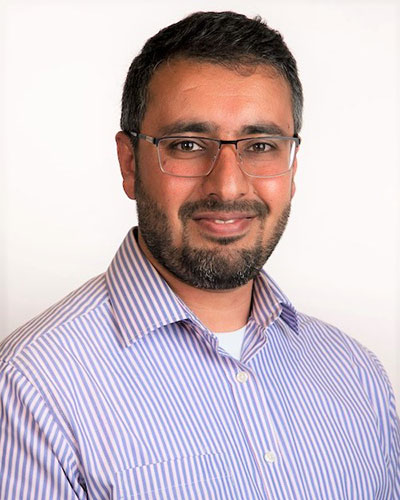
Omar Abbaas is an Assistant Professor in the Department of Mechanical Engineering at The University of Texas at San Antonio (UTSA) within the Klesse College of Engineering and Integrated Design. His academic background includes a dual-title Ph.D. in Industrial Engineering and Operations Research, an M.S. in Industrial Engineering, and a B.S. in Industrial Engineering from Jordan University of Science and Technology. Ph.D., The Pennsylvania State University (Industrial Engineering & Operations Research) M.S., The Pennsylvania State University (Industrial Engineering) M.S., SUNY Binghamton (Industrial & Systems Engineering) B.S., Jordan University of Science and Technology (Industrial Engineering) Dr. Abbaas specializes in smart manufacturing, cyber-physical systems, and supply chain optimization. His research integrates agent-based modeling, network optimization, and combinatorial auction techniques to address complex logistical and operational challenges in modern industrial systems. The recent publications highlight his work in electric vehicle charging infrastructure, supplier selection, and multi-agent scheduling systems. These articles reflect a consistent focus on optimization algorithms, auction mechanisms, and smart logistics solutions across transportation, supply chain, and manufacturing domains. His industry experience includes roles as a Black Belt process improvement leader in logistics, business analyst at an engineering consulting firm, and sheet metal design engineer in manufacturing. These practical engagements inform his academic research in network optimization, alternative fuel distribution, and quality assurance frameworks.
Tina Blegind Jensen is Professor at the Department of Digitalization , Copenhagen Business School (CBS), Denmark. She investigates how digital technologies reshape work, organizations, and society, with a particular focus on human dignity, algorithmic management, and the future of digital labor. Research Interests Digitalization & Organizational Transformation: longitudinal studies of how enterprise systems, platforms, and AI reconfigure work practices and power relations. Algorithmic Management & Labour Organizing: trade-union perspectives on workplace datafication and collective responses to algorithmic control. Human Flourishing & Ethics in Digital Futures: conceptual and empirical work on preserving human dignity, agency, and well-being in increasingly data-driven environments. Healthcare Information Infrastructures: sociotechnical analyses of large-scale e-health implementations, comparing national strategies and clinical outcomes. Sociomateriality & Sensemaking: theoretical development of sociomaterial practice theory and sensemaking lenses to understand technology-in-use. Across 88 scholarly outputs (2018-2025) she has traced a trajectory from early critical studies of electronic patient records to cutting-edge debates on generative AI and the governance of digital labour platforms. A recurring theme is the tension between technological promise and lived experience of workers, patients, and citizens. Scientific Awards & Recognition While no specific awards are listed in the provided text, Professor Jensen’s sustained visibility in premier IS outlets ( Communications of the AIS, Scandinavian Journal of Information Systems, HICSS, Academy of Management ) and frequent keynote invitations testify to her scholarly impact. Doctoral Advising & Research Leadership Supervised at least two doctoral or master’s theses (recorded under “Supervised Work”). Active in doctoral consortia and serves on review committees (e.g., Aalborg University). Leads or co-leads multiple research projects on digital work futures funded by Danish and EU sources (exact grants not detailed in text). Labs, Teams & Collaboration She heads the Digitalization Research Group at CBS, coordinates the Copenhagen Digital Futures research network, and collaborates internationally with scholars in the US, UK, Germany, and Scandinavia. The group’s lab facilities support ethnographic field studies, digital trace data analytics, and participatory design workshops.
KB Heylen is a part-time academic at Macquarie University's School of Communication, Society and Culture, affiliated with the Data Horizons Research Centre. Their research focuses on Critical Discourse Analysis, News Media, and Digital Platforms, exploring intersections with ideology, power, and media regulation. Doctor of Philosophy (Faculty of Arts, Macquarie University) Research Master (Macquarie University, 2022) Commerce Master (Charles Sturt University, 2019) Heylen's work analyzes how digital platforms negotiate news media regulation and competition law, with recent publications in New Media and Society and Media International Australia . Their research extends to platform sovereignty, user interfaces, and online discourse dynamics. Active in industry engagement, Heylen contributed expert commentary on buy now, pay later (BNPL) regulatory changes in 2023. Current roles include academic casual teaching and research collaboration within Macquarie University.
Johanna Silvennoinen serves as Senior Lecturer at the Faculty of Information Technology, University of Jyväskylä, within the Department of Educational Technology and Cognitive Science. Her academic work bridges cognitive science and human-technology interaction, with active supervision of master's and PhD students. Her research centers on cognitive and affective processes in human-computer interaction, specifically investigating how cognitive information processing fluency, perceived visual usability, and aesthetic appraisal contribute to experience design predictability. Additional focus areas include multiobjective decision-making dynamics and the psychology of aesthetics in technological contexts, with recent expansion into place-belongingness in urban environments. Analysis of her 2024-2025 publications reveals strong interdisciplinary convergence between human-computer interaction, cognitive science, and operations research. Key emerging themes include place-belongingness applications in smart cities (6 publications), human-AI co-creation methodologies, and color perception studies. Her work predominantly employs experimental and systematic review approaches across art, transportation safety, and citizen science domains. As a research supervisor, Silvennoinen mentors graduate students while contributing to the DEMO (Decision Analytics utilizing Causal Models and Multiobjective Optimization) profiling area at University of Jyväskylä. Her grant-related activities focus on multiobjective optimization frameworks and decision analytics. She actively participates in the Multiobjective Optimization Group, which develops methodologies for complex decision scenarios, and the Cognitive Science research group where she explores neural and cognitive foundations of human-technology interaction.
Fei Miao is the Pratt & Whitney Associate Professor at the School of Computing, University of Connecticut, with a courtesy appointment in the Department of Electrical & Computer Engineering. She serves as Director of the Miao Embodied AI Lab and is affiliated with the Institute for Advanced Systems Engineering. Prior to joining UConn in August 2017 as an Assistant Professor, she was a postdoctoral researcher at the GRASP Lab and PRECISE Lab at the University of Pennsylvania. Dr. Miao received her Ph.D. in Electrical and Systems Engineering from the University of Pennsylvania in 2016, where she was awarded the "Charles Hallac and Sarah Keil Wolf Award for Best Doctoral Dissertation." She also earned a dual Master's degree in Statistics from the Wharton School. Her undergraduate education was completed at Shanghai Jiao Tong University in 2010, with a major in Automation and a minor in Finance. Dr. Miao's research focuses on developing the foundations for the science of Embodied AI, with emphasis on assuring safety, efficiency, robustness, and security of cyber-physical systems through the integration of learning, optimization, and control. Her technical interests span multi-agent reinforcement learning, robust optimization, uncertainty quantification, control theory, and game theory. These methodologies are applied to connected and autonomous vehicles (CAVs), intelligent transportation systems, transportation decarbonization, smart cities, and power networks. Her research portfolio includes robust reinforcement learning and control, uncertainty quantification for collaborative perception, game theoretical analysis for information sharing benefits in CAVs, data-driven robust optimization for mobile cyber-physical systems, conflict resolution in smart cities, and resilient control of cyber-physical systems under attacks. Her work combines theoretical analysis with experimental validation using urban transportation data, simulators, and small-scale autonomous vehicles. Dr. Miao has received significant recognition for her work, including: NSF CAREER Award (2021) for "Distributionally Robust Learning, Control, and Benefits Analysis of Information Sharing for Connected and Autonomous Vehicles" Pratt & Whitney endowed Associate Professorship (2023) Best Paper Award at ICCPS'21 for "DeResolver: A Decentralized Negotiation and Conflict Resolution Framework for Smart City Services" NSF grants as PI for projects including "SCC-IRG Track 1: Socially Informed Services Conflict Governance" ($2.3M) and "CPS: Small: COLLAB: Improving Efficiency of Electric Vehicle Fleets" ($198,698) Dr. Miao actively mentors graduate students and seeks self-motivated PhD candidates interested in reinforcement learning, robust optimization, machine learning, control theory, game theory, and cyber-physical systems. Her research has been supported by multiple NSF grants, including a CAREER award totaling $509,573 and a collaborative grant of $2.3 million as PI of UConn's portion. She has been actively engaged in the academic community, presenting her work at institutions including CMU, Microsoft Research, Northeastern, Caltech, UCLA, USC, UCSD, Facebook FAIR, Lawrence Berkeley National Lab, UC Berkeley, Nvidia, Stanford, Princeton University, Columbia University, Waymo, and New York University. Her laboratory, the Miao Embodied AI Lab, focuses on experimental validation of theoretical frameworks using real urban transportation data, simulators, and small-scale autonomous vehicle testbeds to advance the field of embodied artificial intelligence for cyber-physical systems.
Martin Reimann is the McClelland Associate Professor of Marketing at the University of Arizona's Eller College of Management, with cross-appointments in Psychology, Veterinary Medicine, and Cognitive Science. He directs the Arizona Think Tank for Behavioral Decision Making and serves as External Faculty Affiliate at Stanford University's Institute for Research in the Social Sciences (IRiSS). His educational background includes: PhD in Psychology from University of Southern California MA in Psychology from University of Southern California Habilitation in Marketing from TU Freiberg Dr. rer. pol. in Marketing from TU Freiberg Diplom-Kaufmann from HHL Dr. Reimann's research centers on emotional-motivational drivers of consumer decision-making, examining states ranging from desire, curiosity, hope, and love to anger, pain, guilt, and shame. His parallel focus explores trust dynamics in human relations with products, pets, and artificial intelligence, investigating how trust shapes judgment and choice. He employs diverse methodologies including behavioral experiments, fMRI neuroimaging, and deep-learning models to advance consumer neuroscience. Analysis of his 15 most recent publications reveals dominant trends in trust erosion within AI-human interactions and emotional states' influence on consumption behavior. His work spans marketing, psychology, neuroscience, and sociology with increasing integration of neuroscientific methods to study branding, product design, and ethical dilemmas, particularly evident in his 2025 PNAS and Organizational Behavior publications on AI transparency. Scientific recognition includes: MSI Scholar designation Early Career Award from American Marketing Association Early Career Award from Society for Consumer Psychology Early Career Award from Society for Personality and Social Psychology While specific advisees aren't documented, Dr. Reimann teaches doctoral seminars in consumer neuroscience and marketing foundations. His research receives substantial funding from DARPA, Google, Marketing Science Institute, National Endowment for the Arts, and National Science Foundation for projects examining trust dynamics and consumer decision architecture. He leads the Arizona Think Tank for Behavioral Decision Making and collaborates with the Center for Trust Studies and Center for Management Innovations in Healthcare, developing interdisciplinary approaches to consumer decision modeling.
Roland Füss is a Professor at the School of Finance , University of St. Gallen , with a focus on Real Estate Economics , Real Estate Finance , Applied Financial Econometrics , and Risk Management . He previously held faculty positions at EBS Universität für Wirtschaft und Recht and University of Freiburg . Education : Habilitation in Business Administration and Econometrics (2007), University of Freiburg Dissertation (summa cum laude, 2003), University of Freiburg Degree in Economics (1999), University of Freiburg Degree in Business Administration (1993), University of Applied Science, Lörrach Studying Painting (1988-1990), Academy of Arts Düsseldorf under Prof. Gerhard Richter Research interests span Real Estate Economics , Real Estate Finance , Applied Financial Econometrics , and Risk Management . His recent articles analyze topics like photovoltaic systems' impact on rents , virtual real estate pricing , low-carbon premiums , and spillover effects in real estate , reflecting his expertise in real estate finance and financial econometrics . Scientific awards include a Best Paper Award (2010), an Overall Best Paper Award (2016), and a Research Prize (2016). He serves on editorial boards for journals like the Journal of Housing Economics and Journal of Property Research . Professional affiliations include membership in the American Finance Association , European Finance Association , and Deutsche Gesellschaft für Finanzwirtschaft . He has held visiting positions at NTNU Business School and National University of Singapore , contributing to global academic collaboration in real estate and finance.
Zhao Longxuan is an Assistant Professor in the Department of Communication (Broadcast and Television Major) at Tongji University's School of Art and Media since March 2024, specializing in media culture and algorithmic studies with a focus on marginalized communities. His academic credentials include: Bachelor of Arts in Journalism-International Politics Dual Degree (minor in Law) from Renmin University of China (2014-2018) Exchange studies at National Chung Cheng University, Taiwan (2016-2017) MSc in Gender, Media and Culture from London School of Economics (2018-2019) PhD in Sociology and Law from East China Normal University (2020-2023) with joint PhD year at LSE sponsored by China Scholarship Council (2022-2023) His research critically examines algorithmic systems through qualitative analysis of Chinese gay men's experiences on Zhihu, exploring gender dynamics, digital self-presentation, and the dual nature of algorithms as both oppressive and protective forces. He employs mixed-method qualitative approaches to investigate how marginalized users negotiate platform architectures. Publication analysis reveals consistent focus on Chinese digital culture, with recurring themes of algorithmic resistance, queer identity formation, and platform-specific communication patterns across Zhihu and dating ecosystems. His work bridges communication theory, gender studies, and critical algorithm studies within East Asian contexts. His recognition includes: Shanghai Outstanding Graduate (2024) Supported by China Scholarship Council during doctoral studies, his current research likely continues examining socio-technical dynamics of algorithms in Chinese digital spaces. He participates in Tongji University's research infrastructure including the Media Experiment and Practice Teaching Center and Omnimedia Research Institute, contributing to interdisciplinary media studies initiatives.
Christof Lammer is a Postdoctoral Assistant (non-tenured Assistant Professor) at the Department of Society, Knowledge and Politics at Alpen-Adria-University Klagenfurt. He earned a PhD in Social and Cultural Anthropology (2018, with distinction) from the University of Vienna, where he also completed MA (2012) and BA (2009) degrees in China Studies and Social and Cultural Anthropology. Research Focus: Intersections of political anthropology, kinship studies, economic anthropology, and science and technology studies (STS). Key Projects: 'Measuring Kinship – Negotiating Belonging', 'Infrastructures of Value', and 'Panda Heritage: Kinship Measurements and Life's Value in Species Conservation' (fellowship at Humboldt University of Berlin, 2024/25). His work examines how measurements of kinship and technological infrastructures shape belonging, legitimacy, and resource distribution in state and non-state contexts. He co-edited the 2021 special issue Measuring Kinship: Gradual Belonging and Thresholds of Exclusion (Social Analysis) and the 2024 special issue Infrastructures of Value (Ethnos). Current projects focus on heritage, value, and kinship in species conservation and agri-food systems. Scientific Awards: PhD with distinction (promotio sub auspiciis praesidentis), University of Vienna (2018) MA and BA with distinction, University of Vienna Fellow, Käte Hamburger Kolleg 'inherit – Heritage in Transformation' (2024–25) Fellow, ZiF Research Group 'Kinship and Politics' (2017) He co-supervises PhD students and reviews Master’s theses, including works on algorithmic fairness, digital welfare in Colombia, green care standardization, rewilding, and ethics of care in agri-food innovations. His publications analyze state-society relations, kinship measurements, and infrastructural value systems in China and beyond.
Sikunder Ali is an Associate Professor in Mathematics Didactics at the Norwegian University of Science and Technology (NTNU), Department of Teacher Education, Faculty of Social and Educational Sciences. His research bridges mathematics education with critical sociology, ethics, and social justice, focusing on how mathematical practices shape moral orders and democratic participation. Current affiliations: NTNU Research areas: Critical mathematics education, inclusive pedagogy, sustainability, and positioning theory Teaching: Courses on mathematics learning (MGLU4103, MGLU5503) Recent work examines ethical citizenship under pandemic conditions, immigrant youth learning experiences, and algorithmic critique. He actively disseminates research through invited international keynotes and publications with Springer, IntechOpen, and EARLI. Scientific Awards: Fulbright Research Fellowship (2024-2025) at SUNY Buffalo Contributor to EARLI SIG 10, 21 & 25 Conference Ali’s interdisciplinary approach informs his role as guest lecturer on research methodology at Nord University, and his collaborations with institutions in Sweden, Pakistan, and Ethiopia. His upcoming public lecture in New York (2025) will address Norwegian culture through global citizenship frameworks.
Oduma Adelio is a Lecturer and doctoral researcher at the University of Tübingen , affiliated with the Faculty of Humanities and the Department of Anglophone Literary Cultures and Global South Studies . His work bridges genocide studies, moral philosophy, and literary analysis. Doctoral Researcher, University of Tübingen Former Researcher, Guerrand-Hermès Foundation for Peace Former Researcher, Global Humanity for Peace Institute (University of Wales Trinity Saint David) His research explores transitional justice , trauma narratives , and ethical debates in digitalization . He has contributed to AI ethics publications and the UNESCO Collective Healing Initiative. Adelio co-edits the forthcoming volume Negotiating Peace, Mediating Conflict (Routledge, 2025), focusing on relational peacebuilding frameworks. Recent collaborations include: “Transparency-Check” (ACM Journal, 2023) – AI ethics in personalization systems “Ethical Guidelines for doing research with children” (IZEW, 2022) – sensitive subject area research Adelio teaches courses on post-genocide Rwandan literature, Caribbean writing, and Black British literature from the 1950s to the present. He studied at Oxford , Cambridge , and Tübingen Universities.
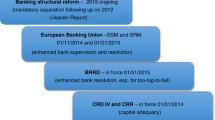
Rainer Stollhoff is Professor of Business Mathematics and Statistics at the Technical University of Wildau, where he also serves as Vice President for Studies and Teaching and Member of the Executive Board since 2023. He leads the Center for Studies and Teaching and is a member of the Management Analytics research group within the Department of Economics, Computer Science, and Law. His academic journey includes a Doctorate in Computer Science and a Diploma in Mathematics, with several years of professional experience in quantitative analysis and consulting for high-level decision-makers. His research spans multiple disciplines, with significant contributions in business mathematics, statistics, game theory, quantitative finance, risk management, machine learning, artificial intelligence, and cognitive neuroscience. Early in his career, he published extensively on facial recognition and prosopagnosia, demonstrating computational modeling expertise. More recently, his work has focused on financial systems, contract negotiation theory, and educational technology, particularly remote examination systems. His publication history reveals a clear evolution from neuroscience research (2010-2011) to business and finance applications (2013-2020), with notable works including the 2013 paper on European banking restructuring mechanisms and the 2020 textbook on contract negotiation and game theory. His research bridges theoretical computer science with practical business applications. Teaching Award of TH Wildau (2023) Certificate in Hochschullehre Brandenburg (sqb) Cambridge English Language Assessment Certificate for English as a Medium of Instruction As Vice President for Studies and Teaching, Professor Stollhoff oversees academic strategy and educational development at TH Wildau. His leadership includes previous roles as Deputy Chairman of the Senate (2022-2023), Senate Member (2017-2023), Departmental Council Member for Economics, Computer Science, Law (2017-2022), and Program Director for the European Management Master program (2017-2020). He co-leads the WIR Future Plan 2025 project focused on educational innovation. His teaching portfolio includes diverse courses such as Game Theory and Behavioral Economics, Machine Learning, Risk Management, and Quantitative Methods, reflecting his interdisciplinary expertise. He has developed specialized modules including the Mercedes Benz-cooperated 'Success Factor Analysis' and maintains a strong focus on practical applications of mathematical and statistical methods in business contexts.
Alixandra Barasch serves as Associate Professor of Marketing and PhD Program Director at the University of Colorado Boulder's Leeds School of Business, where she holds the Gordon and Susan Trafton Faculty Scholar designation. Her academic leadership extends to editorial roles at top journals including the Journal of Consumer Research and Journal of Marketing as Associate Editor, and editorial review boards at Journal of Marketing Research , Journal of Consumer Psychology , and Journal of Personality and Social Psychology . Barasch earned her PhD in Marketing from The Wharton School at the University of Pennsylvania. Prior to joining CU Boulder, she served as Assistant Professor at New York University and Visiting Associate Professor at INSEAD. Her educational background includes a Fulbright Scholarship where she taught at the University of Macau and conducted research at the Hong Kong University of Science and Technology. Before graduate studies, she worked at MDRC, a non-profit focused on education policy research. Her research program investigates how digital technologies reshape consumer behavior and well-being across three interconnected streams. The first examines how technologies like photo-taking, live streaming, and personal quantification affect enjoyment, memory formation, and interpersonal relationships during experiences. The second stream explores online communication dynamics, including information sharing, status signaling through social media, and inferences from digital signals. The third focuses on morality and prosocial behavior, investigating motivations for good deeds, perceptions of others' prosocial actions, and evaluations of technological innovations' fairness and welfare impacts. Analysis of her recent publications reveals consistent exploration of digital behavior patterns, particularly streak psychology, authenticity signaling through imperfections, and technology's impact on experience evaluation. Her work bridges consumer psychology with practical applications in digital marketing, social media strategy, and ethical technology design. Barasch's research demonstrates how seemingly small digital behaviors—like photo angles, error corrections, or streak tracking—create significant psychological effects that shape consumer decisions and well-being. Early Career Award from the Association for Consumer Research (2023) Marketing Science Institute Young Scholar (2021) Barasch's scholarship has been widely disseminated through publications in top-tier journals including Journal of Consumer Research , Journal of Marketing Research , Journal of Marketing , Journal of Personality and Social Psychology , and Psychological Science . Her work receives significant media attention, regularly featured in New York Times , The Atlantic , Time , Washington Post , Fast Company , Wired , and NPR . While specific grant information isn't detailed in the source material, her Fulbright Scholarship and MSI Young Scholar designation indicate substantial research support. As PhD Program Director, Barasch leads doctoral education in marketing at Leeds School of Business, shaping the next generation of consumer researchers. Her research program operates at the intersection of marketing, psychology, and technology, examining how digital tools reshape fundamental human experiences from memory formation to social connection. The lab environment she cultivates emphasizes rigorous experimental methods combined with real-world relevance, as evidenced by her strong media presence and editorial leadership in the field.
Raymond Allen Lutzky, PhD, is an Adjunct Lecturer at the University of Southern California (USC) Annenberg School for Communication and Journalism, specializing in digital media management and social media. He has over 20 years of experience in higher education, having taught at Cornell University, New York University (NYU), Pace University, and Rensselaer Polytechnic Institute. Lutzky brings expertise in digital audience strategy, user experience design, and human-computer interaction to his teaching and research. PhD in Communication and Rhetoric from Rensselaer Polytechnic Institute Master’s in Public Relations from Syracuse University's S.I. Newhouse School Master’s in Digital Audience Strategy from Arizona State University's Walter Cronkite School His research and thought leadership focus on the intersection of education, technology, and digital media. Key areas include enrollment management, educational technology, student recruitment, and the strategic application of AI in higher education. He also explores rhetoric, advocacy, and the ethical implications of algorithmic bias in digital platforms. Lutzky's publications and podcast interviews address graduate enrollment trends, online education strategies, and global recruitment challenges. Notable works include articles on merit scholarships, marketing automation, and international student mobility. His podcast appearances discuss AI-driven engagement, workforce education, and the evolving role of OPMs (Online Program Managers) in graduate education. Dr. Lutzky has held leadership roles in organizations like NAGAP (Association for Graduate Enrollment Management), the Rensselaer Polytechnic Institute Alumni Association, and the Colorado LGBTQ Chamber of Commerce. He hosts the Mastering the Next podcast, which explores innovations in graduate education and technology, and offers online courses on Udemy for career development in user experience design.
Jonathan May is a Research Associate Professor in the Department of Computer Science at the University of Southern California and a Principal Scientist at the Information Sciences Institute. He serves as Director of the Center for Useful Techniques Enhancing Language Applications Based on Natural And Meaningful Evidence (CUTELABNAME). Dr. May teaches courses including CSCI 544: Applied Natural Language Processing and CSCI 662: Advanced Natural Language Processing through Fall 2024. Dr. May's research spans natural language processing, machine translation, and computational linguistics with significant contributions to cross-lingual processing, dialogue systems, and language model development. His work bridges theoretical advances with practical applications in journalism, negotiation systems, and multimodal understanding. Recent research focuses on large language models, with particular emphasis on efficiency, personalization, grounded generation, and exploring the limits of what language models can understand about physical phenomena and human communication. Analysis of Dr. May's recent publications (2024-2025) reveals a strong focus on advancing large language models, with particular emphasis on efficiency (e.g., 'Megalodon: Efficient LLM Pretraining and Inference with Unlimited Context Length'), personalization (e.g., 'Tuning-Free Personalized Alignment via Trial-Error-Explain In-Context Learning'), and grounded generation (e.g., 'NewsInterview: a Dataset and a Playground to Evaluate LLMs' Ground Gap via Informational Interviews'). A notable trend is the integration of reflection and memory mechanisms into language models, as well as exploring multimodal understanding across domains from food science to negotiation. Outstanding Paper Award at EMNLP 2024 for 'Are Large Language Models Capable of Generating Human-Level Narratives?' Outstanding Paper Award at NAACL 2018 for 'Recurrent Neural Networks as Weighted Language Recognizers' Best Demo Award at ACL Demo Sessions 2018 for 'Out-of-the-box Universal Romanization Tool uroman' Dr. May leads CUTELABNAME, which has produced numerous software tools including uroman (Universal Romanizer), BotEval, and SPOLIN. The lab maintains an active research agenda with regular publications at top NLP conferences and collaborations across academia and industry. His work demonstrates both theoretical rigor and practical applicability, with many techniques being adopted in real-world NLP systems.