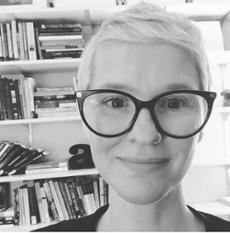
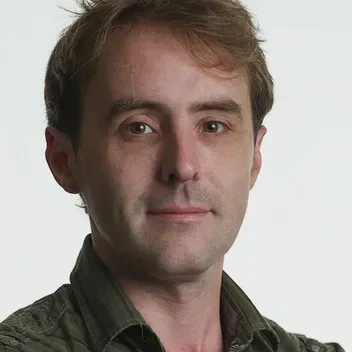
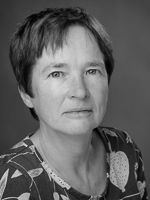
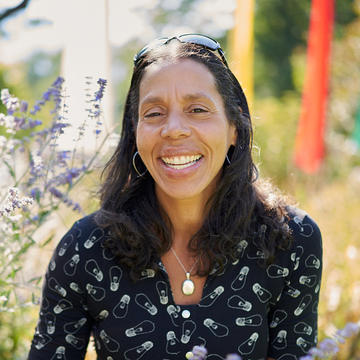
Donia Timby is a Senior Instructor in the School of Human Environmental Sciences at the University of Arkansas, affiliated with the Dale Bumpers College of Agricultural, Food and Life Sciences. She specializes in Human Development and Family Studies (HDFS) and BRKD programs, focusing on connecting undergraduate students with community opportunities to enhance career development. Her research emphasizes the disconnection between children and nature, highlighting nature's role in social and emotional development. Her collaborations with local agencies have successfully hosted Family Engagement Nights for preschool programs in Northwest Arkansas. She advocates for experiential learning and community partnerships to bridge academic theory with practical application. No scientific awards or grants are explicitly mentioned in the provided texts. While no formal student advisees are listed, her role involves mentoring HDFS students toward career readiness. She is based at 118 Home Economics Building, Fayetteville, AR.
Dr. Wanda June serves as Assistant Professor in the Department of Economics, Justice, and Policy Studies at Mount Royal University, holding a PhD in Sociology (Criminology and Genocide Studies) from the University of Manitoba (2023). Her research critically examines criminal, social, and environmental justice through the lens of green criminology, with particular focus on climate change impacts on Indigenous communities and impoverished populations globally. Education: PhD in Sociology (Criminology and Genocide Studies), University of Manitoba, 2023 Dr. June's scholarship investigates the intersection of environmental destruction, legal frameworks, and systemic violence against vulnerable populations including women, children, and LGBTTQ2S+ communities. Her work uniquely bridges genocide studies with environmental justice, analyzing how climate change drives forced migration and militarization. Her teaching philosophy emphasizes relationality, decolonization, and centering marginalized voices through inclusive pedagogical practices that integrate Indigenous, feminist, and racialized perspectives. Her publication record demonstrates consistent focus on symbiogenetic destruction in genocide contexts, with recent work examining Canadian residential schools, Cambodian genocide ecology, and theoretical frameworks for understanding environmental disconnection. These publications reveal growing scholarly engagement with post-anthropocentric approaches to genocide studies and the gendered dimensions of ecological violence. Scientific Awards: Joseph-Armand Bombardier Canada Graduate Scholarship Dr. June actively contributes to critical discourse on environmental justice through rigorous interdisciplinary scholarship that connects legal studies, criminology, and genocide research, advancing understanding of how ecological crises exacerbate systemic violence against marginalized communities worldwide.
Eric Weeks is an Associate Professor and Chair of the Photography & Video Department at Pennsylvania College of Art & Design (PCA&D) in Lancaster, Pennsylvania. Born in Summit, New Jersey in 1965, Weeks lives and works between New York City and Lancaster, Pennsylvania. His work has been acquired by prestigious collections including Los Angeles County Museum of Art, The Art Institute of Chicago, Museum of Modern Art Library, Maison Européenne de la Photographie in Paris, and the Sir Elton John Collection. Weeks received his MFA from Yale University in 1994 and his BFA from the School of Visual Arts in New York in 1987. His educational background has deeply informed his practice as both an artist and educator, with his work often exploring the intersection of formal composition and spontaneous human interaction. Weeks' creative practice focuses on the nature of humanity through fleeting moments of human connection and disconnection. His work spans both still photography and short film, with a particular interest in American culture, automobile culture, and the spaces where people interact. Recent projects like Twentysix Wawa Stores examine the cultural significance of convenience stores along the Lincoln Highway, while The Great Basin! explores desert landscapes and environmental themes. His approach combines formal composition with serendipitous moments, creating works that are both carefully constructed and organically unfolding. Weeks' artistic output reveals consistent themes across his career: human relationships, cultural landscapes, and the intersection of the mundane with the profound. His projects often document specific American cultural phenomena while simultaneously exploring universal human experiences. Recent work shows an increasing focus on environmental themes and the changing American landscape, particularly as it relates to automobile culture and convenience stores in the era of climate change awareness. 2025 Honorable Mention, Best Editing, Dialog Film Festival 2024 Best Film - All About Cities, Toronto Indie Filmmakers Festival 2024 Honorable Mention, Experimental Forum 2024 Best Environmental Film, Munich New Wave Short Film Festival 2024 Best International Short Film, Aura Festival 2023 Best Environmental Film, International Avant-Garde Film Awards 2023 Best Film Editing, International Avant-Garde Film Awards 2023 Winner Best Nature Film, Environmental Film and Screenplay Festival 2023 Cinema in Transgression Edward Snowden Award 2022 Montello Foundation Residency As an educator, Weeks has received multiple PCA&D Faculty Research & Practice Professional Development Grants (2022, 2021) and a New York City Artist Corps Grant (2021). He has curated numerous exhibitions internationally, including Fact/Fiction at the 2016 Jeonju International Photo Festival in South Korea. His teaching philosophy emphasizes the importance of both technical skill and conceptual development, encouraging students to find their unique voice within the photographic medium. Weeks has also served as Chair of the Photography & Video Department at PCA&D, demonstrating leadership in academic administration. Weeks maintains an active studio practice that informs his teaching, with recent projects involving collaborations with international festivals and institutions. His work has been exhibited globally, from the Rotterdam Photo Festival in the Netherlands to the Pingyao International Photography Festival in China. Though not explicitly mentioned as leading a formal lab or team, Weeks frequently collaborates with other artists and participates in international artistic exchanges, contributing to a vibrant network of photographic practitioners.
Dr David Booth is a Senior Lecturer at the DArcy Thompson Unit within the School of Life Sciences at the University of Dundee, serving as Associate Dean for Quality Assurance and Enhancement. With a background in evolutionary biology and genetics from Queen’s University Belfast and Royal Belfast Academical Institution (RBAI), he combines statistical expertise with biological research through roles in sustainable fisheries analysis and BBC science communication. Academic Leadership : Led institutional reviews (2013-2020), TESTA assessment program, and QAA data champion initiatives Research Themes : His work spans evolutionary genetics, ancient DNA analysis, biological invasions, and human-nature relationships. Recent projects include: Quantifying nature connection in children Statistical modeling of wearable health devices COVID-19 impact studies Teaching Contributions : Delivers genetics and statistics modules (BI10002, BI21008) across foundational and advanced biology curriculum. Recognized with Royal Society of Biology's Good Practice Award (2016) and DUSA Student-Led Teaching Awards (2023). Scientific Engagement : Actively participates in public outreach through Discovery Days (2024), Science Saturday events (2018), and consultancy for NatureFix (2019-2021). Collaborates on multidisciplinary projects with 20+ co-investigators including the PHOSP-COVID cohort studies.
Roman Hric serves as an Associate Professor in the Department of Mathematics at Matej Bel University's Faculty of Economics in Banská Bystrica, Slovakia. His academic profile encompasses teaching core mathematics courses including Mathematical Analysis 1-4, Difference Equations, and Partial Differential Equations, while maintaining an active research program in dynamical systems theory. His educational qualifications include: Master of Science (Mgr.) from Comenius University Bratislava (1993) PhD. from Comenius University Bratislava (1999) Habilitation (Doc.) from Silesian University Opava (2005) Hric's research centers on Dynamical Systems and Ergodic Theory, with particular emphasis on minimality phenomena, topological entropy, and structural properties of invariant sets. His work bridges Topology (General and Algebraic), Differential Geometry, and the dynamical analysis of Ordinary and Partial Differential Equations. The interdisciplinary nature of his research connects pure mathematics with applications in complex systems modeling. His publication trajectory reveals evolving focus from foundational studies on interval maps (1999-2000) through investigations of minimal systems and chaos (2003-2009) toward contemporary work on abelian group actions and minimality inheritance (2018-2024). Recent publications demonstrate increasing sophistication in handling abstract dynamical structures while maintaining connections to concrete topological spaces. No scientific awards or honors were documented in the source materials. Regarding academic mentorship and funding, the available documentation does not specify graduate students supervised, research grants awarded, or collaborative projects. His consultation hours are scheduled Fridays 09:00-12:00 at the Department of Mathematics, Tajovského 40, 97401 Banská Bystrica.
Ellen Munthe-Kaas is an Associate Professor in the Department of Informatics at the University of Oslo, where she is affiliated with the Data and Knowledge Management (DKM) research group. Her office is located in Ole-Johan Dahl's house at Gaustadalléen 23B, Oslo, and she can be contacted at ellenmk@ifi.uio.no. Dr. Munthe-Kaas specializes in mobile and wireless networking systems, with particular expertise in Mobile Ad-hoc Networks (MANETs), emergency and rescue applications, and distributed systems. Her research focuses on addressing challenges in sparse and infrastructure-less networks, including resource management, energy efficiency, data sharing, and network synchronization. She has developed middleware solutions specifically designed for emergency response scenarios where reliable communication is critical despite challenging network conditions. Her publication record from 2005-2015 reveals a clear evolution from foundational MANET protocols to more sophisticated systems addressing energy efficiency, quality of service, and context-aware applications. A distinctive theme throughout her work is the practical application of networking research to life-critical emergency response situations. Her research consistently addresses the tension between network performance requirements and resource constraints in mobile environments. Dr. Munthe-Kaas maintains a strong collaborative relationship with colleagues at the University of Oslo, particularly Thomas Peter Plagemann and Vera Hermine Goebel, suggesting she works within a well-established research ecosystem focused on distributed systems challenges. Her work bridges theoretical networking concepts with practical implementations, demonstrating both academic rigor and real-world applicability.
Jim Igoe serves as a Professor in the Department of Anthropology at the University of Virginia, where his research critically examines the intersections of biodiversity conservation, globalization, and social movements. With extensive fieldwork conducted in Tanzania, Pine Ridge (South Dakota), and New Orleans (Louisiana), he investigates how spectacles of nature mediate human relationships with ecological systems within global capitalist frameworks. His work bridges theoretical scholarship and community-based applications through experimental collaborations. Academic Background: PhD in Anthropology, Boston University (2000) Research Interests: Igoe's scholarship centers on the political ecology of conservation, analyzing conflicts between protected areas and indigenous livelihoods while exploring how digital media and consumer culture reshape environmental governance. He investigates the commodification of nature through concepts of spectacle, value, and neoliberal expansion, with geographic focus on East Africa and North America. His approach integrates anthropological theory with public scholarship to address conservation's social justice dimensions, emphasizing how global conservation narratives disconnect local experiences from broader ecological realities. Publication Trends: Igoe's publication trajectory reveals an evolution from ethnographic studies of community-conservation conflicts to theoretical analyses of nature's spectacle in late capitalism. Early work documented tensions in Tanzanian and Native American contexts, while recent scholarship examines how images, money, and digital platforms mediate conservation's aesthetic dimensions. His research consistently critiques market-based conservation approaches, highlighting their role in capitalist expansion and value extraction. Key thematic threads include the genealogy of exchangeable nature, middle-class conservation dynamics, and interdisciplinary value-system mapping that bridges human and non-human domains. Scientific Awards: No awards or fellowships explicitly documented in source materials Advising and Research Support: While specific student lists and grant details are absent from provided texts, Igoe's collaborative projects indicate active mentorship in experimental research integrating theory with public scholarship. His co-authored works with scholars like Bram Buscher and Katja Neves demonstrate sustained interdisciplinary partnerships addressing conservation's political economy, suggesting ongoing engagement with research teams despite unreported funding specifics. Research Collaborations: Igoe participates in experimental collaborations that fuse academic theory with applied practice, particularly through initiatives connecting conservation scholarship to grassroots movements. These partnerships emphasize co-produced knowledge with communities affected by conservation policies, though formal lab structures or team names are not specified in available materials. His work with the Environmental Thought and Practice program at UVA exemplifies this integrative approach to public scholarship.
Edward de Haan is a Professor at Radboud University and Academic Director of the Donders Centre for Cognition and the Donders Institute for Brain, Cognition and Behaviour. His research focuses on neuropsychology, stroke rehabilitation, and visual perception, with particular attention to cognitive neuroscience mechanisms underlying perception, action, and neurological disorders. He holds leadership roles in the British Neuropsychological Society and contributes to clinical neuroimaging methodologies. His work examines stroke-induced deficits in visual and cognitive functions, integrating lesion-symptom mapping with neuroimaging (e.g., DTI) to understand brain-behavior relationships. Key areas include visual binding mechanisms, split-brain phenomena, and the re-evaluation of traditional visual pathway models. Publications highlight interdisciplinary approaches to neurorehabilitation, cognitive dysfunction post-stroke, and the historical context of neuropsychological research. He actively publishes in top journals and maintains an international profile through academic directorships and society leadership.
Jeanine M. Canty is a Professor of Transformative Studies at the California Institute of Integral Studies (CIIS), affiliated with the School of Consciousness and Transformation and the Department of Transformative Inquiry. Previously serving as Chair of Environmental Studies at Naropa University, she guest teaches there and at Pacifica Graduate Institute’s ecopsychology program. Her work bridges ecopsychology, social justice, and transformative learning, emphasizing ecological and social healing through contemplative practices. Education includes a Ph.D. in Transformative Learning and Change from CIIS, an M.A. in Cultural Ecopsychology from Prescott College, and a B.A. in International Relations from Colgate University. Her expertise spans books like Returning the Self to Nature and edited volumes such as Ecological and Social Healing: Multicultural Women’s Voices . Research focuses on collective narcissism, ecojustice, and worldview expansion. She explores how systemic disconnection from nature fuels crises and advocates for compassionate engagement across differences. Publications span journals like World Futures and International Journal of Transpersonal Studies , emphasizing interdisciplinary approaches to socio-ecological challenges. No scientific awards are explicitly mentioned, but her contributions to transdisciplinary scholarship are notable. Teaching and advising reflect a commitment to transformative education. She holds certifications as a Wilderness First Responder and meditation instructor, integrating somatic and contemplative practices into her work.
Professor Robert Sanders is a leading academic in Sydney Medical School at the University of Sydney and holds the Nuffield Chair of Anaesthetics . He is a member of both the Brain and Mind Centre and the Charles Perkins Centre . His academic journey began with a BSc in Neuroscience (First Class Honours) and MBBS from Imperial College London, followed by specialist training in Anaesthetics and a PhD in Biological Sciences funded by the UK Medical Research Council. He completed postdoctoral work at University College London’s Institute of Cognitive Neuroscience and relocated to the University of Wisconsin as an Assistant Professor before joining Sydney Medical School in 2020. Education : BSc (First Class Hons), MBBS, PhD (Imperial College London) Training : Specialist Anaesthetics (London), Postdoctoral Fellow (Wellcome Department of Imaging Neuroscience, UCL) Prof Sanders’ research focuses on Neuropsychiatric Disorders , particularly delirium, dementia, and schizophrenia, with an emphasis on translational medicine. His laboratory investigates the Mechanisms of Consciousness and sensory disconnection under anaesthesia, employing novel disease models from theoretical neuroscience. Current projects include Mechanisms of Postoperative Delirium and Mechanisms of Sensory Disconnection Under Anaesthesia . His publications (2025–2022) span biomarker analysis in postoperative delirium, neural connectivity studies under anaesthetics, and clinical trials on drugs like dexmedetomidine and propofol. Key journals include Anesthesia and Analgesia , British Journal of Anaesthesia , and Nature Communications . His work consistently highlights brain structural changes, neuroinflammatory pathways, and anaesthetic impacts on cognition. Scientific Awards : 2019 Macintosh Professor, Royal College of Anaesthetists 2013 Rising Star Lecture, Royal College of Anaesthetists 2008 GSK Fellowship (Royal Society of Medicine) 2007 Royal Society of Medicine Anaesthesia Trainee Prize 2002 Goldberg–Schachmann Memorial Prize Prof Sanders contributes to teaching and supervision in anaesthesia, postoperative cognitive disorders, and consciousness mechanisms. He leads international collaborations on delirium and anaesthetic neurotoxicity, with significant NIH funding during his Wisconsin tenure. His research bridges clinical anaesthesia with theoretical neuroscience, aiming to disrupt stagnant therapeutic paradigms.
Paul Hesse is an Associate Professor in the School of Natural Sciences at Macquarie University specializing in geomorphology and Quaternary science. His research focuses on understanding how past climate changes have shaped earth surface processes, with significant emphasis on arid and semi-arid regions of Australia. As Convenor of the Bachelor of Environment course, he teaches ENVS2266 Earth Surface Processes, ENVS3240 Environmental Change, and ENVS2341 Active Environments (a field unit in New Zealand). Dr. Hesse's research interests span geomorphology, Quaternary science, climate change impacts, and desert studies. His work examines how climate change influences desert sand dunes, dust storms, rivers, wetlands, and vegetation cover, and how these elements feed back into climate systems. His fingerprint analysis shows strong expertise in dune dynamics (100%), floodplain systems (55%), dust processes (50%), wetland ecology (48%), loess deposits (44%), river systems (40%), desert environments (40%), and Last Glacial Maximum studies (39%). His recent publications demonstrate a focus on paleoclimate reconstruction, dune paleoenvironments, and the impact of climate change on earth surface processes. His work spans from detailed field studies in Australian deserts to broader global analyses of dune systems and dust transport. His most recent papers examine the extended Last Glacial Maximum in the Southern Hemisphere, dune paleoenvironments, and the quantification of vegetation effects on aeolian sediment transport using drone technology. Scientific awards: Farouk El-Baz Award For Desert Research (2018) River Basin Management Society Award for Best Paper (2012) Dr. Hesse leads or participates in numerous research projects including 'Will rivers be smaller when the climate is hotter?' (2022-2025), 'Global climate change, coastal landscape evolution and the intensification of aridity in southern Australia during the Early-Middle Pleistocene Transition' (2020-2023), and 'Evaluating and reducing the risk of floodplain wetland disconnection' (2019-2022). His work is funded by various research councils and organizations focused on understanding climate change impacts on earth surface processes. His laboratory and field work spans diverse environments from Australian deserts to river systems in the Murray-Darling Basin and dunefields in central Argentina. He collaborates with researchers across multiple disciplines to understand the complex interactions between climate, earth surface processes, and ecological systems.
Carlos Andres Gallegos-Riofrío is a Research Assistant Professor at the University of Vermont's Institute for Agroecology, with joint affiliations at Washington University in St. Louis' Buder Center for American Indian Studies and the Gund Institute for Environment. His interdisciplinary work bridges agroecology, nutrition science, and indigenous studies through participatory research frameworks. Gallegos-Riofrío leads three primary research initiatives: (i) cross-cultural examinations of knowledge hegemony in nature-health studies with BIPOC communities, (ii) Earth-health microbiome connections using coherence models, and (iii) Andean collaborations analyzing health impacts of disconnection from traditional agroecosystems. As Research Coordinator of the Caliata Initiative, he facilitates sustainability projects in rural Andes communities. His publications focus on: Decolonizing methodologies in environmental health research Food sovereignty and traditional nutrition systems Social marketing for public health interventions Indigenous cosmovisions in sustainable agriculture Community-based approaches to planetary health challenges Recent work critically addresses cultural diversity gaps in sustainability science and promotes pluralistic knowledge systems. He maintains active collaborations across Ecuador, Peru, Bolivia, and the United States.
Christer Karlsson is a Professor at Uppsala University's Department of Political Science, specializing in European Union politics, democratic theory, and climate policy. His research examines parliamentary opposition in multilevel systems, constitutional adaptation to EU membership, and global climate governance. His primary research interests include political opposition in EU affairs , constitutional politics , and climate change leadership . Karlsson investigates how national parliaments express opposition to EU policies, the relationship between constitutional amendments and EU integration, and the dynamics of leadership recognition in international climate negotiations. His work bridges theoretical frameworks with empirical analysis of legislative behavior across multiple European countries. Analysis of his recent publications reveals a consistent focus on parliamentary opposition patterns across European legislatures, with increasing attention to gender dimensions and institutional contexts. His climate policy research emphasizes the disconnect between leadership aspirations and actual outcomes in international negotiations, particularly regarding the EU and United States. The interdisciplinary nature of his work connects political science, constitutional law, and environmental governance. Karlsson has led multiple significant research projects funded by major Swedish research organizations including the Swedish Research Council, Marianne and Marcus Wallenberg Foundation, and Riksbanken Jubilee Fund. His projects span topics from EU constitutional politics to climate policy research. His current research includes "The Paradox of Political Opposition in Multilevel Europe," examining plenary debates in thirteen parliaments (2019-2022), and previous work on "Searching for Opposition in European Union Affairs" (2015-2019). His research methodology combines comparative case studies with quantitative analysis of legislative behavior across national contexts.
Sandra Gentin serves as a Teaching Associate Professor within the Department of Geosciences and Natural Resource Management at the University of Copenhagen's Faculty of Science. She is actively affiliated with both the Section of Landscape Architecture and Planning and the Nature, Green Spaces and Outdoor Recreation research group, contributing to interdisciplinary studies on human-environment interactions. Her educational foundation includes: M.Sc. in Landscape Management (2006) from the Royal Veterinary and Agricultural University Bachelor in Forestry (2001) from the Royal Veterinary and Agricultural University Dr. Gentin's research program centers on ethnic minorities' outdoor recreation patterns and nature-based integration processes , examining how cultural backgrounds shape environmental engagement. Her work investigates human-nature relational dynamics through perceptual and behavioral lenses, with particular focus on inclusive access to green spaces. Since 2017, she has expanded her research to analyze volunteer-driven governance in Danish nature management, revealing complex institutional arrangements through her mosaic governance framework. Analysis of her recent publications (2023-2025) shows consistent thematic evolution toward governance complexity and social inclusion in nature spaces. Her work increasingly addresses equity gaps in outdoor recreation access, particularly regarding children and ethnic minorities, while documenting volunteer networks' critical role in national park development and species reintroduction initiatives across Denmark. As an active member of the Nature, Green Spaces and Outdoor Recreation research group, she contributes to collaborative projects examining public attitudes toward national parks (Fussingø and Gribskov), nature-based sports integration, and the psychological dimensions of human-nature disconnection. Her team maintains strong connections with Danish municipal authorities and nature management organizations.