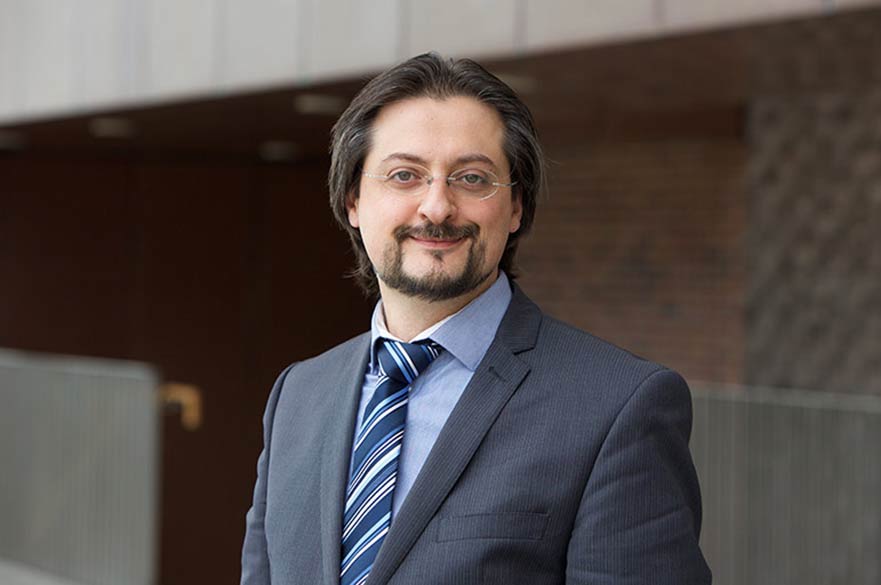
Viktar Asadchy is an Assistant Professor in the Department of Electronics and Nanoengineering at Aalto University . His research focuses on electromagnetic wave control , photonic time crystals , and metasurface engineering , with applications in nonreciprocal optics , reconfigurable intelligent surfaces , and terahertz technology . He has published extensively on dynamic metamaterials and spatiotemporal modulation. Email: viktar.asadchy@aalto.fi His recent work explores terahertz frequency conversion , inverse-designed time-varying nanostructures , and nonreciprocal metasurfaces . Trends in his publications emphasize harnessing temporal modulation and quasi-bound states to achieve extreme electromagnetic control, including perfect anomalous reflection and energy accumulation in photonic systems.
Ondrej Krejci is a researcher in the Department of Applied Physics at Aalto University, specializing in computational and theoretical approaches to surface science, scanning probe microscopy, and materials discovery. His work bridges advanced simulation techniques with experimental validation. Research interests include: Density Functional Theory (DFT) Scanning Probe Microscopy (SPM) simulations Molecular adsorption on surfaces X-ray spectroscopy simulations Condensed matter physics Atomic and molecular physics Recent publications highlight trends in machine learning for catalyst discovery, probe-particle model innovations, and on-surface synthesis of novel carbon allotropes and frameworks. Collaborative work spans computational modeling, experimental validation, and instrumentation development.
Ramazan Tuğrul SENGER is a Professor in the Department of Physics at İzmir Ekonomi Üniversitesi since February 2024. Previously, he held administrative roles at İzmir Yüksek Teknoloji Enstitüsü (IYTE) as Dean of the Graduate School of Natural and Applied Sciences, a member of the Senate, and Head of the Physics Department. He earned his Ph.D. (2000), M.Sc. (1996), and B.Sc. (1994) in Physics from Bilkent University. Education : Bilkent University (Ph.D., M.Sc., B.Sc.) Past Positions : Bilkent University (Researcher, Lecturer), Emory University (Postdoctoral Researcher), TÜBİTAK-UEKAE (Expert Researcher), IYTE (Assistant Professor → Associate Professor → Professor) His research focuses on computational materials science , particularly quantum transport phenomena and spintronics in low-dimensional systems. He has extensively studied thermoelectric properties of nanostructured materials and excitonic behavior in halide perovskites . His recent publications highlight advancements in perovskite microribbons (exciton mobility), strain-engineered 2D magnets (α-RuCl3), and thermoelectric performance of transition metal dichalcogenides. These works employ first-principles calculations and evolutionary algorithms for material optimization. Scientific Awards : TÜBA GEBİP Award (2006) FABED Young Scientist Award (2009) ODTÜ Mustafa N. Parlar Foundation Research Incentive Award (2010) Fulbright Fellowship (2019-2020) He has supervised PhD theses on topics like "Thermoelectric Properties of Nanoscale 2D Materials" and "Polaronic Excitons in 2D Structures." His work has been supported by grants from TÜBİTAK, DPT, and international institutions.
Vitali Goussev is a Distinguished Professor at Le Mans Université, France, working at the Laboratory of Acoustics of the University of Maine (LAUM), a joint research unit with CNRS. He has been a professor at the École Nationale Supérieure d'Ingénieurs du Mans (ENSIM) since 1998, contributing significantly to the fields of acoustics, laser ultrasonics, and photoacoustics. Professor Goussev earned his PhD in physics and mathematics (laser physics) in 1982 from Moscow State University, Russia, followed by habilitations in mathematics and physics (acoustics) at Moscow University in 1992 and at Le Mans University in 1997. His academic journey spans institutions in Russia, France, Japan, Germany, and Canada through various prestigious fellowships. His research focuses on nonlinear acoustics, thermo-acoustics, laser ultrasonics, photoacoustics, interaction of laser radiation with matter, laser-induced ultrafast phenomena, physics of semiconductors and nanomaterials, and acoustic metamaterials . His work has significantly advanced our understanding of acoustic wave propagation in complex media, particularly granular materials and nanostructures. His recent research emphasizes time-domain Brillouin scattering applications for imaging, nonlinear laser ultrasound, acoustics of granular media, and non-destructive testing and evaluation of nanomaterials. Analysis of his 15 most recent publications reveals a strong trend toward advanced imaging techniques, particularly using time-domain Brillouin scattering for nanoscale characterization. His work bridges fundamental physics with practical applications in materials science, semiconductor technology, and non-destructive testing. A significant portion of his recent research focuses on understanding acoustic phenomena in complex materials like granular media, ice phases, and ferroelectric nanostructures. 2024: Gerald J. Diebold Prize in Theoretical Photoacoustics and Photothermics 2023: VEBLEO Fellow 2016: Fellow of the American Physical Society 2013: Fellow of the Acoustical Society of America 2010: Gay Lussac – Humboldt Research Award 2009: Knight in the Order of Academic Palms 2007: French Medal of the French Acoustical Society 2006: Senior Member of the Institute of French Universities (IUF) 2004: Senior Prize of International Photoacoustic and Photothermal Association Professor Goussev has served on numerous scientific committees including the International Advisory Board of the International Congress on Ultrasonics and the Advisory Committee of the International Conferences on Photoacoustic and Photothermal Phenomena. He is also a member of editorial boards for international journals including "Applied Sciences," "Scientific Reports," and "Photoacoustics." His laboratory, part of the Laboratoire d'Acoustique de l'Université du Mans (LAUM), conducts cutting-edge research in materials acoustics, opto-acoustics, ultrasonics, and related fields, with a strong focus on both theoretical and experimental approaches.
John Tomich, Ph.D., is a Professor at Kansas State University's Department of Biochemistry and Molecular Biophysics. He serves as Director of the Biotechnology/Proteomics Core Facility and as an Undergraduate Advisor. His research focuses on synthetic peptides for drug development and renewable biomaterials using biologic, synthetic, analytic, and physical methods. B.A. (1974) - University of Connecticut M.S. (1975) - Purdue University Ph.D. (1980) - University of Waterloo The Tomich laboratory specializes in Branched Amphiphilic Peptide Capsules (BAPCs) for biomedical applications. Their work spans drug delivery systems , nanocarriers , and gene editing tools , with recent publications exploring CRISPR/Cas9 delivery, cellular uptake mechanisms, and biodegradable nanocapsules. The lab investigates supramolecular peptide structures and biomaterials using interdisciplinary approaches. Publications highlight trends in nanotechnology , peptide engineering , and RNA interference . The research demonstrates precise control over nanocapsule morphology , biocompatibility , and targeted delivery systems .
Mark Wilson is a Professor in the Department of Chemistry at Durham University, where he leads the Computational Soft Matter research group. His laboratory is housed in the Wolfson Suite for Computational Chemistry, focusing on molecular dynamics and Monte Carlo simulations of complex molecular systems. The group's research is primarily funded by EPSRC grants, supporting investigations into liquid crystals, polymers, proteins, and nanostructured materials. Wilson's research integrates theoretical chemistry with computational physics to study: Self-assembly processes in chromonic liquid crystals and surfactants Multiscale modeling approaches combining atomistic and coarse-grained methods Protein dynamics and allosteric regulation mechanisms Phase behavior of bent-core liquid crystals and ferroelectric nematics Interfacial phenomena in polymer-surfactant systems Analysis of his 15 most recent publications reveals strong emphasis on: methodological developments in dissipative particle dynamics; molecular engineering of pharmaceuticals; and predictive modeling of soft material behavior. Recurring themes include surfactant phase diagrams, liquid crystal polymorphism, and computational methods validation through experimental collaboration. Wilson currently supervises four PhD students and maintains an active research team with six group members. His laboratory utilizes advanced high-performance computing resources for large-scale simulations, with recent work extending to biomolecular systems including beta-amyloid aggregation and antimicrobial peptides.
Prof. K. George Thomas is a distinguished Professor and J C Bose National Fellow at the School of Chemistry, Indian Institute of Science Education and Research Thiruvananthapuram (IISER TVM). He currently serves as the Dean of Faculty Affairs and has been instrumental in building IISER TVM since its inception in 2010, having previously served as the founding Dean of Academics and Faculty Affairs (2010-2015) and as Director (additional charge) in 2013-2014. His leadership extends internationally as President of the Asian and Oceanian Photochemistry Association. Prof. Thomas received his academic training at prestigious Indian institutions: B.Sc. (First Class) from Kerala University (1981) M.Sc. (First Class) from Savitribai Phule Pune University (1983) Ph.D. from University of Kerala (1990) Prof. Thomas's research focuses on light-matter interactions at the nanoscale, with particular emphasis on molecular systems, plasmonic nanostructures, and semiconductor quantum dots. His group employs advanced spectroscopic techniques including steady-state and time-resolved methods, as well as single-molecule and particle spectroscopy/microscopy. Key research thrusts include plasmon-exciton coupling, chiroptical properties of nanostructures, and the organization of molecules on 2D surfaces. His work bridges fundamental photophysics with practical applications in sensing and energy conversion. Analysis of his recent publications reveals a strong focus on quantum dot photophysics, particularly InP and perovskite nanocrystals as environmentally friendly alternatives to traditional materials. His group has made significant contributions to understanding chiral phenomena at the nanoscale and developing plasmon-enhanced spectroscopic techniques for practical sensing applications. Prof. Thomas has received numerous prestigious accolades recognizing his contributions to nanoscience and photochemistry: Shanti Swarup Bhatnagar Prize in Chemical Sciences (2006) J C Bose National Fellowship (2014-2019 and 2019-2024) Elected Fellow of Indian Academy of Sciences (2008) Elected Fellow of Indian National Science Academy (2015) Materials Research Society of India (MRSI) Medal (2005) Chemical Research Society of India (CRSI) Bronze Medal (2004) MRSI-ICSC Superconductivity & Materials Science Prize (2015) C. N. R. Rao Prize Lecture in Advanced Materials (2020) Prof. Thomas has supervised twenty doctoral students, all of whom now hold important positions in prestigious academic institutions worldwide. His research is generously supported by the Department of Science and Technology (DST) and Science and Engineering Research Board (SERB) through multiple research projects. He has served on numerous national scientific committees and advisory boards, including the editorial advisory committee of the Journal of Physical Chemistry of the American Chemical Society (2012-2015). His group has developed innovative technologies, including a surface-enhanced spectroscopy based device for rapid detection of pesticide residues. Leading the KGT Research Group at IISER TVM, Prof. Thomas oversees a vibrant research environment focused on cutting-edge nanoscience. The group collaborates extensively with theoretical scientists from IISER TVM, Argonne National Laboratory (USA), University of Parma (Italy), and Jawaharlal Nehru Centre for Advanced Scientific Research (India). Their laboratory is equipped with state-of-the-art facilities for nanomaterials synthesis and advanced optical characterization, supporting both fundamental research and translational applications in sensing and energy technologies.
Brian S.Y. Kim serves as Assistant Professor of Materials Science and Engineering and Physics at the University of Arizona, holding a joint appointment since January 2024. Previously, he conducted postdoctoral research at Columbia University (2018-2023) in Mechanical Engineering and Physics. His laboratory focuses on atomic-scale engineering of quantum materials for next-generation electronic and photonic technologies. His educational background includes: PhD in Electrical Engineering, Stanford University (2018) MS in Electrical Engineering, Stanford University (2013) BS in Electrical Engineering, Northwestern University (2011) Professor Kim's research spans 2D quantum materials and heterostructures , experimental condensed matter physics , and advanced nanofabrication . His group employs robotic nano-manufacturing systems, reconfigurable device architectures, and nano-optical imaging to investigate emergent phenomena in van der Waals materials. Key methodologies include plasmonic cavity engineering, moiré superlattice fabrication, and atomic-scale device characterization. His publication record demonstrates consistent contributions to quantum materials science, with recent emphasis on plasmon-exciton interactions in layered antiferromagnets, novel FET architectures using 2D transition metal dichalcogenides, and thermal transport phenomena in nanostructured materials. The work bridges fundamental condensed matter physics with practical device applications. His scientific recognition includes: Outstanding Young Researcher Award (2024) from AKPA/KPS APL Photonics Early Career Editorial Advisory Board membership (2025-26) Research funding includes the Vertically Integrated Projects Catalyst Seed Fund Award (2024) for "twisting two-dimensional atomic sheets." The Kim Lab actively mentors undergraduate researchers like David Tashchyan and collaborates with institutions including Kyung Hee University and Sungkyunkwan University. Current projects focus on developing programmable hyperbolic polaritons and Fermi-level engineered 2D electrodes. The Brian SY Kim Lab operates within UArizona's Materials Science and Engineering department, utilizing state-of-the-art facilities for nanofabrication and quantum device characterization. Ongoing initiatives explore cavity-altered superconductivity and magnetically confined excitons, with potential applications in quantum computing and ultra-sensitive photodetection.
Grzegorz Greczynski is a Professor and Head of the Unit of Fundamental Science of Thin Films at the Department of Physics, Chemistry and Biology (IFM) at Linköping University. A pioneer in high power impulse magnetron sputtering (HiPIMS) and X-ray Photoelectron Spectroscopy (XPS), he focuses on low-energy ion/surface interactions for nanostructure control during thin film growth, particularly for transition-metal-based nitrides, borides, and carbides. His work bridges industrial applications and academic innovation, with collaborations spanning the University of Illinois (USA) and Aachen University (Germany). PhD in Materials Physics (2001) from Linköping University MSc in Materials Physics (1997) from University of Science and Technology, Krakow, and Linköping University Research interests include: Development of non-destructive XPS analysis methods High-power impulse magnetron sputtering (HiPIMS) for thin film deposition Surface charging mitigation in insulating thin films Phase evolution in nitride and diboride thin films Mechanical properties of multilayer coatings Binding energy referencing in spectroscopy Scientific contributions highlight trends in: Advancements in XPS reliability and calibration Energy-efficient magnetron sputtering techniques High-entropy alloy thin films for extreme environments Space mission plasma probe technology Nanostructured coatings for oxidation resistance Surface analysis of catalytic materials Awards: Fellow of the American Vacuum Society (2018) Collaborations include researchers like Prof. Lars Hultman (LiU), Prof. Joe Greene (University of Illinois), and Prof. Jochen Schneider (Aachen University). His work impacts industries ranging from space exploration to biomedical coatings.
Julie Champion is the William R. McLain Endowed Term Professor in the School of Chemical and Biomolecular Engineering at Georgia Institute of Technology. She holds a Ph.D. in Chemical Engineering from the University of California Santa Barbara and completed NIH postdoctoral training at Caltech. As Faculty and Associate Chair for Graduate Studies, her work spans protein engineering , nanostructured biomaterials , and biocatalysis applications . Education: B.S.E. (University of Michigan), Ph.D. (UC Santa Barbara), NIH Postdoc (Caltech) Her research focuses on creating self-assembled protein nanomaterials for immunotherapy , cancer treatment , and industrial biocatalysis . Key projects include: Thermoresponsive protein nanosheets pH-sensitive vesicles for drug delivery Enzyme-immobilizing protein-inorganic hybrids Hexameric antibody delivery nanocarriers AvrA-based anti-inflammatory therapies Universal subunit vaccines via nanoparticle platforms Scientific recognition includes: Fellow, American Institute for Medical and Biological Engineering (2021) ACS Women Chemists Rising Star Award (2021) Georgia Tech BioEngineering Outstanding Advisor Award (2014) NSF BRIGE Award NIH Postdoctoral Fellowship NSF Graduate Fellowship Her lab at the Engineered Biosystems Building hosts ongoing outreach initiatives like the TEC Camp for middle school girls and Project ENGAGES for high school research mentorship.
Fernando A. Escobedo is a Professor in the Department of Chemical Engineering at Cornell University's College of Engineering, holding the Marjorie Hart Chair of Engineering since joining the faculty in 1998. His research pioneers computational methodologies for understanding entropy-driven self-assembly in complex soft matter systems, with applications spanning solar cells, battery electrodes, and advanced membranes. His educational background includes: B.S. in Chemical Engineering from Universidad de San Agustin, Peru (1986) M.S. in Chemical Engineering from University of Nebraska-Lincoln (1993) Ph.D. in Chemical Engineering from University of Wisconsin-Madison (1997) Professor Escobedo's work centers on molecular-level simulations of thermodynamic and kinetic properties, with particular emphasis on entropy's role in forming intermediate-ordered phases like liquid crystals and block copolymer mesophases. His group develops novel computational frameworks to establish structure-property relationships for nanoscale building blocks, enabling rational design of materials with tailored mechanical, optical, and transport properties. This research bridges statistical mechanics with practical engineering challenges in nanomaterials synthesis. Analysis of his 2023-2025 publications reveals three dominant trends: (1) machine learning integration for multiscale materials design, (2) entropy-controlled phase behavior in non-additive colloidal mixtures, and (3) molecular engineering of liquid crystalline oligomers for enhanced ion transport. Key advancements include heuristic rules for nanoparticle superlattice stability and diffusionless transition mechanisms in faceted colloids. His scientific recognition includes: Fellow, American Physical Society (2014) AIChE Computational Molecular Science & Engineering Impact Award (2012) Alfred P. Sloan Foundation Fellowship (2004) NSF CAREER Award (2001) Camille & Henry Dreyfus Foundation New Faculty Award (1999) College of Engineering Teaching Excellence Award (2003) Professor Escobedo has secured sustained funding through competitive grants including the NSF CAREER award and Sloan Fellowship, supporting his computational research group's high-impact publications in top journals. His mentorship focuses on training graduate students in advanced simulation techniques, with research outputs frequently appearing in Journal of Physical Chemistry and Macromolecules . While no dedicated lab name is specified, his work operates at the intersection of Cornell's Chemical Engineering department and nanomaterials research initiatives, emphasizing collaborative approaches to entropy-driven assembly problems.
Vibha Kalra is the Fred H. Rhodes Professor in the Smith School of Chemical and Biomolecular Engineering at Cornell University and serves as the Kathy Dwyer Marble and Curt Marble Faculty Director at Cornell Atkinson, leading Accelerating Energy Transitions initiatives. Previously the George B. Francis Professor at Drexel University, she began her academic career there as an assistant professor in 2010 after completing her PhD at Cornell. Education: B.S. Chemical Engineering, Indian Institute of Technology Delhi (2004) Ph.D. Chemical and Biomolecular Engineering, Cornell University (2009) Research Focus: Her research integrates material assembly, electrochemical characterization, and in-operando spectroscopy to develop advanced energy storage systems. Primary areas include: Design of novel electrode materials and electrolyte additives Fundamental studies of electrochemical mechanisms via in-operando spectroscopy Device-scale testing of batteries at coin cell and pouch cell levels Sustainable battery recycling and regeneration technologies Development of lithium-sulfur, solid-state, and anode-free batteries Awards and Honors: NSF CAREER Award (2012) ONR Summer Faculty Fellowship (2013) AIChE DVS Outstanding Faculty Award (2015) Drexel CBE Outstanding Service Award (2018) Drexel Engineering Outstanding Research Awards (2015, 2020) Drexel Provost Mid-Career Research Achievement Award (2020) Drexel Engineering Innovation Award (2021) ELATES Fellowship (2022-2023) With over 65 peer-reviewed publications and 13 patents, her work significantly advances battery technology through fundamental insights into electrode-electrolyte interfaces, sulfur cathode stabilization, and novel material architectures.
Dr. Demosthenes Koutsogeorgis is an Associate Professor of Photonic Technologies in the Department of Physics & Mathematics at Nottingham Trent University's School of Science & Technology. He serves as a Module Leader, Placement Tutor, Project Supervisor, Director of Studies for PhD programmes, IMEC Research Centre PGR coordinator, and NTU Laser Safety Adviser. He leads the iSMaRT Research Group (Innovations in Surfaces Materials And Related Technologies) based at MTIF Clifton, and was one of the founding members of industry-facing initiatives "Thin Film Services" and "Scientific Services To Industry" at NTU. Dr. Koutsogeorgis received his education at: BSc in Physics from the University of Ioannina, Greece (1997) PhD in "Investigation of laser annealing of phosphor thin films for potential luminescent devices" from Nottingham Trent University (2003) His research focuses on Material Science, with specific expertise in thin film technology, laser processing, luminescent devices, plasmonics, electronic devices, and smart coatings. His work spans numerous applications in nanotechnology across industries including photovoltaics, data storage, security and authentication, optoelectronics, flexible electronics, displays, optical coatings, and biomedical technologies. He has developed unique technologies for subsurface modification of nanoparticles and laser processing of phosphor thin films for enhanced light output and longevity. His recent publications demonstrate strong focus on laser processing techniques for transparent conductive oxides, plasmonic nanostructures, and thin film materials. The research spans from fundamental materials characterization to practical applications in electronics, photonics, and biomedical devices. Key trends include reactive laser annealing, plasmonic nanoparticle engineering, thin film transistor development, and applications of these technologies in both industrial and medical contexts. Dr. Koutsogeorgis has collaborated with numerous institutions including: University of Ioannina (Greece) Aristotle University of Thessaloniki (Greece) OpSec Group (UK) University of Southampton (UK) The University of Nottingham (UK) Sheffield Hallam University (UK) University of Milano (Italy) KAUST (Saudi Arabia) He has supervised multiple PhD students including WEST, J.M. (2023) on "Laser induced nitrogen doping of zinc oxide" and KOUTSIAKI, C. (2023) on "Photonic conversion of sol-gel organometallic precursors into inorganic thin films." His research has been supported by various sponsors including Innovate UK, EU FP7 programme, Engineering and Physical Sciences Research Council EPSRC, and numerous industrial partners. Dr. Koutsogeorgis leads the iSMaRT Research Group, which benefits from long-standing expertise in thin film technology and laser processing. The group works extensively with the MTIF (Manufacturing Technology Innovation Facility) at NTU and maintains strong industry connections through the SS2i initiative. The research environment includes advanced capabilities in deposition, processing, and characterization of thin film materials for various applications.
Richard Bright is a Research Fellow at the Biomedical Nanoengineering Laboratory within the College of Medicine and Public Health at Flinders University. His research focuses on the complex interplay between bacteria and mammalian cells on biomaterial substrates, with expertise spanning microbiology, cell biology, and molecular biology. Education: PhD, Biomedical Science from Flinders University (awarded January 20, 2024) Master of Science, Immunology from Charles Sturt University (awarded January 20, 2013) Bachelor of Science (Honors) from University of Adelaide (awarded January 12, 2008) Dr. Bright's research spans multiple interdisciplinary areas including biomaterials, antimicrobials, nanoengineering, tissue engineering, molecular and cell biology, stem cell and bone biology, and immunology. His work particularly focuses on understanding how surface properties of biomaterials influence biological responses, with applications in infection prevention, wound healing, and implant integration. His fingerprint research areas include surface science, antiinfective agents, biomaterials, infection mechanisms, silver nanoparticles, Staphylococcus aureus interactions, nanocomposites, and wound infection management. Dr. Bright has secured significant research funding, including an ARC Discovery Project (2025), Flinders Foundation Seed Grant (2024), and multiple grants from ADRF and industry partners like Colgate Palmolive. His research outputs show consistent productivity with 73 publications to date, demonstrating increasing research activity from 2021-2025. As a supervisor, Dr. Bright emphasizes open communication, collaboration, and critical thinking while providing tailored mentorship. He aims to balance hands-on guidance with encouraging independence, maintaining high ethical standards, and promoting work-life balance. He is committed to supporting students in both academic and industry career paths while fostering an inclusive research environment. His current research involves leading projects, grant writing, manuscript preparation, and supervision of students and laboratory staff. Dr. Bright is a key member of the Biomedical Nanoengineering Laboratory and the Flinders Health and Medical Research Institute. His work contributes to UN Sustainable Development Goals, particularly in health and well-being. His research has practical applications in developing next-generation antimicrobial biomaterials, improving implant integration, and advancing wound healing technologies through innovative nanoengineering approaches.
Prof. Eleftherios H. Drosinos is a Professor at the Agricultural University of Athens , specializing in Food Safety and Quality Management Systems . He teaches undergraduate and postgraduate courses in these areas and leads research initiatives focused on microbial quality control, HACCP systems, and ISO 9000 series standards. Education: Graduated from the Agricultural University of Athens; Ph.D. from Bath University (UK). His research explores microbial interactions in food systems, particularly pathogenic and spoilage microorganisms, with a strong emphasis on Lactiplantibacillus plantarum and Listeria monocytogenes dynamics across various substrates. He has published extensively on topics like sourdough microbiota, cheese safety, and antimicrobial strategies under the One Health framework. Recent publications (2024) highlight advancements in food spoilage detection, GMO monitoring, and microbial ecology. His work spans both experimental studies and reviews, addressing food safety in retail, fermented products, and fresh-cut vegetables. He directs the Laboratory of Food Quality Control and Hygiene , contributing to standardization and regulatory compliance in the food sector.