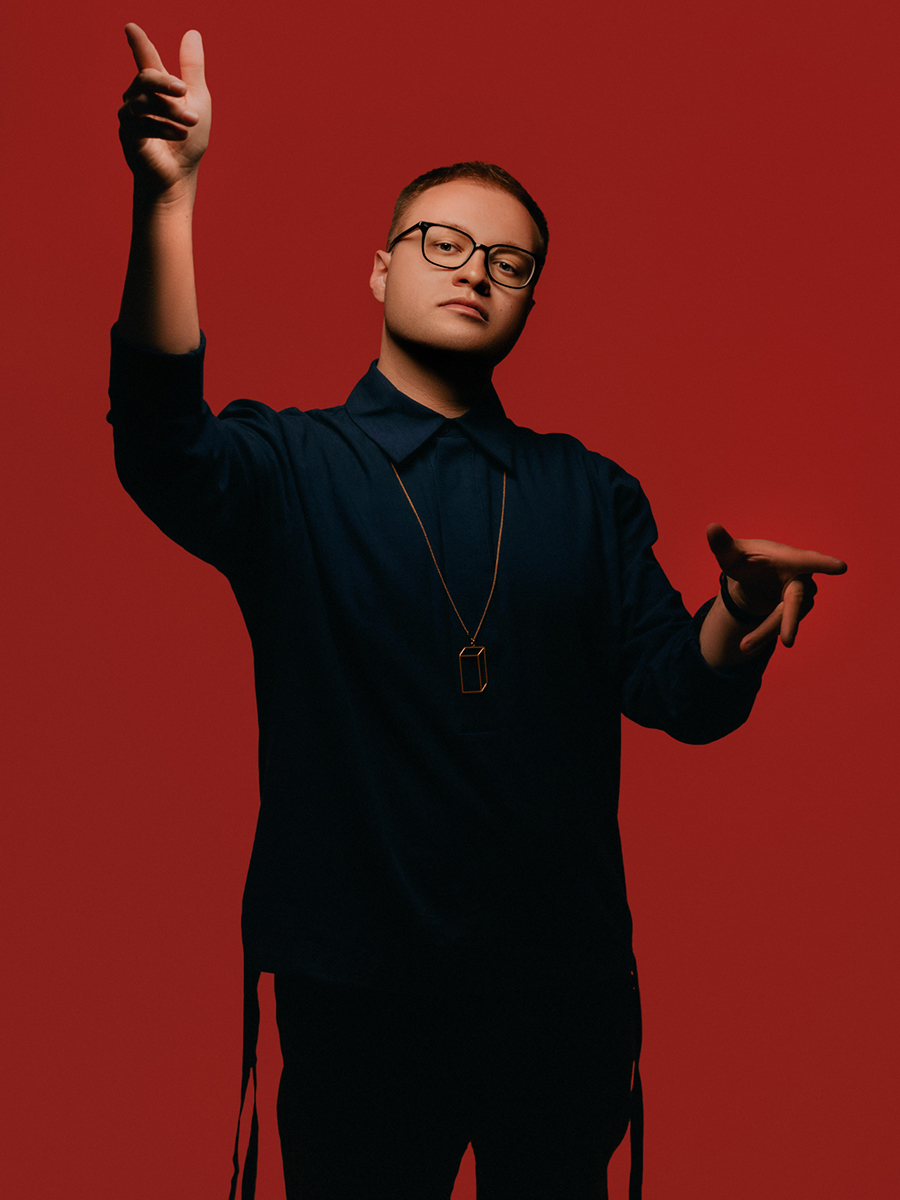
Dominic Thibault is an Assistant Professor at the Faculty of Music, Université de Montréal . His research-creation explores human-machine interaction in musical contexts, focusing on embodied cognition through electroacoustic compositions, audiovisual performances, and musical software development. Co-director, Laboratoire Formes·Ondes Active member, CIRMMT (Centre for Interdisciplinary Research in Music Media and Technology) Research axis leader, Expanded Musical Practice (CIRMMT) Member, Québecor Millénium entrepreneurship committee Scientific committee member, ACFAS
Dr. Jules Rawlinson is a Senior Lecturer in Digital Design at the Reid School of Music , University of Edinburgh. He serves as Programme Director for the MSc Sound Design and contributes to MSc Design and Digital Media, ESALA undergraduate courses, and the Reid School's MSc Digital Composition and Performance. PhD in Composition (University of Edinburgh, 2011) MSc Sound Design (University of Edinburgh, 2006) BA Combined Arts (Sunderland University) Jules investigates audiovisual composition , live electronics , and interactive performance systems , blending machine learning , virtual environments , and corpus-based sound synthesis . His work explores non-linear narrative structures , graphical scores , and political sound-art through collaborations like Raw Green Rust and projects such as Lie Still My Sleepy Fortunes and w[i]nd . His 15 most recent outputs span audiovisual installations , generative sound systems , and collaborative performances , focusing on virtual reality , spectral transformation , and digital improvisation . Jules co-founded the LLEAPP network and has secured grants from EPSRC and New Media Scotland's Alt-w Fund . He supervises PhD students Tim Bentley, Hal Xu, Benjamin Cantil, and Liam Peacock, with works showcased at festivals including Sonorities , Edinburgh International Film Festival , and Edinburgh Festival Fringe . His Requiem for Edward Snowden was featured in BBC Radio 3's Hear and Now and selected for Creative Scotland's Made In Scotland Showcase.
Kerri Kotta is a Professor of Music Theory and Head of Musicology at the Estonian Academy of Music and Theatre. She holds a PhD in Musicology (2004) and an MA in Composition (1997) from the same institution. Her research focuses on music theory, tonal analysis, Estonian music history, and contemporary composition, with special expertise in the works of Eduard Tubin and Dmitri Shostakovich. She coordinates the International Eduard Tubin Society and edits the composer's complete works. Her research interests span music theory , compositional techniques , Estonian cultural heritage , and interdisciplinary performance studies . Recent publications explore modernism in Estonian art music, Beethoven's structural rhetoric, and socio-psychological dimensions of contemporary opera. Kotta received the Reet Neimar Criticism Award (2023) for her contributions to music scholarship. She leads the project How to share the ardor? Conveying complex musical structures through animated scores (2024-2025), funded by the Estonian Ministry of Culture. Administratively, she chairs the Estonian Musicological Society (2013–present) and the International Eduard Tubin Society (2015–present), while serving on the board of the Estonian Composers Union (2022–present).
Piotr Scholz is an award-winning jazz guitarist, composer, and conductor currently serving as an Assistant Professor at the Academy of Music in Łódź within the Institute of Jazz Instrumental Studies . He holds three specializations in jazz and pop music from Polish institutions, including a doctorate from the Karol Szymanowski Academy of Music in Katowice (2021). His academic roles include teaching jazz arrangement, composition, and conducting. Ph.D. in Composition (Karol Szymanowski Academy of Music in Katowice, 2021) Jazz Guitar (Academy of Music in Poznań, 2015) Composition with Arrangement (Academy of Music in Poznań, 2016) Conducting Jazz Bands and Popular Music (Academy of Music in Bydgoszcz, 2017) Scholz’s research focuses on jazz orchestration and symmetrical scale applications , with publications exploring these domains. His artistic work demonstrates innovative approaches to jazz harmony and ensemble leadership. Recent publications analyze: Symmetrical scales in improvisation Contemporary jazz arrangement techniques Conducting methodologies for jazz orchestras Awarded numerous honors including multiple festival Grand Prix awards and international composition accolades, Scholz has received artistic scholarships from both municipal and national Polish cultural institutions. As artistic director of the Academy of Music in Łódź Jazz Orchestra, he leads original projects like Weezdob Collective and PJPOrchestra , while collaborating with prominent artists including Jean-Luc Ponty, Stanley Jordan, and Włodek Pawlik.
Salome Voegelin is a Professor of Sound Art at the London College of Communication, University of the Arts London. She is a leading figure in sound studies, focusing on listening as a socio-political practice and the transversal potential of sound across disciplines. Her research explores the intersections of sound with politics, feminism, and pedagogy, and she leads projects like Listening across Disciplines II (LxDII), funded by the AHRC, which investigates listening as a research methodology. Education: PhD in Sound Art, Goldsmiths, University of London (2000–2004) BA (Hons) Fine Art Film and Video, Central Saint Martins (1994–1997) PGCertHE, Middlesex University Research Interests: Sound Studies, Sonic Pedagogy, Feminism, Interdisciplinary Knowledge Production, Sonic Methodologies Her work bridges artistic practice and theory, including collaborations with David Mollin and co-convening Points of Listening . Key books include Listening to Noise and Silence (2010), The Political Possibility of Sound (2018), and Sonic Possible Worlds (2021). She is a member of the Creative Research into Sound Arts Practice (CRiSAP) and leads the Sounding Knowledge Network. Recent articles and presentations highlight themes like transversal sound studies, the ethics of listening, and curatorial practices. Her projects emphasize participatory engagement and the socio-political dimensions of sound.
Rudolf Lutz (*1951) is a Swiss musician, conductor, and composer renowned for his work in sacred music and historical performance practice. He received an honorary doctorate from the Faculty of Theology at the University of Zurich in 2021, recognizing his contributions to performing and disseminating Johann Sebastian Bach's vocal works, including founding the J.S. Bach Foundation and directing its ensemble since 2006. Lutz has taught improvisation at the Schola Cantorum Basiliensis, bass continuo at the Basel University of Music, and oratorio studies at the Zurich University of Music. Research & Artistic Contributions Rudolf Lutz's work focuses on the intersection of music and theology, particularly through the complete performance and innovative interpretation of Bach's sacred compositions. His initiatives include the Bachpedia platform, livestreamed performances during the pandemic, and dialogues with theologians and literary figures. He has also composed original works like the Christmas Oratorio in English style and a cantata for Luther's commemoration. Honors Culture Prize of the Canton of St. Gallen (2006) STAB Prize (2015) Swiss Culture Prize (2019) Member of the Board of the New Bach Society (since 2016)
Christopher Castro serves as an Assistant Professor of Composition at Chapman University's College of Performing Arts. A composer and double bassist from Brooklyn, New York, he combines academic rigor with avant-garde experimentation. Ph.D. in Composition and Theory from University of California, Davis Bachelor of Music from Juilliard School (Double Bass & Composition) His research bridges Western Art Music traditions with contemporary innovations , creating works that merge: Johannes Ockeghem's polyphonic complexity John Coltrane's spiritual intensity Modernist structural experimentation Historical reconstruction techniques Jazz-classical hybrid forms Interdisciplinary performance formats Recent compositions demonstrate trends in flexible instrumentation , text-music relationships , and genre synthesis . His output spans chamber works, orchestral pieces, and vocal compositions with equal mastery. Scientific recognition includes: 2023 Fromm Music Foundation Commission (Harvard University) Chamber Music America's 2021 Classical Commissioning Award As a new music advocate , Castro collaborates with ensembles like: Left Coast Chamber Ensemble (artistic advisory board) New Mexico Contemporary Ensemble Los Angeles Philharmonic's Upbeat Live series Lyris Quartet and Sharon Harms
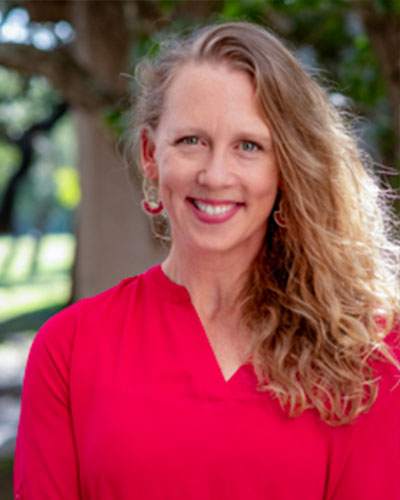
Jennifer Beavers, Ph.D. , is an Associate Professor of Music Theory at the University of Texas at San Antonio (UTSA) in the College of Liberal and Fine Arts. Her research intersects early twentieth-century music analysis, timbre/orchestration studies, and music theory pedagogy, with a focus on Maurice Ravel’s compositions and curriculum innovation. Awarded Faculty Mentor Award for Undergraduate Research (2019) Co-founder of UTSA Music Theory Club initiatives Active presenter at Society for Music Theory , American Musicological Society , and College Music Society conferences Research Themes : Analytical approaches to Ravel’s neurological decline, timbre as structural marker, flipped pedagogy, and interdisciplinary collaborations. Her publications span journals like Music Theory Online and Indiana Theory Review , emphasizing timbral transformations and pedagogical innovation. Scientific Awards : Faculty Mentor Award for Undergraduate Research (2019) Teaching Contributions : Courses include Aural Skills , Basic Skills , 20th-Century Analysis , and graduate Research Methods . Her pedagogical research addresses improvisation, pitch-matching, and AP curriculum alignment.
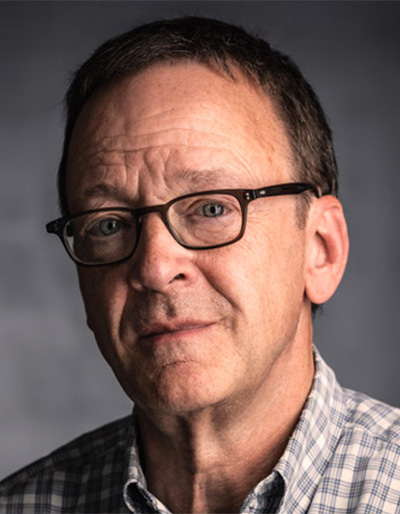
Dr. Robert Lieck is an Assistant Professor in the Department of Computer Science at Durham University. His research focuses on interdisciplinary applications of machine learning (ML) and artificial intelligence (AI), emphasizing interpretability, robustness, and ethical considerations. He explores computational models in music cognition, communication dynamics, and medical image analysis, aiming to bridge theory and practical tools for domain experts. Before Durham, he was a postdoctoral researcher at EPFL's Digital and Cognitive Musicology Lab (2018–2021) and earned his PhD from the Learning and Intelligent Systems Lab in Stuttgart/Berlin (2012–2017). His work combines probabilistic modelling, neuro-symbolic systems, and reinforcement learning to address challenges in music analysis, autonomous decision-making, and medical robotics. Key research themes include: Music structure and perception modelling Symbol emergence in multi-agent communication Ethical AI and autonomous systems governance Medical imaging applications (CT/MRI analysis) Recent projects involve developing patient-agnostic diabetes management systems using deep reinforcement learning and surgical workflow anticipation through graph learning algorithms. He actively contributes to conferences such as NeurIPS, ISMIR, and AAAI, with publications spanning music informatics, robotics, and biomedical engineering. Current supervision includes four postgraduate students focusing on AI applications in healthcare, music technology, and autonomous systems. His work bridges technical innovation with societal impact, addressing challenges in policy, legislation, and interdisciplinary collaboration.
Professor Annie Mahtani is a Professor of Electroacoustic Composition and Practice at the University of Birmingham's Department of Music. She holds a BMus (Hons), MA, MPhil, and PhD from the University of Birmingham and Birmingham City University. Her work focuses on electroacoustic music, acousmatic composition, multichannel audio, spatialisation, and field recordings, with significant contributions to site-specific installations and cross-disciplinary collaborations. She co-directs the SOUNDkitchen collective and serves on key boards such as the British ElectroAcoustic Network (BEAN) and the British Section of ISCM. Her research explores the sonic identity of environmental sounds, large-scale multichannel composition, and ambisonic audio techniques. As a performer with BEAST (Birmingham Electroacoustic Sound Theatre), she develops live acousmatic performances and soundwalks. Recent projects include Becoming Tree (an immersive audio retelling of a literary work) and Minimum Monument , performed at Birmingham Hippodrome. She actively collaborates with dance and theatre companies like Rosie Kay Dance Company. Professor Mahtani teaches undergraduate and postgraduate modules in electroacoustic composition and is involved in admissions and curriculum leadership. Her works have been performed globally in festivals like Klang! Électroacoustique and Sound + Environment, showcasing her innovative contributions to contemporary music and sound art.
Dr. Garth Alper is a Professor and Program Coordinator for Jazz Studies at the University of Louisiana at Lafayette's School of Music and Performing Arts. He holds a Doctor of Arts in Music Theory/Composition from the University of Northern Colorado, a Master of Arts in Piano Performance (Jazz Track) from New York University, and a Bachelor of Professional Studies in Jazz Studies from SUNY Empire State College. His research focuses on Jazz Piano, Jazz History, and Popular Music, with notable contributions to understanding improvisation techniques, postmodernism in music, and the cultural legacy of jazz icons like Duke Ellington. Dr. Alper has authored numerous articles in journals such as College Music Symposium , Rock Music Studies , and Jazz Perspectives , and guest-edited a special jazz issue of Popular Music and Society . His music compositions are featured on multiple CDs, including the acclaimed Spider’s Web (2022) and Stratus (2017). He has received significant grants and awards, including the BORSF Endowed Professorship and funding for jazz pedagogy and recording projects. Education: Doctor of Arts in Music Theory/Composition (University of Northern Colorado) Master of Arts in Piano Performance (Jazz Track, New York University) Bachelor of Professional Studies in Jazz Studies (SUNY Empire State College) Research Contributions: Includes analysis of jazz improvisation, postmodern music theory, and the sociocultural impact of jazz. He has authored encyclopedia entries on influential jazz musicians and contributed to critical discussions on popular music pedagogy. Teaching & Courses: Teaches Jazz Piano, Jazz Theory, Jazz History, Film Scoring, and directs the Jazz Combo program. Courses include MUS 312: Jazz Theory I and MUS 438: Film Scoring I . Grants & Recognition: Over $100K in grants for recording projects, multimedia facilities, and pedagogical initiatives. Holder of the Ruth Stodghill Girard BORSF Endowed Professorship since 2001. Labs/Teams: Coordinates the Jazz Studies program and collaborates on projects blending jazz with film scoring and modern media.
Dr. Peter McMurray is an Associate Professor of Music and Director of Studies at Queens' College, University of Cambridge. His research focuses on the intersection of Islam and sound in the Ottoman Empire and Turkey, including recitation, liturgy, and architecture. He is completing a book, *Pathways to God: The Islamic Acoustics of Turkish Berlin*, and co-editing *Acoustics of Empire*. His work also spans global music theory, audiovisual media history (1890–1945), and race and listening studies. Education: PhD in Music (Harvard), MFA in Music Composition (Brandeis), BA in Classics (Greek) and Slavic Literature (Harvard). Research interests include oral poetry, media art, and experimental improvisation. He previously held postdoctoral fellowships at MIT (Mellon) and Harvard’s Society of Fellows. He leads the research project *Ottoman Auralities and the Eastern Mediterranean: Sound, Media and Power, 1789–1922* (2022–2027). Awards: Mellon Fellowship, Harvard Society of Fellows Fellowship. Advising PhD students on topics related to Ottoman sound studies. Collaborates with Harvard’s metaLAB and Sensate Journal. Performance background in jazz and experimental music.
Wolfgang Mayer is a Professor for Performative Practice at the State Academy of Fine Arts Stuttgart , teaching collaborative artistic processes. He co-founded the art group Discoteca Flaming Star (DFS) in 1998 with Cristina Gómez Barrio, focusing on performative works that challenge memory and institutional frameworks. 1990–1995: Studied at Academy of Fine Arts Munich 1996–1997: DAAD scholarship at School of Visual Arts NYC 2005–2006: Whitney ISP participant Mayer’s research integrates performative practice , body theory , and collaborative art . His works interrogate memory , feminist narratives , and public space dynamics through sculptures , performances , and experimental music . Recent projects like Momentum:synthesize.r (2024) and Love Any Out of (90 Seconds) End (2023) explore temporal structures and emotional labor . Scientific honors include: 2013 Fundacion Estrenos Grant 2006–2007 Pollock-Krasner Scholarship 1993 Salzburg Summer Academy scholarship He emphasizes non-formalized artistic development through Sound & Body modules, public space interventions , and critical response protocols . Mayer’s DFS collective has shown globally at institutions like The Kitchen , Whitney Museum , and Tate Modern , often collaborating with figures like Rita McBride and Jeremiah Day.
Marié Abe is an Associate Professor in the Department of Music at the University of California, Berkeley, where she joined the faculty in 2023 after twelve years at Boston University. Her research explores how auditory culture produces social space through the political and affective dimensions of sound in contemporary Japan, Okinawa, Ethiopia, and the United States. Her educational background includes: B.A. in Ethnomusicology/Cultural Anthropology, Swarthmore College (2001) M.A. in Ethnomusicology, University of California, Berkeley (2004) Ph.D. in Ethnomusicology, University of California, Berkeley (2010) Abe's research investigates how culturally specific listening practices elucidate power dynamics, human difference, and spatial understandings. Her work spans sound studies, ethnography, human geography, and affect theory, with fieldwork focusing on Japanese street music, US military bases in Okinawa, and sonic connections between Japan and Ethiopia during the Korean War. She emphasizes long-term ethical engagements with interlocutors and draws from locally grounded epistemologies. Her scientific awards include: Peabody Award (2008) for co-producing NPR program 'Squeezebox Stories' Reischauer Center for Japanese Studies Fellowship, Harvard University (2010-2011) Newhouse Center for the Humanities Fellowship, Wellesley College (2013-2014) International Research Center for Japanese Studies Fellowship, Kyoto, Japan (2018-2019) Abe has advised over a dozen doctoral students at Boston University across diverse geographical contexts including Senegal, Ghana, Cambodia, and Japan. She pioneered public ethnomusicology through the BU Global Music Festival and co-founded the Peabody Award-winning radio documentary 'Squeezebox Stories'. As an active accordion performer, she engages with indie pop, Ethiopian jazz, and free improvisation ensembles, performing at major international festivals including Bonaroo and New Orleans Jazz Festival.
Catherine Laws is a Professor of Music at the University of York, affiliated with the School of Arts and Creative Technologies. She holds a dual role as a musicologist and pianist specializing in contemporary music, with particular focus on interdisciplinary performance practices and the relationship between music and language. Her research explores collaboration, embodiment, and subjectivity in performance, alongside studies of Samuel Beckett’s musical intermediality. Laws maintains a Senior Artistic Research Fellowship at the Orpheus Institute in Ghent, leading the 'Performance, Subjectivity, and Experimentation' research cluster. Education: PhD in Music (University of York, 1996), MA and BA in Music (University of York) Her research spans two core areas: 1) performance-based studies examining performer agency, embodiment, and interdisciplinary collaboration through works like the multimedia Player Piano ; and 2) investigations into composers’ responses to literary texts, notably Beckett’s works. Key outputs include co-authored Voices, Bodies, Practices (2019) and edited Performance, Subjectivity, and Experimentation (2020). Her recent projects with filmmaker Minyung Im reimagine piano performances through film, blending sound, visual, and spatial elements. Publications reflect her dual focus: experimental music performance, Beckett studies, and collaborative art practices. Her work often bridges theory and practice, integrating compositional, performative, and audiovisual mediums.