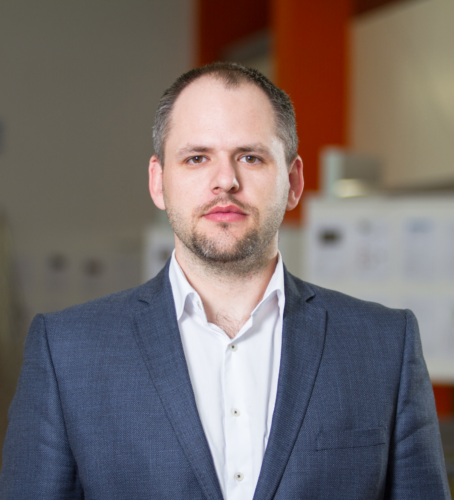
Professor Zhugen Yang is a leading academic in biosensing and environmental health at Cranfield University, where he heads the UKCRIC-funded Advanced Sensors Laboratory. He holds a Professorship in Biosensing and Environmental Health and has been recognized with prestigious awards, including the Leverhulme Research Leadership Award and the James J Morgan ES&T Early Career Award. His research focuses on low-cost biosensors for environmental and public health applications, such as wastewater surveillance for infectious diseases like COVID-19. Yang leads a multidisciplinary team developing paper-based microfluidic devices and CRISPR technologies for rapid diagnostics and environmental monitoring. Education: PhD (University of Lyon), MSc (Sun Yat-sen University), BEng (Harbin Institute of Technology). Postdoctoral research at the University of Cambridge and Marie Curie Fellowships at University of Bath and Glasgow. Research Interests: Biosensors for environmental health, water quality monitoring, antimicrobial resistance, and wastewater-based epidemiology. His team's innovations include origami paper devices for SARS-CoV-2 detection featured in the London Science Museum. Publications & Impact: Over 100 peer-reviewed articles, including in Nature Water , Nature Communications , and ACS Nano . His work has been covered by BBC News, Science, and The Washington Post. He edits journals like TrAC and Water Research , and organizes international conferences on microfluidics and environmental sensors. Awards & Grants: Over £20M in research funding from UKRI, Leverhulme Trust, and Royal Society. Current projects include a £1.9M Leverhulme Trust initiative for wastewater surveillance and collaborations with UKHSA and industry partners. Students & Team: Supervises 6 PhD students and 2 Postdoctoral Researchers. Openings exist for PDRA and PhD positions in sensors, microfluidics, and wastewater epidemiology. Labs & Facilities: Leads the Advanced Sensors Laboratory at Cranfield, focusing on water-environment-health nexus technologies. Collaborates with global institutions on One Health initiatives and antimicrobial resistance research.